Kirjojen hintavertailu – 12 866 492 kirjaa ja 27 kauppaa

Kirjailija

Yohanan Petrovsky-Shtern

Kirjat ja teokset yhdessä paikassa: 8 kirjaa, julkaisuja vuosilta 2008–2024, suosituimpiin kuuluu Besmirching the Denominational Enemy Within and Outside. Vertaile teosten hintoja ja tarkista saatavuus suomalaisista kirjakaupoista.

8 kirjaa

Kirjojen julkaisuvuodet: 2008–2024.

Besmirching the Denominational Enemy Within and Outside

Besmirching the Denominational Enemy Within and Outside

Ephraim Nissan; Yohanan Petrovsky-Shtern

Springer International Publishing AG
2024
sidottu
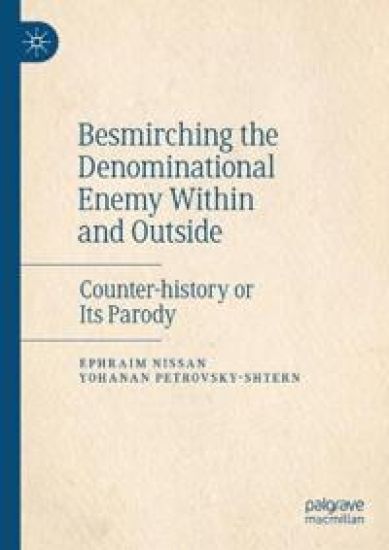
Counter-hagiography and counter-biography besmirch foundational figures held dear by different religious, political, or social groups. Such phenomena figure prominently in the history of religion and conflicts. For example, what we know of the Mazdakite revolution in pre-Islamic Iran/Iraq comes from revilers. The anti-Judaic polemicist from ninth-century Afghanistan and Iraq, Hiwi (“Snake”), was actually called ??yyawi (still a name among Iraqi Jews). The reputation of the great Haskalah (Jewish Enlightenment) thinker Moses Mendelssohn was damaged among the Orthodox by how Haskalah extremists portrayed him in their image. In 1869, a Genoan politician, Cesare Cabella, fulminated against Esther and Mordecai. In the Letter of Haman in rabbinic homiletics, Jews parodized hostile representations of their sacred history. Gerson Rosenzweig parroted in his 1892 talmudic-style Tractate America, anti-immigrant rhetoric from New York newspapers. Roman-age rabbis responded to claims about the protagonist of the Book of Joshua, “Joshua the Robber” as per a North African inscription early Byzantine Procopius of Caesarea alleged to have seen.
Jews and Ukrainians

Jews and Ukrainians

Paul Robert Magocsi; Yohanan Petrovsky-Shtern

University of Toronto Press
2016
sidottu
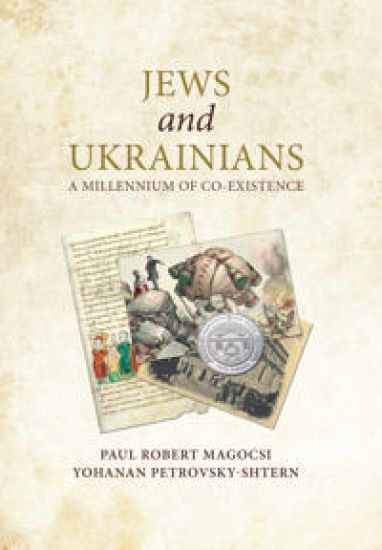
There is much that ordinary Ukrainians do not know about Jews and that ordinary Jews do not know about Ukrainians. As a result, those Jews and Ukrainians who may care about their respective ancestral heritages usually view each other through distorted stereotypes, misperceptions, and biases. This book sheds new light on highly controversial moments of Ukrainian-Jewish relations and argues that the historical experience in Ukraine not only divided ethnic Ukrainians and Jews but also brought them together. The story of Jews and Ukrainians is presented in an impartial manner through twelve thematic chapters. Among the themes discussed are geography, history, economic life, traditional culture, religion, language and publications, literature and theater, architecture and art, music, the diaspora, and contemporary Ukraine. The book’s easy-to-read narrative is enhanced by 335 full-color illustrations, 29 maps, and several text inserts that explain specific phenomena or address controversial issues. Jews and Ukrainians provides a wealth of information for anyone interested in learning more about the fascinating land of Ukraine and two of its most historically significant peoples.
The Golden Age Shtetl

The Golden Age Shtetl

Yohanan Petrovsky-Shtern

Princeton University Press
2015
pokkari
The shtetl was home to two-thirds of East Europe's Jews in the eighteenth and nineteenth centuries, yet it has long been one of the most neglected and misunderstood chapters of the Jewish experience. This book provides the first grassroots social, economic, and cultural history of the shtetl. Challenging popular misconceptions of the shtetl as an isolated, ramshackle Jewish village stricken by poverty and pogroms, Yohanan Petrovsky-Shtern argues that, in its heyday from the 1790s to the 1840s, the shtetl was a thriving Jewish community as vibrant as any in Europe. Petrovsky-Shtern brings this golden age to life, looking at dozens of shtetls and drawing on a wealth of never-before-used archival material. Illustrated throughout with rare archival photographs and artwork, this nuanced history casts the shtetl in an altogether new light, revealing how its golden age continues to shape the collective memory of the Jewish people today.
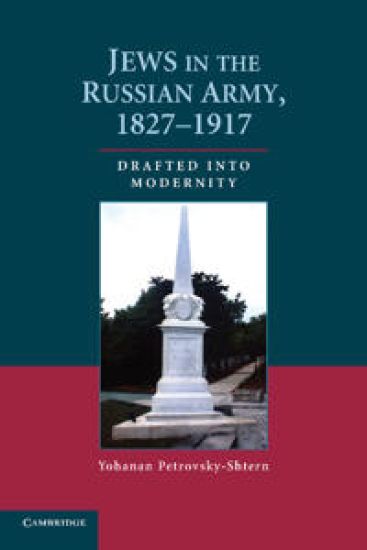
Jews in the Russian Army, 1827–1917

Jews in the Russian Army, 1827–1917

Yohanan Petrovsky-Shtern

Cambridge University Press
2014
pokkari
This is the first study of the military experience of some one to one-and-a-half million Jews who served in the Russian Army between 1827, the onset of personal conscription of Jews in Russia, and 1917, the demise of the tsarist regime. The conscription integrated Jews into the state, transforming the repressed Jewish victims of the draft into modern imperial Russian Jews. The book contextualizes the reasons underlying the decision to draft Jews, the communal responses to the draft, the missionary initiatives directed toward Jews in the army, alleged Jewish draft evasion and Jewish military performance, and the strategies Jews used to endure military service. It also explores the growing antisemitism of the upper echelons of the military toward the Jews on the eve of World War I and the rise of Russian-Jewish loyalty and patriotism.
The Golden Age Shtetl

The Golden Age Shtetl

Yohanan Petrovsky-Shtern

Princeton University Press
2014
sidottu
The shtetl was home to two-thirds of East Europe's Jews in the eighteenth and nineteenth centuries, yet it has long been one of the most neglected and misunderstood chapters of the Jewish experience. This book provides the first grassroots social, economic, and cultural history of the shtetl. Challenging popular misconceptions of the shtetl as an isolated, ramshackle Jewish village stricken by poverty and pogroms, Yohanan Petrovsky-Shtern argues that, in its heyday from the 1790s to the 1840s, the shtetl was a thriving Jewish community as vibrant as any in Europe. Petrovsky-Shtern brings this golden age to life, looking at dozens of shtetls and drawing on a wealth of never-before-used archival material. Illustrated throughout with rare archival photographs and artwork, this nuanced history casts the shtetl in an altogether new light, revealing how its golden age continues to shape the collective memory of the Jewish people today.
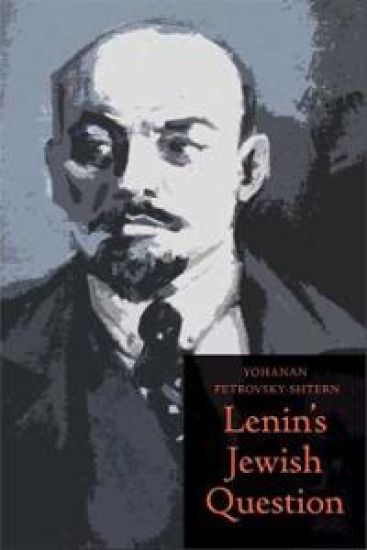
Lenin's Jewish Question

Lenin's Jewish Question

Yohanan Petrovsky-Shtern

Yale University Press
2010
sidottu
In this first examination of Lenin’s genealogical and political connections to East European Jews, Yohanan Petrovsky-Shtern reveals the broad cultural meanings of indisputable evidence that Lenin’s maternal grandfather was a Jew. He examines why and how Lenin’s Jewish relatives converted to Christianity, explains how Lenin’s vision of Russian Marxism shaped his identity, and explores Lenin’s treatment of party colleagues of Jewish origin and the Jewish Question in Europe. Petrovsky-Shtern also uncovers the continuous efforts of the Soviet communists to suppress Lenin’s Jewishness and the no less persistent attempts of Russian extremists to portray Lenin as a Jew. In this fascinating book, Petrovsky-Shtern expands our understanding not only of Lenin, but also of Russian and Soviet handling of the Jewish Question.
The Anti-Imperial Choice

The Anti-Imperial Choice

Yohanan Petrovsky-Shtern

Yale University Press
2009
sidottu
This book is the first to explore the Jewish contribution to, and integration with, Ukrainian culture. Yohanan Petrovsky-Shtern focuses on five writers and poets of Jewish descent whose literary activities span the 1880s to the 1990s. Unlike their East European contemporaries who disparaged the culture of Ukraine as second-rate, stateless, and colonial, these individuals embraced the Russian- and Soviet-dominated Ukrainian community, incorporating their Jewish concerns in their Ukrainian-language writings. The author argues that the marginality of these literati as Jews fuelled their sympathy toward Ukrainians and their national cause. Providing extensive historical background, biographical detail, and analysis of each writer’s poetry and prose, Petrovsky-Shtern shows how a Ukrainian-Jewish literary tradition emerged. Along the way, he challenges assumptions about modern Jewish acculturation and Ukrainian-Jewish relations.
Jews in the Russian Army, 1827–1917

Jews in the Russian Army, 1827–1917

Yohanan Petrovsky-Shtern

Cambridge University Press
2008
sidottu
This is the first study of the military experience of some one to one-and-a-half million Jews who served in the Russian Army between 1827, the onset of personal conscription of Jews in Russia, and 1917, the demise of the tsarist regime. The conscription integrated Jews into the state, transforming the repressed Jewish victims of the draft into modern imperial Russian Jews. The book contextualizes the reasons underlying the decision to draft Jews, the communal responses to the draft, the missionary initiatives directed toward Jews in the army, alleged Jewish draft evasion and Jewish military performance, and the strategies Jews used to endure military service. It also explores the growing antisemitism of the upper echelons of the military toward the Jews on the eve of World War I and the rise of Russian-Jewish loyalty and patriotism.