Kirjojen hintavertailu – 12 859 818 kirjaa ja 27 kauppaa
Kirjailija
Yossef Rapoport
Kirjat ja teokset yhdessä paikassa: 7 kirjaa, julkaisuja vuosilta 2005–2026, suosituimpiin kuuluu Empires of Faith. Vertaile teosten hintoja ja tarkista saatavuus suomalaisista kirjakaupoista.
Raina Abouzeid; Jon B. Alterman; Ali M. Ansari; James Barr; Ali Fathollah-Nejad; Peter Frankopan; Chaim Gans; Amber Gartrell; Kim Ghattas; Andrew S. Gilmour; Martin Goodman; Sir John Jenkins; Halil M. Karaveli; Elisabeth Kendall; Hugh Kennedy; Stephen Kotkin; Nelly Lahoud; Göran Larsson; Gabriel Martinez-Gros; General Sir Simon Mayall; Yossef Rapoport; Mark Ronan; Stefanie Rudolf; Peter Sarris; Nathan Shachar; Brendan Simms; Selena Wisnom
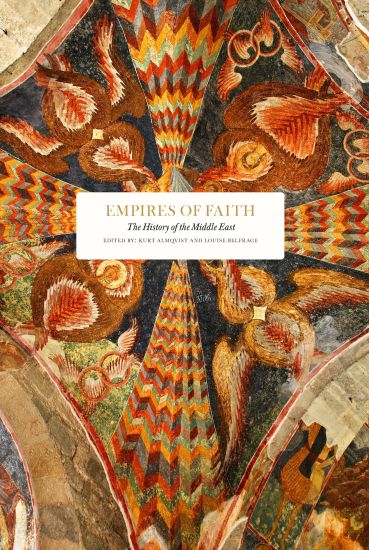
Mellanöstern har alltid varit en central plats för handel och erövringar. Läget har medfört enorma rikedomar, kulturellt utbyte och intellektuell vitalitet – men också konflikter, instabilitet och ihållande geopolitiska spänningar. Att förstå regionens förflutna är avgörande för att förstå dess nutid. Antologin Empires of Faith utforskar Mellanösterns långa historia – från Mesopotamien, de persiska kungarikena och Alexander den store till kristendomens och islams uppkomst, det bysantinska och ottomanska riket, och 1900-talets dramatiska omvandling av regionen. Hur har religion, civilisation och imperialistiska ambitioner format regionen? Vilka arv lämnade de stora imperierna efter sig och hur påverkade de lagstiftning, kultur, styre och undersåtarnas vardagsliv? Och i vilken utsträckning är historiens efterverkningar fortfarande synliga i dagens politiska och religiösa landskap? Boken utkommer även på svenska våren 2027.
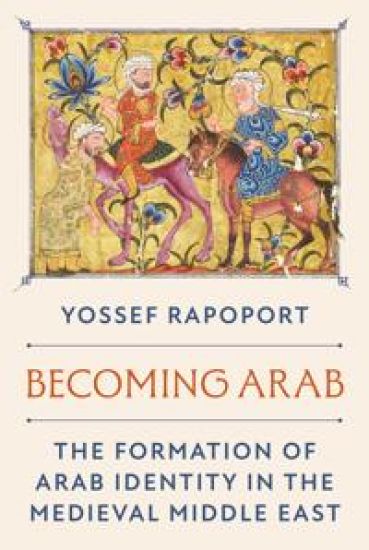
How late medieval Middle Eastern peasants adopted Arab cultural identities, and formed village clansDuring the later Middle Ages, peasants in Egypt and Greater Syria came to view themselves as members of Arab clans that had originated in the Arabian Peninsula. They expressed their Arab identity by wearing Arab headgear, adopting an Arab dialect, and circulating a new genre of popular epic that told heroic tales of pre-Islamic Arabia. In Becoming Arab, Yossef Rapoport argues that this proliferation of Arab village clans did not come about through mass migration and displacement but reflected an internal transformation. Drawing on extensive documentary, literary, administrative, and material evidence, Rapoport shows that the widespread formation of Arab village clans in late medieval Egypt and Greater Syria was a gradual process, the result of mass rural conversion to Islam and a new landholding regime in which peasants shifted from being landowners to being tenants. After the eleventh century, Rapoport contends, Middle Eastern villagers were turning Arab. These Arab village clans were not merely administrative regimes imposed from above; villagers enthusiastically embraced their new identities. New converts to Islam adopted Arab lineages to claim status and as a counter-identity to urban-based Turkish elites. Arab identity was used by clans to mobilize rural uprisings against the ruling sultans and to resolve disputes among villagers. Challenging traditional historiography of the Middle East, which views Arab clansmen as pastoralists whose identity separated them from that of the wider peasantry, Rapoport argues that the pervasive establishment of Arab village clans was the most important development in the history of the Middle Eastern countryside in the Islamic era.
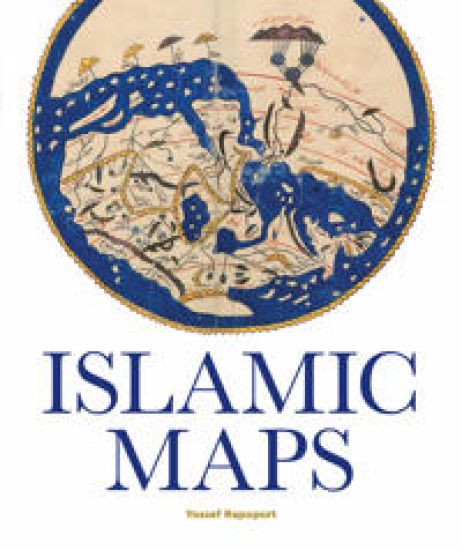
Spanning the Islamic world, from ninth-century Baghdad to nineteenth-century Iran, this book tells the story of the key Muslim map-makers and the art of Islamic cartography. Muslims were uniquely placed to explore the edges of the inhabited world and their maps stretched from Isfahan to Palermo, from Istanbul to Cairo and Aden. Over a similar period, Muslim artists developed distinctive styles, often based on geometrical patterns and calligraphy. Map-makers, including al-Khwarazmi and al-Idrisi, combined novel cartographical techniques with art, science and geographical knowledge. The results could be aesthetically stunning and mathematically sophisticated, politically charged as well as a celebration of human diversity. 'Islamic Maps' examines Islamic visual interpretations of the world in their historical context, through the lives of the map-makers themselves. What was the purpose of their maps, what choices did they make and what was the argument they were trying to convey? Lavishly illustrated with stunning manuscripts, beautiful instruments and Qibla charts, this book shows how maps constructed by Muslim map-makers capture the many dimensions of Islamic civilisation, providing a window into the worldviews of Islamic societies.
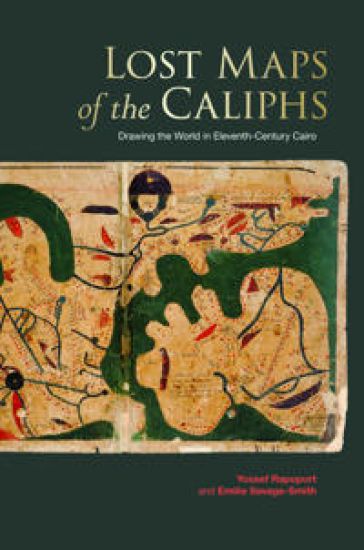
About a millennium ago, in Cairo, someone completed a large and richly illustrated book. In the course of thirty-five chapters, our unknown author guided the reader on a journey from the outermost cosmos and planets to Earth and its lands, islands, features and inhabitants. This treatise, known as The Book of Curiosities, was unknown to modern scholars until a remarkable manuscript copy surfaced in 2000. Lost Maps of the Caliphs provides the first general overview of The Book of Curiosities and the unique insight it offers into medieval Islamic thought. Opening with an account of the remarkable discovery of the manuscript and its purchase by the Bodleian Library, the authors use The Book of Curiosities to re-evaluate the development of astrology, geography and cartography in the first four centuries of Islam. Early astronomical ‘maps’ and drawings demonstrate the medieval understanding of the structure of the cosmos and illustrate the pervasive assumption that almost any visible celestial event had an effect upon life on Earth. Lost Maps of the Caliphs also reconsiders the history of global communication networks at the turn of the previous millennium. Not only is The Book of Curiosities one of the greatest achievements of medieval map-making, it is also a remarkable contribution to the story of Islamic civilization.
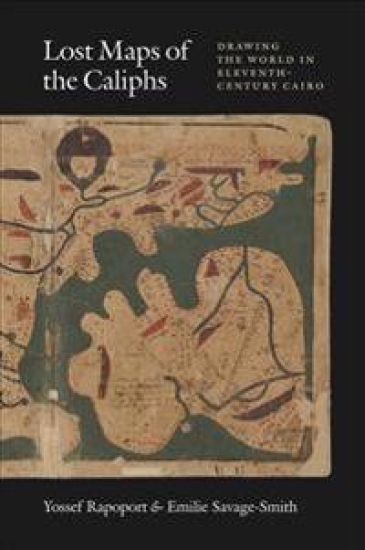
About a millennium ago, in Cairo, an unknown author completed a large and richly illustrated book. In the course of thirty-five chapters, this book guided the reader on a journey from the outermost cosmos and planets to Earth and its lands, islands, features, and inhabitants. This treatise, known as The Book of Curiosities, was unknown to modern scholars until a remarkable manuscript copy surfaced in 2000. Lost Maps of the Caliphs provides the first general overview of The Book of Curiosities and the unique insight it offers into medieval Islamic thought. Opening with an account of the remarkable discovery of the manuscript and its purchase by the Bodleian Library, the authors use The Book of Curiosities to re-evaluate the development of astrology, geography, and cartography in the first four centuries of Islam. Their account assesses the transmission of Late Antique geography to the Islamic world, unearths the logic behind abstract maritime diagrams, and considers the palaces and walls that dominate medieval Islamic plans of towns and ports. Early astronomical maps and drawings demonstrate the medieval understanding of the structure of the cosmos and illustrate the pervasive assumption that almost any visible celestial event had an effect upon life on Earth. Lost Maps of the Caliphs also reconsiders the history of global communication networks at the turn of the previous millennium. It shows the Fatimid Empire, and its capital Cairo, as a global maritime power, with tentacles spanning from the eastern Mediterranean to the Indus Valley and the East African coast. As Lost Maps of the Caliphs makes clear, not only is The Book of Curiosities one of the greatest achievements of medieval mapmaking, it is also a remarkable contribution to the story of Islamic civilization that opens an unexpected window to the medieval Islamic view of the world.
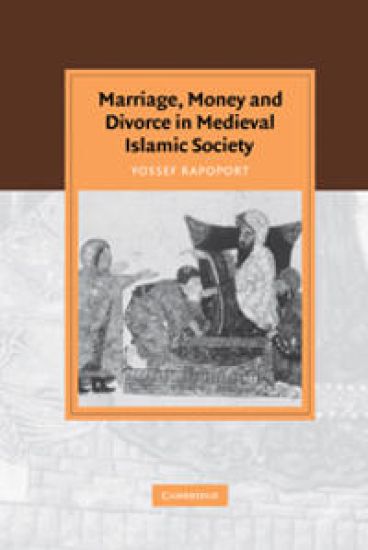
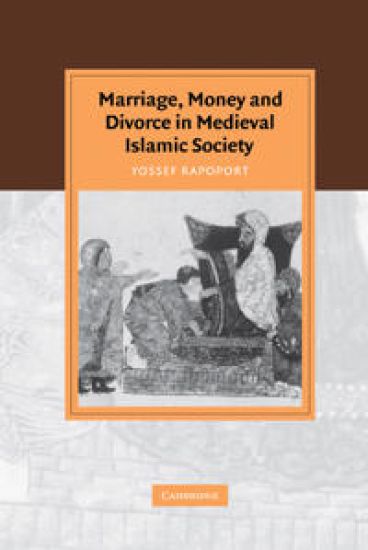
High rates of divorce, often taken to be a modern and western phenomenon, were also typical of medieval Islamic societies. By pitting these high rates of divorce against the Islamic ideal of marriage,Yossef Rapoport radically challenges usual assumptions about the legal inferiority of Muslim women and their economic dependence on men. He argues that marriages in late medieval Cairo, Damascus and Jerusalem had little in common with the patriarchal models advocated by jurists and moralists. The transmission of dowries, women's access to waged labour, and the strict separation of property between spouses made divorce easy and normative, initiated by wives as often as by their husbands. This carefully researched work of social history is interwoven with intimate accounts of individual medieval lives, making for a truly compelling read. It will be of interest to scholars of all disciplines concerned with the history of women and gender in Islam.