Kirjojen hintavertailu – 12 859 829 kirjaa ja 27 kauppaa
Kirjailija
Youmin Zhang
Kirjat ja teokset yhdessä paikassa: 9 kirjaa, julkaisuja vuosilta 2003–2024, suosituimpiin kuuluu Refined Safety Control of Unmanned Flight Vehicles via Fractional-Order Calculus. Vertaile teosten hintoja ja tarkista saatavuus suomalaisista kirjakaupoista.
This book focuses on the fault-tolerant cooperative control (FTCC) of multiple unmanned aerial vehicles (multi-UAVs). It provides systematic and comprehensive descriptions of FTCC issues in multi-UAVs concerning faults, external disturbances, strongly unknown nonlinearities, and input saturation. Further, it addresses FTCC design from longitudinal motions to attitude motions, and outer-loop position motions of multi-UAVs. The book’s detailed control schemes can be used to enhance the flight safety of multi-UAVs. As such, the book offers readers an in-depth understanding of UAV safety in cooperative/formation flight and corresponding design methods. The FTCC methods presented here can also provide guidelines for engineers to improve the safety of aerospace engineering systems. The book offers a valuable asset for scientists and researchers, aerospace engineers, control engineers, lecturers and teachers, and graduates and undergraduates in the system and control community, especially those working in the field of UAV cooperation and multi-agent systems.
The monograph explores the safety of unmanned flight vehicles via the corresponding fault-tolerant control design methods. The authors analyse the safety control issues of unmanned flight vehicles, which include finite-time recovery against faults, concurrence of actuator faults and sensor faults, concurrence of actuator faults and wind effects, and faults encountered by a portion of unmanned flight vehicles in a distributed communication network. In addition, the commonly used simple but effective proportional-integral-derivative structure is also incorporated into the safety control design for unmanned flight vehicles. By using the fractional-order calculus, the developed safety control results are able to ensure flight safety and achieve the refined performance adjustments against faults and wind effects. The book will be of interest to 3rd/4th year undergraduate students, postgraduate and graduate students, researchers, academic staff, engineers of aircraft and unmanned flight vehicles.
This book focuses on the fault-tolerant cooperative control (FTCC) of multiple unmanned aerial vehicles (multi-UAVs). It provides systematic and comprehensive descriptions of FTCC issues in multi-UAVs concerning faults, external disturbances, strongly unknown nonlinearities, and input saturation. Further, it addresses FTCC design from longitudinal motions to attitude motions, and outer-loop position motions of multi-UAVs. The book’s detailed control schemes can be used to enhance the flight safety of multi-UAVs. As such, the book offers readers an in-depth understanding of UAV safety in cooperative/formation flight and corresponding design methods. The FTCC methods presented here can also provide guidelines for engineers to improve the safety of aerospace engineering systems. The book offers a valuable asset for scientists and researchers, aerospace engineers, control engineers, lecturers and teachers, and graduates and undergraduates in the system and control community, especially those working in the field of UAV cooperation and multi-agent systems.
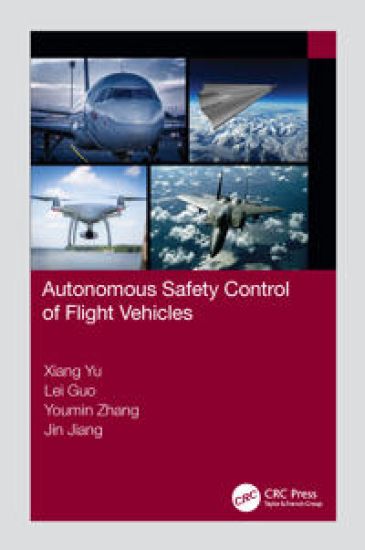
Aerospace vehicles are by their very nature a crucial environment for safety-critical systems. By virtue of an effective safety control system, the aerospace vehicle can maintain high performance despite the risk of component malfunction and multiple disturbances, thereby enhancing aircraft safety and the probability of success for a mission. Autonomous Safety Control of Flight Vehicles presents a systematic methodology for improving the safety of aerospace vehicles in the face of the following occurrences: a loss of control effectiveness of actuators and control surface impairments; the disturbance of observer-based control against multiple disturbances; actuator faults and model uncertainties in hypersonic gliding vehicles; and faults arising from actuator faults and sensor faults. Several fundamental issues related to safety are explicitly analyzed according to aerospace engineering system characteristics; while focusing on these safety issues, the safety control design problems of aircraft are studied and elaborated on in detail using systematic design methods. The research results illustrate the superiority of the safety control approaches put forward. The expected reader group for this book includes undergraduate and graduate students but also industry practitioners and researchers. About the Authors:Xiang Yu is a Professor with the School of Automation Science and Electrical Engineering, Beihang University, Beijing, China. His research interests include safety control of aerospace engineering systems, guidance, navigation, and control of unmanned aerial vehicles. Lei Guo, appointed as "Chang Jiang Scholar Chair Professor", is a Professor with the School of Automation Science and Electrical Engineering, Beihang University, Beijing, China. His research interests include anti-disturbance control and filtering, stochastic control, and fault detection with their applications to aerospace systems. Youmin Zhang is a Professor in the Department of Mechanical, Industrial and Aerospace Engineering, Concordia University, Montreal, Québec, Canada. His research interests include fault diagnosis and fault-tolerant control, and cooperative guidance, navigation, and control (GNC) of unmanned aerial/space/ground/surface vehicles. Jin Jiang is a Professor in the Department of Electrical & Computer Engineering, Western University, London, Ontario, Canada. His research interests include fault-tolerant control of safety-critical systems, advanced control of power plants containing non-traditional energy resources, and instrumentation and control for nuclear power plants.
This book provides a systematical and comprehensive description of some facets of modeling, designing, analyzing and exploring the control allocation and fault-tolerant control problems for over-actuated spacecraft attitude control system under actuator failures, system uncertainties and disturbances. The book intends to provide a unified platform for understanding and applicability of the fault-tolerant attitude control and control allocation for different purposes in aerospace engineering and some related fields. And it is particularly suited for readers who are interested to learn solutions in spacecraft attitude control system design and related engineering applications.
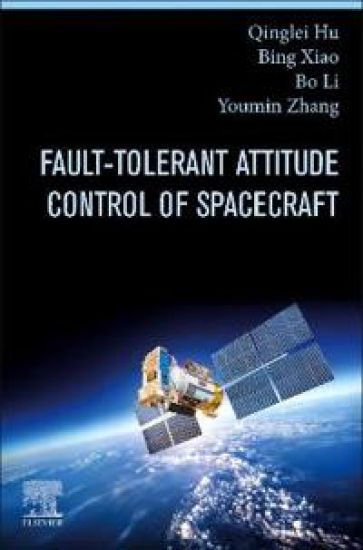
Fault-Tolerant Attitude Control of Spacecraft presents the fundamentals of spacecraft fault-tolerant attitude control systems, along with the most recent research and advanced, nonlinear control techniques. This book gives researchers a self-contained guide to the complex tasks of envisaging, designing, implementing and experimenting by presenting designs for integrated modeling, dynamics, fault-tolerant attitude control, and fault reconstruction for spacecraft. Specifically, the book gives a full literature review and presents preliminaries and mathematical models, robust fault-tolerant attitude control, fault-tolerant attitude control with actuator saturation, velocity-free fault tolerant attitude control, finite-time fault-tolerant attitude tracking control, and active fault-tolerant attitude contour. Finally, the book looks at the future of this interesting topic, offering readers a one-stop solution for those working on fault-tolerant attitude control for spacecraft.
This book provides a systematical and comprehensive description of some facets of modeling, designing, analyzing and exploring the control allocation and fault-tolerant control problems for over-actuated spacecraft attitude control system under actuator failures, system uncertainties and disturbances. The book intends to provide a unified platform for understanding and applicability of the fault-tolerant attitude control and control allocation for different purposes in aerospace engineering and some related fields. And it is particularly suited for readers who are interested to learn solutions in spacecraft attitude control system design and related engineering applications.
Aerospace vehicles are by their very nature a crucial environment for safety-critical systems. By virtue of an effective safety control system, the aerospace vehicle can maintain high performance despite the risk of component malfunction and multiple disturbances, thereby enhancing aircraft safety and the probability of success for a mission. Autonomous Safety Control of Flight Vehicles presents a systematic methodology for improving the safety of aerospace vehicles in the face of the following occurrences: a loss of control effectiveness of actuators and control surface impairments; the disturbance of observer-based control against multiple disturbances; actuator faults and model uncertainties in hypersonic gliding vehicles; and faults arising from actuator faults and sensor faults. Several fundamental issues related to safety are explicitly analyzed according to aerospace engineering system characteristics; while focusing on these safety issues, the safety control design problems of aircraft are studied and elaborated on in detail using systematic design methods. The research results illustrate the superiority of the safety control approaches put forward. The expected reader group for this book includes undergraduate and graduate students but also industry practitioners and researchers. About the Authors:Xiang Yu is a Professor with the School of Automation Science and Electrical Engineering, Beihang University, Beijing, China. His research interests include safety control of aerospace engineering systems, guidance, navigation, and control of unmanned aerial vehicles. Lei Guo, appointed as "Chang Jiang Scholar Chair Professor", is a Professor with the School of Automation Science and Electrical Engineering, Beihang University, Beijing, China. His research interests include anti-disturbance control and filtering, stochastic control, and fault detection with their applications to aerospace systems. Youmin Zhang is a Professor in the Department of Mechanical, Industrial and Aerospace Engineering, Concordia University, Montreal, Québec, Canada. His research interests include fault diagnosis and fault-tolerant control, and cooperative guidance, navigation, and control (GNC) of unmanned aerial/space/ground/surface vehicles. Jin Jiang is a Professor in the Department of Electrical & Computer Engineering, Western University, London, Ontario, Canada. His research interests include fault-tolerant control of safety-critical systems, advanced control of power plants containing non-traditional energy resources, and instrumentation and control for nuclear power plants.
Modern technological systems rely on sophisticated control functions to meet increased performance requirements. For such systems, Fault Tolerant Control Systems (FTCS) need to be developed. Active FTCS are dependent on a Fault Detection and Identification (FDI) process to monitor system performance and to detect and isolate faults in the systems. The main objective of this book is to study and to validate some important issues in real-time Active FTCS by means of theoretical analysis and simulation. Several models are presented to achieve this objective, taking into consideration practical aspects of the system to be controlled, performance deterioration in FDI algorithms, and limitations in reconfigurable control laws.