Kirjailija
Yuanyi Ma
Kirjat ja teokset yhdessä paikassa: 14 kirjaa, julkaisuja vuosilta 2020–2026, suosituimpiin kuuluu Lao She's Teahouse and Its Two English Translations. Vertaile teosten hintoja ja tarkista saatavuus suomalaisista kirjakaupoista.
14 kirjaa
Kirjojen julkaisuvuodet: 2020–2026.
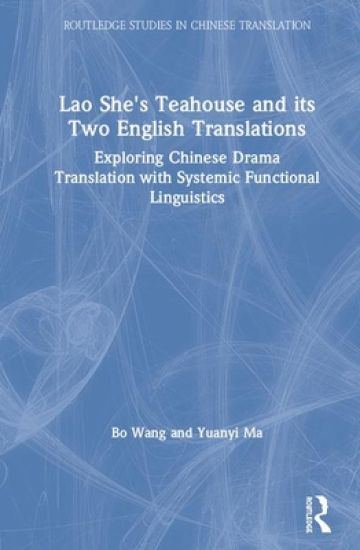
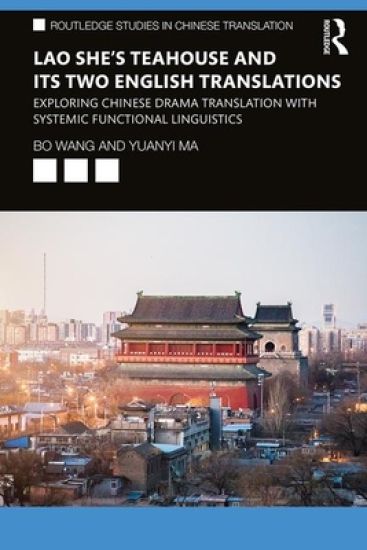
Lao She’s Teahouse and Its Two English Translations: Exploring Chinese Drama Translation with Systemic Functional Linguistics provides an in-depth application of Systemic Functional Linguistics (SFL) to the study of Chinese drama translation, and theoretically explores the interface between SFL and drama translation. Investigating two English translations of the Chinese drama, Teahouse (?? Cha Guan in Chinese) by Lao She, and translated by John Howard-Gibbon and Ying Ruocheng respectively, Bo Wang and Yuanyi Ma apply Systemic Functional Linguistics to point out the choices that translators have to make in translation. This book is of interest to graduates and researchers of Chinese translation and discourse studies.
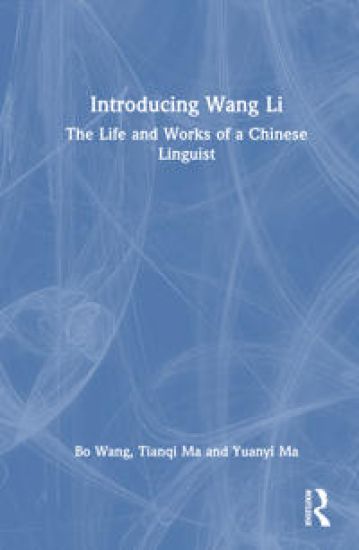
Focusing on the life and works of Wang Li, one of the founding figures of modern Chinese linguistics, this book offers a comprehensive introduction to his scholarship. It presents Wang Li as a pioneering linguist whose research ranged across grammar, phonology and phonetics, historical linguistics, dialectology, pedagogy, and prosody, and shows how he integrated traditional Chinese philology with modern linguistic science. The book first sketches Wang Li’s life through a concise biography from his birth in 1900 to his deceased in 1986, highlighting key moments in his intellectual development and professional career. It then introduces his major contributions across different research areas, explaining their significance to the study of the Chinese language. This volume is an essential resource for students and researchers of Chinese linguistics, as well as for readers seeking an accessible entry point to one of the most influential linguists of the twentieth century.
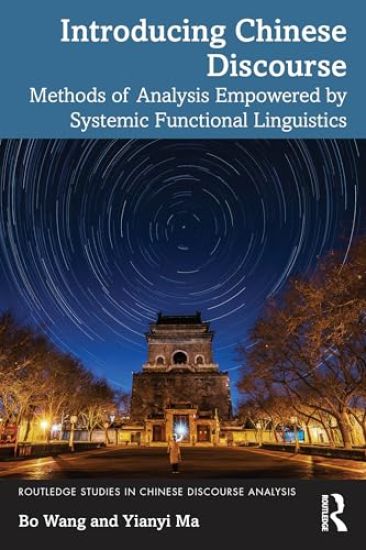
Drawing on Systemic Functional Linguistics (SFL), this book introduces readers to the methods for analysing discourse/texts written and spoken in the Chinese language. It presents Chinese discourse as a semantic unit, adopting a trinocular view in terms of the hierarchy of stratification. The texts in this book are based on a comprehensive and rich archive, featuring not only text types available in other languages and cultures, but also those unique in the Chinese language. The book is aimed at students and researchers working on SFL, language description, translation studies or related areas, as well as MA or doctoral students who have some basic knowledge about linguistics or discourse analysis.
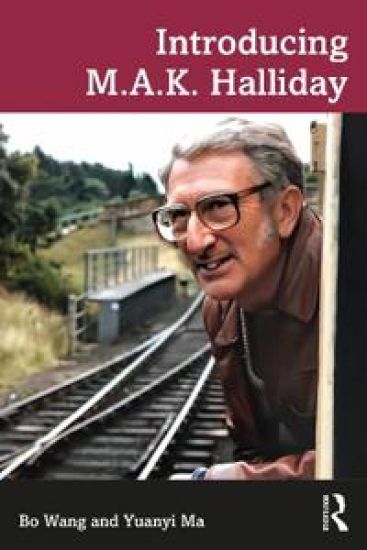
M. A. K. Halliday (1925–2018) was the founder of Systemic Functional Linguistics (SFL) and, undoubtedly, one of the most influential linguists of his time, credited with changing the way that language and linguistics have been taught. SFL, as an appliable theory that approaches language as social semiotic, is the study of the relationship between language and its functions in social settings. Moreover, SFL conceives of language as a resource for making meaning and organizes language systemically as a huge network of interrelated choices of meaning. This book is an introduction to the life and seminal works of Halliday. Targeting both SFL and non-SFL scholars, this book introduces Halliday’s life and work in simple terms, expounds his theoretical conceptions, illustrates how his theories have been applied to various areas of linguistics and offers additional readings for researchers who want to explore this area further. Divided into six sections covering Hallidayan connections, theory and architecture of language, Hallidayan conceptions of language, systems and the modes of meaning, and applications of SFL, this accessible introduction is a key resource for researchers and students within the fields of linguistics and applied linguistics.
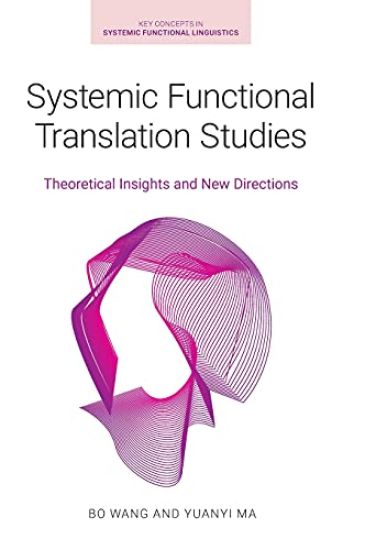
This book offers a comprehensive account of Systemic Functional Translation Studies (SFTS) - a research area that applies Systemic Functional Linguistics (SFL) to study translation, and to relate researches by scholars in the community of both SFL and translation studies. The important trends as well as contributions in SFTS will be summarised. Various topics in SFTS will be covered in the six chapters of this book, including the basic issues and concepts in SFTS; the relationship between SFTS, the cognate functional approaches, translation studies and translation practice; SFTS and different modes of meaning; registerial variation and SFTS; technologies and SFTS as well as a future outlook on SFTS. The objectives of this book include to provide a comprehensive introduction to SFTS; to relate SFTS to translation studies; to summarise the important contributions and limitations of SFTS; and to offer directions for future researches in SFTS, reflecting on what is currently missing from the SFL theory.
Systemic Functional Insights on Language and Linguistics
Christian M.I.M. Matthiessen; Bo Wang; Yuanyi Ma; Isaac N. Mwinlaaru
SPRINGER VERLAG, SINGAPORE
2023
nidottu
This book features a collection of 10 interviews with Christian M. I. M. Matthiessen, who is a key figure in Systemic Functional Linguistics (SFL) and has collaborated closely with M. A. K. Halliday since the 1980s. As noted by Professor Chang Chenguang, Editor of the M. A. K. Halliday Library Functional Linguistics Series, “this collection of interviews serves as an important reference for scholars and students of SFL. It provides a unique perspective on the theoretical development and future outlooks of SFL, as well as Matthiessen’s own interpretations of the theory. It also enriches our understanding of SFL and is a very useful addition to the series.” Written in an engaging dialogic format, the book paints a vivid picture of SFL thriving among the landscape of general linguistics and of SFL as an important tool now being applied in various areas.
Systemic Functional Insights on Language and Linguistics
Christian M.I.M. Matthiessen; Bo Wang; Yuanyi Ma; Isaac N. Mwinlaaru
SPRINGER VERLAG, SINGAPORE
2022
sidottu
This book features a collection of 10 interviews with Christian M. I. M. Matthiessen, who is a key figure in Systemic Functional Linguistics (SFL) and has collaborated closely with M. A. K. Halliday since the 1980s. As noted by Professor Chang Chenguang, Editor of the M. A. K. Halliday Library Functional Linguistics Series, “this collection of interviews serves as an important reference for scholars and students of SFL. It provides a unique perspective on the theoretical development and future outlooks of SFL, as well as Matthiessen’s own interpretations of the theory. It also enriches our understanding of SFL and is a very useful addition to the series.” Written in an engaging dialogic format, the book paints a vivid picture of SFL thriving among the landscape of general linguistics and of SFL as an important tool now being applied in various areas.
This book offers a comprehensive account of Systemic Functional Translation Studies (SFTS) - a research area that applies Systemic Functional Linguistics (SFL) to study translation, and to relate researches by scholars in the community of both SFL and translation studies. The important trends as well as contributions in SFTS will be summarised. Various topics in SFTS will be covered in the six chapters of this book, including the basic issues and concepts in SFTS; the relationship between SFTS, the cognate functional approaches, translation studies and translation practice; SFTS and different modes of meaning; registerial variation and SFTS; technologies and SFTS as well as a future outlook on SFTS. The objectives of this book include to provide a comprehensive introduction to SFTS; to relate SFTS to translation studies; to summarise the important contributions and limitations of SFTS; and to offer directions for future researches in SFTS, reflecting on what is currently missing from the SFL theory.
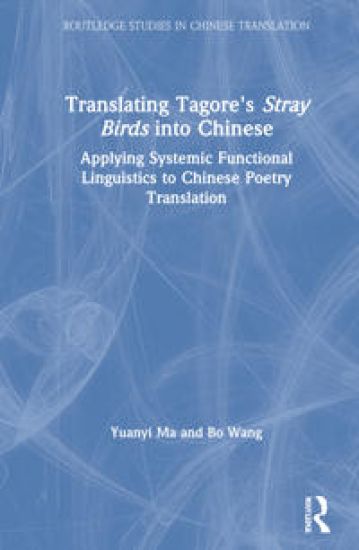
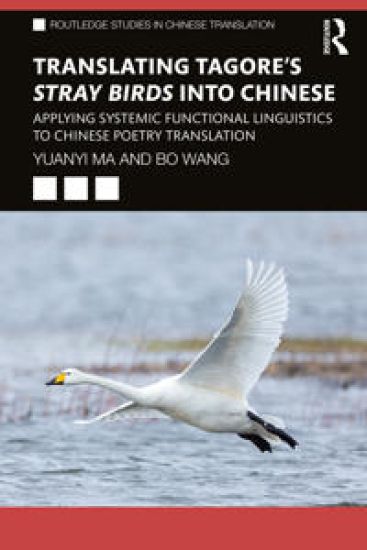
Translating Tagore’s ‘Stray Birds’ into Chinese explores the choices in poetry translation in light of Systemic Functional Linguistics (SFL) and illustrates the ways in which readers can achieve a deeper understanding of translated works in English and Chinese. Focusing on Rabindranath Tagore’s ‘Stray Birds’, a collection of elegant and philosophical poems, as a source text, Ma and Wang analyse four Chinese target texts by Zheng Zhenduo, Yao Hua, Lu Jinde and Feng Tang and consider their linguistic complexities through SFL. This book analyses the source text and the target texts from the perspectives of the four strata of language, including graphology, phonology, lexicogrammar and context. Ideal for researchers and academics of SFL, Translation Studies, Linguistics, and Discourse Analysis, Translating Tagore’s ‘Stray Birds’ into Chinese provides an in-depth exploration of SFL and its emerging prominence in the field of Translation Studies.