Kirjojen hintavertailu – 12 859 829 kirjaa ja 27 kauppaa

Kirjailija

Yujie Zhu

Kirjat ja teokset yhdessä paikassa: 9 kirjaa, julkaisuja vuosilta 2018–2025, suosituimpiin kuuluu Heritage and Romantic Consumption in China. Vertaile teosten hintoja ja tarkista saatavuus suomalaisista kirjakaupoista.

9 kirjaa

Kirjojen julkaisuvuodet: 2018–2025.

Heritage and Romantic Consumption in China
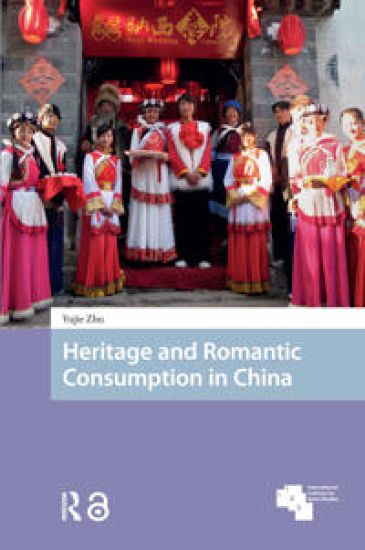
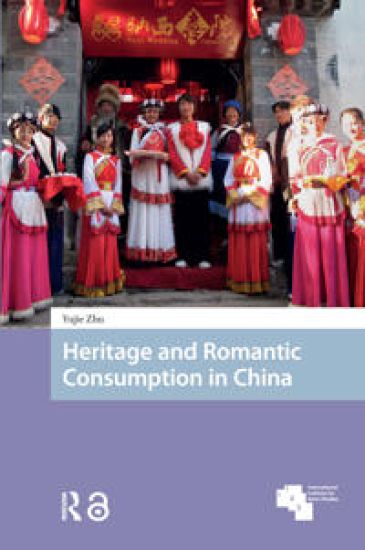
The drums beat, an old man in a grand robe mutters incantations and three brides on horseback led by their grooms on foot proceed to the Naxi Wedding Courtyard, accompanied, watched and photographed the whole way by tourists, who have bought tickets for the privilege. The traditional wedding ceremonies are performed for the ethnic tourism industry in Lijiang, a World Heritage town in southwest China. This book examines how heritage interacts with social-cultural changes and how individuals perform and negotiate their identities through daily practices that include tourism, on the one hand, and the performance of ethnicity on the other. The wedding performances in Lijiang not only serve as a heritage 'product' but show how the heritage and tourism industry helps to shape people's values, dreams and expectations. This book also explores the rise of 'romantic consumerism' in contemporary China. Chinese dissatisfaction with the urban mundane leads to romanticized interests in practices and people deemed to be natural, ethnic, spiritual and aesthetic, and a search for tradition and authenticity. But what, exactly, are tradition and authenticity, and what happens to them when they are turned into performance?
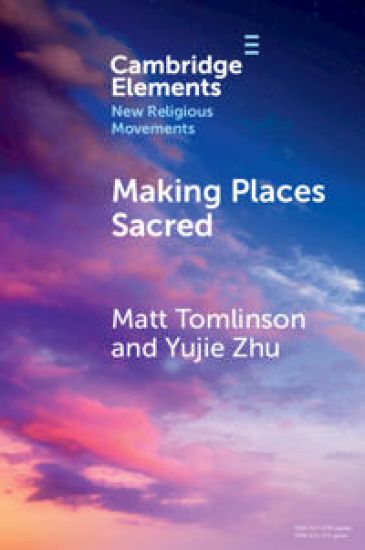
Making Places Sacred

Making Places Sacred

Matt Tomlinson; Yujie Zhu

Cambridge University Press
2025
sidottu
Although claims to sacredness are often linked to the power of a distant past, the work of making places sacred is creative, novel, renewable, and reversible. This Element highlights how sacred space is newly made. It is often associated with blood, death, and geographic anomalies, yet no single feature determines sacred associations. People make space sacred by connecting with 'extrahuman' figures – the ancestors, spirits, and gods that people attempt to interact with in every society. These connections can be concentrated in people's bodies, yet bodies are particularly vulnerable to loss. The Element also examines the multidimensional and multisensory dimensions of sacred space, which can be made almost anywhere, including online, but can also be unmade. Unmaking sacred space can entail new sacralization. New and minority religions in particular provide excellent sites for studying sacredness as a value, raising the reliably productive question: sacred for whom?
Making Places Sacred

Making Places Sacred

Matt Tomlinson; Yujie Zhu

Cambridge University Press
2025
pokkari
Although claims to sacredness are often linked to the power of a distant past, the work of making places sacred is creative, novel, renewable, and reversible. This Element highlights how sacred space is newly made. It is often associated with blood, death, and geographic anomalies, yet no single feature determines sacred associations. People make space sacred by connecting with 'extrahuman' figures – the ancestors, spirits, and gods that people attempt to interact with in every society. These connections can be concentrated in people's bodies, yet bodies are particularly vulnerable to loss. The Element also examines the multidimensional and multisensory dimensions of sacred space, which can be made almost anywhere, including online, but can also be unmade. Unmaking sacred space can entail new sacralization. New and minority religions in particular provide excellent sites for studying sacredness as a value, raising the reliably productive question: sacred for whom?
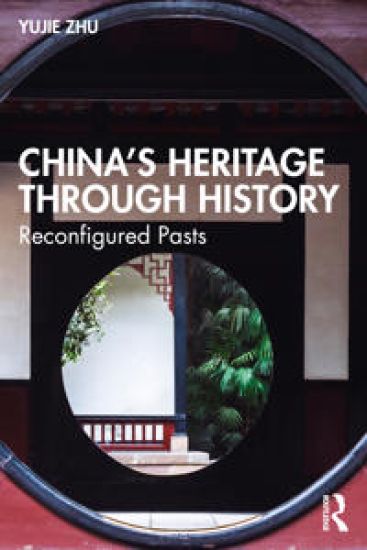
China’s Heritage through History

China’s Heritage through History

Yujie Zhu

TAYLOR FRANCIS LTD
2024
nidottu
China’s Heritage through History employs a longue durée approach to examine China’s heritage through history. From Imperial to contemporary China, it explores the role of practices and material forms of the past in shaping social transformation through knowledge production and transmission. The art of collecting, reproducing, and reinterpreting the past has been an enduring force shaping cultural identity and political legitimacy in China. Offering a unique, non-Western perspective on the history of heritage in China, Zhu considers who the key players have been in these ongoing processes of reconfigured pasts, what methods they have employed, and how these practices have shaped society at large. The book tackles these questions by delving into the transformation of practices related to heritage through examples such as the book collection at Tianyi Private Library, the reproduction of the Orchid Pavilion Preface calligraphy and its associated sites, and the dynamics of exchange within the Liulichang antique market. Zhu reveals how these practices, once reserved for elites, have become accessible to the broader public. These processes of transformation, embodied in various forms of reconfigured pasts, have given rise to modern approaches to preservation, digitisation, museums, and the burgeoning heritage tourism industry. China’s Heritage through History will be an invaluable resource for academics, students, and practitioners working in the fields of heritage, museum studies, and art history.
China’s Heritage through History

China’s Heritage through History

Yujie Zhu

TAYLOR FRANCIS LTD
2024
sidottu
China’s Heritage through History employs a longue durée approach to examine China’s heritage through history. From Imperial to contemporary China, it explores the role of practices and material forms of the past in shaping social transformation through knowledge production and transmission. The art of collecting, reproducing, and reinterpreting the past has been an enduring force shaping cultural identity and political legitimacy in China. Offering a unique, non-Western perspective on the history of heritage in China, Zhu considers who the key players have been in these ongoing processes of reconfigured pasts, what methods they have employed, and how these practices have shaped society at large. The book tackles these questions by delving into the transformation of practices related to heritage through examples such as the book collection at Tianyi Private Library, the reproduction of the Orchid Pavilion Preface calligraphy and its associated sites, and the dynamics of exchange within the Liulichang antique market. Zhu reveals how these practices, once reserved for elites, have become accessible to the broader public. These processes of transformation, embodied in various forms of reconfigured pasts, have given rise to modern approaches to preservation, digitisation, museums, and the burgeoning heritage tourism industry. China’s Heritage through History will be an invaluable resource for academics, students, and practitioners working in the fields of heritage, museum studies, and art history.
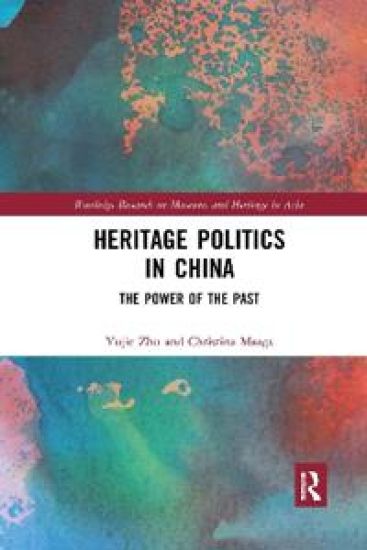
Heritage Politics in China

Heritage Politics in China

Yujie Zhu; Christina Maags

TAYLOR FRANCIS LTD
2021
nidottu
Heritage Politics in China: The Power of the Past studies the impact of heritage policies and discourses on the Chinese state and Chinese society. It sheds light on the way Chinese heritage policies have transformed the narratives and cultural practices of the past to serve the interests of the present. As well as reinforcing a collective social identity, heritage in China has served as an instrument of governance and regulation at home and a tool to generate soft power abroad. Drawing on a critical analysis of heritage policies and laws, empirical case studies and interviews with policymakers, practitioners, and local communities, the authors off er a comprehensive perspective on the role that cultural heritage plays in Chinese politics and policy. They argue that heritage-making appropriates international, national, and local values, thereby transforming it into a public good suitable for commercial exploitation. By framing heritage as a site of cooperation, contestation, and negotiation, this book contributes to our understanding of the complex nature of heritage in the rapidly shifting landscape of contemporary China. Heritage Politics in China: The Power of the Past is essential reading for academics, researchers and students in the fi elds of heritage studies, cultural studies, Asian studies, anthropology, tourism and politics.
Heritage Tourism

Heritage Tourism

Yujie Zhu

Cambridge University Press
2021
pokkari
As one of the world's fastest growing industries, heritage tourism is surrounded by political and ethical issues. This research explores the social and political effects and implications of heritage tourism through several pertinent topics. It examines the hegemonic power of heritage tourism and its consequences, the spectre of nationalism and colonialism in heritage-making, particularly for minorities and indigenous peoples, and the paradox of heritage tourism's role in combating these issues. Drawing from global cases, the study addresses a range of approaches and challenges of empowerment within the context of heritage tourism, including cultural landscapes, intangible heritage and eco-museums. The research argues that heritage tourism has the potential to develop as a form of co-production. It can be used to create a mechanism for community-centred governance that integrates recognition and interpretation and promotes dialogue, equity and diversity.
Heritage Politics in China

Heritage Politics in China

Yujie Zhu; Christina Maags

Routledge
2020
sidottu
Heritage Politics in China: The Power of the Past studies the impact of heritage policies and discourses on the Chinese state and Chinese society. It sheds light on the way Chinese heritage policies have transformed the narratives and cultural practices of the past to serve the interests of the present. As well as reinforcing a collective social identity, heritage in China has served as an instrument of governance and regulation at home and a tool to generate soft power abroad. Drawing on a critical analysis of heritage policies and laws, empirical case studies and interviews with policymakers, practitioners, and local communities, the authors off er a comprehensive perspective on the role that cultural heritage plays in Chinese politics and policy. They argue that heritage-making appropriates international, national, and local values, thereby transforming it into a public good suitable for commercial exploitation. By framing heritage as a site of cooperation, contestation, and negotiation, this book contributes to our understanding of the complex nature of heritage in the rapidly shifting landscape of contemporary China. Heritage Politics in China: The Power of the Past is essential reading for academics, researchers and students in the fi elds of heritage studies, cultural studies, Asian studies, anthropology, tourism and politics.
Heritage and Romantic Consumption in China

Heritage and Romantic Consumption in China

Yujie Zhu

Amsterdam University Press
2018
sidottu
The drums beat, an old man in a grand robe mutters incantations and three brides on horseback led by their grooms on foot proceed to the Naxi Wedding Courtyard, accompanied, watched and photographed the whole way by tourists, who have bought tickets for the privilege. The traditional wedding ceremonies are performed for the ethnic tourism industry in Lijiang, a World Heritage town in southwest China. This book examines how heritage interacts with social-cultural changes and how individuals perform and negotiate their identities through daily practices that include tourism, on the one hand, and the performance of ethnicity on the other. The wedding performances in Lijiang not only serve as a heritage 'product' but show how the heritage and tourism industry helps to shape people's values, dreams and expectations. This book also explores the rise of 'romantic consumerism' in contemporary China. Chinese dissatisfaction with the urban mundane leads to romanticized interests in practices and people deemed to be natural, ethnic, spiritual and aesthetic, and a search for tradition and authenticity. But what, exactly, are tradition and authenticity, and what happens to them when they are turned into performance?