Kirjojen hintavertailu – 12 903 725 kirjaa ja 27 kauppaa

Kirjailija

Yuki Tanaka

Kirjat ja teokset yhdessä paikassa: 11 kirjaa, julkaisuja vuosilta 2001–2025, suosituimpiin kuuluu Japanisches Kochbuch: Mit 101+ leckeren Rezepten der japanischen Küche für die ganze Familie. Vertaile teosten hintoja ja tarkista saatavuus suomalaisista kirjakaupoista.

11 kirjaa

Kirjojen julkaisuvuodet: 2001–2025.

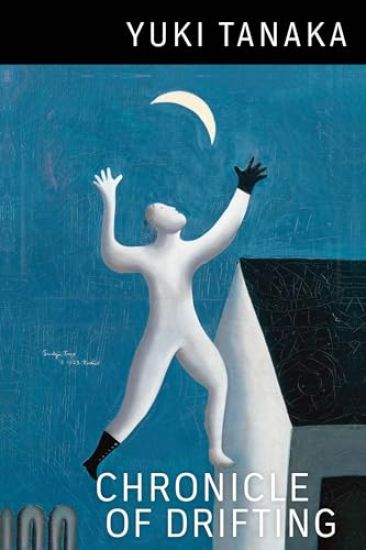
Chronicle of Drifting

Chronicle of Drifting

Yuki Tanaka

Copper Canyon Press,U.S.
2025
pokkari
Yuki Tanaka's stunning debut, Chronicle of Drifting, moves with tenderness between isolation and connection, between the physical body and the act of wandering. Yuki Tanaka's stunning debut, Chronicle of Drifting, moves between isolation and connection, between the physical body and the act of wandering--through place, through image and language. This collection explores what creates distance between people--war, grief, isolation, the loss of family and home--while reaching toward human connection. A boy sips sake from the kneecap of his grandfather. An aunt gathers rain in a pail to wash the bodies of her nephews. A man wanders Tokyo during the pandemic and sits for his first haircut in six months. Inspired by the Japanese tradition of tanka and haiku, as well as Western surrealism, these poems, ranging from lyric to prose, are beautifully sharp & poignant. In their stillness, readers become "a stagnant pool of water reflecting a face," drifting toward revelation.
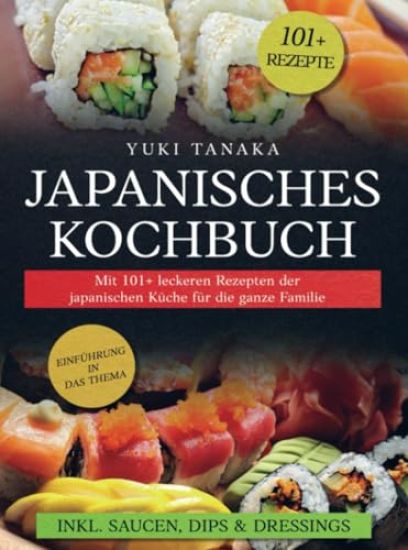
Japanisches Kochbuch: Mit 101+ leckeren Rezepten der japanischen Küche für die ganze Familie
Dieses Japan-Kochbuch ist voll von k stlichen, leicht zuzubereitenden Rezepten Mit ber 101+ Rezepten zur Auswahl, finden Sie in diesem Kochbuch bestimmt das, wonach Sie suchen... M chten Sie die... ...authentischen japanischen Aromen zelebrieren, indem Sie zu Hause k stliche und einheimische japanische Gerichte zubereiten? Dann sind Sie hier genau richtig Dieses Kochbuch wird Ihnen einige der beliebtesten japanischen Rezepte und Gerichte vorstellen, die Sie lieben werden. Ob aus dem S den oder dem Norden Japans, die ganze Insel bietet eine einzigartige Kultur und eigene Traditionen. Die Geschichte hat gro e Einfl sse auf die kulinarischen Normen und die K che Japans hinterlassen. Hinzu kommen einige geografische und klimatische Einfl sse, die zusammen die japanische K che in Geschmack und Form so vielf ltig machen. Heute werden Sie also alles ber den Reichtum und die Vielfalt dieser asiatischen K che erfahren. Das ultimative japanische Kochbuch wird Ihnen die japanische K che und ihre kulinarische Kultur auf eine Weise n her bringen, die Sie sicher noch nie ausprobiert haben. Dieses Kochbuch ist ideal f r alle, die gerne gesund kochen und neue und einzigartige Geschmacksrichtungen ausprobieren m chten. Mit Hilfe dieses Kochbuchs der japanischen K che k nnen Sie zu Hause ein komplettes japanisches Men zusammenstellen oder all die besonderen japanischen Rezepte f r besondere Anl sse und Feiern zubereiten. Warum japanische K che? Die japanische K che ist unvergleichlich, und man kann sie nicht mit anderen asiatischen K chen verwechseln, da sie eine andere Mischung von So en und Gew rzen verwendet, um jedem Rezept eine einzigartige japanische Note zu verleihen. Sie ist stark von den asiatischen Esskulturen beeinflusst, was sich in der Verwendung verschiedener Nudel- und Reissorten zeigt. Auch bei der Verwendung verschiedener Zutaten wie Reiskuchen, Fischkuchen und scharfen Chilisaucen, die ausschlie lich japanischen Ursprungs sind, findet man eine gro e Vielfa
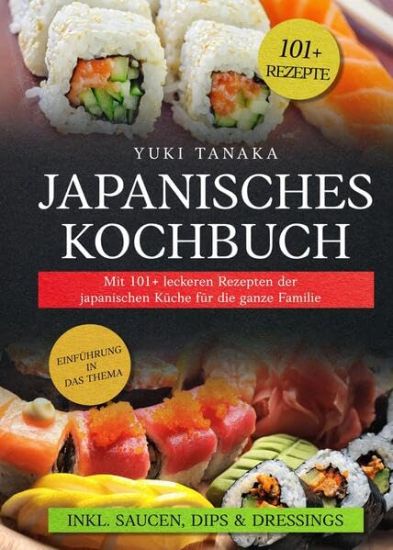
Japanisches Kochbuch: Mit 101+ leckeren Rezepten der japanischen Küche für die ganze Familie
Dieses Japan-Kochbuch ist voll von k stlichen, leicht zuzubereitenden Rezepten Mit ber 101+ Rezepten zur Auswahl, finden Sie in diesem Kochbuch bestimmt das, wonach Sie suchen... M chten Sie die... ...authentischen japanischen Aromen zelebrieren, indem Sie zu Hause k stliche und einheimische japanische Gerichte zubereiten? Dann sind Sie hier genau richtig Dieses Kochbuch wird Ihnen einige der beliebtesten japanischen Rezepte und Gerichte vorstellen, die Sie lieben werden. Ob aus dem S den oder dem Norden Japans, die ganze Insel bietet eine einzigartige Kultur und eigene Traditionen. Die Geschichte hat gro e Einfl sse auf die kulinarischen Normen und die K che Japans hinterlassen. Hinzu kommen einige geografische und klimatische Einfl sse, die zusammen die japanische K che in Geschmack und Form so vielf ltig machen. Heute werden Sie also alles ber den Reichtum und die Vielfalt dieser asiatischen K che erfahren. Das ultimative japanische Kochbuch wird Ihnen die japanische K che und ihre kulinarische Kultur auf eine Weise n her bringen, die Sie sicher noch nie ausprobiert haben. Dieses Kochbuch ist ideal f r alle, die gerne gesund kochen und neue und einzigartige Geschmacksrichtungen ausprobieren m chten. Mit Hilfe dieses Kochbuchs der japanischen K che k nnen Sie zu Hause ein komplettes japanisches Men zusammenstellen oder all die besonderen japanischen Rezepte f r besondere Anl sse und Feiern zubereiten. Warum japanische K che? Die japanische K che ist unvergleichlich, und man kann sie nicht mit anderen asiatischen K chen verwechseln, da sie eine andere Mischung von So en und Gew rzen verwendet, um jedem Rezept eine einzigartige japanische Note zu verleihen. Sie ist stark von den asiatischen Esskulturen beeinflusst, was sich in der Verwendung verschiedener Nudel- und Reissorten zeigt. Auch bei der Verwendung verschiedener Zutaten wie Reiskuchen, Fischkuchen und scharfen Chilisaucen, die ausschlie lich japanischen Ursprungs sind, findet man eine gro e Vielfa
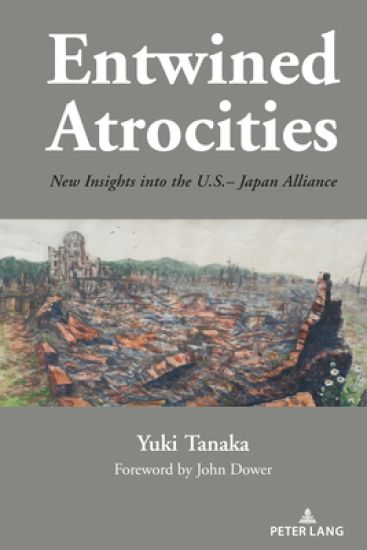
Entwined Atrocities

Entwined Atrocities

Yuki Tanaka

PETER LANG PUBLISHING INC
2023
sidottu
Numerous books on the topic of the atomic bombing of Hiroshima and Nagasaki have been published hitherto. Yet, no one has written about the fire and atomic bombings in the context of the U. S. justification of the crime of indiscriminate bombings and its relationship to Japan’s political exploitation of the atomic bombing to cover up Hirohito’s war responsibility. Further, no one has analyzed the fundamental contradiction in Japan’s peace constitution between the concealment of Hirohito’s war crimes and the responsibility of the U. S. Readers will learn how Japanese and U. S. official war memories were crafted to justify their respective wartime performances, exposing the flaws and failing of present-day democracy in Japan and the U. S. This book also explores how Japanese people could potentially create a truly powerful cultural memory of war, utilizing various forms of artwork including Japan’s traditional performing art, Noh. It should appeal to many readers—historians (both modern American and Japanese history specialists), constitutional scholars, students, peace and anti-nuclear activists, intellectuals as well as general readers. “Japanese historian Yuki Tanaka presents here his life work on the grand subjects of Japanese war responsibility, the US-Japan relationship, US and Japanese war crimes and the emperor system. Matching meticulous archival research with personal and political advocacy, he concludes by calling upon Japanese and American civil society to confront the present-day Japanese state and inter-state system as a fundamentally flawed, seven-decade long design of obfuscation, concealment, and manipulation. It is also, he argues, increasingly precarious. Tanaka’s radical, wide-ranging thesis deserves to be read.” —Gavan McCormack, Emeritus Professor, Australian National University “This fascinating book caps decades of careful thinking about why nominally democratic Japan seems so undemocratic and so trapped in self-destructive foreign policies today. The author zeros in on postwar Japanese and American government collaborations to explain this phenomenon, including joint evasion of responsibility for bombing civilians during World War II, when, ironically, they themselves were bitter enemies. This is a genuinely thought-provoking contribution with many arresting observations based on little-known research about such topics as the emperor’s place in the postwar Japanese political system, the 1945 surrender decision, Japan’s history of empire, and the politics of nuclear weapons in postwar Japan.” —Laura Hein, the Harold H. and Virginia Anderson Professor of History, Northwestern University, USA

Hidden Horrors

Hidden Horrors

Yuki Tanaka

Routledge
2020
nidottu
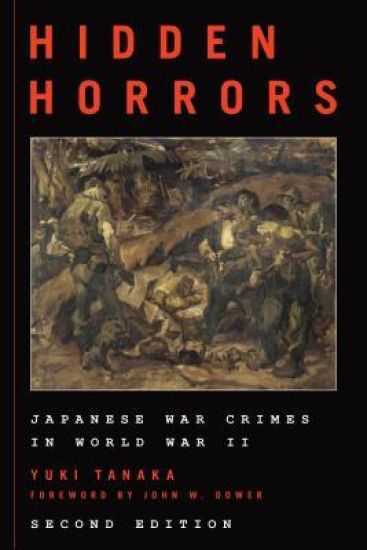
This book documents the previously hidden Japanese atrocities in World War ll, including cannibalism; the slaughter and starvation of prisoners of war; the rape, enforced prostitution, and murder of noncombatants; and biological warfare experiments.
Hidden Horrors

Hidden Horrors

Yuki Tanaka

Routledge
2019
sidottu
This book documents for the first time previously hidden Japanese atrocities in World War II, including cannibalism; the slaughter and starvation of prisoners of war; the rape, enforced prostitution, and murder of noncombatants; and biological warfare experiments. The author describes how desperate Japanese soldiers consumed the flesh of their own comrades killed in fighting as well as that of Australians, Pakistanis, and Indians. Another chapter traces the fate of 65 shipwrecked Australian nurses and British soldiers who were shot or stabbed to death by Japanese soldiers. Thirty-two other nurses, who landed on another island, were captured and sent to Sumatra to become “comfort women‗prostitutes for Japanese soldiers. Tanaka recounts how thousands of Australian and British POWs died in the infamous Sandakan camp in the Borneo jungle in 1945. Those who survived were forced to endure a tortuous 160-mile march on which anyone who dropped out of line was immediately shot. Only six escapees lived to tell the tale. Based on exhaustive research in previously closed archives, this book represents a landmark analysis of Japanese war crimes. The author explores individual atrocities in their broader social, psychological, and institutional milieu and places Japanese behavior during the war in the broader context of the dehumanization of men at war—without denying individual and national responsibility.
Hidden Horrors

Hidden Horrors

Yuki Tanaka; John W. Dower

Rowman Littlefield
2017
sidottu
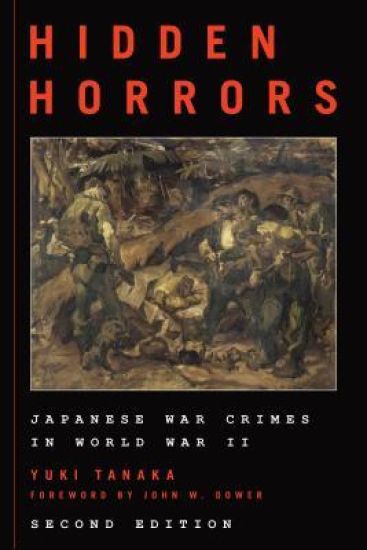
This landmark book documents little-known wartime Japanese atrocities during World War II. Yuki Tanaka’s case studies, still remarkably original and significant, include cannibalism; the slaughter and starvation of prisoners of war; the rape, enforced prostitution, and murder of noncombatants; and biological warfare experiments. The author describes how desperate Japanese soldiers consumed the flesh of their own comrades killed in fighting as well as that of Australians, Pakistanis, and Indians. He traces the fate of sixty-five shipwrecked Australian nurses and British soldiers who were shot or stabbed to death by their captors. Another thirty-two nurses were captured and sent to Sumatra to become “comfort women”—sex slaves for Japanese soldiers. Tanaka recounts how thousands of Australian and British POWs were massacred in the infamous Sandakan camp in the Borneo jungle in 1945, while those who survived were forced to endure a tortuous 160-mile march on which anyone who dropped out of line was immediately shot. This new edition also includes a powerful chapter on the island of Nauru, where thirty-nine leprosy patients were killed and thousands of Naurans were ill-treated and forced to leave their homes. Without denying individual and national responsibility, the author explores individual atrocities in their broader social, psychological, and institutional milieu and places Japanese behavior during the war in the broader context of the dehumanization of men at war. In his substantially revised conclusion, Tanaka brings in significant new interpretations to explain why Japanese imperial forces were so brutal, tracing the historical processes that created such a unique military structure and ideology. Finally, he investigates why a strong awareness of their collective responsibility for wartime atrocities has been and still is lacking among the Japanese.
Hidden Horrors

Hidden Horrors

Yuki Tanaka; John W. Dower

Rowman Littlefield
2017
nidottu
This landmark book documents little-known wartime Japanese atrocities during World War II. Yuki Tanaka’s case studies, still remarkably original and significant, include cannibalism; the slaughter and starvation of prisoners of war; the rape, enforced prostitution, and murder of noncombatants; and biological warfare experiments. The author describes how desperate Japanese soldiers consumed the flesh of their own comrades killed in fighting as well as that of Australians, Pakistanis, and Indians. He traces the fate of sixty-five shipwrecked Australian nurses and British soldiers who were shot or stabbed to death by their captors. Another thirty-two nurses were captured and sent to Sumatra to become “comfort women”—sex slaves for Japanese soldiers. Tanaka recounts how thousands of Australian and British POWs were massacred in the infamous Sandakan camp in the Borneo jungle in 1945, while those who survived were forced to endure a tortuous 160-mile march on which anyone who dropped out of line was immediately shot. This new edition also includes a powerful chapter on the island of Nauru, where thirty-nine leprosy patients were killed and thousands of Naurans were ill-treated and forced to leave their homes. Without denying individual and national responsibility, the author explores individual atrocities in their broader social, psychological, and institutional milieu and places Japanese behavior during the war in the broader context of the dehumanization of men at war. In his substantially revised conclusion, Tanaka brings in significant new interpretations to explain why Japanese imperial forces were so brutal, tracing the historical processes that created such a unique military structure and ideology. Finally, he investigates why a strong awareness of their collective responsibility for wartime atrocities has been and still is lacking among the Japanese.
Japan's Comfort Women

Japan's Comfort Women

Yuki Tanaka

Routledge
2001
sidottu
Japan's Comfort Women tells the harrowing story of the "comfort women" who were forced to enter prostitution to serve the Japanese Imperial army, often living in appalling conditions of sexual slavery. Using a wide range of primary sources, the author for the first time links military controlled prostitution with enforced prostitution. He uncovers new and controversial information about the role of the US' occupation forces in military controlled prostitution, as well as the subsequent "cover-up" of the existence of such a policy. This groundbreaking book asks why US occupation forces did little to help the women, and argues that military authorities organised prostitution to prevent the widespread incidence of GI rape of Japanese women, and to control the spread of sexually transmitted diseases.
Japan's Comfort Women

Japan's Comfort Women

Yuki Tanaka

Routledge
2001
nidottu

Halvin toimitettuna 67,40 €

Japan's Comfort Women tells the harrowing story of the "comfort women" who were forced to enter prostitution to serve the Japanese Imperial army, often living in appalling conditions of sexual slavery. Using a wide range of primary sources, the author for the first time links military controlled prostitution with enforced prostitution. He uncovers new and controversial information about the role of the US' occupation forces in military controlled prostitution, as well as the subsequent "cover-up" of the existence of such a policy. This groundbreaking book asks why US occupation forces did little to help the women, and argues that military authorities organised prostitution to prevent the widespread incidence of GI rape of Japanese women, and to control the spread of sexually transmitted diseases.