Kirjojen hintavertailu – 12 903 724 kirjaa ja 27 kauppaa

Kirjailija

Yulia Gradskova

Kirjat ja teokset yhdessä paikassa: 7 kirjaa, julkaisuja vuosilta 2017–2026, suosituimpiin kuuluu Känslornas revolution : kärlek, ilska och lycka på 1970-talet. Vertaile teosten hintoja ja tarkista saatavuus suomalaisista kirjakaupoista.

7 kirjaa

Kirjojen julkaisuvuodet: 2017–2026.

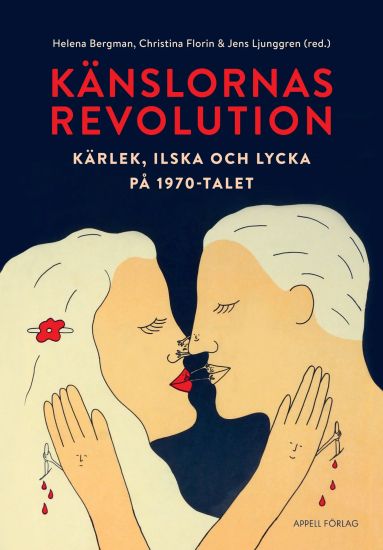
Känslornas revolution : kärlek, ilska och lycka på 1970-talet

Känslornas revolution : kärlek, ilska och lycka på 1970-talet

Helena Bergman; Christina Florin; Jens Ljunggren; Ingrid Ryberg; Yulia Gradskova; Kristoffer Ekberg; Linnea Tillema

Appell Förlag
2017
sidottu
1970-talets känslomönster utmärktes av en dröm om mänsklig gemenskap och befrielse från fördomar samt en vilja att komma i kontakt med sig själv och andra, att söka det äkta, det naturliga, det autentiska och nå en öppenhet. Man ville att det skulle kännas på ett visst sätt att arbeta, vila, skapa, vara solidarisk, konsumera, ha sex, vara barn, förälder, man och kvinna, ung och gammal, överordnad och underordnad. Här skärskådar en grupp historiker, idé- och filmhistoriker detta färgstarka och omvälvande decennium. Med stor kunskap granskar de allt från politik och medier till kärleksliv och moral. De refererar till Ingmar Bergman, Kerstin Thorvall, Birgitta Stenberg och många många andra av tidens framträdande personligheter. Fram växer en fascinerande bild av hur känslorna blir till regler och mönster ­– och att normerna för vad människor förväntas känna och faktiskt känner varierar i tid och rum.
“Good Mothers”, Nations and Nationalisms

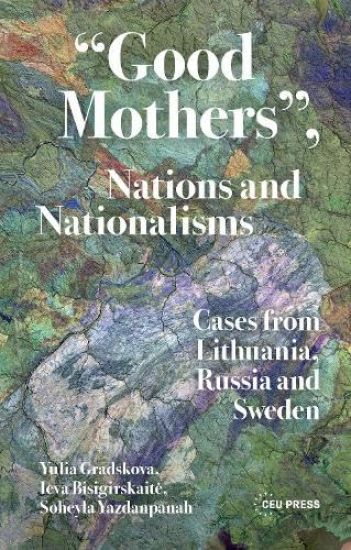
“Good Mothers”, Nations and Nationalisms

Yulia Gradskova; Ieva Bisigirskaite; Soheyla Yazdanpanah

Pallas Publications
2026
sidottu
This book explores constructions of the “good mother” within diverse nations and nationalisms, focusing on three contexts grappling with distinct forms of “demographic anxiety.” Inspired by Sara Farris’ inquiry into femonationalism and utilizing “maternalism” and “politics of care” as critical theoretical instruments, the book analyses the evolving political and social expectations imposed upon mothers in Lithuania, migrant mothers, including postsocialist migrant mothers from Central Asia and Caucasus in Sweden, and women in the militarizing authoritarian Russian state’s construction of maternity within its “traditional values” agenda. It also probes both how “good motherhood” is enacted and contested by individual mothers, as well as how it is mobilized in resisting conservative, ethnonationalist tendencies (in Sweden) and militarism (in the case of Russia). The book’s chapters illuminate the roles of political and social actors engaged with renegotiating materialist politics—such as grassroots birth activist movements and maternalist social policy campaigns—as well as those defying militarism.
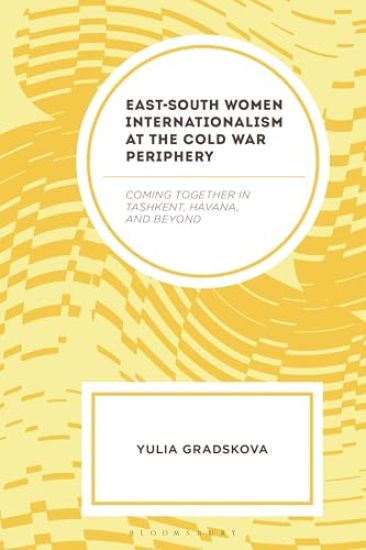
East–South Women Internationalism at the Cold War Periphery

East–South Women Internationalism at the Cold War Periphery

Yulia Gradskova

BLOOMSBURY PUBLISHING PLC
2025
sidottu
This open access book by Yulia Gradskova examines women’s internationalism and gatherings in the places understood as Cold War peripheries. East–South Women Internationalism at the Cold War Periphery: Coming Together in Tashkent, Havana, and Beyond examines women’s gatherings, internationalism, political travel, and networks through questioning established geopolitical categories. While female “political tourists” coming to cities like Tashkent and Havana cannot be seen as free from neither the superpowers’ open and hidden confrontational agendas nor from Cold War surveillance and pressures, Gradskova demonstrates that they significantly contributed to the advancement of transnational women’s rights. Simultaneously, East-South Women Internationalism at the Cold War Periphery contributes to the growing field of decolonial criticism regarding the “second world” emancipation project by detailing how its vision of progress hindered many other voices and visions of the future from being heard. Gradskova’s attention to the mundane problems and pleasures of traveling, coming together, and writing letters allows for distinguishing implicit details of curiosity, emotional attachment as well as (self) censorship and hierarchies; in turn, helping to reconstruct parts of women’s robust and complex participation in the building of the transnational connectivity trespassing the Cold War division lines. The ebook editions of this book are available open access under a CC BY-NC-ND 4.0 license on bloomsburycollections.com. Open access was funded by Riksbankens Jubileumsfond.
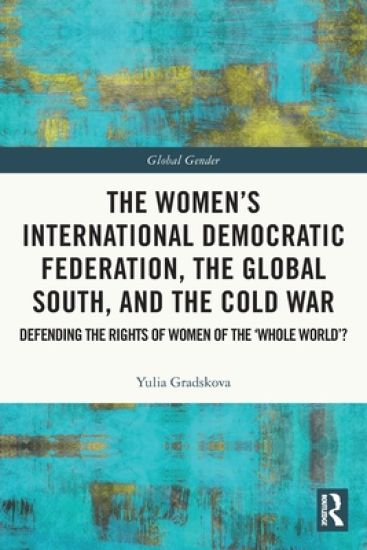
The Women’s International Democratic Federation, the Global South and the Cold War
This book examines the role of the Women's International Defense Federation (WIDF) in transnational women’s activism in the context of the Cold War, and in connection to the rights of women from Asia, Africa and Latin America. Combining a global history and postcolonial theory approach, this monograph shines light on an underrepresented organisation and its important role in the Cold War, Twentieth Century women's rights and Soviet history. Questioning whether the organization acted for women’s causes or whether it was merely a Cold War political instrument, the book analyzes and problematizes the place that the WIDF had in the politics of the Soviet Union, examining the ideology and politics of the WIDF and state socialist propaganda regarding women's equality and rights. Using Soviet archival documents of the organizations, the book offers a new perspective on the complexities of the development of global women’s rights movement divided by the Cold War confrontations. This is an important study suitable for students and researchers in Women's and Gender History, Eastern European History and Gender Studies.
The Women’s International Democratic Federation, the Global South and the Cold War
This book examines the role of the Women's International Defense Federation (WIDF) in transnational women’s activism in the context of the Cold War, and in connection to the rights of women from Asia, Africa and Latin America. Combining a global history and postcolonial theory approach, this monograph shines light on an underrepresented organisation and its important role in the Cold War, Twentieth Century women's rights and Soviet history. Questioning whether the organization acted for women’s causes or whether it was merely a Cold War political instrument, the book analyzes and problematizes the place that the WIDF had in the politics of the Soviet Union, examining the ideology and politics of the WIDF and state socialist propaganda regarding women's equality and rights. Using Soviet archival documents of the organizations, the book offers a new perspective on the complexities of the development of global women’s rights movement divided by the Cold War confrontations. This is an important study suitable for students and researchers in Women's and Gender History, Eastern European History and Gender Studies.
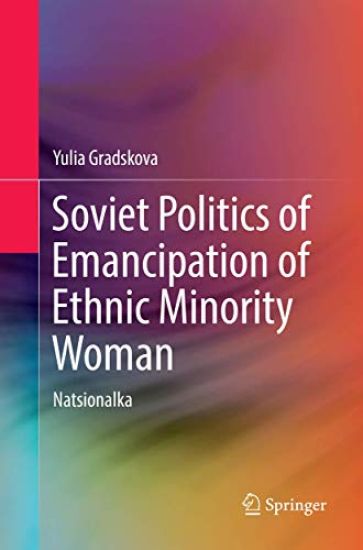
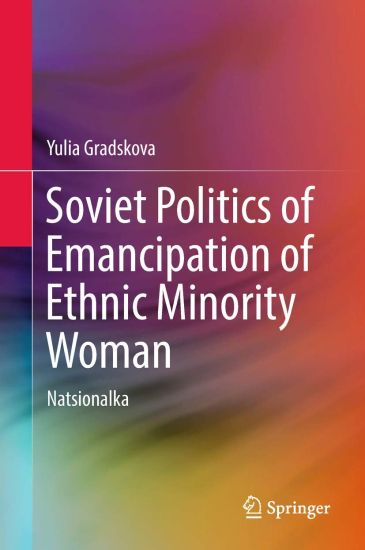
Soviet Politics of Emancipation of Ethnic Minority Woman

Soviet Politics of Emancipation of Ethnic Minority Woman

Yulia Gradskova

Springer Nature Switzerland AG
2018
nidottu
This book provides a new perspective through a closer look on “Other”, i.e. ethnic minority women defined by the Soviet documents as natsionalka. Applying decolonial theory and critical race and whiteness studies, the book analyzes archive documents, early Soviet films and mass publications in order to explore how the “emancipation” and “culturalization” of women of “culturally backward nations” was practiced and presented for the mass Soviet audience. Whilst the special focus of the book lies in the region between the Volga and the Urals (and Muslim women of the Central Eurasia), the Soviet emancipation practices are presented in the broader context of gendered politics of modernization in the beginning of the 20th century. The analysis of the Soviet documents of the 1920s-1930s not only subverts the Soviet story on “generous help” with emancipation of natsionalka through uncovering its imperial/colonial aspects, but also makes an important contribution to the studies of imperial domination and colonial politics. This book is addressed to all interested in Russian and Eurasian studies and in decolonial approach to gender history.
Soviet Politics of Emancipation of Ethnic Minority Woman

Soviet Politics of Emancipation of Ethnic Minority Woman

Yulia Gradskova

Springer International Publishing AG
2018
sidottu
This book provides a new perspective through a closer look on “Other”, i.e. ethnic minority women defined by the Soviet documents as natsionalka. Applying decolonial theory and critical race and whiteness studies, the book analyzes archive documents, early Soviet films and mass publications in order to explore how the “emancipation” and “culturalization” of women of “culturally backward nations” was practiced and presented for the mass Soviet audience. Whilst the special focus of the book lies in the region between the Volga and the Urals (and Muslim women of the Central Eurasia), the Soviet emancipation practices are presented in the broader context of gendered politics of modernization in the beginning of the 20th century. The analysis of the Soviet documents of the 1920s-1930s not only subverts the Soviet story on “generous help” with emancipation of natsionalka through uncovering its imperial/colonial aspects, but also makes an important contribution to the studies of imperial domination and colonial politics. This book is addressed to all interested in Russian and Eurasian studies and in decolonial approach to gender history.