Kirjojen hintavertailu – 12 903 725 kirjaa ja 27 kauppaa

Kirjailija

Yun Yang

Kirjat ja teokset yhdessä paikassa: 7 kirjaa, julkaisuja vuosilta 2011–2025, suosituimpiin kuuluu The Design of Cloud Workflow Systems. Vertaile teosten hintoja ja tarkista saatavuus suomalaisista kirjakaupoista.

7 kirjaa

Kirjojen julkaisuvuodet: 2011–2025.

The Design of Cloud Workflow Systems

The Design of Cloud Workflow Systems

Xiao Liu; Dong Yuan; Gaofeng Zhang; Wenhao Li; Dahai Cao; Qiang He; Jinjun Chen; Yun Yang

Springer-Verlag New York Inc.
2011
nidottu
Cloud computing is the latest market-oriented computing paradigm which brings software design and development into a new era characterized by “XaaS”, i.e. everything as a service. Cloud workflows, as typical software applications in the cloud, are composed of a set of partially ordered cloud software services to achieve specific goals. However, due to the low QoS (quality of service) nature of the cloud environment, the design of workflow systems in the cloud becomes a challenging issue for the delivery of high quality cloud workflow applications. To address such an issue, this book presents a systematic investigation to the three critical aspects for the design of a cloud workflow system, viz. system architecture, system functionality and quality of service. Specifically, the system architecture for a cloud workflow system is designed based on the general four-layer cloud architecture, viz. application layer, platform layer, unified resources layer and fabric layer. The system functionality for a cloud workflow system is designed based on the general workflow reference model but with significant extensions to accommodate software services in the cloud. The support of QoS is critical for the quality of cloud workflow applications. This book presents a generic framework to facilitate a unified design and development process for software components that deliver lifecycle support for different QoS requirements. While the general QoS requirements for cloud workflow applications can have many dimensions, this book mainly focuses on three of the most important ones, viz. performance, reliability and security. In this book, the architecture, functionality and QoS management of our SwinDeW-C prototype cloud workflow system are demonstrated in detail as a case study to evaluate our generic design for cloud workflow systems. To conclude, this book offers a general overview of cloud workflow systems and provides comprehensive introductions to the design of thesystem architecture, system functionality and QoS management.
Self-Commissioning Wireless Power Transfer
This accessible guide describes the design and implementation of new front-end monitoring and control strategies for wireless power transfer (WPT). The new control paradigm moves all receiver-side controllers to the transmitter side to enable multiple advantages over conventional designs. This book provides readers with information in three areas. First, it discusses a series of front-end monitoring and control strategies for WPT. The new technologies are designed at the transmitter side, while no control is needed at the receiver side. Besides, no communication is required between the transmitter and receiver. Implementing this change will enable engineers to make the receiver more compact, reliable, and cost-effective and enhance the overall efficiency of the system as the main power circuits of the WPT system, auxiliary power supplies of controllers, and protection circuits can be significantly reduced. Second, it presents designs for new control strategies in achieving maximum efficiency transfer and minimum charging time, along with precise modeling of battery loads and other power electronic components throughout the charging process. Third, it illustrates how new control methodologies integrate with other technologies for compatibility in industrial applications. Throughout, the book illustrates its descriptions of the technologies and designs with real-world case studies and analysis. Researchers working on WPT technologies within academia and industry will benefit immensely from the discussions within this book, as will graduate students aiming to increase their knowledge on control schemes for power converters at the transmitter sides and primary-side control for transmitter-side inverters.
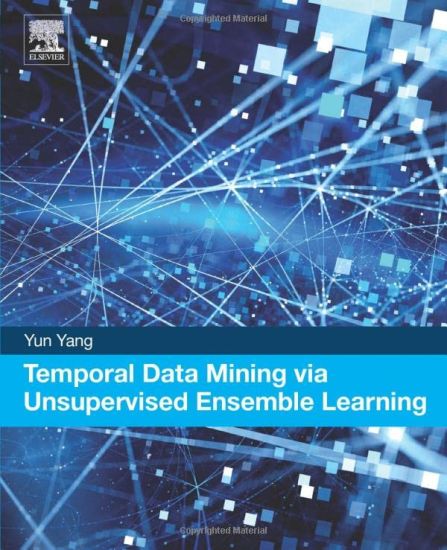
Temporal Data Mining via Unsupervised Ensemble Learning

Temporal Data Mining via Unsupervised Ensemble Learning

Yun Yang

Elsevier Science Publishing Co Inc
2016
nidottu
Temporal Data Mining via Unsupervised Ensemble Learning provides the principle knowledge of temporal data mining in association with unsupervised ensemble learning and the fundamental problems of temporal data clustering from different perspectives. By providing three proposed ensemble approaches of temporal data clustering, this book presents a practical focus of fundamental knowledge and techniques, along with a rich blend of theory and practice. Furthermore, the book includes illustrations of the proposed approaches based on data and simulation experiments to demonstrate all methodologies, and is a guide to the proper usage of these methods. As there is nothing universal that can solve all problems, it is important to understand the characteristics of both clustering algorithms and the target temporal data so the correct approach can be selected for a given clustering problem. Scientists, researchers, and data analysts working with machine learning and data mining will benefit from this innovative book, as will undergraduate and graduate students following courses in computer science, engineering, and statistics.
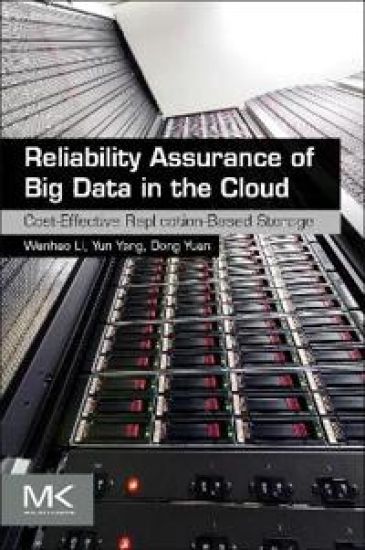
Reliability Assurance of Big Data in the Cloud

Reliability Assurance of Big Data in the Cloud

Yun Yang; Wenhao Li; Dong Yuan

Morgan Kaufmann Publishers In
2014
nidottu
With the rapid growth of Cloud computing, the size of Cloud data is expanding at a dramatic speed. A huge amount of data is generated and processed by Cloud applications, putting a higher demand on cloud storage. While data reliability should already be a requirement, data in the Cloud needs to be stored in a highly cost-effective manner. This book focuses on the trade-off between data storage cost and data reliability assurance for big data in the Cloud. Throughout the whole Cloud data lifecycle, four major features are presented: first, a novel generic data reliability model for describing data reliability in the Cloud; second, a minimum replication calculation approach for meeting a given data reliability requirement to facilitate data creation; third, a novel cost-effective data reliability assurance mechanism for big data maintenance, which could dramatically reduce the storage space needed in the Cloud; fourth, a cost-effective strategy for facilitating data creation and recovery, which could significantly reduce the energy consumption during data transfer.
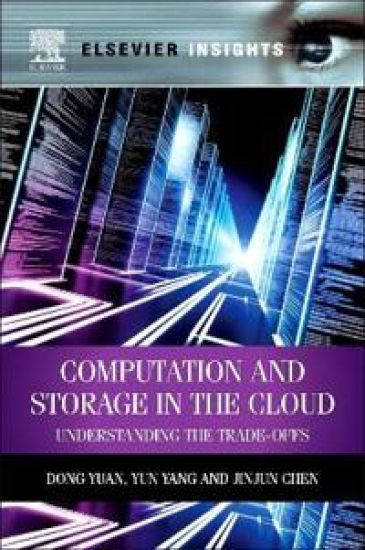
Computation and Storage in the Cloud

Computation and Storage in the Cloud

Dong Yuan; Yun Yang; Jinjun Chen

Elsevier Science Publishing Co Inc
2013
nidottu
Computation and Storage in the Cloud is the first comprehensive and systematic work investigating the issue of computation and storage trade-off in the cloud in order to reduce the overall application cost. Scientific applications are usually computation and data intensive, where complex computation tasks take a long time for execution and the generated datasets are often terabytes or petabytes in size. Storing valuable generated application datasets can save their regeneration cost when they are reused, not to mention the waiting time caused by regeneration. However, the large size of the scientific datasets is a big challenge for their storage. By proposing innovative concepts, theorems and algorithms, this book will help bring the cost down dramatically for both cloud users and service providers to run computation and data intensive scientific applications in the cloud. Covers cost models and benchmarking that explain the necessary tradeoffs for both cloud providers and users Describes several novel strategies for storing application datasets in the cloud Includes real-world case studies of scientific research applications
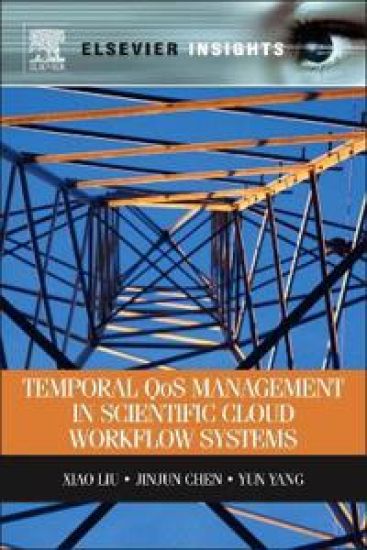
Temporal QOS Management in Scientific Cloud Workflow Systems

Temporal QOS Management in Scientific Cloud Workflow Systems

Xiao Liu; Jinjun Chen; Yun Yang

Elsevier Science Publishing Co Inc
2012
nidottu
Cloud computing can provide virtually unlimited scalable high performance computing resources. Cloud workflows often underlie many large scale data/computation intensive e-science applications such as earthquake modelling, weather forecasting and astrophysics. During application modelling, these sophisticated processes are redesigned as cloud workflows, and at runtime, the models are executed by employing the supercomputing and data sharing ability of the underlying cloud computing infrastructures. Temporal QOS Management in Scientific Cloud Workflow Systems focuses on real world scientific applications which often must be completed by satisfying a set of temporal constraints such as milestones and deadlines. Meanwhile, activity duration, as a measurement of system performance, often needs to be monitored and controlled. This book demonstrates how to guarantee on-time completion of most, if not all, workflow applications. Offering a comprehensive framework to support the lifecycle of time-constrained workflow applications, this book will enhance the overall performance and usability of scientific cloud workflow systems.