Kirjojen hintavertailu – 12 859 829 kirjaa ja 27 kauppaa

Kirjailija

Yung Chul Park

Kirjat ja teokset yhdessä paikassa: 6 kirjaa, julkaisuja vuosilta 2005–2021, suosituimpiin kuuluu Monetary and Financial Integration in East Asia. Vertaile teosten hintoja ja tarkista saatavuus suomalaisista kirjakaupoista.

6 kirjaa

Kirjojen julkaisuvuodet: 2005–2021.

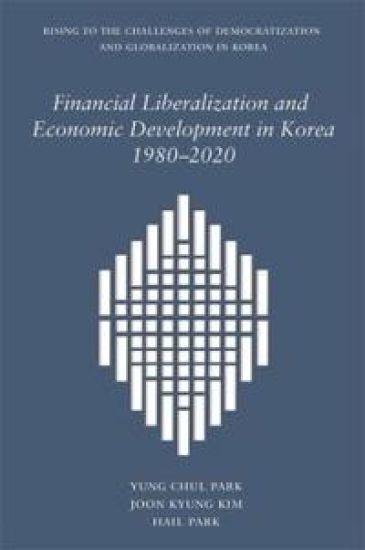
Financial Liberalization and Economic Development in Korea, 1980–2020

Financial Liberalization and Economic Development in Korea, 1980–2020

Yung Chul Park; Joon Kyung Kim; Hail Park

Harvard University, Asia Center
2021
sidottu
Since the early 1980s, Korea’s financial development has been a tale of liberalization and opening. After the 1997 financial crisis, great strides were made in building a market-oriented financial system through sweeping reforms for deregulation and the opening of financial markets. However, the new system failed to steer the country away from a credit card boom and bust in 2003, a liquidity crisis in 2008, and a run on its savings banks in 2011, and has been severely tested again by the ongoing COVID-19 pandemic crisis. Financial liberalization, clearly, has been no panacea. This study analyzes the deepening of and structural changes in Korea’s financial system since the early 1980s and presents the empirical results of the effects of financial development on economic growth, stability, and the distribution of income. It finds that, contrary to conventional wisdom, financial liberalization has contributed little to fostering the growth and stability of the Korean economy and has exacerbated income distribution problems. Are there any merits in financial liberalization? The authors answer this query through empirical examinations of the theories of finance and growth. They point to a clear need to further improve the efficiency, soundness, and stability of Korean financial institutions and markets.
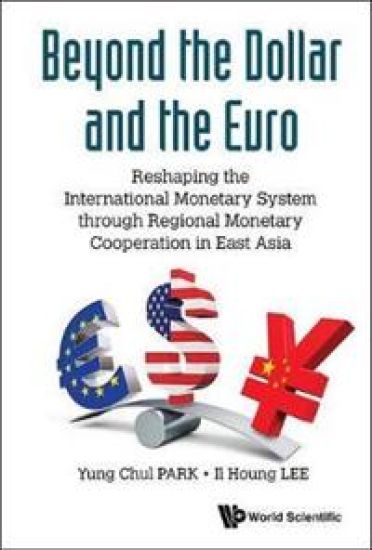
Beyond The Dollar And The Euro: Reshaping The International Monetary System Through Regional Monetary Cooperation In East Asia
Since the 2008 global financial crisis, the debate on the reform of the international monetary system (IMS) has gained new momentum. It questioned the desirability of the current system's excessive reliance on the US dollar despite the fact that the US financial system has proven to be less than perfect, and US monetary policy stance has not been in tune with the business cycle of the rest of the world. However, attempts to reform the IMF or strengthen regional safety nets have not produced material results. With the challenges in the euro area persisting, the dollar is very likely to stay as the main reserve currency for the foreseeable future. Against this background, this book prescribes concrete steps on how to shape an alternative monetary system that will be a win-win solution to all without having to strike an international agreement on a new global governance structure. It proposes to use the RMB — already in motion to become an international currency — to become the third pillar without the need for China to open its capital account prematurely. For policy makers, this book will help them rethink how they can approach the problems facing the IMS. For the general readers, it will offer them a comprehensive view on what the international monetary system is about, what the problems are, and how these problems can be addressed. In particular, it will equip them with a better sense of what currencies they will need to carry when traveling around the world, or in what currencies they should hold their wealth in the coming decades.
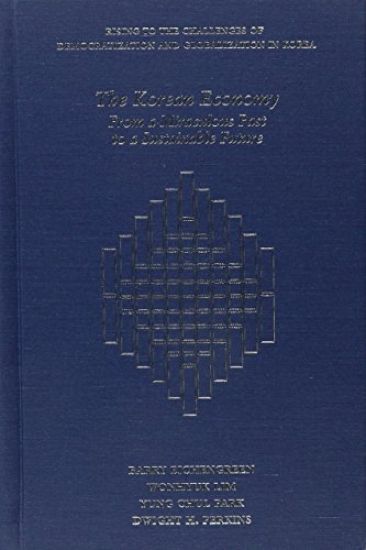
The Korean Economy

The Korean Economy

Barry Eichengreen; Wonhyuk Lim; Yung Chul Park; Dwight H. Perkins

Harvard University, Asia Center
2015
sidottu
South Korea has been held out as an economic miracle—as a country that successfully completed the transition from underdeveloped to developed country status—and as an example of how a middle-income country can continue to move up the technology ladder into the production and export of more sophisticated goods and services. But with these successes have come challenges, among them poverty, inequality, long work hours, financial instability, and complaints about the economic and political power of the country’s large corporate conglomerates, or chaebol. The Korean Economy provides an overview of Korean economic experience since the 1950s, with a focus on the period since democratization in 1987. Successive chapters analyze the Korean experience from the perspectives of political economy, the growth record, industrial organization and corporate governance, financial development and instability, labor and employment, inequality and social policy, and Korea’s place in the world economy. A concluding chapter describes the country’s economic challenges going forward and how they can best be met. The volume also serves to summarize the findings of companion volumes in the Harvard–Korean Development Institute series on the Korean economy, also published by the Harvard University Asia Center.
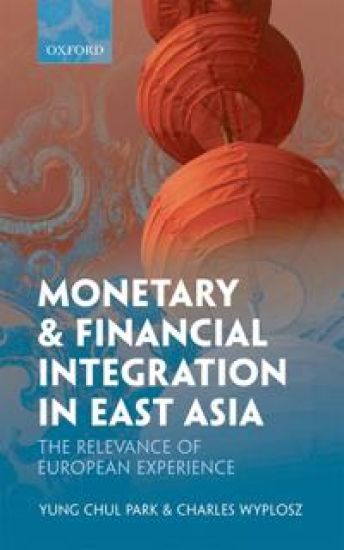
Monetary and Financial Integration in East Asia

Monetary and Financial Integration in East Asia

Yung Chul Park; Charles Wyplosz

Oxford University Press
2010
sidottu
This book looks at East Asia's monetary and financial integration from both Asian and European perspectives. It analyses the Euro area's framework for monetary policy implementation, introduced in 1999. It reviews the efforts to foster regional monetary and financial integration and relates them to Europe's own evolution. It highlights successes and failures in both cases and offers a careful assessment of the state of play. A central theme of the volume is that the East Asian reliance on markets is not enough to promote the kind of deep integration that Europe has achieved and that provides protection against exchange rate turbulence. The implications of the recent global crisis are also examined. Written by two of the foremost monetary experts on Asia and Europe, this book will be an invaluable aid to students and academics interested in the relevance of the European experience to the debates about monetary integration in East Asia.
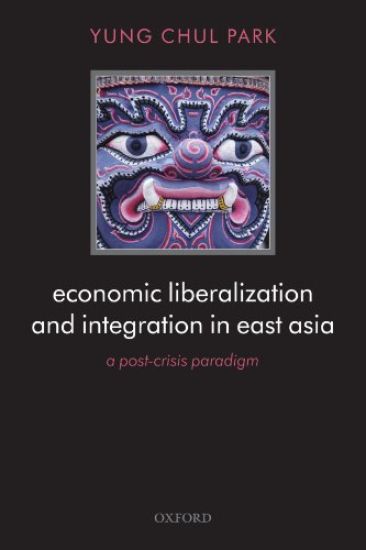
Economic Liberalization and Integration in East Asia

Economic Liberalization and Integration in East Asia

Yung Chul Park

Oxford University Press
2007
nidottu
Several years before the 1997-98 Asian financial crisis, most East Asian economies with the exception of China had engaged in the liberal reform prescriptions of the Washington Consensus. The Asian financial crisis added impetus to the transformation process as the crisis countries accepted the Washington Consensus as part of their commitment to the IMF policy conditionality. In this book the author argues for the continuing validity of an 'East Asian' model of economic development that differs distinctly from the Washington Consensus. He argues that, while this model was undermined to some extent by the 1997-98 financial crisis, it remains robust and important in explaining economic events in East Asia. In doing so, he covers the accomplishments and failures of the East Asian development model and the reform agenda for a new East Asian paradigm for post-crisis development.
Economic Liberalization and Integration in East Asia

Economic Liberalization and Integration in East Asia

Yung Chul Park

Oxford University Press
2005
sidottu
Several years before the 1997-98 Asian financial crisis, most East Asian economies with the exception of China had engaged in the liberal reform prescriptions of the Washington Consensus. The Asian financial crisis added impetus to the transformation process as the crisis countries accepted the Washington Consensus as part of their commitment to the IMF policy conditionality. In this book the author argues for the continuing validity of an 'East Asian' model of economic development that differs distinctly from the Washington Consensus. He argues that, while this model was undermined to some extent by the 1997-98 financial crisis, it remains robust and important in explaining economic events in East Asia. In doing so, he covers the accomplishments and failures of the East Asian development model and the reform agenda for a new East Asian paradigm for post-crisis development.