Kirjojen hintavertailu – 12 859 828 kirjaa ja 27 kauppaa

Kirjailija

Yves Gingras

Kirjat ja teokset yhdessä paikassa: 5 kirjaa, julkaisuja vuosilta 1991–2017, suosituimpiin kuuluu Science and Religion. Vertaile teosten hintoja ja tarkista saatavuus suomalaisista kirjakaupoista.

5 kirjaa

Kirjojen julkaisuvuodet: 1991–2017.

Science and Religion

Science and Religion

Yves Gingras

Polity Press
2017
nidottu
Today we hear renewed calls for a dialogue between science and religion: why has the old question of the relations between science and religion now returned to the public domain and what is at stake in this debate? To answer these questions, historian and sociologist of science Yves Gingras retraces the long history of the troubled relationship between science and religion, from the condemnation of Galileo for heresy in 1633 until his rehabilitation by John Paul II in 1992. He reconstructs the process of the gradual separation of science from theology and religion, showing how God and natural theology became marginalized in the scientific field in the eighteenth and nineteenth centuries. In contrast to the dominant trend among historians of science, Gingras argues that science and religion are social institutions that give rise to incompatible ways of knowing, rooted in different methodologies and forms of knowledge, and that there never was, and cannot be, a genuine dialogue between them. Wide-ranging and authoritative, this new book on one of the fundamental questions of Western thought will be of great interest to students and scholars of the history of science and of religion as well as to general readers who are intrigued by the new and much-publicized conversations about the alleged links between science and religion.

Science and Religion

Science and Religion

Yves Gingras

Polity Press
2017
sidottu
Today we hear renewed calls for a dialogue between science and religion: why has the old question of the relations between science and religion now returned to the public domain and what is at stake in this debate? To answer these questions, historian and sociologist of science Yves Gingras retraces the long history of the troubled relationship between science and religion, from the condemnation of Galileo for heresy in 1633 until his rehabilitation by John Paul II in 1992. He reconstructs the process of the gradual separation of science from theology and religion, showing how God and natural theology became marginalized in the scientific field in the eighteenth and nineteenth centuries. In contrast to the dominant trend among historians of science, Gingras argues that science and religion are social institutions that give rise to incompatible ways of knowing, rooted in different methodologies and forms of knowledge, and that there never was, and cannot be, a genuine dialogue between them. Wide-ranging and authoritative, this new book on one of the fundamental questions of Western thought will be of great interest to students and scholars of the history of science and of religion as well as to general readers who are intrigued by the new and much-publicized conversations about the alleged links between science and religion.

Bibliometrics and Research Evaluation
Why bibliometrics is useful for understanding the global dynamics of science but generate perverse effects when applied inappropriately in research evaluation and university rankings. The research evaluation market is booming. "Ranking," "metrics," "h-index," and "impact factors" are reigning buzzwords. Government and research administrators want to evaluate everything-teachers, professors, training programs, universities-using quantitative indicators. Among the tools used to measure "research excellence," bibliometrics-aggregate data on publications and citations-has become dominant. Bibliometrics is hailed as an "objective" measure of research quality, a quantitative measure more useful than "subjective" and intuitive evaluation methods such as peer review that have been used since scientific papers were first published in the seventeenth century. In this book, Yves Gingras offers a spirited argument against an unquestioning reliance on bibliometrics as an indicator of research quality. Gingras shows that bibliometric rankings have no real scientific validity, rarely measuring what they pretend to. Although the study of publication and citation patterns, at the proper scales, can yield insights on the global dynamics of science over time, ill-defined quantitative indicators often generate perverse and unintended effects on the direction of research. Moreover, abuse of bibliometrics occurs when data is manipulated to boost rankings. Gingras looks at the politics of evaluation and argues that using numbers can be a way to control scientists and diminish their autonomy in the evaluation process. Proposing precise criteria for establishing the validity of indicators at a given scale of analysis, Gingras questions why universities are so eager to let invalid indicators influence their research strategy.
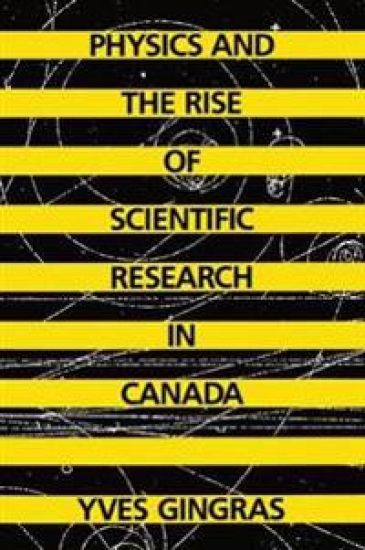
Physics and the Rise of Scientific Research in Canada

Physics and the Rise of Scientific Research in Canada

Yves Gingras

McGill-Queen's University Press
1991
sidottu
The teaching of engineering and a change in liberal arts curricula, both stimulated by industrial growth, encouraged the creation of specialized courses in the sciences. By the 1890s, Gingras argues, trained researchers had begun to appear in Canadian universities. The technological demands of the First World War and the founding, in 1916, of the National Research Council of Canada (NRC) accelerated the growth of scientific research. The Transactions of the Royal Society of Canada could no longer publish everything submitted to it because of the disproportionately large number of research papers from the fields of science. In response, the NRC created the Canadian Journal of Research, a journal specifically dedicated to the publication of scientific research. By 1930, a stable, national system of scientific research was in place in Canada. Following the dramatic increase in the national importance of their disciplines, scientists faced the problem of social identity. Gingras demonstrates that in the case of physics this took the form of a conflict between those who promoted a professional orientation, necessary to compete successfully with engineers in the labour market, and those, mainly in the universities, who were concerned with problems of the discipline such as publication, internal management, and awards. Physics and the Rise of Scientific Research in Canada is the first book to provide a general analysis of the origins of scientific research in Canadian universities. Gingras proposes a sociological model of the formation of scientific disciplines, distinguishing the profession from the discipline, two notions often confused by historians and sociologists of science.