Kirjojen hintavertailu – 12 903 724 kirjaa ja 27 kauppaa

Kirjailija

Yvonne Rydin

Kirjat ja teokset yhdessä paikassa: 13 kirjaa, julkaisuja vuosilta 1996–2025, suosituimpiin kuuluu The Language Of Environment. Vertaile teosten hintoja ja tarkista saatavuus suomalaisista kirjakaupoista.

13 kirjaa

Kirjojen julkaisuvuodet: 1996–2025.

Planning Without Growth

Planning Without Growth

Yvonne Rydin

Bristol University Press
2025
nidottu

Halvin toimitettuna 32,30 €

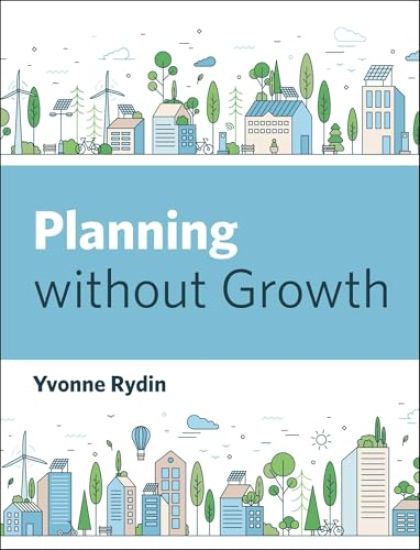
Many planning systems are currently locked into growth-dependence, encouraging market-led development which can widen social inequalities and produce adverse environmental outcomes. This accessible book introduces students to the debates around growth and planning and sets out the solutions to promote genuinely sustainable communities. It includes: • a positive proposal for reform of the planning system; • focused discussions from the UK and Europe providing lessons for future planning; • analysis of the challenges of implementing reform. Covering chapters on cooperatives, community land trusts, local economic development and community assets and infrastructure, as well as commoning, it provides a roadmap for planning system reform with social justice and sustainability at its heart.
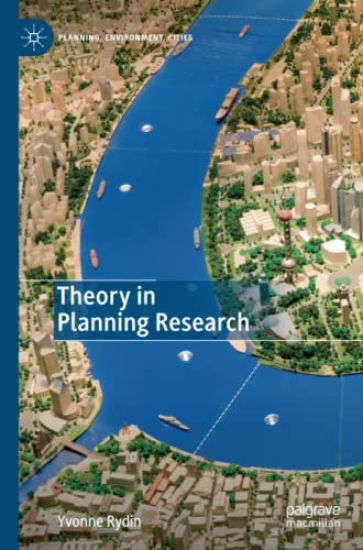
Theory in Planning Research

Theory in Planning Research

Yvonne Rydin

Springer Verlag, Singapore
2021
nidottu

Halvin toimitettuna 42,70 €

Doing research is an essential element of almost all programmes in planning studies as well as related areas such as geography and urban studies, from undergraduate, through Masters to doctoral programmes. While most texts on such research emphasise methodologies, this book is unique in addressing how theoretical frameworks and perspectives can inform research activity. Providing both a concise introduction to a wide range of such theories and detailed engagement with cases of planning research, it provides the reader with the insights necessary to conduct theory-informed research. It offers an understanding of how the choice of a theoretical framework has implications for the focus of the research, the precise research questions addressed and the methodologies that will be most effective in answering those questions. Through practical advice and published examples it will support planning researchers in doing stronger, more widely-applicable research, which answers key questions aboutplanning systems and their role within our societies.
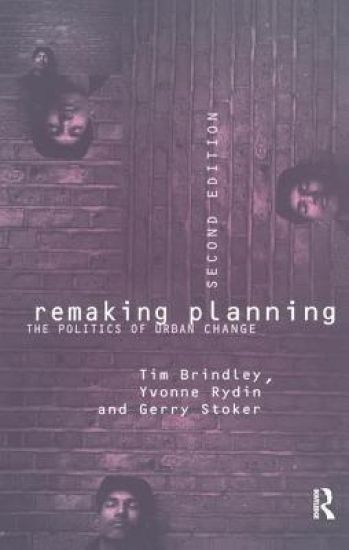
Remaking Planning

Remaking Planning

Tim Brindley; Yvonne Rydin; Gerry Stoker

Routledge
2016
sidottu
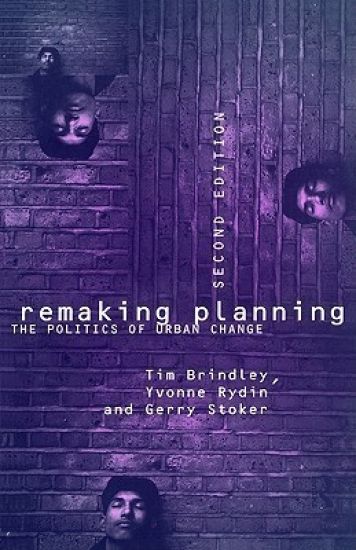
Remaking Planning challenges the common misconception that planning under the Conservative government has been dismantled and abandoned to market forces. This new edition of a very well received text brings the original study up to date with an analysis of how planning in the 1990s has responded to continuing economic restructuring, political fragmentation and social change, and developed a new awareness of uncertainty and risk. The book illustrates how planning remains as a never-ending attempt to reconcile the demands of economic efficiency with those of democratic legitimacy.
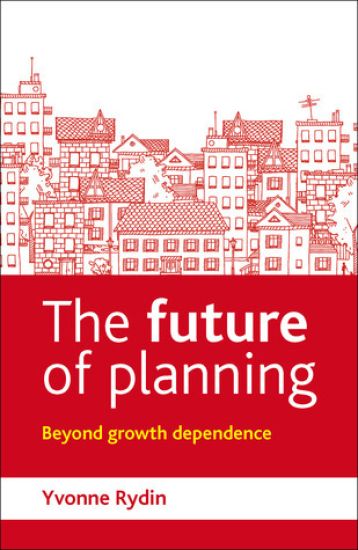
The Future of Planning

The Future of Planning

Yvonne Rydin

Policy Press
2013
sidottu
For the past half-century, the planning system has operated on the basis of a growth-dependence paradigm. It has been based on market-led urban development and has sought to provide community benefits from a share of development profits. However, we do not live in a world where growth can be taken for granted and we are more aware than previously of the implications for well-being and sustainability. This timely book provides a fresh analysis of the limitations of the growth-dependence planning paradigm. It considers alternative urban development models, ways of protecting and enhancing existing low value land uses and means of managing community assets within the built environment. In each case it spells out the role that a reformed planning system could play in establishing a new agenda for planning. The book will be of relevance to planning students, planning professionals and planning academics, as well as urban policy specialists more generally.
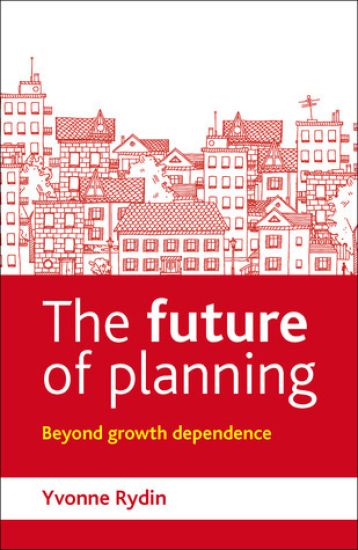
The Future of Planning

The Future of Planning

Yvonne Rydin

Policy Press
2013
nidottu
For the past half-century, the planning system has operated on the basis of a growth-dependence paradigm. It has been based on market-led urban development and has sought to provide community benefits from a share of development profits. However, we do not live in a world where growth can be taken for granted and we are more aware than previously of the implications for well-being and sustainability. This timely book provides a fresh analysis of the limitations of the growth-dependence planning paradigm. It considers alternative urban development models, ways of protecting and enhancing existing low value land uses and means of managing community assets within the built environment. In each case it spells out the role that a reformed planning system could play in establishing a new agenda for planning. The book will be of relevance to planning students, planning professionals and planning academics, as well as urban policy specialists more generally.
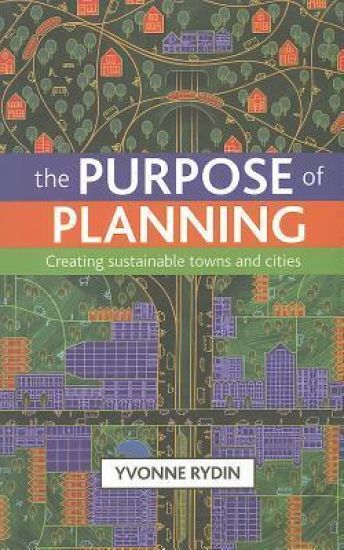
The Purpose of Planning

The Purpose of Planning

Yvonne Rydin

Policy Press
2011
nidottu

Halvin toimitettuna 32,30 €

Planning is never far from the top of the policy or media agenda, whether this concerns 'garden-grabbing', the location of wind farms or protests about travellers' sites. The operation of the planning system raises strong views, even passions, and is highly political. Planners have to engage with developers working on multi-million pound schemes and the local communities that will be affected by such schemes. And throughout, they have to work in the public interest, delivering on broad policy goals and meeting the needs of vulnerable communities. This book is about the way that the planning system works, what it can do, what it cannot do and how it should evolve to meet the challenges of the 21st century. It looks at a range of issues to unlock the purpose of planning by being positive about the role of planning while remaining realistic about its achievements and potential. Written in a clear and accessible manner, this book will be essential reading for students studying planning in a variety of disciplines and practitioners engaging with the planning system.
Governing for Sustainable Urban Development
Achieving urban sustainability is amongst the most pressing issues facing planners and governments. This book is the first to provide a cohesive analysis of sustainable urban development and to examine the processes by which change in how urban areas are built can be achieved. The author looks at how sustainable urban development can be delivered on the ground through a comprehensive analysis of the different modes of governing for new urban development. Governing for Sustainable Urban Development:considers a range of policy tools that influence urban development and that constitute different modes of governingprovides an innovative conceptual emphasis on learning within governing processesdraws on a wide range of existing research, policy and literature together with case study material focussing on Londonis above all concerned with demonstrating how sustainable urban development can be delivered in practice. This title be essential reading for students, academics and professionals in planning, urban design and architecture world-wide working to achieve sustainability.
Governing for Sustainable Urban Development
Achieving urban sustainability is amongst the most pressing issues facing planners and governments. This book is the first to provide a cohesive analysis of sustainable urban development and to examine the processes by which change in how urban areas are built can be achieved. The author looks at how sustainable urban development can be delivered on the ground through a comprehensive analysis of the different modes of governing for new urban development. Governing for Sustainable Urban Development:considers a range of policy tools that influence urban development and that constitute different modes of governingprovides an innovative conceptual emphasis on learning within governing processesdraws on a wide range of existing research, policy and literature together with case study material focussing on Londonis above all concerned with demonstrating how sustainable urban development can be delivered in practice. This title be essential reading for students, academics and professionals in planning, urban design and architecture world-wide working to achieve sustainability.
Urban and Environmental Planning in the UK
The second edition of this innovative introduction to urban and environmental planning combines comprehensive coverage of institutions and procedures with detailed analysis of the economic and political context of planning, its historical development and competing theoretical approaches. Extensively revised and updated to take account of changes in the context and content of planning into New Labour's second term, extensive use is made throughout of case studies, summary charts and exhibits to bring the subject to life.
Remaking Planning

Remaking Planning

Tim Brindley; Yvonne Rydin; Gerry Stoker

Routledge
1996
nidottu
Remaking Planning challenges the common misconception that planning under the Conservative government has been dismantled and abandoned to market forces. This new edition of a very well received text brings the original study up to date with an analysis of how planning in the 1990s has responded to continuing economic restructuring, political fragmentation and social change, and developed a new awareness of uncertainty and risk. The book illustrates how planning remains as a never-ending attempt to reconcile the demands of economic efficiency with those of democratic legitimacy.
The Language Of Environment

The Language Of Environment

George Myerson; Yvonne Rydin

Routledge
1996
sidottu
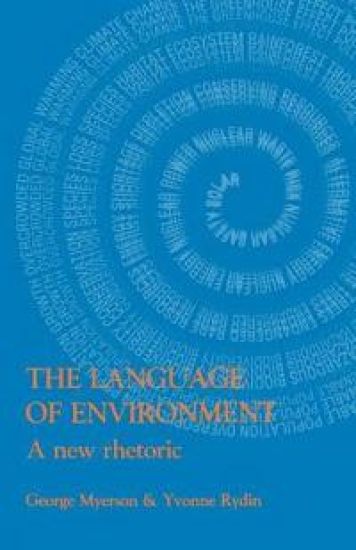
First published in 1996. “Environment” challenges modern knowledge and its institutions: academic disciplines, research groups, journals and presses, syllabuses and texts, professions and data banks, media experts and policy advisors. The language of environment makes no policy proposals, it is not prescriptive. But it is an attempt to think about the cultural context of all proposals and prescriptions, the cultures of authority and expertise in our time. How is knowledge made to count, and how do all the different claims connect, or collide?
The Language Of Environment

The Language Of Environment

George Myerson; Yvonne Rydin

Routledge
1996
nidottu
First published in 1996. “Environment” challenges modern knowledge and its institutions: academic disciplines, research groups, journals and presses, syllabuses and texts, professions and data banks, media experts and policy advisors. The language of environment makes no policy proposals, it is not prescriptive. But it is an attempt to think about the cultural context of all proposals and prescriptions, the cultures of authority and expertise in our time. How is knowledge made to count, and how do all the different claims connect, or collide?