Kirjojen hintavertailu – 12 859 827 kirjaa ja 27 kauppaa

Kirjailija

Zalmay Khalilzad

Kirjat ja teokset yhdessä paikassa: 7 kirjaa, julkaisuja vuosilta 1995–2022, suosituimpiin kuuluu The United States and a Rising China. Vertaile teosten hintoja ja tarkista saatavuus suomalaisista kirjakaupoista.

7 kirjaa

Kirjojen julkaisuvuodet: 1995–2022.

The United States and a Rising China

The United States and a Rising China

Zalmay Khalilzad; Abram N. Shulsky; Daniel L. Byman; Roger Cliff

RAND
1999
pokkari
An analysis of the rising of China and its implications for the USA. The book suggests that, at present, the best US response appears to be a combination of engagement and containment, a congagement policy that would continue to try to bring China into the international system.

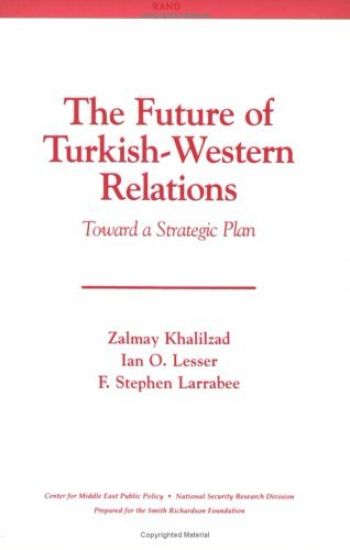
The Future of Turkish-Western Relations

The Future of Turkish-Western Relations

Zalmay Khalilzad; Ian O. Lesser; F. Stephen Larrabee

RAND
2000
pokkari
At the European Union's Helsinki Summit in 1999, Turkey was declared a candidate for EU membership. This report discusses Western stakes in the future of a changing Turkey. The authors offer an agenda for closer strategic co-operation in the US-Turkish-European triangle.
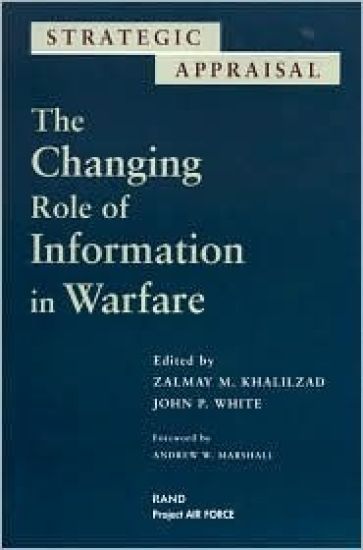
The Changing Role of Information Warfare
Advanced information technologies will have a profound effect on our national security. Driven by the need to understand this revolution and to take steps towards defending against information attack, the editors provided this thorough examination of information warfare, with implications for the U. S. and other countries.
From Containment to Global Leadership?
With its victory in the Cold War, the United States is now the world's preeminent military and political power. It has the world's largest economy. It leads the world in many areas of technology. It faces no global rival and no significant hostile alliances. Most of the world's economically capable nations are U. S. allies. Three years after the end of the Cold War, however, no new grand design has yet jelled, and this failure carries large opportunity costs. Now is the time for the United States to decide upon a new grand strategy to guide the nation's direction for the future. The report identifies options for a new U. S. architectural framework. During the Cold War, U. S. foreign and security policies were guided by the objective of "Soviet containment." Today, does the country need a new vision and grand strategy? What options are there to choose from, which is the best, and why? And what are the preferred option's implications for America's foreign and security policies and its military forces? The report seeks to answer these questions and offers seven principles that should guide U. S. policies.