Kirjojen hintavertailu – 12 903 725 kirjaa ja 27 kauppaa

Kirjailija

Zane L Miller

Kirjat ja teokset yhdessä paikassa: 4 kirjaa, julkaisuja vuosilta 2000–2023, suosituimpiin kuuluu Clifton. Vertaile teosten hintoja ja tarkista saatavuus suomalaisista kirjakaupoista.

Nimi esiintyy myös muodoissa: Zane L. Miller

4 kirjaa

Kirjojen julkaisuvuodet: 2000–2023.

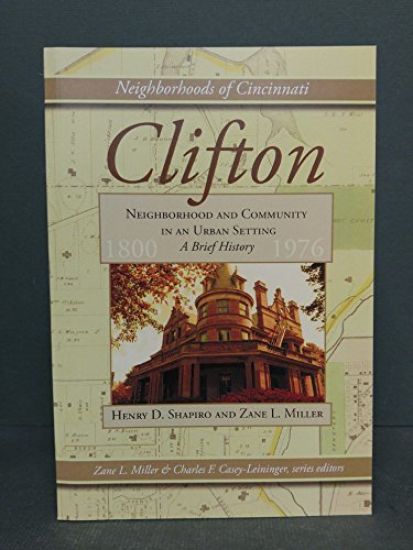
Clifton

Clifton

Zane L Miller; Henry D Shapiro

Commonwealth Book Company, Inc.
2014
pokkari
In 1975, some members of Clifton Town Meeting approached Zane Miller and Henry Shapiro about writing a pamphlet on the history of Clifton for their 1976 house tour. Having conducted much of the research in their own studies and teaching at the University of Cincinnati, Shapiro and Miller produced a concise description of Clifton's development from an elite rural village several miles from Cincinnati to a modern neighborhood of that city. Shapiro and Miller fleshed out the stages of that transformation in chronologically arranged "chapters," each of which examined Clifton's past from the point of view of problem definition and resolution by its residents and sometimes by outsiders.

Visions of Place

Visions of Place

Zane L Miller

Ohio State University Press
2021
pokkari
Almost every American city has or had neighborhoods like Clifton, which developed in the mid-nineteenth century as a silk-stocking suburb with a more diverse population than most observers noticed. Incorporated by Cincinnati in the late nineteenth century, Clifton had a reputation as a better-than-average place in which to live, a view that persisted until the end of the twentieth century. In Visions of Place, Zane L. Miller treats ideas about the nature of cities-including their neighborhoods and their suburbs-as the dynamic factors in Clifton's experience and examines the changes in Clifton's social, physical, civic, and political structure resulting from these transforming notions. These structural shifts involved a variety of familiar nineteenth- and twentieth-century urban phenomena, including not only the switch from suburban village to city neighborhood and the salience of interracial fears but also the rise of formal city planning and conflicts among Protestants, Catholics, and Jews over the future of Clifton's religious and ethnic ambiance. Miller concludes with a policy analysis of current and future prospects for neighborhoods like Clifton and the cities and metropolitan areas of which they form a part.