
Kirjojen hintavertailu – 12 859 824 kirjaa ja 27 kauppaa

Kirjailija

Zhang Cheng

Kirjat ja teokset yhdessä paikassa: 2 kirjaa, julkaisuja vuosilta 2021–2022, suosituimpiin kuuluu Governing Enterprises in China. Vertaile teosten hintoja ja tarkista saatavuus suomalaisista kirjakaupoista.

2 kirjaa

Kirjojen julkaisuvuodet: 2021–2022.

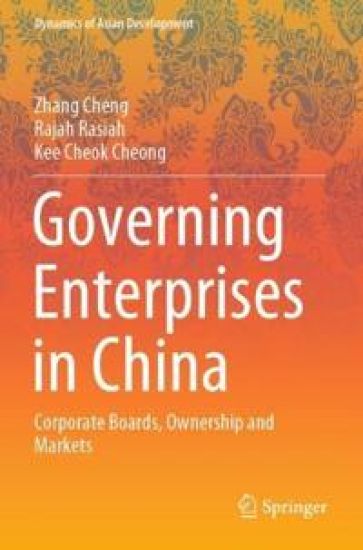
Governing Enterprises in China

Governing Enterprises in China

Zhang Cheng; Rajah Rasiah; Kee Cheok Cheong

SPRINGER VERLAG, SINGAPORE
2022
nidottu
This book examines the nature of the marketization of corporate boards following the introduction of the split share reform, corporate board and shareholder relations, corporate performance, and risk-taking conduct in China. The chapters cover topics such as determinants of corporate board size and independence, corporate risk-taking conduct under different controlling shareholder types. The book deepens our understanding of corporate governance mechanisms as most previous studies have limited their findings using mainstream perspectives grounded on neoclassical theory. It outlines that China’s corporate board composition is determined by the board’s scope of operation, monitoring, bargaining power, and other governance mechanisms and regulations. It also offers a comparison between China’s experience with other economies in general and other transition economies in particular. As such, the book represents an essential overview of thecurrent concerns regarding corporate governance in China. It is of great interest to legal researchers, policymakers, and legal practitioners working with business investments in China.
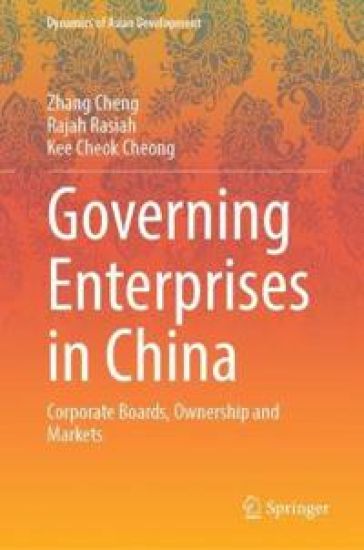
Governing Enterprises in China

Governing Enterprises in China

Zhang Cheng; Rajah Rasiah; Kee Cheok Cheong

Springer Verlag, Singapore
2021
sidottu
This book examines the nature of the marketization of corporate boards following the introduction of the split share reform, corporate board and shareholder relations, corporate performance, and risk-taking conduct in China. The chapters cover topics such as determinants of corporate board size and independence, corporate risk-taking conduct under different controlling shareholder types. The book deepens our understanding of corporate governance mechanisms as most previous studies have limited their findings using mainstream perspectives grounded on neoclassical theory. It outlines that China’s corporate board composition is determined by the board’s scope of operation, monitoring, bargaining power, and other governance mechanisms and regulations. It also offers a comparison between China’s experience with other economies in general and other transition economies in particular. As such, the book represents an essential overview of thecurrent concerns regarding corporate governance in China. It is of great interest to legal researchers, policymakers, and legal practitioners working with business investments in China.