Kirjojen hintavertailu – 12 903 725 kirjaa ja 27 kauppaa

Kirjailija

Zhao Lu

Kirjat ja teokset yhdessä paikassa: 4 kirjaa, julkaisuja vuosilta 2019–2025, suosituimpiin kuuluu In Pursuit of the Great Peace. Vertaile teosten hintoja ja tarkista saatavuus suomalaisista kirjakaupoista.

4 kirjaa

Kirjojen julkaisuvuodet: 2019–2025.

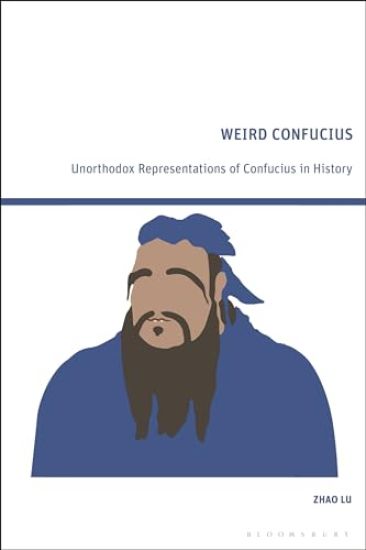
Weird Confucius

Weird Confucius

Zhao Lu

BLOOMSBURY PUBLISHING PLC
2025
nidottu
Spanning antiquity until the present, Zhao Lu analyses the eclectic and fictitious representations of Confucius that have been widely celebrated by communities of people throughout history. While mainstream scholarship mostly considers Confucius in terms of his role as a celebrated man of wisdom and as a teacher with a humanistic worldview, Zhao addresses the weirder representations. He considers depictions of Confucius as a prophet, a fortune-teller, a powerful demon hunter, a shrewd villain of 19th century American newspapers, an embodiment of feudal evils in the Cultural Revolution, and as a cute friend. Zhao asks why some groups would risk contradicting the well-accepted image of Confucius with such representations and shows how these illustrations reflect the specific anxieties of these communities. He reveals not only how people across history perceived Confucius in diverse ways, but more importantly how they used Confucius in daily life, ranging from calming their anxiety about the future, to legitimizing a dynasty, stereotyping Chinese people, and even to forging a new sense of history.

Weird Confucius

Weird Confucius

Zhao Lu

BLOOMSBURY PUBLISHING PLC
2024
sidottu
Spanning antiquity until the present, Zhao Lu analyses the eclectic and fictitious representations of Confucius that have been widely celebrated by communities of people throughout history. While mainstream scholarship mostly considers Confucius in terms of his role as a celebrated man of wisdom and as a teacher with a humanistic worldview, Zhao addresses the weirder representations. He considers depictions of Confucius as a prophet, a fortune-teller, a powerful demon hunter, a shrewd villain of 19th century American newspapers, an embodiment of feudal evils in the Cultural Revolution, and as a cute friend. Zhao asks why some groups would risk contradicting the well-accepted image of Confucius with such representations and shows how these illustrations reflect the specific anxieties of these communities. He reveals not only how people across history perceived Confucius in diverse ways, but more importantly how they used Confucius in daily life, ranging from calming their anxiety about the future, to legitimizing a dynasty, stereotyping Chinese people, and even to forging a new sense of history.
Dice and Gods on the Silk Road

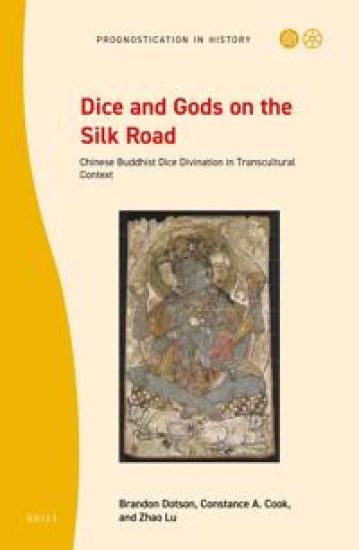
Dice and Gods on the Silk Road

Brandon Dotson; Constance A. Cook; Zhao Lu

BRILL
2021
sidottu
What do dice and gods have in common? What is the relationship between dice divination and dice gambling? This interdisciplinary collaboration situates the tenth-century Chinese Buddhist “Divination of Mahesvara” within a deep Chinese backstory of divination with dice and numbers going back to at least the 4th century BCE. Simultaneously, the authors track this specific method of dice divination across the Silk Road and into ancient India through a detailed study of the material culture, poetics, and ritual processes of dice divination in Chinese, Tibetan, and Indian contexts. The result is an extended meditation on the unpredictable movements of gods, dice, divination books, and divination users across the various languages, cultures, and religions of the Silk Road.
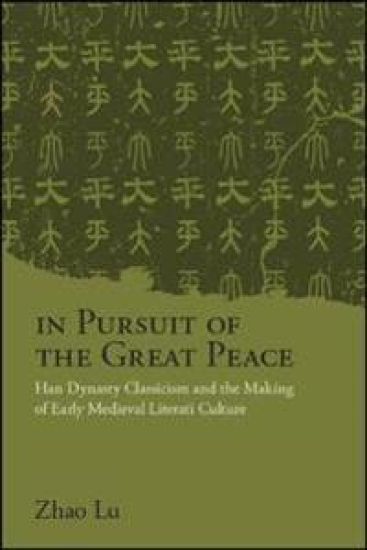
In Pursuit of the Great Peace

In Pursuit of the Great Peace

Zhao Lu

State University of New York Press
2019
Sidottu
Examines the Great Peace (taiping), one of the first utopian visions in Chinese history, and its impact on literati lives in Han China. Through an examination of the Great Peace (taiping), one of the first utopian visions in Chinese history, Zhao Lu describes the transformation of literati culture that occurred during the Han Dynasty. Driven by anxiety over losing the mandate of Heaven, the imperial court encouraged classicism in order to establish the Great Peace and follow Heaven's will. But instead of treating the literati as puppets of competing and imagined lineages, Zhao uses sociological methods to reconstruct their daily lives and to show how they created their own thought by adopting, modifying, and opposing the work of their contemporaries and predecessors. The literati who served as bureaucrats in the first century BCE gradually became classicists who depended on social networking as they traveled to study the classics. By the second century CE, classicism had dissolved in this traveling culture and the literati began to expand the corpus of knowledge beyond the accepted canon. Thus, far from being static, classicism in Han China was full of innovation, and ultimately gave birth to both literary writing and religious Daoism.