Kirjojen hintavertailu – 12 903 724 kirjaa ja 27 kauppaa

Kirjailija

Zhaohui Wu

Kirjat ja teokset yhdessä paikassa: 6 kirjaa, julkaisuja vuosilta 2008–2021, suosituimpiin kuuluu SmartShadow: Models and Methods for Pervasive Computing. Vertaile teosten hintoja ja tarkista saatavuus suomalaisista kirjakaupoista.

6 kirjaa

Kirjojen julkaisuvuodet: 2008–2021.

SmartShadow: Models and Methods for Pervasive Computing

SmartShadow: Models and Methods for Pervasive Computing

Zhaohui Wu; Gang Pan

Springer-Verlag Berlin and Heidelberg GmbH Co. K
2015
nidottu
SmartShadow: Models and Methods for Pervasive Computing offers a new perspective on pervasive computing with SmartShadow, which is designed to model a user as a personality “shadow” and to model pervasive computing environments as user-centric dynamic virtual personal spaces. Just like human beings’ shadows in the physical world, it follows people wherever they go, providing them with pervasive services. The model, methods, and software infrastructure for SmartShadow are presented and an application for smart cars is also introduced. The book can serve as a valuable reference work for researchers and graduate students in the field of pervasive/ubiquitous computing. Zhaohui Wu is a Professor at Zhejiang University, Hangzhou, China. Gang Pan is a Professor at the same institute.
SmartShadow: Models and Methods for Pervasive Computing

SmartShadow: Models and Methods for Pervasive Computing

Zhaohui Wu; Gang Pan

Springer-Verlag Berlin and Heidelberg GmbH Co. K
2013
sidottu
SmartShadow: Models and Methods for Pervasive Computing offers a new perspective on pervasive computing with SmartShadow, which is designed to model a user as a personality “shadow” and to model pervasive computing environments as user-centric dynamic virtual personal spaces. Just like human beings’ shadows in the physical world, it follows people wherever they go, providing them with pervasive services. The model, methods, and software infrastructure for SmartShadow are presented and an application for smart cars is also introduced. The book can serve as a valuable reference work for researchers and graduate students in the field of pervasive/ubiquitous computing. Zhaohui Wu is a Professor at Zhejiang University, Hangzhou, China. Gang Pan is a Professor at the same institute.
Semantic Grid: Model, Methodology, and Applications

Semantic Grid: Model, Methodology, and Applications

Zhaohui Wu; Huajun Chen

Springer-Verlag Berlin and Heidelberg GmbH Co. K
2008
sidottu
Semantic Grid: Model, Methodology, and Applications introduces to the science, core technologies, and killer applications. First, scientific issues of semantic grid systems are covered, followed by two basic technical issues, data-level semantic mapping, and service-level semantic interoperating. Two killer applications are then introduced to show how to build a semantic grid for specific application domains. Although this book is organized in a step by step manner, each chapter is independent. Detailed application scenarios are also presented. In 1990, Prof. Wu invented the first KB-system tool, ZIPE, based on C on a SUN platform. He proposed the first coupling knowledge representing model, Couplingua, which embodies Rule, Frame, Semantic Network and Nerve Cell Network, and supports symbol computing and data processing computing. His current focus is on semantic web, grid & ubiquitous computing, and their applications in the life sciences.
Food Supply Chain Management

Food Supply Chain Management

Madeleine Pullman; Zhaohui Wu

Routledge
2021
sidottu
This fully updated new edition of a respected text retains the original’s comprehensive and practical approach to food supply chain management, and introduces a global perspective and a wide range of new material. More than ever, this is the food supply chain management textbook. With an introduction that speaks to academic and non-academic audiences alike, the second edition of Food Supply Chain Management covers all-new topics such as cold chain management, “last mile” logistics, blockchain and traceability in the food supply chain, and the implications of global trade and climate change. Case studies examine the farm-to-table movement, sustainable co-ops, and more, with “quick facts” and mini-cases that are engaging and thought-provoking. This textbook is appropriate for upper-level undergraduate and postgraduate students of agricultural business, natural resources, and food science, as well as supply chain management students. Supporting online materials include lecture slides, test banks, and instructor manuals.
Food Supply Chain Management

Food Supply Chain Management

Madeleine Pullman; Zhaohui Wu

Routledge
2021
nidottu
This fully updated new edition of a respected text retains the original’s comprehensive and practical approach to food supply chain management, and introduces a global perspective and a wide range of new material. More than ever, this is the food supply chain management textbook. With an introduction that speaks to academic and non-academic audiences alike, the second edition of Food Supply Chain Management covers all-new topics such as cold chain management, “last mile” logistics, blockchain and traceability in the food supply chain, and the implications of global trade and climate change. Case studies examine the farm-to-table movement, sustainable co-ops, and more, with “quick facts” and mini-cases that are engaging and thought-provoking. This textbook is appropriate for upper-level undergraduate and postgraduate students of agricultural business, natural resources, and food science, as well as supply chain management students. Supporting online materials include lecture slides, test banks, and instructor manuals.
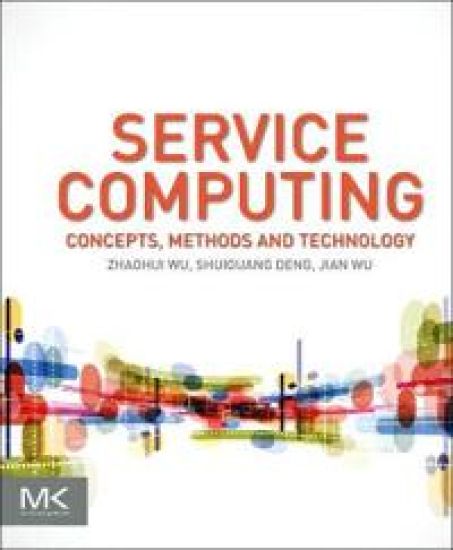
Service Computing: Concept, Method and Technology
Service computing is a cross-disciplinary field that covers science and technology, and represents a promising direction for distributed computing and software development methodologies. It aims to bridge the gap between business services and IT services by supporting the whole lifecycle of services innovation. Over the last ten years applications in industry and academic research have produced considerable progress and success Service Computing: Concept, Method and Technology presents the concept of service computing and a proposed reference architecture for service computing research before proceeding to introduce two underlying technologies: Web services and service-oriented architecture. It also presents the authors’ latest research findings on hot topics such as service discovery, recommendation, composition, verification, service trust, dynamic configuration and big data service. Some new models and methods are proposed including three service discovery methods based on semantics and skyline technologies, two service recommendation methods using graph mining and QoS prediction, two service composition methods with graph planning and one service verification method using p calculus and so on. Moreover, this book introduces JTang, an underlying platform supporting service computing, which is a product of the authors’ last ten years of research and development.