Kirjojen hintavertailu – 12 859 829 kirjaa ja 27 kauppaa

Kirjailija

Zhiqiang Wang

Kirjat ja teokset yhdessä paikassa: 3 kirjaa, julkaisuja vuosilta 2015–2024, suosituimpiin kuuluu High-Speed Maglev Train’s Levitation and Guidance Control. Vertaile teosten hintoja ja tarkista saatavuus suomalaisista kirjakaupoista.

3 kirjaa

Kirjojen julkaisuvuodet: 2015–2024.

High-Speed Maglev Train’s Levitation and Guidance Control

High-Speed Maglev Train’s Levitation and Guidance Control

Zhiqiang Long; Zhiqiang Wang; Mingda Zhai; Xiaolong Li

SPRINGER VERLAG, SINGAPORE
2024
sidottu

Halvin toimitettuna 181,30 €

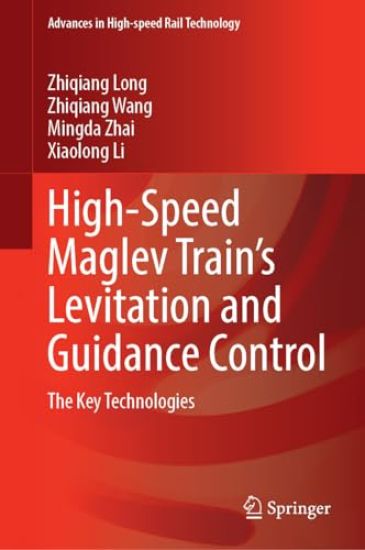
This book highlights the system modeling, control, diagnosis and fault-tolerant design of the suspension, and guidance system of the high-speed maglev train based on electromagnetic suspension technology. The electromagnetic suspension technology has been widely used in real-life engineering, including maglev trains, magnetic bearings, magnetic levitation vibration isolators, magnetic suspension and balance systems for wind tunnels, etc. Based on the academic researches, engineering applications, and technical innovations of high-speed maglev trains carried out by the maglev team of the National University of Defense Technology, this book summarizes the technical achievements in the field of levitation and guidance control technology of high-speed maglev train. It analyzes the research status and challenges of the suspension control technology of the electromagnetic suspension maglev train. The suspension, guidance system modeling, and controller design of the high-speed maglev train are described in detail. The performance index and performance evaluation method of the levitation and guidance system under various working conditions are analyzed respectively. A suspension scheme of permanent magnet electromagnetic hybrid suspension high-speed maglev train is proposed, and the results of the vehicle test are given in order to further improve the suspension energy consumption and heating of electromagnetic suspension high-speed maglev train. The suspension and guidance fault diagnosis and tolerant control methods of the high-speed maglev train are studied to improve the system's safety and reliability. The research and application results of suspension control technology of electromagnetic suspension maglev train are fully displayed for readers. This book is intended for researchers, scientists, engineers, and graduate students involved in the rail transit industry, train control and diagnosis, and maglev technology.
Cognitive Radio Networks

Cognitive Radio Networks

Tao Jiang; Zhiqiang Wang; Yang Cao

CRC Press
2020
nidottu
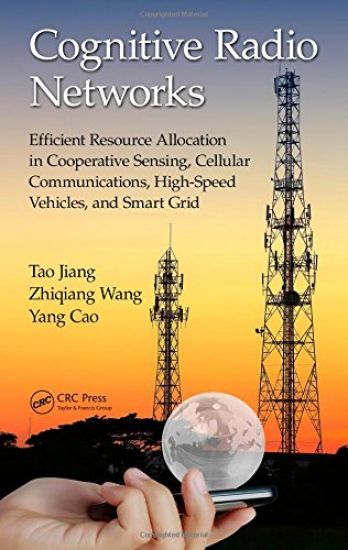
Resource allocation is an important issue in wireless communication networks. In recent decades, cognitive radio-based networks have garnered increased attention and have been well studied to overcome the problem of spectrum scarcity in future wireless communications systems. Many new challenges in resource allocation appear in cognitive radio-based networks. This book focuses on effective resource allocation solutions in several important cognitive radio-based networks, including opportunistic spectrum access networks, cooperative sensing networks, cellular networks, high-speed vehicle networks, and smart grids. Cognitive radio networks are composed of cognitive, spectrum-agile devices capable of changing their configuration on the fly based on the spectral environment. This capability makes it possible to design flexible and dynamic spectrum access strategies with the purpose of opportunistically reusing portions of the spectrum temporarily vacated by licensed primary users. Different cognitive radio-based networks focus on different network resources, such as transmission slots, sensing nodes, transmission power, white space, and sensing channels. This book introduces several innovative resource allocation schemes for different cognitive radio-based networks according to their network characteristics: Opportunistic spectrum access networks – Introduces a probabilistic slot allocation scheme to effectively allocate the transmission slots to secondary users to maximize throughput Cooperative sensing networks – Introduces a new adaptive collaboration sensing scheme in which the resources of secondary users are effectively utilized to sense the channels for efficient acquisition of spectrum opportunitiesCellular networks – Introduces a framework of cognitive radio-assisted cooperation for downlink transmissions to allocate transmission modes, relay stations, and transmission power/sub-channels to secondary users to maximize throughputHigh-speed vehicle networks – Introduces schemes to maximize the utilized TV white space through effective allocation of white space resources to secondary usersSmart grids – Introduces effective sensing channel allocation strategies for acquiring enough available spectrum channels for communications between utility and electricity consumers
Cognitive Radio Networks

Cognitive Radio Networks

Tao Jiang; Zhiqiang Wang; Yang Cao

Productivity Press
2015
sidottu
Resource allocation is an important issue in wireless communication networks. In recent decades, cognitive radio-based networks have garnered increased attention and have been well studied to overcome the problem of spectrum scarcity in future wireless communications systems. Many new challenges in resource allocation appear in cognitive radio-based networks. This book focuses on effective resource allocation solutions in several important cognitive radio-based networks, including opportunistic spectrum access networks, cooperative sensing networks, cellular networks, high-speed vehicle networks, and smart grids. Cognitive radio networks are composed of cognitive, spectrum-agile devices capable of changing their configuration on the fly based on the spectral environment. This capability makes it possible to design flexible and dynamic spectrum access strategies with the purpose of opportunistically reusing portions of the spectrum temporarily vacated by licensed primary users. Different cognitive radio-based networks focus on different network resources, such as transmission slots, sensing nodes, transmission power, white space, and sensing channels. This book introduces several innovative resource allocation schemes for different cognitive radio-based networks according to their network characteristics: Opportunistic spectrum access networks – Introduces a probabilistic slot allocation scheme to effectively allocate the transmission slots to secondary users to maximize throughput Cooperative sensing networks – Introduces a new adaptive collaboration sensing scheme in which the resources of secondary users are effectively utilized to sense the channels for efficient acquisition of spectrum opportunities Cellular networks – Introduces a framework of cognitive radio-assisted cooperation for downlink transmissions to allocate transmission modes, relay stations, and transmission power/sub-channels to secondary users to maximize throughput High-speed vehicle networks – Introduces schemes to maximize the utilized TV white space through effective allocation of white space resources to secondary users Smart grids – Introduces effective sensing channel allocation strategies for acquiring enough available spectrum channels for communications between utility and electricity consumers