Kirjojen hintavertailu – 12 859 829 kirjaa ja 27 kauppaa

Kirjailija

Zhisheng Niu

Kirjat ja teokset yhdessä paikassa: 3 kirjaa, julkaisuja vuosilta 2014–2018, suosituimpiin kuuluu Radio Resource Management Using Geometric Water-Filling. Vertaile teosten hintoja ja tarkista saatavuus suomalaisista kirjakaupoista.

3 kirjaa

Kirjojen julkaisuvuodet: 2014–2018.

Radio Resource Management Using Geometric Water-Filling

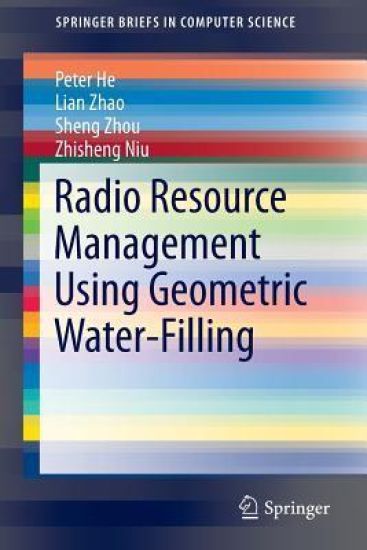
Radio Resource Management Using Geometric Water-Filling

Peter He; Lian Zhao; Sheng Zhou; Zhisheng Niu

Springer International Publishing AG
2014
nidottu
This brief introduces the fundamental theory and development of managing radio resources using a water-filling algorithm that can optimize system performance in wireless communication. Geometric Water-Filling (GWF) is a crucial underlying tool in emerging communication systems such as multiple input multiple output systems, cognitive radio systems, and green communication systems. Early chapters introduce emerging wireless technologies and provide a detailed analysis of water-filling. The brief investigates single user and multi-user issues of radio resource management, allocation of resources, and energy harvesting. Effective algorithms demonstrate the incredible potential capabilities of water-filling mechanisms. This brief is designed for researchers and professionals working with resource management and wireless communications. Advanced-level students in computer science and engineering will also find the information valuable.
Wireless Traffic Steering For Green Cellular Networks

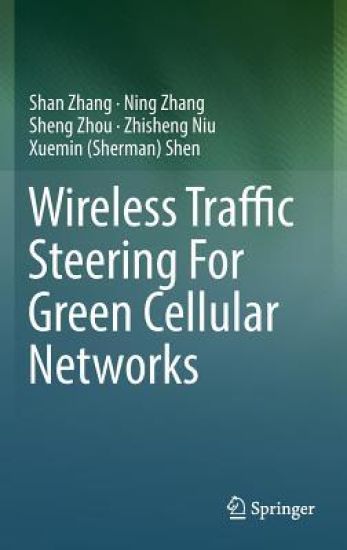
Wireless Traffic Steering For Green Cellular Networks

Shan Zhang; Ning Zhang; Sheng Zhou; Zhisheng Niu; Xuemin (Sherman) Shen

Springer International Publishing AG
2018
nidottu
This book introduces wireless traffic steering as a paradigm to realize green communication in multi-tier heterogeneous cellular networks. By matching network resources and dynamic mobile traffic demand, traffic steering helps to reduce on-grid power consumption with on-demand services provided. This book reviews existing solutions from the perspectives of energy consumption reduction and renewable energy harvesting. Specifically, it explains how traffic steering can improve energy efficiency through intelligent traffic-resource matching. Several promising traffic steering approaches for dynamic network planning and renewable energy demand-supply balancing are discussed. This book presents an energy-aware traffic steering method for networks with energy harvesting, which optimizes the traffic allocated to each cell based on the renewable energy status. Renewable energy demand-supply balancing is a key factor in energy dynamics, aimed at enhancing renewable energy sustainability to reduce on-grid energy consumption. Dynamic network planning adjusts cell density with traffic variations to provide on-demand service, which reduces network power consumption with quality of service provisioning during off-peak hours. With intra- or inter-tier traffic steering, cell density is dynamically optimized with regards to the instant traffic load for conventional homogeneous and multi-tier heterogeneous cellular networks, respectively. This book is beneficial for researchers and graduate students interested in traffic management and future wireless networking.
Wireless Traffic Steering For Green Cellular Networks

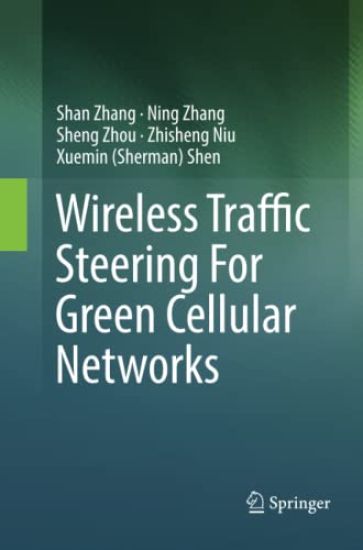
Wireless Traffic Steering For Green Cellular Networks

Shan Zhang; Ning Zhang; Sheng Zhou; Zhisheng Niu; Xuemin (Sherman) Shen

Springer International Publishing AG
2016
sidottu
This book introduces wireless traffic steering as a paradigm to realize green communication in multi-tier heterogeneous cellular networks. By matching network resources and dynamic mobile traffic demand, traffic steering helps to reduce on-grid power consumption with on-demand services provided. This book reviews existing solutions from the perspectives of energy consumption reduction and renewable energy harvesting. Specifically, it explains how traffic steering can improve energy efficiency through intelligent traffic-resource matching. Several promising traffic steering approaches for dynamic network planning and renewable energy demand-supply balancing are discussed. This book presents an energy-aware traffic steering method for networks with energy harvesting, which optimizes the traffic allocated to each cell based on the renewable energy status. Renewable energy demand-supply balancing is a key factor in energy dynamics, aimed at enhancing renewable energy sustainability to reduce on-grid energy consumption. Dynamic network planning adjusts cell density with traffic variations to provide on-demand service, which reduces network power consumption with quality of service provisioning during off-peak hours. With intra- or inter-tier traffic steering, cell density is dynamically optimized with regards to the instant traffic load for conventional homogeneous and multi-tier heterogeneous cellular networks, respectively. This book is beneficial for researchers and graduate students interested in traffic management and future wireless networking.