Kirjojen hintavertailu – 12 903 725 kirjaa ja 27 kauppaa
Kirjailija
Zhong-Ping Jiang
Kirjat ja teokset yhdessä paikassa: 8 kirjaa, julkaisuja vuosilta 2011–2021, suosituimpiin kuuluu Robust Event-Triggered Control of Nonlinear Systems. Vertaile teosten hintoja ja tarkista saatavuus suomalaisista kirjakaupoista.
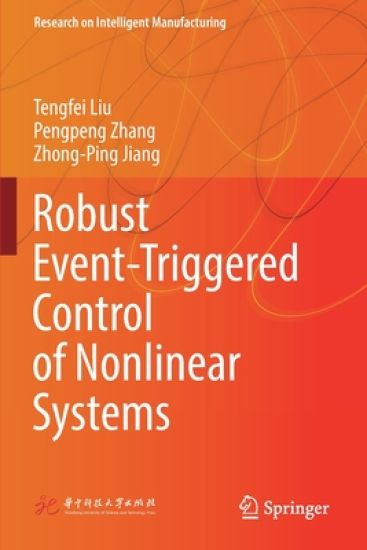
This book presents a study on the novel concept of "event-triggered control of nonlinear systems subject to disturbances", discussing the theory and practical applications. Richly illustrated, it is a valuable resource for researchers, engineers and graduate students in automation engineering who wish to learn the theories, technologies, and applications of event-triggered control of nonlinear systems.
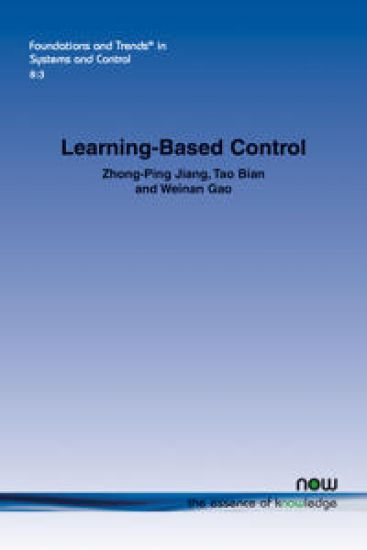
The recent success of Reinforcement Learning and related methods can be attributed to several key factors. First, it is driven by reward signals obtained through the interaction with the environment. Second, it is closely related to the human learning behavior. Third, it has a solid mathematical foundation. Nonetheless, conventional Reinforcement Learning theory exhibits some shortcomings particularly in a continuous environment or in considering the stability and robustness of the controlled process. In this monograph, the authors build on Reinforcement Learning to present a learning-based approach for controlling dynamical systems from real-time data and review some major developments in this relatively young field. In doing so the authors develop a framework for learning-based control theory that shows how to learn directly suboptimal controllers from input-output data. There are three main challenges on the development of learning-based control. First, there is a need to generalize existing recursive methods. Second, as a fundamental difference between learning-based control and Reinforcement Learning, stability and robustness are important issues that must be addressed for the safety-critical engineering systems such as self-driving cars. Third, data efficiency of Reinforcement Learning algorithms need be addressed for safety-critical engineering systems. This monograph provides the reader with an accessible primer on a new direction in control theory still in its infancy, namely Learning-Based Control Theory, that is closely tied to the literature of safe Reinforcement Learning and Adaptive Dynamic Programming.
This book presents a study on the novel concept of "event-triggered control of nonlinear systems subject to disturbances", discussing the theory and practical applications. Richly illustrated, it is a valuable resource for researchers, engineers and graduate students in automation engineering who wish to learn the theories, technologies, and applications of event-triggered control of nonlinear systems.
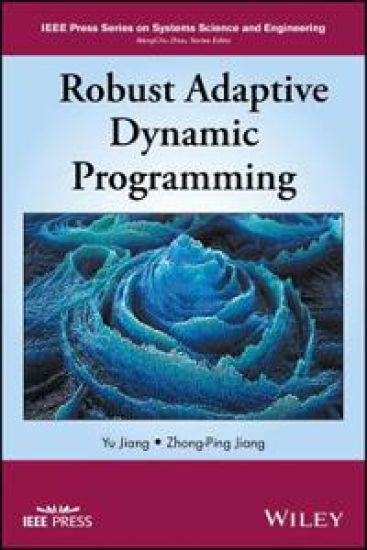
A comprehensive look at state-of-the-art ADP theory and real-world applications This book fills a gap in the literature by providing a theoretical framework for integrating techniques from adaptive dynamic programming (ADP) and modern nonlinear control to address data-driven optimal control design challenges arising from both parametric and dynamic uncertainties. Traditional model-based approaches leave much to be desired when addressing the challenges posed by the ever-increasing complexity of real-world engineering systems. An alternative which has received much interest in recent years are biologically-inspired approaches, primarily RADP. Despite their growing popularity worldwide, until now books on ADP have focused nearly exclusively on analysis and design, with scant consideration given to how it can be applied to address robustness issues, a new challenge arising from dynamic uncertainties encountered in common engineering problems. Robust Adaptive Dynamic Programming zeros in on the practical concerns of engineers. The authors develop RADP theory from linear systems to partially-linear, large-scale, and completely nonlinear systems. They provide in-depth coverage of state-of-the-art applications in power systems, supplemented with numerous real-world examples implemented in MATLAB. They also explore fascinating reverse engineering topics, such how ADP theory can be applied to the study of the human brain and cognition. In addition, the book: Covers the latest developments in RADP theory and applications for solving a range of systems’ complexity problemsExplores multiple real-world implementations in power systems with illustrative examples backed up by reusable MATLAB code and Simulink block setsProvides an overview of nonlinear control, machine learning, and dynamic controlFeatures discussions of novel applications for RADP theory, including an entire chapter on how it can be used as a computational mechanism of human movement control Robust Adaptive Dynamic Programming is both a valuable working resource and an intriguing exploration of contemporary ADP theory and applications for practicing engineers and advanced students in systems theory, control engineering, computer science, and applied mathematics.
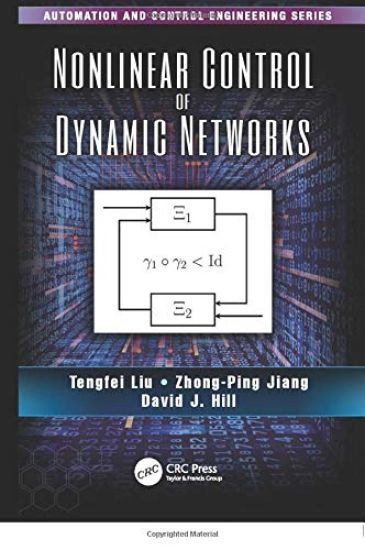
Significant progress has been made on nonlinear control systems in the past two decades. However, many of the existing nonlinear control methods cannot be readily used to cope with communication and networking issues without nontrivial modifications. For example, small quantization errors may cause the performance of a "well-designed" nonlinear control system to deteriorate. Motivated by the need for new tools to solve complex problems resulting from smart power grids, biological processes, distributed computing networks, transportation networks, robotic systems, and other cutting-edge control applications, Nonlinear Control of Dynamic Networks tackles newly arising theoretical and real-world challenges for stability analysis and control design, including nonlinearity, dimensionality, uncertainty, and information constraints as well as behaviors stemming from quantization, data-sampling, and impulses. Delivering a systematic review of the nonlinear small-gain theorems, the text: Supplies novel cyclic-small-gain theorems for large-scale nonlinear dynamic networksOffers a cyclic-small-gain framework for nonlinear control with static or dynamic quantizationContains a combination of cyclic-small-gain and set-valued map designs for robust control of nonlinear uncertain systems subject to sensor noisePresents a cyclic-small-gain result in directed graphs and distributed control of nonlinear multi-agent systems with fixed or dynamically changing topologyBased on the authors’ recent research, Nonlinear Control of Dynamic Networks provides a unified framework for robust, quantized, and distributed control under information constraints. Suggesting avenues for further exploration, the book encourages readers to take into consideration more communication and networking issues in control designs to better handle the arising challenges.
Significant progress has been made on nonlinear control systems in the past two decades. However, many of the existing nonlinear control methods cannot be readily used to cope with communication and networking issues without nontrivial modifications. For example, small quantization errors may cause the performance of a "well-designed" nonlinear control system to deteriorate. Motivated by the need for new tools to solve complex problems resulting from smart power grids, biological processes, distributed computing networks, transportation networks, robotic systems, and other cutting-edge control applications, Nonlinear Control of Dynamic Networks tackles newly arising theoretical and real-world challenges for stability analysis and control design, including nonlinearity, dimensionality, uncertainty, and information constraints as well as behaviors stemming from quantization, data-sampling, and impulses. Delivering a systematic review of the nonlinear small-gain theorems, the text: Supplies novel cyclic-small-gain theorems for large-scale nonlinear dynamic networksOffers a cyclic-small-gain framework for nonlinear control with static or dynamic quantizationContains a combination of cyclic-small-gain and set-valued map designs for robust control of nonlinear uncertain systems subject to sensor noisePresents a cyclic-small-gain result in directed graphs and distributed control of nonlinear multi-agent systems with fixed or dynamically changing topologyBased on the authors’ recent research, Nonlinear Control of Dynamic Networks provides a unified framework for robust, quantized, and distributed control under information constraints. Suggesting avenues for further exploration, the book encourages readers to take into consideration more communication and networking issues in control designs to better handle the arising challenges.
Recently, the subject of nonlinear control systems analysis has grown rapidly and this book provides a simple and self-contained presentation of their stability and feedback stabilization which enables the reader to learn and understand major techniques used in mathematical control theory. In particular: the important techniques of proving global stability properties are presented closely linked with corresponding methods of nonlinear feedback stabilization; a general framework of methods for proving stability is given, thus allowing the study of a wide class of nonlinear systems, including finite-dimensional systems described by ordinary differential equations, discrete-time systems, systems with delays and sampled-data systems; approaches to the proof of classical global stability properties are extended to non-classical global stability properties such as non-uniform-in-time stability and input-to-output stability; and new tools for stability analysis and control design of a wide class of nonlinear systems are introduced. The presentational emphasis of Stability and Stabilization of Nonlinear Systems is theoretical but the theory’s importance for concrete control problems is highlighted with a chapter specifically dedicated to applications and with numerous illustrative examples. Researchers working on nonlinear control theory will find this monograph of interest while graduate students of systems and control can also gain much insight and assistance from the methods and proofs detailed in this book.
Recently, the subject of nonlinear control systems analysis has grown rapidly and this book provides a simple and self-contained presentation of their stability and feedback stabilization which enables the reader to learn and understand major techniques used in mathematical control theory. In particular: the important techniques of proving global stability properties are presented closely linked with corresponding methods of nonlinear feedback stabilization; a general framework of methods for proving stability is given, thus allowing the study of a wide class of nonlinear systems, including finite-dimensional systems described by ordinary differential equations, discrete-time systems, systems with delays and sampled-data systems; approaches to the proof of classical global stability properties are extended to non-classical global stability properties such as non-uniform-in-time stability and input-to-output stability; and new tools for stability analysis and control design of a wide class of nonlinear systems are introduced. The presentational emphasis of Stability and Stabilization of Nonlinear Systems is theoretical but the theory’s importance for concrete control problems is highlighted with a chapter specifically dedicated to applications and with numerous illustrative examples. Researchers working on nonlinear control theory will find this monograph of interest while graduate students of systems and control can also gain much insight and assistance from the methods and proofs detailed in this book.