Kirjojen hintavertailu – 12 903 725 kirjaa ja 27 kauppaa

Kirjailija

Zhongjian Mou

Kirjat ja teokset yhdessä paikassa: 4 kirjaa, julkaisuja vuosilta 2020–2024, suosituimpiin kuuluu Handbook of the History of Religions in China I. Vertaile teosten hintoja ja tarkista saatavuus suomalaisista kirjakaupoista.

4 kirjaa

Kirjojen julkaisuvuodet: 2020–2024.

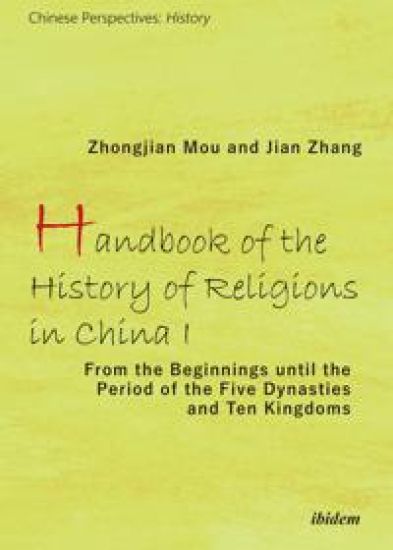
Handbook of the History of Religions in China I

Handbook of the History of Religions in China I

Zhongjian Mou; Jian Zhang

ibidem-Verlag, Jessica Haunschild u Christian Schon
2020
nidottu
This book is part of an initiative in cooperation with renowned Chinese publishers to make fundamental, formative, and influential Chinese thinkers available to a western readership, providing absorbing insights into Chinese reflections of late, and offering a chance to grasp todays China. In their influential book Handbook of the History of Religions in China, Zhongjian Mou and Jian Zhang present a panorama of the religions existing in China through time. In their fascinating History, they delineate the emergence and development of Daoism, Buddhism, Confucianism, Islam, and Christianity and explore the roles they played in Chinese society and the interrelations between them. In China, also due to the encompassing Confucian idea of living together harmoniously while maintaining differences, religions -- including newly arrived ones -- came closer together than anywhere else in the world and reached a unique level of peaceful societal coexistence. Despite many frictions and conflicts, communication and reconciliation were indisputably predominant in China throughout history. Buddhism was peacefully introduced into China and, later on, a harmonious, symbiotic syncretism of Confucianism, Buddhism, and Daoism developed -- an exemplary process of how a diverse set of different religions can complement each other and contribute to a better life.
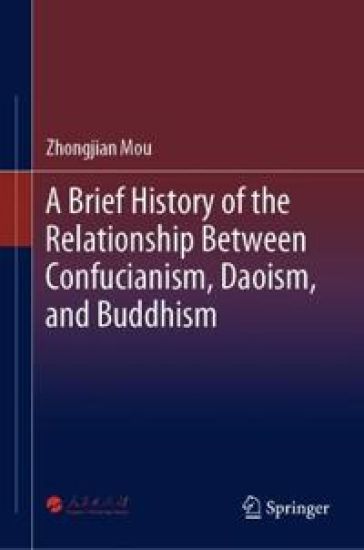
A Brief History of the Relationship Between Confucianism, Daoism, and Buddhism
Chinese traditions of Confucianism, Daoism, and Buddhism have a profoundly philosophical dimension. The three traditions are frequently referred to as three paths of moral teachings. In this book, Mou provides a clear account of the textual corpus that emerges to define each of these traditions and how this canonical axis was augmented by a continuing commentarial tradition as each generation reauthorized the written core for their own time and place. In his careful exegesis, Mou lays out the differences between the more religious reading of these traditions with their defining practices that punctuate the human journey through life, and the more intellectual and philosophical treatment of the texts that has and continues to produce a first-order culture of annotation that become integral to the traditions themselves. At the center of the alternative religious experience reflected throughout the teachings of Confucianism, Daoism, and Buddhism is the project of personal cultivation as it comes to be expressed as robust growth in family and communal relations. For Mou, these three highly distinctive and yet complementary ways of thinking and living constitute a kind of moral ecology, wherein each of them complements the others as they stand in service to a different dimension of the human need for an educated spirituality.
A Brief History of the Relationship Between Confucianism, Daoism, and Buddhism
Chinese traditions of Confucianism, Daoism, and Buddhism have a profoundly philosophical dimension. The three traditions are frequently referred to as three paths of moral teachings. In this book, Mou provides a clear account of the textual corpus that emerges to define each of these traditions and how this canonical axis was augmented by a continuing commentarial tradition as each generation reauthorized the written core for their own time and place. In his careful exegesis, Mou lays out the differences between the more religious reading of these traditions with their defining practices that punctuate the human journey through life, and the more intellectual and philosophical treatment of the texts that has and continues to produce a first-order culture of annotation that become integral to the traditions themselves. At the center of the alternative religious experience reflected throughout the teachings of Confucianism, Daoism, and Buddhism is the project of personal cultivation as it comes to be expressed as robust growth in family and communal relations. For Mou, these three highly distinctive and yet complementary ways of thinking and living constitute a kind of moral ecology, wherein each of them complements the others as they stand in service to a different dimension of the human need for an educated spirituality.
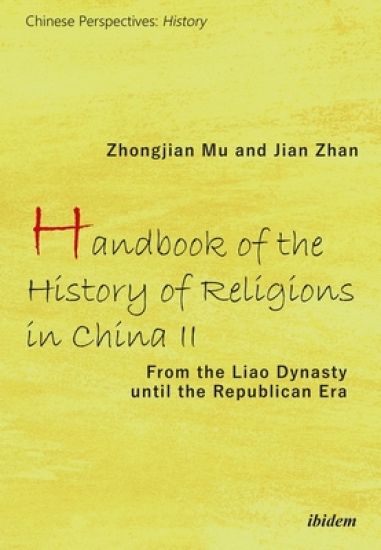
Handbook of the History of Religions in China II

Handbook of the History of Religions in China II

Zhongjian Mou; Jian Zhang

ibidem-Verlag, Jessica Haunschild u Christian Schon
2020
nidottu
This book is part of an initiative in cooperation with renowned Chinese publishers to make fundamental, formative, and influential Chinese thinkers available to a western readership, providing absorbing insights into Chinese reflections of late, and offering a chance to grasp todays China. In their influential book Handbook of the History of Religions in China, Zhongjian Mou and Jian Zhang present a panorama of the religions existing in China through time. In their fascinating History, they delineate the emergence and development of Daoism, Buddhism, Confucianism, Islam, and Christianity and explore the roles they played in Chinese society and the interrelations between them. In China, also due to the encompassing Confucian idea of living together harmoniously while maintaining differences, religions -- including newly arrived ones -- came closer together than anywhere else in the world and reached a unique level of peaceful societal coexistence. Despite many frictions and conflicts, communication and reconciliation were indisputably predominant in China throughout history. Buddhism was peacefully introduced into China and, later on, a harmonious, symbiotic syncretism of Confucianism, Buddhism, and Daoism developed -- an exemplary process of how a diverse set of different religions can complement each other and contribute to a better life.