Kirjojen hintavertailu – 12 903 725 kirjaa ja 27 kauppaa

Kirjailija

Zhou Xun

Kirjat ja teokset yhdessä paikassa: 4 kirjaa, julkaisuja vuosilta 2000–2021, suosituimpiin kuuluu 'I Know Who Caused COVID-19'. Vertaile teosten hintoja ja tarkista saatavuus suomalaisista kirjakaupoista.

4 kirjaa

Kirjojen julkaisuvuodet: 2000–2021.

'I Know Who Caused COVID-19'

'I Know Who Caused COVID-19'

Zhou Xun; Sander L. Gilman

Reaktion Books
2021
sidottu
This book explores prejudice towards groups who are thought to have caused and spread the COVID-19 virus. The book examines four cases around the world: the residents of Wuhan, China; Ultra-Orthodox Jewish communities in the USA, Britain and Israel; African-Americans in the United States and Black/Asian/Mixed Ethnic communities in Britain; and 'White' right-wing groups in American and Europe. The book examines stereotyping and the false attribution of blame towards these groups, as well as what happens when a collective is actually at fault, and how the community deals with these conflicting issues. This is a timely, cogent examination of blame and xenophobia, which have been brought to the surface by the COVID-19 pandemic.
Narcotic Culture

Narcotic Culture

Frank Dikotter; Zhou Xun; Lars Peter Laamann

C Hurst Co Publishers Ltd
2016
nidottu
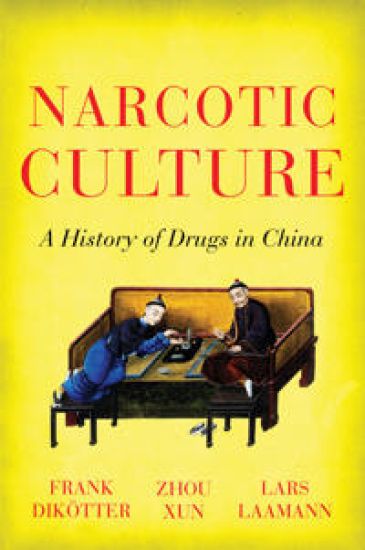
To this day, the perception persists that China was a civilisation defeated by imperialist Britain's most desirable trade commodity, opium - a drug that turned the Chinese into cadaverous addicts in the iron grip of dependence. But, as this new edition of Narcotic Culture brilliantly shows, the real scandal in Chinese history was not the expansion of the drug trade by Britain in the early nineteenth century, but rather the failure of the British to grasp the consequences of prohibition. They reveal that opium actually had few harmful effects on either health or longevity; in fact, it was prepared and appreciated in highly complex rituals with inbuilt constraints preventing excessive use. Opium was even used as a medicinal panacea in China before the availability of aspirin and penicillin. But as a result of the British effort to eradicate opium, the Chinese turned from the relatively benign use of that drug to heroin, morphine, cocaine, and countless other psychoactive substances. The transition from a tolerated opium culture to a system of prohibition produced a 'cure' that was far worse than the disease. Delving into a history of drugs and their abuses, Narcotic Culture is part revisionist history of imperial and twentieth-century Britain and part sobering portrait of the dangers of prohibition.
Chinese Perceptions of the Jews' and Judaism
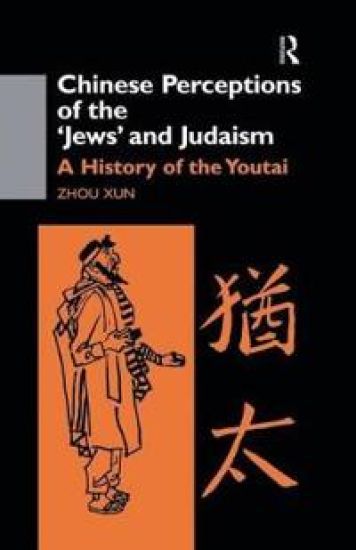
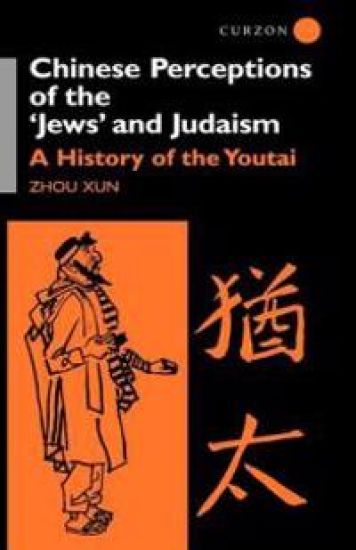
While prejudice against Jews is a real and ongoing category in Western culture, little attention has been paid to the myths of the Jews' and their impact in countries outside the West. This work draws on a wide variety of source materials from the past two centuries to examine the images of the Jews' as constructed in China. However, the interest here does not lie in the determination of the boundary between the real and fictional aspects of these images. Rather, it lies in the implications associated with the Jew' as an other', which remains a distant mirror in the construction of the self' amongst various social groups in modern China. Although it has been noted by a few scholars that the use of the Jews' as a category was important to many thinkers of modern China in the construction of their nationalistic and socio- political ideologies, this is the first systematic study in the field to be published. This book is also more than a historical book on China in that it opens a new arena for modern Jewish studies from a unique angle.
Chinese Perceptions of the Jews' and Judaism

Chinese Perceptions of the Jews' and Judaism

Zhou Xun; Xun Zhou

RoutledgeCurzon
2000
sidottu
While prejudice against Jews is a real and ongoing category in Western culture, little attention has been paid to the myths of the Jews' and their impact in countries outside the West. This work draws on a wide variety of source materials from the past two centuries to examine the images of the Jews' as constructed in China. However, the interest here does not lie in the determination of the boundary between the real and fictional aspects of these images. Rather, it lies in the implications associated with the Jew' as an other', which remains a distant mirror in the construction of the self' amongst various social groups in modern China. Although it has been noted by a few scholars that the use of the Jews' as a category was important to many thinkers of modern China in the construction of their nationalistic and socio- political ideologies, this is the first systematic study in the field to be published. This book is also more than a historical book on China in that it opens a new arena for modern Jewish studies from a unique angle.