Kirjojen hintavertailu – 12 859 826 kirjaa ja 27 kauppaa

Kirjailija

Zhu Qiang

Kirjat ja teokset yhdessä paikassa: 4 kirjaa, julkaisuja vuodelta 2012, suosituimpiin kuuluu The Challenges of Urban Ecological Sanitation. Vertaile teosten hintoja ja tarkista saatavuus suomalaisista kirjakaupoista.

4 kirjaa

The Challenges of Urban Ecological Sanitation

The Challenges of Urban Ecological Sanitation

Arno Rosemarin; Jennifer McConville; Amparo Flores; Zhu Qiang

Practical Action Publishing
2012
nidottu
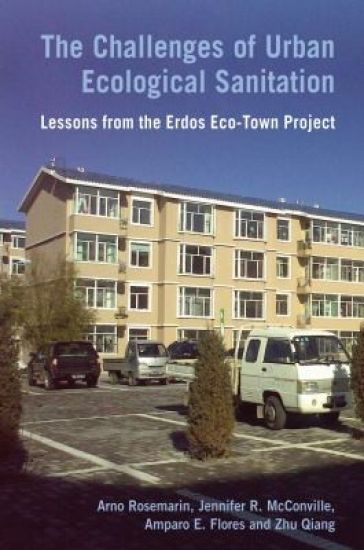
The need for improved sanitation around the world is becoming a crisis, and the situation is particularly critical in urban and peri-urban areas in developing countries. Here the population is growing rapidly, and where sanitation is provided, the means to treat and dispose of waste safely is neglected, with huge environmental and public health consequences. Sanitation solutions are needed that are safe for the user and interlinked with other urban services which can treat waste as a resource. This book describes an attempt to create modern, multi-storey urban dwellings that incorporate ecological sanitation into their design, resulting in a clean living space, and deriving safe agricultural inputs from human organic waste. The book highlights the experience of implementing the Erdos Eco-Town Project in Inner Mongolia, China. This remains the largest urban project of urine-diversion dry toilets in the world and describes the technical design, daily operation and maintenance, costs and benefits compared to conventional systems, as well as the challenges in achieving acceptability with users. Published in association with Stockholm Environment Institute.
The Challenges of Urban Ecological Sanitation

The Challenges of Urban Ecological Sanitation

Arno Rosemarin; Jennifer McConville; Amparo Flores; Zhu Qiang

Practical Action Publishing
2012
sidottu
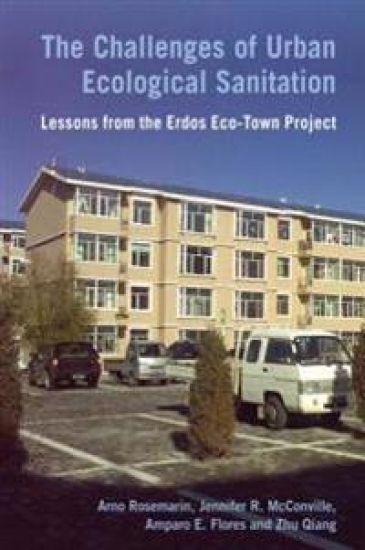
The need for improved sanitation around the world is becoming a crisis, and the situation is particularly critical in urban and peri-urban areas in developing countries. Here the population is growing rapidly, and where sanitation is provided, the means to treat and dispose of waste safely is neglected, with huge environmental and public health consequences. Sanitation solutions are needed that are safe for the user and interlinked with other urban services which can treat waste as a resource. This book describes an attempt to create modern, multi-storey urban dwellings that incorporate ecological sanitation into their design, resulting in a clean living space, and deriving safe agricultural inputs from human organic waste. The book highlights the experience of implementing the Erdos Eco-Town Project in Inner Mongolia, China. This remains the largest urban project of urine-diversion dry toilets in the world, serving a population of approximately 3000 people in 4-5 story apartment buildings. The multi-story collection system also links to on-site grey water treatment, a composting center, underground urine tanks, and the agricultural reuse of nutrients. The Challenges of Urban Ecological Sanitation describes the technical design, daily operation and maintenance, costs and benefits compared to conventional systems, as well as the challenges in achieving acceptability with users. It includes technical information and illustrations, but also stresses the institutional structure needed to support this system and discusses its long-term sustainability. The Challenges of Urban Ecological Sanitation should be read by engineers, policy makers, researchers and NGO staff working in the field of water supply and sanitation.
Every Last Drop

Every Last Drop

Zhu Qiang; Li Yuanhong; John Gould

Practical Action Publishing
2012
nidottu
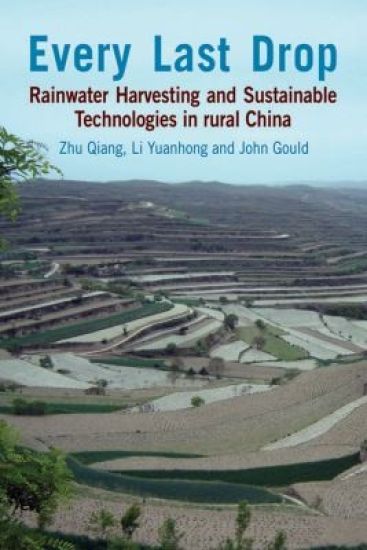
Over the past two decades a quiet revolution has been taking place in the countryside of China where hundreds of millions of people have been lifted out of poverty. This book focuses on some of the practical actions and clever use of appropriate technologies which have been at the heart of this positive grassroots-driven change in rural Gansu Province. Key to this has been mobilizing the population and their expeditious use of rainwater harvesting both to dramatically improve crop yields and provide households with reliable domestic water supplies. Since Gansu is semi-arid and stored rainwater a scarce resource, ingenious systems of providing crops with just the right amount of supplementary irrigation at critical periods have been developed. Challenges such as lack of fuelwood have been overcome by the development of simple low-cost solar cookers; the construction of low-cost greenhouses allows for the collection of rainwater and its use in efficient drip irrigation systems. The real significance of this case study is that most of the approaches described are based on universal principles of sustainable development. This book is recommended reading for engineers, planners, staff of NGOs, academics and students in the water, energy, and agriculture sectors.
Every Last Drop

Every Last Drop

Zhu Qiang; Li Yuanhong; John Gould

Practical Action Publishing
2012
sidottu
Over the past two decades a quiet revolution has been taking place in the countryside of China where hundreds of millions of people have been lifted out of poverty. This book focuses on some of the practical actions and clever use of appropriate technologies which have been at the heart of this positive grassroots-driven change in rural Gansu Province. Key to this has been mobilizing the population and their expeditious use of rainwater harvesting both to dramatically improve crop yields and provide households with reliable domestic water supplies. Since Gansu is semi-arid and stored rainwater a scarce resource, ingenious systems of providing crops with just the right amount of supplementary irrigation at critical periods have been developed. Challenges such as lack of fuelwood have been overcome by the development of simple low-cost solar cookers, which by focusing the sun's rays using tiny mirrors can boil a kettle in minutes. These affordable units are now being produced at hundreds of small rural factories. The construction of low-cost greenhouses using plastic sheeting allows for the collection of rainwater and its use in efficient drip irrigation systems. By supplying vegetables and cash crops to local markets farmers have been able to repay their initial investment in under two years. The real significance of this case study is that most of the approaches described are based on universal principles of sustainable development. Every Last Drop is recommended reading for engineers, planners, staff of NGOs, academics and students in the water, energy, and agriculture sectors.