Kirjojen hintavertailu – 12 903 724 kirjaa ja 27 kauppaa

Kirjailija

Zicheng Liu

Kirjat ja teokset yhdessä paikassa: 6 kirjaa, julkaisuja vuosilta 2011–2022, suosituimpiin kuuluu Vision-Language Pre-Training. Vertaile teosten hintoja ja tarkista saatavuus suomalaisista kirjakaupoista.

6 kirjaa

Kirjojen julkaisuvuodet: 2011–2022.

Vision-Language Pre-Training

Vision-Language Pre-Training

Zhe Gan; Linjie Li; Chunyuan Li; Lijuan Wang; Zicheng Liu; Jianfeng Gao

Now Publishers Inc
2022
nidottu
Humans perceive the world through many channels, such as images viewed by the eyes, or voices heard by the ears. Though any individual channel might be incomplete or noisy, humans can naturally align and fuse information collected from multiple channels in order to grasp the key concepts needed for a better understanding of the world. One of the core aspirations in Artificial Intelligence (AI) is to develop algorithms that endow computers with an ability to effectively learn from multimodal (or, multi-channel) data. This data is similar to sights and sounds attained from vision and language that help humans make sense of the world around us. For example, computers could mimic this ability by searching the most relevant images to a text query (or vice versa), and by describing the content of an image using natural language. Vision-and-Language (VL), a popular research area that sits at the nexus of Computer Vision and Natural Language Processing (NLP), aims to achieve this goal. This monograph surveys vision-language pre-training (VLP) methods for multimodal intelligence that have been developed in the last few years. Approaches are grouped into three categories: (i) VLP for image-text tasks, such as image captioning, image-text retrieval, visual question answering, and visual grounding; (ii) VLP for core computer vision tasks, such as (open-set) image classification, object detection, and segmentation; and (iii) VLP for video-text tasks, such as video captioning, video-text retrieval, and video question answering. For each category, a comprehensive review of state-of-the-art methods is presented, and the progress that has been made and challenges still being faced are discussed, using specific systems and models as case studies. In addition, for each category, advanced topics being actively explored in the research community are presented, such as big foundation models, unified modeling, in-context few-shot learning, knowledge, robustness, and computer vision in the wild, to name a few.

Advanced Pulse-Width-Modulation: With Freedom to Optimize Power Electronics Converters

Advanced Pulse-Width-Modulation: With Freedom to Optimize Power Electronics Converters

Dong Jiang; Zewei Shen; Qiao Li; Jianan Chen; Zicheng Liu

SPRINGER VERLAG, SINGAPORE
2022
nidottu
This book is a technical publication for students, scholars and engineers in electrical engineering, focusing on the pulse-width-modulation (PWM) technologies in power electronics area. Based on an introduction of basic PWM principles this book analyzes three major challenges for PWM on system performance: power losses, voltage/current ripple and electromagnetic interference (EMI) noise, and the lack of utilization of control freedoms in conventional PWM technologies. Then, the model of PWM's impact on system performance is introduced, with the current ripple prediction method for voltage source converter as example. With the prediction model, two major advanced PWM methods are introduced: variable switching frequency PWM and phase-shift PWM, which can reduce the power losses and EMI for the system based on the prediction model. Furthermore, the advanced PWM can be applied in advanced topologies including multilevel converters and paralleled converters. With more control variables in the advanced topologies, performance of PWM can be further improved. Also, for the special problem for common-mode noise, this book introduces modified PWM method for reduction. Especially, the paralleled inverters with advanced PWM can achieve good performance for the common-mode noise reduction. Finally, the implementation of PWM technologies in hardware is introduced in the last part.
Advanced Pulse-Width-Modulation: With Freedom to Optimize Power Electronics Converters

Advanced Pulse-Width-Modulation: With Freedom to Optimize Power Electronics Converters

Dong Jiang; Zewei Shen; Qiao Li; Jianan Chen; Zicheng Liu

Springer Verlag, Singapore
2021
sidottu
This book is a technical publication for students, scholars and engineers in electrical engineering, focusing on the pulse-width-modulation (PWM) technologies in power electronics area. Based on an introduction of basic PWM principles this book analyzes three major challenges for PWM on system performance: power losses, voltage/current ripple and electromagnetic interference (EMI) noise, and the lack of utilization of control freedoms in conventional PWM technologies. Then, the model of PWM's impact on system performance is introduced, with the current ripple prediction method for voltage source converter as example. With the prediction model, two major advanced PWM methods are introduced: variable switching frequency PWM and phase-shift PWM, which can reduce the power losses and EMI for the system based on the prediction model. Furthermore, the advanced PWM can be applied in advanced topologies including multilevel converters and paralleled converters. With more control variables in the advanced topologies, performance of PWM can be further improved. Also, for the special problem for common-mode noise, this book introduces modified PWM method for reduction. Especially, the paralleled inverters with advanced PWM can achieve good performance for the common-mode noise reduction. Finally, the implementation of PWM technologies in hardware is introduced in the last part.
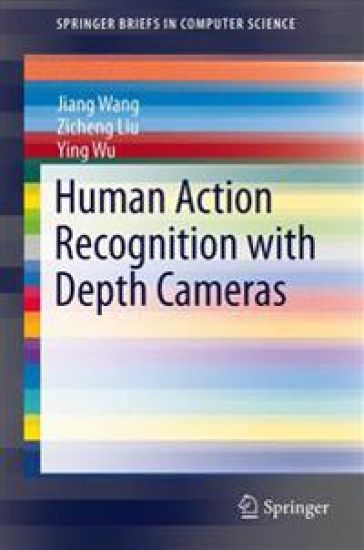
Human Action Recognition with Depth Cameras

Human Action Recognition with Depth Cameras

Jiang Wang; Zicheng Liu; Ying Wu

Springer International Publishing AG
2014
nidottu
Action recognition technology has many real-world applications in human-computer interaction, surveillance, video retrieval, retirement home monitoring, and robotics. The commoditization of depth sensors has also opened up further applications that were not feasible before. This text focuses on feature representation and machine learning algorithms for action recognition from depth sensors. After presenting a comprehensive overview of the state of the art, the authors then provide in-depth descriptions of their recently developed feature representations and machine learning techniques, including lower-level depth and skeleton features, higher-level representations to model the temporal structure and human-object interactions, and feature selection techniques for occlusion handling. This work enables the reader to quickly familiarize themselves with the latest research, and to gain a deeper understanding of recently developed techniques. It will be of great use for both researchers andpractitioners.
Human Action Analysis with Randomized Trees

Human Action Analysis with Randomized Trees

Gang Yu; Junsong Yuan; Zicheng Liu

Springer Verlag, Singapore
2014
nidottu
This book will provide a comprehensive overview on human action analysis with randomized trees. It will cover both the supervised random trees and the unsupervised random trees. When there are sufficient amount of labeled data available, supervised random trees provides a fast method for space-time interest point matching. When labeled data is minimal as in the case of example-based action search, unsupervised random trees is used to leverage the unlabelled data. We describe how the randomized trees can be used for action classification, action detection, action search, and action prediction. We will also describe techniques for space-time action localization including branch-and-bound sub-volume search and propagative Hough voting.
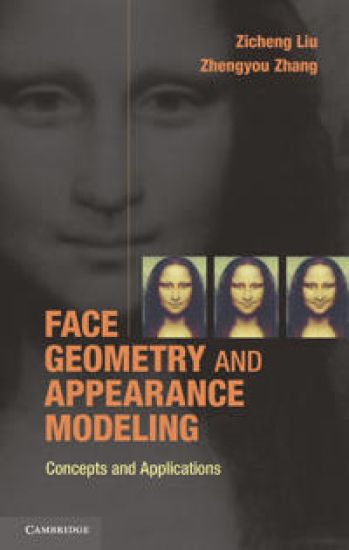
Face Geometry and Appearance Modeling

Face Geometry and Appearance Modeling

Zicheng Liu; Zhengyou Zhang

Cambridge University Press
2011
sidottu
Human faces are familiar to our visual systems. We easily recognize a person's face in arbitrary lighting conditions and in a variety of poses; detect small appearance changes; and notice subtle expression details. Can computer vision systems process face images as well as human vision systems can? Face image processing has potential applications in surveillance, image and video search, social networking and other domains. A comprehensive guide to this fascinating topic, this book provides a systematic description of modeling face geometry and appearance from images, including information on mathematical tools, physical concepts, image processing and computer vision techniques, and concrete prototype systems. The book will be an excellent reference for researchers and graduate students in computer vision, computer graphics and multimedia, as well as application developers who would like to gain a better understanding of the state of the art.