Kirjojen hintavertailu – 12 859 829 kirjaa ja 27 kauppaa

Kirjailija

Zihao Zhang

Kirjat ja teokset yhdessä paikassa: 5 kirjaa, julkaisuja vuosilta 2021–2025, suosituimpiin kuuluu Landscape Architecture Frontiers 046. Vertaile teosten hintoja ja tarkista saatavuus suomalaisista kirjakaupoista.

5 kirjaa

Kirjojen julkaisuvuodet: 2021–2025.

Deep Learning in Quantitative Trading

Deep Learning in Quantitative Trading

Zihao Zhang; Stefan Zohren

Cambridge University Press
2025
sidottu
This Element provides a comprehensive guide to deep learning in quantitative trading, merging foundational theory with hands-on applications. It is organized into two parts. The first part introduces the fundamentals of financial time-series and supervised learning, exploring various network architectures, from feedforward to state-of-the-art. To ensure robustness and mitigate overfitting on complex real-world data, a complete workflow is presented, from initial data analysis to cross-validation techniques tailored to financial data. Building on this, the second part applies deep learning methods to a range of financial tasks. The authors demonstrate how deep learning models can enhance both time-series and cross-sectional momentum trading strategies, generate predictive signals, and be formulated as an end-to-end framework for portfolio optimization. Applications include a mixture of data from daily data to high-frequency microstructure data for a variety of asset classes. Throughout, they include illustrative code examples and provide a dedicated GitHub repository with detailed implementations.

Deep Learning in Quantitative Trading

Deep Learning in Quantitative Trading

Zihao Zhang; Stefan Zohren

Cambridge University Press
2025
pokkari
This Element provides a comprehensive guide to deep learning in quantitative trading, merging foundational theory with hands-on applications. It is organized into two parts. The first part introduces the fundamentals of financial time-series and supervised learning, exploring various network architectures, from feedforward to state-of-the-art. To ensure robustness and mitigate overfitting on complex real-world data, a complete workflow is presented, from initial data analysis to cross-validation techniques tailored to financial data. Building on this, the second part applies deep learning methods to a range of financial tasks. The authors demonstrate how deep learning models can enhance both time-series and cross-sectional momentum trading strategies, generate predictive signals, and be formulated as an end-to-end framework for portfolio optimization. Applications include a mixture of data from daily data to high-frequency microstructure data for a variety of asset classes. Throughout, they include illustrative code examples and provide a dedicated GitHub repository with detailed implementations.
Cybernetics and the Constructed Environment

Cybernetics and the Constructed Environment

Zihao Zhang

TAYLOR FRANCIS LTD
2024
nidottu
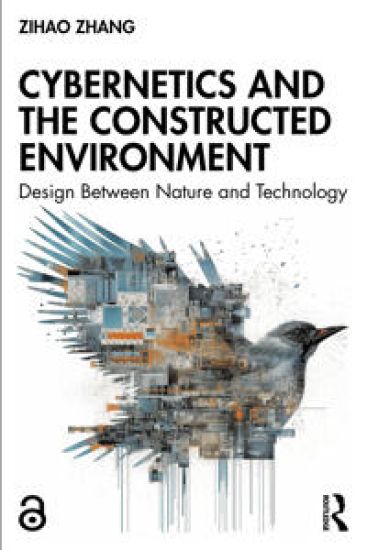
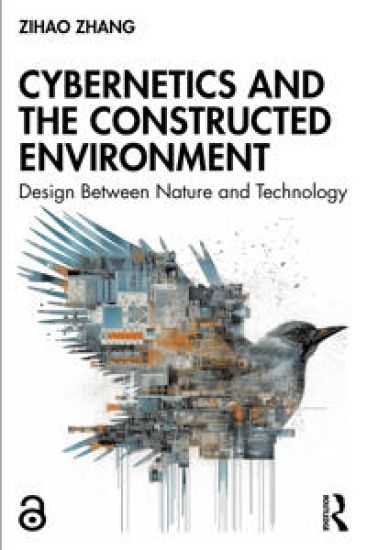
Grounded in contemporary landscape architecture theory and practice, Cybernetics and the Constructed Environment blends examples from art, design, and engineering with concepts from cybernetics and posthumanism, offering a transdisciplinary examination of the ramifications of cybernetics on the constructed environment. Cybernetics, or the study of communication and control in animals and machines, has grown increasingly relevant nearly 80 years after its inception. Cyber-physical systems, sensing networks, and spatial computing—algorithms and intelligent machines—create endless feedback loops with human and non-human actors, co-producing a cybernetic environment. Yet, when an ecosystem is meticulously managed by intelligent machines, can we still call it wild nature? Posthumanism ideas, such as new materialism, actor-network theory, and object-oriented ontology, have become increasingly popular among design disciplines, including landscape architecture, and may have provided transformative frameworks to understand this entangled reality. However, design still entails a sense of intentionality and an urge to control. How do we, then, address the tension between the designer’s intentionality and the co-produced reality of more-than-human agents in the cybernetic environment? Is posthumanism enough to develop a framework to think beyond our all-too-human ways of thinking? For researchers, scholars, practitioners, and students in environmental design and engineering disciplines, this book maps out a paradigm of environmentalism and ecological design rooted in non-communication and uncontrollability, and puts a speculative turn on cybernetics. Chapters 8 and 9 of this book are freely available as a downloadable Open Access PDF at http://www.taylorfrancis.com under a Creative Commons Attribution-Non Commercial-No Derivatives (CC-BY-NC-ND) 4.0 license.
Cybernetics and the Constructed Environment

Cybernetics and the Constructed Environment

Zihao Zhang

TAYLOR FRANCIS LTD
2024
sidottu
Grounded in contemporary landscape architecture theory and practice, Cybernetics and the Constructed Environment blends examples from art, design, and engineering with concepts from cybernetics and posthumanism, offering a transdisciplinary examination of the ramifications of cybernetics on the constructed environment. Cybernetics, or the study of communication and control in animals and machines, has grown increasingly relevant nearly 80 years after its inception. Cyber-physical systems, sensing networks, and spatial computing—algorithms and intelligent machines—create endless feedback loops with human and non-human actors, co-producing a cybernetic environment. Yet, when an ecosystem is meticulously managed by intelligent machines, can we still call it wild nature? Posthumanism ideas, such as new materialism, actor-network theory, and object-oriented ontology, have become increasingly popular among design disciplines, including landscape architecture, and may have provided transformative frameworks to understand this entangled reality. However, design still entails a sense of intentionality and an urge to control. How do we, then, address the tension between the designer’s intentionality and the co-produced reality of more-than-human agents in the cybernetic environment? Is posthumanism enough to develop a framework to think beyond our all-too-human ways of thinking? For researchers, scholars, practitioners, and students in environmental design and engineering disciplines, this book maps out a paradigm of environmentalism and ecological design rooted in non-communication and uncontrollability, and puts a speculative turn on cybernetics. Chapters 8 and 9 of this book are freely available as a downloadable Open Access PDF at http://www.taylorfrancis.com under a Creative Commons Attribution-Non Commercial-No Derivatives (CC-BY-NC-ND) 4.0 license.
Landscape Architecture Frontiers 046

Landscape Architecture Frontiers 046

Kongjian Yu; Noha Ahmed Abd El Aziz; Paolo Vincenzo Genovese; Kevin Thwaites; Zihao Zhang; Zhaowu Yu; Christian Nolf; Xiaoxuan Lu; Halina Steiner; Siu Man Kwok

Oro Editions
2021
nidottu
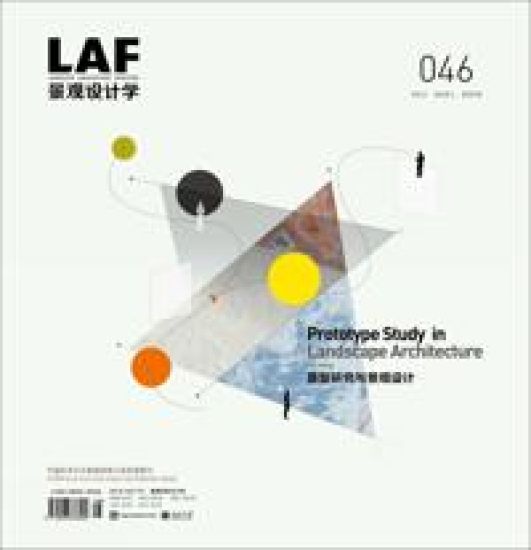
In its history of over a hundred of years, landscape architecture has developed many ideas, concepts, methods, and models. In this issue, LA Frontiers focuses on prototype studies by examining those traceable and repeatable landscape theories, methodologies, and pedagogies, and introducing the knowledge from allied disciplines to inspire knowledge innovation, with a particular highlight on the prototypes adaptive to future uncertainties. It hopes to extend the disciplinary horizon and enrich the fruition of disciplinary growth, and to provide designers and scholars with prospective design thoughts and more resilient working methods. This issue explores the following aspects: First, prototyping process, or test planning process, which is characterised for the test-planning-design process and has been widely applied in the fields of computer sciences and industrial design but still being less explored in landscape architecture. This process emphasises the multi-disciplinary collaboration and test procedure before design, which would improve the communication efficiency among professionals from different fields. Second, reflection and innovation on classic theories and models in landscape planning and design, such as Ian McHarg’s Map Overlay and Carl Steinitz’s Six Steps model. Third, research-based design, including design research or competitions with clear goals and boundary conditions which help designers comprehend the essence and implications of design and encourage disciplinary innovation. And fourth, inductive and empirical pedagogies to inspire forward-looking design ideas and working methods.