
Kirjailija
Zoe Skoulding
Kirjat ja teokset yhdessä paikassa: 10 kirjaa, julkaisuja vuosilta 2004–2026, suosituimpiin kuuluu Cosmic Sadness. Vertaile teosten hintoja ja tarkista saatavuus suomalaisista kirjakaupoista.
Nimi esiintyy myös muodoissa: Zoë Skoulding
10 kirjaa
Kirjojen julkaisuvuodet: 2004–2026.
Skoulding's second Carcanet collection develops the author's contribution to ecopoetics, inventing new forms to think through relationships with the more-than-human world. Through ferns, plastic, troubadour birdsong and broken bones, experimental poems bring background into the foreground.
Listening has always mattered in poetry, but how does poetry change when listening has been transformed? In Poetry & Listening: The Noise of Lyric, the field of sound studies, which has revolutionised research in contemporary music, is brought into dialogue with new lyric criticism. Examining poetry as mediated by performance, technology and translation, this book discovers how contemporary poetry has been re-energised by the influence of recorded sound and influenced by the creative methods that emerged with it. It offers an exploration of contemporary poetry’s acoustic contexts, moving beyond traditional analysis of poetic form to consider the social, political and ecological dimensions of a poem's sounds and silences. Through lucid engagement with a range of richly innovative English-language poetry from the UK and USA, it argues for the centrality of listening to a form of composition in which language not only represents sonic experience but is part of it. With reference to Jean-Luc Nancy’s distinction between hearing and listening, alongside other key theorists of sound and noise, it shows how poetry offers insights into sensory perception, and how it charts acoustic relationships between language and the environment.
Shortlisted for the Wales Poetry Book of the Year Award 2023. A Marginal Sea is written from the vantage point of Ynys Mon/Anglesey, which is both on the edge of Wales and in a marginal sea of the Atlantic Ocean - the island is imagined here as a site of archipelagic connection with other places and histories, where the spaces of dream and digital technology are interwoven with the everyday. Skoulding's poems take their readers into new worlds: we come to terms with the oystercatcher's 'muscle of belonging'; we chart the cross-cultural coordinates of 'Newborough Warren with Map of Havana' ('and it's this way to the Malecon /to look out over the Menai Strait'); elegy and song overlap in moving poems which think through how we remember and misremember: 'it's my voice // deepening with others that won't let themselves / be buried.' ('Anecdote for the Birds'). A Marginal Sea is inventive, exhilarating in its soundscapes, and brilliantly awake to otherness, in language, and in the animal and natural world.
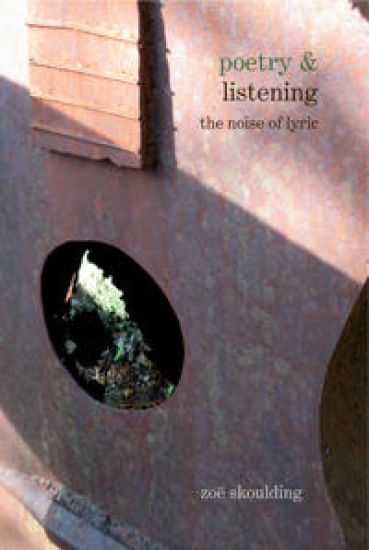
Listening has always mattered in poetry, but how does poetry change when listening has been transformed? In Poetry & Listening: The Noise of Lyric, the field of sound studies, which has revolutionised research in contemporary music, is brought into dialogue with new lyric criticism. Examining poetry as mediated by performance, technology and translation, this book discovers how contemporary poetry has been re-energised by the influence of recorded sound and influenced by the creative methods that emerged with it. It offers an exploration of contemporary poetry’s acoustic contexts, moving beyond traditional analysis of poetic form to consider the social, political and ecological dimensions of a poem's sounds and silences. Through lucid engagement with a range of richly innovative English-language poetry from the UK and USA, it argues for the centrality of listening to a form of composition in which language not only represents sonic experience but is part of it. With reference to Jean-Luc Nancy’s distinction between hearing and listening, alongside other key theorists of sound and noise, it shows how poetry offers insights into sensory perception, and how it charts acoustic relationships between language and the environment.
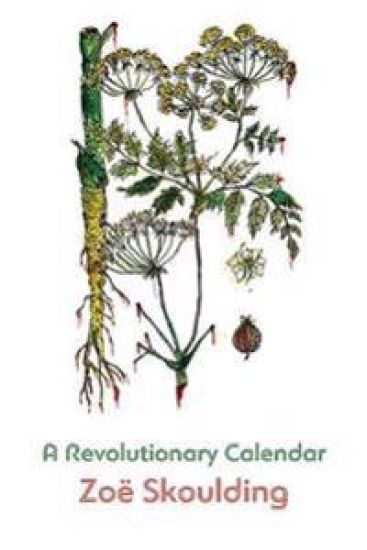
This year-long sequence of five-line poems takes as its point of departure the French Republican Calendar, devised by the poet Fabre d'Eglantine with the aim of breaking the power of the Church and returning symbolic importance to the agricultural worker. It featured months renamed after the seasons, and days that, instead of being dedicated to saints, were each devoted to a plant, animal, mineral or agricultural implement.
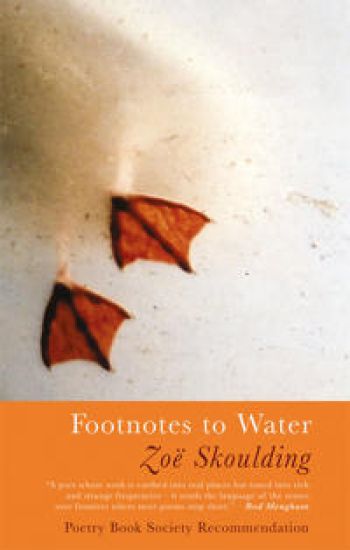
Footnotes to Water imagines a river as a transverse section, cutting through urban and rural spaces, connecting places that are themselves in flux. Zoë Skoulding follows the mysterious path of the culverted Afon Adda in Bangor, close to where she lives, as it draws her into conversations with the city as well as with the sound of the river itself, half-heard under the metal plates of the observation chambers along its route. It leads her to the Bièvre, a lost Parisian stream that once ran through streets of tanneries and past the Gobelins tapestry factory, where the quality of a famous red dye was attributed to the river’s polluted water. Following literary traces as well as landscapes, a sequence on hefting sheep links the two rivers, extending the idea of local habitat or cynefin to encompass the interweaving lives of different cultures and species.
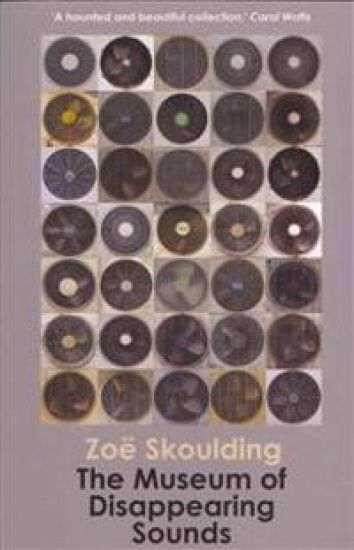
The disappearing sounds of Zoe Skoulding's new collection may be either in the rich sonic environments that the poems observe, or in the resonance of words themselves, which exist in traces of speech and breath 'The Man in the Moone' takes its title from a 17th century work of science fiction in which lunar inhabitants can communicate their thoughts via music alone. But rather than aspiring to reach beyond language, these poems focus on the spaces that words occupy, looking at how 'a sentence reverses itself between two pairs of eyes' or noting 'the distance drifted by a word shaken loose from border controls'. Skoulding's characteristically inventive approach to form emerges in a fractured sonnet sequence based on the coincidences of room numbers. Repeated actions build haunting interior spaces which the reader is invited to enter, each poem becoming a room in which sound 'bounces off four walls', as memory accumulates in the subtle rhythms of everyday life. These poems can provoke states of eerie unease, or of passion evoked with shimmering densities of verbal texture. We can feel the ice in 'Gwydyr Forest' "Freezing under feathered/ water landscapes". Provisional landscapes in which the ground itself is 'aslant' call for an active state of perception in which 'I can do more dangerous things /just with my eyes'. Exploratory and alive to the senses, 'The Museum of Disappearing Sounds' creates new perspectives on language and the world in which it exists.
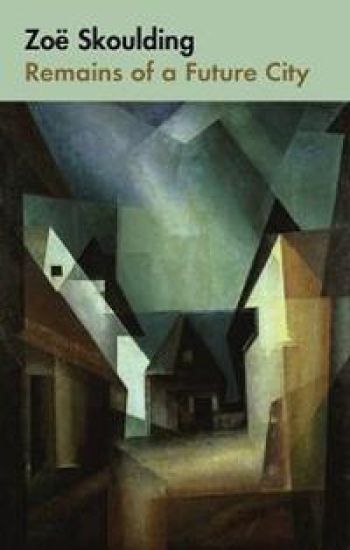
"These are mesmerising and unsettling poems. In an unstable world, objects speak a language of constant change. There's a split-second balance; for now the slates hold. The language is, as it needs to be, spare, tough, elegant. Zoë Skoulding brings cool and penetrating insights to disrupt quotidian vision." Wendy MulfordThese vibrant, multi-layered poems create a textual city of monuments, castles, bridges and labyrinths through which the reader is invited to wander. Such visions carry within them both hints of utopia and the seeds of disaster, as the future city is haunted by its ruins. New relationships emerge from the fractures of a shared past and the global communications of the twenty-first century. The historic traumas of European cityscapes emerge in dream and nightmare, but also in the process of rebuilding 'as the vein runs / under fragile reconstructions / of what was holding us together'. As well as testing the notion of the city as a collective identity, these poems present the urban landscape as open to what lies beyond it." Her observations have the painful precision of the hyper vigilant." Planet"Beyond the initial appearance of austerity of design lies a city of the mind that, in its openness to play and exploration, is moving, even beautiful… In work like this, Skoulding is bringing fresh ways of thinking, and of making poems, to Britain." Poetry LondonZoë Skoulding has lived in north Wales since 1991. She is Research Fellow in the School of English at Bangor University, exploring relationships between poetry and city space, and co-ordinates the University's part-time courses in literature and creative writing. She has been involved in various cross-artform projects and is a member of the group Parking Non-Stop. Having launched the literary magazine Skald in 1994, she became Editor of Poetry Wales in 2008.
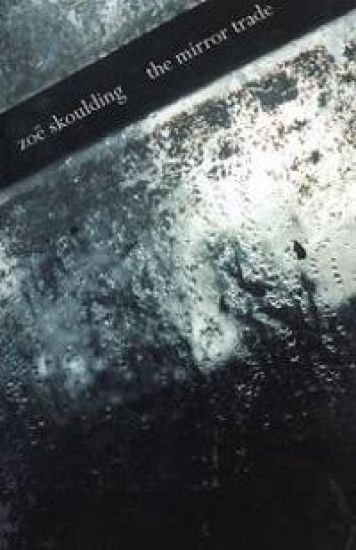
The title poem of this collection is set in Murano, home to the Venetian glass-making industry. The alchemical processes of mirror-making, its 'furnaces and transubstantiations, / amalgams of tin and quicksilver' become a guiding metaphor for the poet. Cityscapes are haunted by memories both personal and historic. Formally inventive, restless, inquisitive, these poems capture our attention by subverting expectations. Zoë Skoulding co-edits the literary magazine Skald with Ian Davidson and their collection of collaborative poems, Dark Wires, was published by West House Books in 2007. She holds an AHRC Fellowship in the Creative and Performing Arts in the School of English at Bangor University where she also lectures part-time in the School of Lifelong Learning.