Kirjojen hintavertailu – 12 903 725 kirjaa ja 27 kauppaa

Kirjailija

Zvonka Zupanic Slavec

Kirjat ja teokset yhdessä paikassa: 3 kirjaa, julkaisuja vuosilta 2004–2012, suosituimpiin kuuluu Tuberculosis (1860-1960). Vertaile teosten hintoja ja tarkista saatavuus suomalaisista kirjakaupoista.

3 kirjaa

Kirjojen julkaisuvuodet: 2004–2012.

New Method of Identifying Family Related Skulls

New Method of Identifying Family Related Skulls

Zvonka Zupanic Slavec; G. Hauser; E. Strouhal; I. Grdina

Springer Verlag GmbH
2012
nidottu
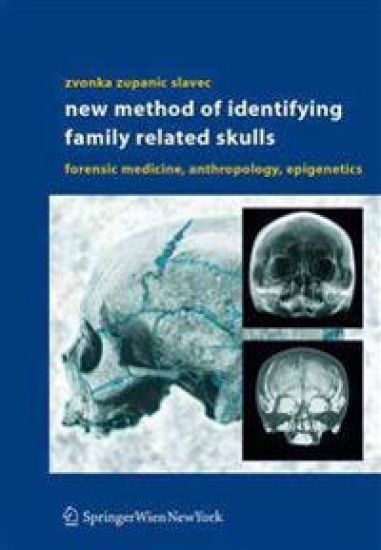
If DNA cannot be isolated, don't give up the identification! The author has used for the same purpose methods ranging from physical anthropology to forensic medicine and especially a recent method of comparison of epigenetic traits, which proved to be very useful for the identification of family related skulls in connection with historical and other data. The kinship of 18 identified skulls (buried together in a family vault) is established by comparison of X-ray images of paranasal cavities (frontal and maxillary sinuses, orbital and nasal cavities), the shape and size of which are strongly genetically determined. The comparison also extends to numerous other epigenetic trait similarities on the skulls. It is recommended for: scientists working on human identification and studying heredity, forensic scientists, physical anthropologists, radiologists, stomatologists, paleopathologists, geneticists, historians and many others.

Tuberculosis (1860-1960)

Tuberculosis (1860-1960)

Zvonka Zupanic Slavec

Peter Lang AG
2011
sidottu
This book is an epic story of the efforts by conscientious Slovenian and international communities, public healthcare, and healthcare policy to prevent the illness and death engendered by tuberculosis. It is a universal account of the socioeconomic disease of tuberculosis in the second half of the nineteenth century and in the twentieth century, up to the discovery of the successful combination of anti-tuberculosis medicines in the 1950s that relegated tuberculosis to the margins of medicine in the developed world. The book is based on an analysis of the Slovenian tuberculosis sanatorium at Golnik, which set the foundations for a uniform doctrine of treating and containing (especially pulmonary) tuberculosis among the twenty million people living in Yugoslavia at that time. The Slovenian struggle against tuberculosis in this period is also contextualized through comparison with similar overviews for Austria, Italy, and Croatia. This work also synthesizes the dynamics of this socioeconomic disease, which is not only combated by the effectiveness of medical treatment, but also depends on social, economic, political, and numerous other factors that currently contribute to the spread of other socioeconomic diseases. The anti-tuberculosis struggle in Slovenia is also contextualized within two different political systems. Following the First World War, elements of Austro-Hungarian healthcare came to the forefront due to Slovenia’s several centuries as part of the Austro-Hungarian Monarchy. At that time socialized medicine also began to be introduced in the Kingdom of the Serbs, Croats, and Slovenes. Its originator was Andrija Štampar, who introduced measures to make healthcare more universally accessible. Štampar established the idea that the community must take care of every citizen and especially work towards disease prevention. Preventive measures including patient quarantines, residential sanitation, outpatient and home-care monitoring of infected people, and patient education significantly reduced tuberculosis morbidity and mortality even before effective antibiotics were discovered. After 1945, a publicly funded healthcare system was introduced in Yugoslavia, which supported mass healthcare campaigns against tuberculosis. Starting in 1946, rights to state-funded medical treatment and rehabilitation were regulated by social security laws. During the 1960s, detecting tuberculosis in the field, mass preventive campaigns, and effective hospital treatment reduced Slovenia’s tuberculosis rates close to those in more developed European countries.
New Method of Identifying Family Related Skulls

New Method of Identifying Family Related Skulls

Zvonka Zupanic Slavec; G. Hauser; E. Strouhal; I. Grdina

Springer Verlag GmbH
2004
sidottu
If DNA cannot be isolated, don't give up the identification! The author has used for the same purpose methods ranging from physical anthropology to forensic medicine and especially a recent method of comparison of epigenetic traits, which proved to be very useful for the identification of family related skulls in connection with historical and other data. The kinship of 18 identified skulls (buried together in a family vault) is established by comparison of X-ray images of paranasal cavities (frontal and maxillary sinuses, orbital and nasal cavities), the shape and size of which are strongly genetically determined. The comparison also extends to numerous other epigenetic trait similarities on the skulls. It is recommended for: scientists working on human identification and studying heredity, forensic scientists, physical anthropologists, radiologists, stomatologists, paleopathologists, geneticists, historians and many others.