Kirjojen hintavertailu – 12 859 827 kirjaa ja 27 kauppaa

Kirjailija

Aeschylus

Kirjat ja teokset yhdessä paikassa: 240 kirjaa, julkaisuja vuosilta 1845–2026, suosituimpiin kuuluu Aeschylus Plays: I. Vertaile teosten hintoja ja tarkista saatavuus suomalaisista kirjakaupoista.

240 kirjaa

Kirjojen julkaisuvuodet: 1845–2026.

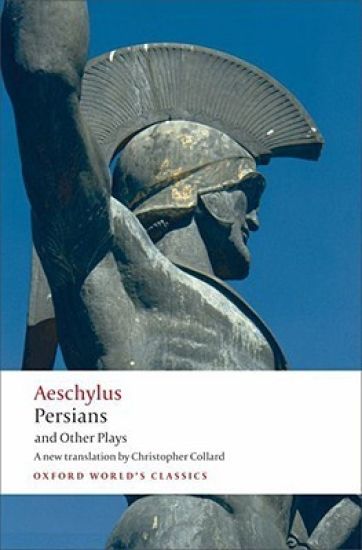
Persians and Other Plays

Persians and Other Plays

Aeschylus

Oxford University Press
2009
nidottu

Halvin toimitettuna 19,90 €

Aeschylus is the first of the great Greek playwrights, and the four plays in this volume demonstrate the remarkable range of Greek tragedy. Persians is the only surviving tragedy to draw on contemporary history, the Greeks' extraordinary victory over Persia in 480 BC. The Persians' aggression is inhuman in scale, and offends the gods, but while celebrating the Greek triumph, Aeschylus also portrays the shock of the defeated with some compassion. In Seven Against Thebes a royal family is cursed with self-destruction, in a remorseless tragedy that anticipates the grandeur of the later Oresteia. Suppliants portrays the wretched plight of the daughters of Danaus, fleeing from enforced marriage; as refugees they seek protection, and must plead a moral and political case to gain it. And in Prometheus Bound, Prometheus is relentlessly persecuted by Zeus for benefitting mankind in defiance of the god. Christopher Collard's highly readable new translation is accompanied by an introduction that sets the plays in their original context, and together with the notes considers theatrical and poetic issues, as well as details of content and language. ABOUT THE SERIES: For over 100 years Oxford World's Classics has made available the widest range of literature from around the globe. Each affordable volume reflects Oxford's commitment to scholarship, providing the most accurate text plus a wealth of other valuable features, including expert introductions by leading authorities, helpful notes to clarify the text, up-to-date bibliographies for further study, and much more.
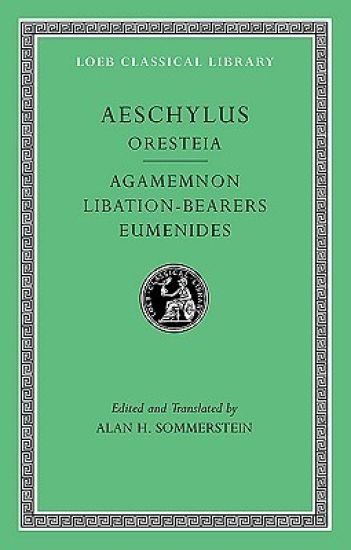
Oresteia: Agamemnon. Libation-Bearers. Eumenides
The tragic cycle of justice. Aeschylus (ca. 525–456 BC), the dramatist who made Athenian tragedy one of the world’s great art forms, witnessed the establishment of democracy at Athens, fought against the Persians at Marathon and probably also at Salamis, and had one of his productions sponsored by the young Pericles. He was twice invited to visit Sicily, and it was there that he died. At Athens he competed for the tragic prize at the City Dionysia about nineteen times between circa 499 and 458, and won it on thirteen occasions; in his later years he was probably victorious almost every time he put on a production, though Sophocles beat him at least once. Of his total of about eighty plays, seven survive complete. The first volume of this new Loeb Classical Library edition contains fresh texts and translations by Alan H. Sommerstein of Persians (472), on the recent war, the only surviving Greek historical drama; Seven against Thebes (467), the third play of a trilogy, on the conflict between Oedipus’ sons which ends when they kill each other; Suppliants, the first or second play of a trilogy, on the successful appeal by the daughters of Danaus to the king and people of Argos for protection against a forced marriage to their cousins (whom they will later murder, all but one); and Prometheus Bound (of disputed authenticity), on the terrible punishment of Prometheus for giving fire to humans in defiance of Zeus (with whom he will later be reconciled after preventing his overthrow). The second volume contains the complete Oresteia trilogy (458), comprising Agamemnon, Libation-Bearers, and Eumenides, presenting the murder of Agamemnon by his wife, the revenge taken by their son Orestes, the pursuit of Orestes by his mother’s avenging Furies, his trial and acquittal at Athens, Athena’s pacification of the Furies, and the blessings they both invoke upon the Athenian people. This edition’s third volume offers all the major fragments of lost Aeschylean plays, with brief headnotes explaining what is known, or can be plausibly inferred, about their content, and bibliographies of recent studies.

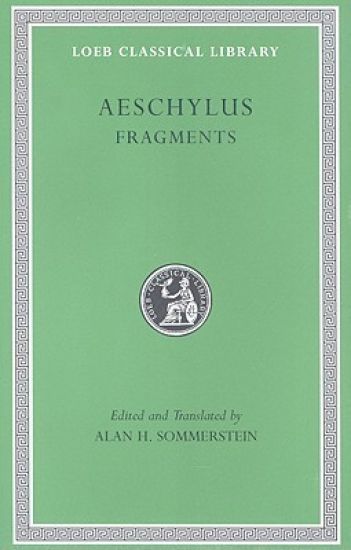
Fragments

Fragments

Aeschylus

Loeb Classical Library
2009
sidottu
Tantalizing quotations from lost tragedies. Aeschylus (ca. 525–456 BC), the dramatist who made Athenian tragedy one of the world’s great art forms, witnessed the establishment of democracy at Athens, fought against the Persians at Marathon and probably also at Salamis, and had one of his productions sponsored by the young Pericles. He was twice invited to visit Sicily, and it was there that he died. At Athens he competed for the tragic prize at the City Dionysia about nineteen times between circa 499 and 458, and won it on thirteen occasions; in his later years he was probably victorious almost every time he put on a production, though Sophocles beat him at least once. Of his total of about eighty plays, seven survive complete. The first volume of this new Loeb Classical Library edition contains fresh texts and translations by Alan H. Sommerstein of Persians (472), on the recent war, the only surviving Greek historical drama; Seven against Thebes (467), the third play of a trilogy, on the conflict between Oedipus’ sons which ends when they kill each other; Suppliants, the first or second play of a trilogy, on the successful appeal by the daughters of Danaus to the king and people of Argos for protection against a forced marriage to their cousins (whom they will later murder, all but one); and Prometheus Bound (of disputed authenticity), on the terrible punishment of Prometheus for giving fire to humans in defiance of Zeus (with whom he will later be reconciled after preventing his overthrow). The second volume contains the complete Oresteia trilogy (458), comprising Agamemnon, Libation-Bearers, and Eumenides, presenting the murder of Agamemnon by his wife, the revenge taken by their son Orestes, the pursuit of Orestes by his mother’s avenging Furies, his trial and acquittal at Athens, Athena’s pacification of the Furies, and the blessings they both invoke upon the Athenian people. This edition’s third volume offers all the major fragments of lost Aeschylean plays, with brief headnotes explaining what is known, or can be plausibly inferred, about their content, and bibliographies of recent studies.