Kirjojen hintavertailu – 12 859 826 kirjaa ja 27 kauppaa

Kirjailija

Aeschylus

Kirjat ja teokset yhdessä paikassa: 240 kirjaa, julkaisuja vuosilta 1845–2026, suosituimpiin kuuluu Aeschylus Plays: I. Vertaile teosten hintoja ja tarkista saatavuus suomalaisista kirjakaupoista.

240 kirjaa

Kirjojen julkaisuvuodet: 1845–2026.

Agamemnon In Plain and Simple English (Translated)

Agamemnon In Plain and Simple English (Translated)

Aeschylus

Createspace Independent Publishing Platform
2013
nidottu
Revenge. Adultery. Murder. Sounds like something from a modern drama series, right? But this isn't TV-this is ancient Greece at its most gripping. Aeschylus' Agamemnon is packed with raw emotion, tragic fate, and powerful themes that still resonate today. There's just one problem: the language. Let's face it-centuries-old translations can make even the most exciting plays feel dry and confusing. That's where BookCaps comes in. This edition brings Agamemnon to life with a modern translation that makes the story accessible without watering down its brilliance. You'll follow Agamemnon's triumphant return from the Trojan War, watch as tensions brew in his own household, and witness the chilling conclusion-all in language that makes sense to the modern reader. To help you dive deeper, the text is presented a plain English version. Whether you're a student trying to survive a classics class or just someone who wants to enjoy one of the world's greatest tragedies, this book will guide you through every twist and turn. BookCaps is a small but growing company dedicated to making classic literature approachable for everyone. We add new titles regularly, so there's always something new to discover.
Prometheus Bound and The Seven Against Thebes

Prometheus Bound and The Seven Against Thebes

Aeschylus

Createspace Independent Publishing Platform
2013
nidottu
"Prometheus Bound" is the first and only surviving play in a trilogy of tragedies called the Prometheia by Aeschylus featuring the Titan Prometheus who is bound to a rock as punishment by Zeus for providing the knowledge of fire to humans. The other two plays from the trilogy unfortunately only survive in fragments and are "Prometheus Unbound" and "Prometheus the Fire-Bringer". "The Seven against Thebes" is the third play in an Oedipus-themed trilogy produced by Aeschylus in 467 BC. The trilogy is sometimes referred to as the Oedipodea. It concerns the battle between an Argive army led by Polynices and the army of Thebes led by Eteocles and his supporters. The trilogy won the first prize at the City Dionysia. Its first two plays, Laius and Oedipus as well as the satyr play Sphinx are no longer extant. Aeschylus (circa 525 BC - 455 BC) was the first of the three ancient Greek tragedians whose plays can still be read or performed, the others being Sophocles and Euripides. He is often described as the father of tragedy: our knowledge of the genre begins with his work and our understanding of earlier tragedies is largely based on inferences from his surviving plays. According to Aristotle, he expanded the number of characters in plays to allow for conflict amongst them, whereas previously characters had interacted only with the chorus. Only seven of his estimated seventy to ninety plays have survived into modern times.
Prometheus Bound

Prometheus Bound

Aeschylus

Hackett Publishing Co, Inc
2012
nidottu
This is an outstandingly useful edition of Prometheus Bound. The translation is both faithful and graceful, and the introduction to this difficult play is a model of clarity, intelligence, and a profound familiarity with the workings of Greek myth, Greek literature, and literature in general. --Rachel Hadas, Department of English, Rutgers University
Prometheus Bound

Prometheus Bound

Aeschylus

Hackett Publishing Co, Inc
2012
sidottu
This is an outstandingly useful edition of Prometheus Bound. The translation is both faithful and graceful, and the introduction to this difficult play is a model of clarity, intelligence, and a profound familiarity with the workings of Greek myth, Greek literature, and literature in general. --Rachel Hadas, Department of English, Rutgers University
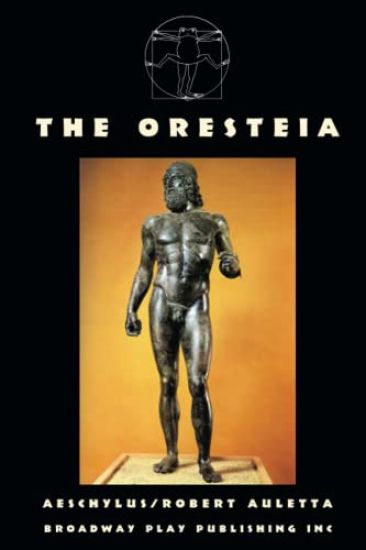
The Oresteia

The Oresteia

Aeschylus

Broadway Play Publishing
2011
nidottu
This collection includes three full-length plays: AGAMEMNON, THE LIBATION BEARERS, and THE EUMENIDIES, collectively known as THE ORESTEIA. In AGAMEMNON, the title character, having sacrificed his daughter, Iphigenia, to win the battle of Troy, returns to Argos. His wife, Clytaemnestra, murders him while her lover, Aegisthus, who will soon assume the throne, looks on. In THE LIBATION BEARERS Agamemnon's daughter Electra mourns her father's death. Her brother, Orestes, returns to Argos to kill their mother and stepfather, now king, and avenge their father's death. In THE EUMENIDIES Orestes, trying to escape the vengeance of the Furies, is rescued by the gods and ordered to stand trial in a democratic court in Athens. He is acquitted, and the Furies are transformed and civilized to end the cycle of violence. "THE ORESTEIA is the granddaddy of domestic-violence drama, and that's hardly Greek to us. The 2,500 year-old Aeschylean trilogy - on which Sonny kills Mom and her love, who made sword meat of Dad - is as American as apple pie ... Auletta - whose own works include WALK THE DOG WILLIE, RUNDOWN, and the Obie-winning STOPS and VIRGINS - seems an odd collaborator for Aeschylus. But he is in fact an old hand at diddling with old Greeks. He has adapted both Sophocles's AJAX and Aeschylus's THE PERSIANS for Peter Sellars. He also adapted Georg B chner's DANTON'S DEATH for Robert Wilson." -Carolyn Clay, Phoenix (Boston) "... I very like very much the truncated colloquial that you've worked out. It's better than Ezra Pound] managed and it's just right for the purpose you have, to provide a fast moving text for the stage ..." -letter from James Laughlin, New Directions "... Auletta's script glistens with old strokes highlighting rather than detracting from Aeschylus ..." -Ed Siegel, The Boston Globe
Persians, Seven against Thebes, and Suppliants

Persians, Seven against Thebes, and Suppliants

Aeschylus

Johns Hopkins University Press
2011
pokkari
Aaron Poochigian's new translations of Aeschylus's earliest extant plays provide the clearest rendering yet of their formal structure. The distinction between spoken and sung rhythms is as sharp as it is in the source texts, and for the first time readers in English can fully grasp the balanced, harmonious arrangement of choral odes. The importance of these works to the history of drama and tragedy and to the history of classical literature is beyond question, and their themes of military hubris and foreign versus native are deeply relevant today. Persians offers a surprisingly sympathetic portrayal of the Athenians' most hated enemy; in Seven against Thebes Argive invaders, though no less Greek than the Thebans themselves, are portrayed as barbarians; and in Suppliants the city of Argos is called upon to protect Egyptian refugees. Based on textual evidence and the archaeological remains of the Theater of Dionysus at Athens, Poochigian's introductory overview of stage properties and accompanying stage directions allow readers to experience the plays as they were performed in their own time. He is most careful in his translations of the plays' choral odes. Instead of rendering them with little or no form, Poochigian has preserved the comprehensive structures Aeschylus himself employed. Readers are thus able to recognize Aeschylus as a master of poetry as well as of drama. Poochigian's translations are the most accurate renditions of the poetry and dramaturgy of the original works available. Intended to be both read as literature and performed as plays, these translations are lucid and readable, while remaining staunchly faithful to the texts.
Persians, Seven against Thebes, and Suppliants

Persians, Seven against Thebes, and Suppliants

Aeschylus

Johns Hopkins University Press
2011
sidottu
Aaron Poochigian's new translations of Aeschylus's earliest extant plays provide the clearest rendering yet of their formal structure. The distinction between spoken and sung rhythms is as sharp as it is in the source texts, and for the first time readers in English can fully grasp the balanced, harmonious arrangement of choral odes. The importance of these works to the history of drama and tragedy and to the history of classical literature is beyond question, and their themes of military hubris and foreign versus native are deeply relevant today. Persians offers a surprisingly sympathetic portrayal of the Athenians' most hated enemy; in Seven against Thebes Argive invaders, though no less Greek than the Thebans themselves, are portrayed as barbarians; and in Suppliants the city of Argos is called upon to protect Egyptian refugees. Based on textual evidence and the archaeological remains of the Theater of Dionysus at Athens, Poochigian's introductory overview of stage properties and accompanying stage directions allow readers to experience the plays as they were performed in their own time. He is most careful in his translations of the plays' choral odes. Instead of rendering them with little or no form, Poochigian has preserved the comprehensive structures Aeschylus himself employed. Readers are thus able to recognize Aeschylus as a master of poetry as well as of drama. Poochigian's translations are the most accurate renditions of the poetry and dramaturgy of the original works available. Intended to be both read as literature and performed as plays, these translations are lucid and readable, while remaining staunchly faithful to the texts.
The House of Atreus

The House of Atreus

Aeschylus

Theophania Publishing
2011
nidottu
Thank you for checking out this book by Theophania Publishing. We appreciate your business and look forward to serving you soon. We have thousands of titles available, and we invite you to search for us by name, contact us via our website, or download our most recent catalogues. Of the life of Aeschylus, the first of the three great masters of Greek tragedy, only a very meager outline has come down to us. He was born at Eleusis, near Athens, B. C. 525, the son of Euphorion. Before he was twenty-five he began to compete for the tragic prize, but did not win a victory for twelve years. He spent two periods of years in Sicily, where he died in 456, killed, it is said, by a tortoise which an eagle dropped on his head. Though a professional writer, he did his share of fighting for his country, and is reported to have taken part in the battles of Marathon, Salamis, and Plataea. Of the seventy or eighty plays which he is said to have written, only seven survive: "The Persians," dealing with the defeat of Xerxes at Salamis; "The Seven against Thebes," part of a tetralogy on the legend of Thebes; "The Suppliants," on the daughters of Dana s; "Prometheus Bound," part of a trilogy, of which the first part was probably "Prometheus, the Fire-bringer," and the last, "Prometheus Unbound"; and the "Oresteia," the only example of a complete Greek tragic trilogy which has come down to us, consisting of "Agamemnon," "Choephorae" (The Libation-Bearers), and the "Eumenides" (Furies). The importance of Aeschylus in the development of the drama is immense. Before him tragedy had consisted of the chorus and one actor; and by introducing a second actor, expanding the dramatic dialogue thus made possible, and reducing the lyrical parts, he practically created Greek tragedy as we understand it. Like other writers of his time, he acted in his own plays, and trained the chorus in their dances and songs; and he did much to give impressiveness to the performances by his development of the accessories of scene and costume on the stage. Of the four plays here reproduced, "Prometheus Bound" holds an exceptional place in the literature of the world. (As conceived by Aeschylus, Prometheus is the champion of man against the oppression of Zeus; and the argument of the drama has a certain correspondence to the problem of the Book of Job.) The Oresteian trilogy on "The House of Atreus" is one of the supreme productions of all literature. It deals with the two great themes of the retribution of crime and the inheritance of evil; and here again a parallel may be found between the assertions of the justice of God by Aeschylus and by the Hebrew prophet Ezekiel. Both contend against the popular idea that the fathers have eaten sour grapes and the children's teeth are set on edge; both maintain that the soul that sinneth, it shall die. The nobility of thought and the majesty of style with which these ideas are set forth give this triple drama its place at the head of the literary masterpieces of the antique world.