Kirjojen hintavertailu – 12 903 725 kirjaa ja 27 kauppaa

Kirjailija

Ahmed Osman

Kirjat ja teokset yhdessä paikassa: 23 kirjaa, julkaisuja vuosilta 2002–2025, suosituimpiin kuuluu The Egyptian Origins of King David and the Temple of Solomon. Vertaile teosten hintoja ja tarkista saatavuus suomalaisista kirjakaupoista.

23 kirjaa

Kirjojen julkaisuvuodet: 2002–2025.

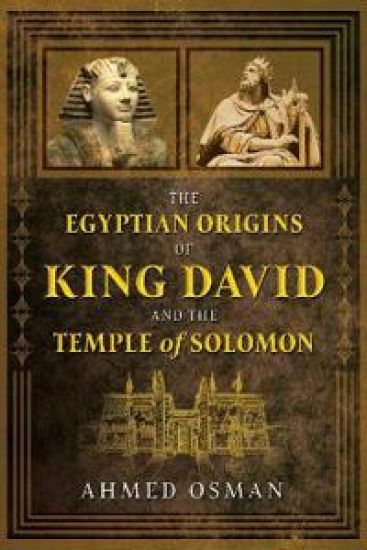
The Egyptian Origins of King David and the Temple of Solomon
An investigation into the real historical figure of King David and the real location of the Temple of Solomon During the last two centuries, thousands of ancient documents from different sites in the Middle East have been uncovered. However, no archaeological discovery speaks of King David or Solomon, his son and successor, directly or in directly. Was King David a real person or a legend like King Arthur? Proposing that David was a genuine historical figure, Ahmed Osman explores how his identity may be radically different than what is described in religious texts. Drawing on recent archaeological, historical, and biblical evidence from Egypt, Osman shows that David lived in Thebes, Egypt, rather than Jerusalem; that he lived five centuries earlier than previously thought, during the 15th rather than the 10th century B. C.; and that David was not a descendant of Isaac but was, in fact, Isaac’s father. The author also reveals David’s true Egyptian identity: Pharaoh Tuthmosis III of the 18th Dynasty. Confirming evidence from rabbinic literature that indicates Isaac was not Abraham’s son, despite the version provided in Genesis, Osman demonstrates how biblical narrators replaced David with Abraham the Hebrew to hide the Egyptian identity of Isaac’s father. He shows how Egyptian historical and archaeological sources depict figures that match David’s and Solomon’s known characteristics in many ways, including accounts of a great empire between the Euphrates and the Nile that corresponds with David’s empire as described in the Bible. Unveiling the real history behind the biblical story of King David, Osman reveals that the great ancestor of the Israelites was, in fact, Egyptian.

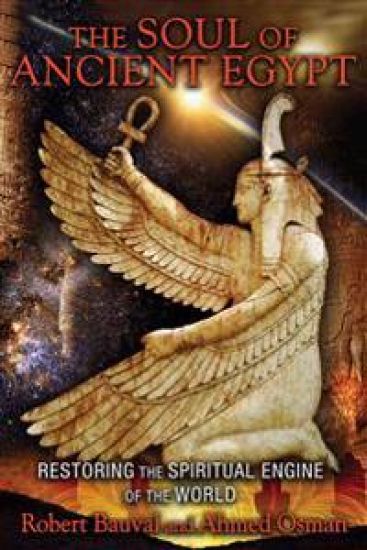
The Soul of Ancient Egypt

The Soul of Ancient Egypt

Robert Bauval; Ahmed Osman

Bear Company
2015
pokkari
Imagine the paradise of ancient Egypt: a lush green valley with a gentle river, full of animals and birds of all sizes. The first settlers, arriving by way of the desert, would have marveled at this beautiful landscape. This awe held on through the first three millennia of settlement in Egypt. Centered on careful observations of the natural rhythms of their environment, particularly the Nile, this enlightened civilization lived in a state of spiritual balance and harmony they called "living in Maat." This state was further enhanced by the sacred landscape of Egypt and the colossal monuments and pyramids the Egyptians built to reflect the heavens, thus creating a cosmic "spiritual engine" for the ancient world. But sadly, the paradise and Maat of ancient Egypt were not to last, and for the past two thousand years Egypt has experienced many occupations by hostile forces bent on taking control of this magical land. Exploring the exemplary social and cultural model that produced the golden civilization of ancient Egypt as well as the many waves of conquest and destruction up to the present day, Robert Bauval and Ahmed Osman examine each phase of Egyptian history from its origins and the Pharaonic period, through the Roman conquest and its Christianization, to the Pan-Arabization of Nasser and the ongoing Islamization that began with the Muslim caliphate in the 7th century. They show how the current Islamic rulers are actively working to eradicate all traces of Egypt's spiritual roots, the source of the Western Mystery tradition. They provide a revised portrait of the life of Muhammad, revealing his connections to the Essene tradition, and explain how most Sharia Law is not based on the Koran. Revealing how even the dams built on the Nile are impeding Egypt's sacred role, the authors sound the call for a return to the original tenets of Egyptian civilization, one that sustained itself in harmony and peaceful creativity for more than three millennia.
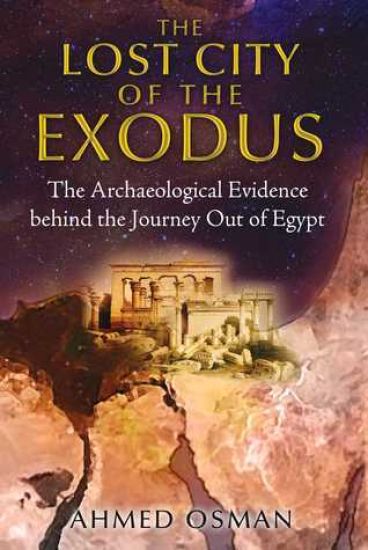
The Lost City of the Exodus

The Lost City of the Exodus

Ahmed Osman

Bear Company
2014
pokkari
When the first archaeologists visited Egypt in the late 1800s, they arrived in the eastern Nile Delta to verify the events described in the biblical Book of Exodus. Several locations believed to be the city of the Exodus were found but all were later rejected for lack of evidence. This led many scholars to dismiss the Exodus narrative merely as a myth that borrowed from accounts of the Hyksos expulsion from Egypt. But as Ahmed Osman shows, the events of Exodus have a historical basis and the ruins of the ancient city of Zarw, where the Road to Canaan began, have been found. Drawing on decades of research as well as recent archaeological findings in Egypt, Ahmed Osman reveals the exact location of the lost city of the Exodus as well as his 25-year effort to have this finding confirmed by the Egyptian government, including his heated debates with Zahi Hawass, former Egyptian Minister for Antiquities Affairs. He explains why modern scholars have been unable to find the city of the Exodus: they are looking in the wrong historical period and thus the wrong region of Egypt. He details his extensive research on the Pentateuch of the Hebrew scriptures, the historical scenes recorded in the great hall of Karnak, and other ancient source texts, which allowed him to pinpoint the Exodus site after he discovered that the Exodus happened not during the pharaonic reign of Ramses II but during that of his grandfather Ramses I. Osman concluded that the biblical city of the Exodus was to be found at Tell Heboua at the ruins of the fortified city of Zarw, the royal city of Ramses I--far from the Exodus locations theorized by previous archaeologists and scholars. In 2012, after 20 years of archaeological work, the location of Zarw was confirmed by Egyptian officials exactly where Osman said it would be 25 years ago. Thus, Osman shows that, time and again, if we take the creators of the source texts at their word, they will prove to be right.
Breaking the Mirror of Heaven

Breaking the Mirror of Heaven

Robert Bauval; Ahmed Osman

Bear Company
2012
pokkari
Called the “Mirror of Heaven” by Hermes-Thoth and regarded as the birthplace of civilization, science, religion, and magic, Egypt has ignited the imagination of all who come in contact with it since ancient times--from Pythagoras and Plato to Alexander the Great and Napoleon to modern Egyptologists the world over. Yet, despite this preeminence in the collective mind, Egypt has suffered considerable destruction over the centuries. Even before the burning of the Great Library at Alexandria, the land of the pharaohs was pillaged by its own people. With the arrival of foreign rulers, both Arabic and European, the destruction and thievery continued along with suppression of ancient knowledge as some rulers sought to cleanse Egypt of its “pagan” past. Exploring the many cycles of destruction and suppression in Egypt as well as moments of salvation, such as the first registered excavations by Auguste Mariette, Robert Bauval and Ahmed Osman investigate the many conquerors of Egypt through the millennia as well as what has happened to famous artifacts such as the Rosetta Stone. They show how Napoleon, through his invasion, wanted to revive ancient Egyptian wisdom and art because of its many connections to Freemasonry. They reveal how the degradation of monuments, theft of relics, and censorship of ancient teachings continue to this day. Exposing recent cover-ups during the tenure of Antiquities Minister Zahi Hawass, they explain how new discoveries at Giza were closed to further research. Clearing cultural and historical distortions, the authors reveal the long-hidden and persecuted voice of ancient Egypt and call for the return of Egypt to its rightful place as “the Mother of Nations” and “the Mirror of Heaven.”
Christianity

Christianity

Ahmed Osman

Bear Company
2005
nidottu
In Christianity: An Ancient Egyptian Religion author Ahmed Osman, contends that there is a suppressed history of Christianity that can be traced back to ancient Egypt. He compares the chronology of the Old Testament and its factual content with ancient Egyptian records to show that the major characters of the Hebrew Scriptures - including Solomon, David, Moses and Joshua - are based on Egyptian historical figures. He further suggests that not only were these personalities and the stories associated with them cultivated on the banks of the Nile, but the major tenets of Christian belief - the One God, the Trinity, the hierarchy of heaven, life after death and the virgin birth - are all Egyptian in origin. He likewise provides a convincing argument that Jesus himself came out of Egypt. With the help of modern archaeological findings, Osman shows that Christianity survived as an Egyptian mystery cult until the fourth century A. D., when the Romans embarked on a mission of suppression and persecution. In A. D.391 the Roman-appointed Bishop Theophilus led a mob into the Serapeum quarter of Alexandria and burned the Alexandrian library, destroying all records of the true Egyptian roots of Christianity. The Romans' version of Christianity, manufactured to maintain political power, claimed that Christianity originated in Judaea. In Christianity: An Ancient Egyptian Religion Osman restores Egypt to its rightful place in the history of Christianity.