Kirjojen hintavertailu – 12 903 724 kirjaa ja 27 kauppaa

Kirjailija

Ahmed Osman

Kirjat ja teokset yhdessä paikassa: 23 kirjaa, julkaisuja vuosilta 2002–2025, suosituimpiin kuuluu The Egyptian Origins of King David and the Temple of Solomon. Vertaile teosten hintoja ja tarkista saatavuus suomalaisista kirjakaupoista.

23 kirjaa

Kirjojen julkaisuvuodet: 2002–2025.

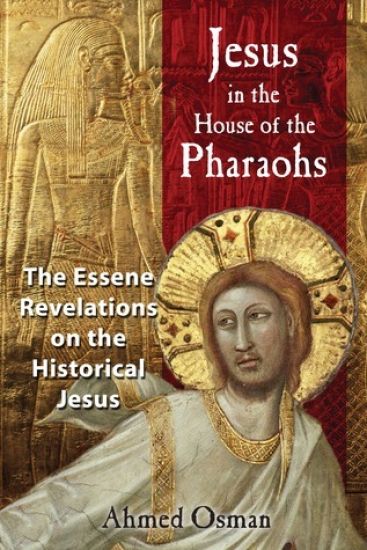
Jesus in the House of the Pharaohs

Jesus in the House of the Pharaohs

Ahmed Osman

Bear Company
2004
nidottu
Although it is commonly believed that Jesus lived during the first century C. E there is no concrete evidence to support this fact from the Roman and Jewish historians who would have been his contemporaries. The Gospel writers themselves were of a later generation and many accounts recorded in the Old Testament and Talmudic commentaries refer to the coming of the Messiah as an event that had already occurred. Using the evidence available from archaeology the Dead Sea Scrolls the Koran the Talmud and other biblical sources Ahmed Osman provides a compelling case that both Jesus and Joshua were one and the same - a belief echoed by the early Church Fathers - and that this person was likewise the pharaoh Tutankhamun who ruled Egypt between 1361 and 1352 B. C. E and was regarded as the spiritual son of God. Osman contends that the Essene Christians - who followed Jesus' teachings in secret after his murder - only came into the open following the execution of their prophet John the Baptist by Herod many centuries later. Yet it was also the Essenes who following the death of Tutankhamun and his father Akhenaten (Moses) secretly kept the monotheistic religion of Egypt alive. The Essenes believed themselves to the people of the New Covenant established between their Lord and themselves by the Teacher of Righteousness who was murdered by a wicked priest. The Dead Sea Scrolls support Osman's contention that this Teacher of Righteousness was in fact Jesus. Originally published as The House of the Messiah by Harper Collins.
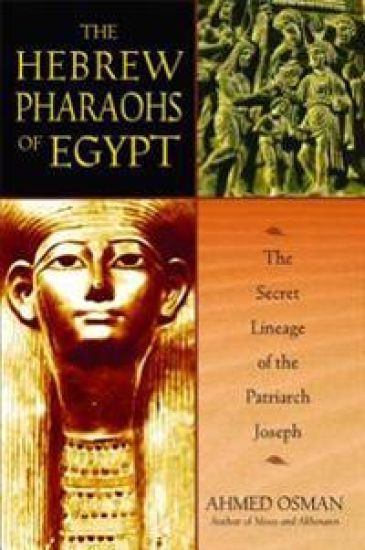
The Hebrew Pharaohs of Egypt

The Hebrew Pharaohs of Egypt

Ahmed Osman

Bear Company
2003
nidottu
A reinterpretation of Egyptian and biblical history that shows the Patriarch Joseph and Yuya, a vizier of the eighteenth dynasty king Tuthmosis IV, to be the same person- Uses detailed evidence from Egyptian, biblical, and Koranic sources to place Exodus in the time of Ramses I- Sheds new light on the mysterious and sudden rise of monotheism under Yuya's daughter, Queen Tiye, and her son AkhnatenWhen Joseph revealed his identity to his kinsmen who had sold him into slavery, he told them that God had made him "a father to Pharaoh." Throughout the long history of ancient Egypt, only one man is known to have been given the title "a father to Pharaoh"--Yuya, a vizier of the eighteenth dynasty king Tuthmosis IV. Yuya has long intrigued Egyptologists because he was buried in the Valley of Kings even though he was not a member of the Royal House. His extraordinarily well-preserved mummy has a strong Semitic appearance, which suggests he was not of Egyptian blood, and many aspects of his burial have been shown to be contrary to Egyptian custom. As "The Hebrew Pharohs of Egypt" shows, the idea that Joseph and Yuya may be one and the same person sheds a whole new light on the sudden rise of monotheism in Egypt, spearheaded by Queen Tiye and her son Akhnaten. It would clearly explain the deliberate obliteration of references to the "heretic" king and his successors by the last eighteenth dynasty pharaoh, Horemheb, whom the author believes was the oppressor king in the Book of Exodus. The author also draws on a wealth of detailed evidence from Egyptian, biblical, and Koranic sources to place the time of the departure of the Hebrews from Egypt during the short reign of Ramses I, the first king of the nineteenth dynasty.
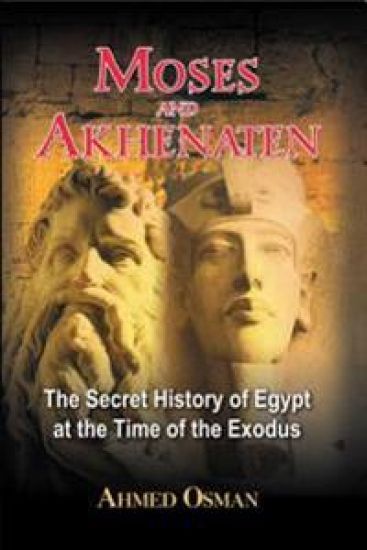
Moses and Akhenaten

Moses and Akhenaten

Ahmed Osman

Bear Company
2002
pokkari
During his reign, the Pharaoh Akhenaten was able to abolish the complex pantheon of the ancient Egyptian religion and replace it with a single god, the Aten, who had no image or form. Seizing on the striking similarities between the religious vision of this “heretic” pharaoh and the teachings of Moses, Sigmund Freud was the first to argue that Moses was in fact an Egyptian. Now Ahmed Osman, using recent archaeological discoveries and historical documents, contends that Akhenaten and Moses were one and the same man. In a stunning retelling of the Exodus story, Osman details the events of Moses/Akhenaten's life: how he was brought up by Israelite relatives, ruled Egypt for seventeen years, angered many of his subjects by replacing the traditional Egyptian pantheon with worship of the Aten, and was forced to abdicate the throne. Retreating to the Sinai with his Egyptian and Israelite supporters, he died out of the sight of his followers, presumably at the hands of Seti I, after an unsuccessful attempt to regain his throne. Osman reveals the Egyptian components in the monotheism preached by Moses as well as his use of Egyptian royal ritual and Egyptian religious expression. He shows that even the Ten Commandments betray the direct influence of Spell 125 in the Egyptian Book of the Dead. Moses and Akhenatenprovides a radical challenge to long-standing beliefs concerning the origin of Semitic religion and the puzzle of Akhenaten's deviation from ancient Egyptian tradition. In fact, if Osman's contentions are correct, many major Old Testament figures would be of Egyptian origin.