Kirjojen hintavertailu – 12 903 725 kirjaa ja 27 kauppaa

Kirjailija

Aleksandr Solzhenitsyn

Kirjat ja teokset yhdessä paikassa: 86 kirjaa, julkaisuja vuosilta 1970–2027, suosituimpiin kuuluu August 1914. Vertaile teosten hintoja ja tarkista saatavuus suomalaisista kirjakaupoista.

86 kirjaa

Kirjojen julkaisuvuodet: 1970–2027.

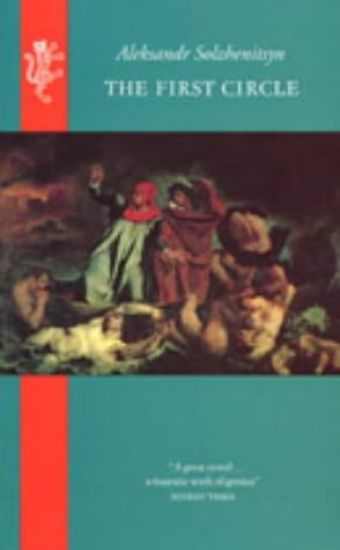
First Circle

First Circle

Aleksandr Solzhenitsyn

Harvill Press
1988
pokkari
At the height of Stalin's postwar terror, Innokenty, a young diplomat and scion of a corrupt ruling class, discovers an earlier and more spiritual tradition than that adopted by the October Revolution, the beginning of a process which is Solzhenitsyn's basic theme: the individual's experience of acquiring an immortal soul.
Warning to the West

Warning to the West

Aleksandr Solzhenitsyn

Hill Wang
1986
nidottu
Alexander Solzhenitsyn's Warning to the West includes the texts of the Nobel Prize-winning author's three speeches in the United States in the summer of 1975, his first major public addresses since his expulsion from the Soviet Union in 1974: on June 30 and July 9 to trade-union leaders of the AFL-CIO in Washington, D. C., and in New York City, and on July 15 to the United States Congress; and also the texts of his BBC interview and radio speech, which sparked widespread public controversy when they were aired in London in March 1976. Solzhenitsyn's outspoken criticism of the West's growing weakness and complacency and his belief that Russia's growing strength will enable her to establish supremacy over the West without risk of a nucelar holocaust are expressed with the moral authority of a great novelist and historian. "Solzhenitsyn mounts a public indictment of the supine inattention of the West that rings like the blows of the hammer with which Luther nailed his manifesto to the doors at Wittenberg."--Times Literary Supplement
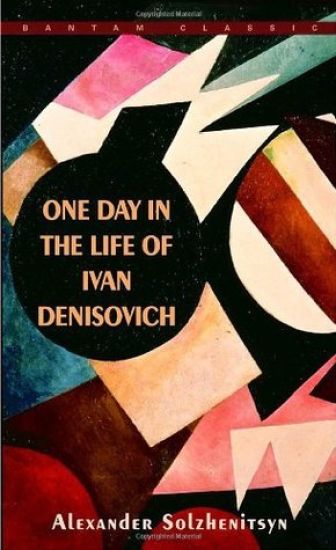
One Day in the Life of Ivan Denisovich

One Day in the Life of Ivan Denisovich

Aleksandr Solzhenitsyn

Bantam Classics
1984
pokkari

Halvin toimitettuna 13,00 €

"Stark . . . the story of how one falsely accused convict and his fellow prisoners survived or perished in an arctic slave labor camp after the war."--Time From the icy blast of reveille through the sweet release of sleep, Ivan Denisovich endures. A common carpenter, he is one of millions viciously imprisoned for countless years on baseless charges, sentenced to the waking nightmare of the Soviet work camps in Siberia. Even in the face of degrading hatred, where life is reduced to a bowl of gruel and a rare cigarette, hope and dignity prevail. This powerful novel of fact is a scathing indictment of Communist tyranny, and an eloquent affirmation of the human spirit. The prodigious works of Alexander Solzhenitsyn, including his acclaimed The Gulag Archipelago, have secured his place in the great tradition of Russian literary giants. Ironically, One Day in the Life of Ivan Denisovich is the only one of his works permitted publication in his native land. Praise for One Day in the Life of Ivan Denisovich "Cannot fail to arouse bitterness and pain in the heart of the reader. A literary and political event of the first magnitude."--New Statesman"Both as a political tract and as a literary work, it is in the Doctor Zhivago category."--Washington Post"Dramatic . . . outspoken . . . graphically detailed . . . a moving human record."--Library Journal
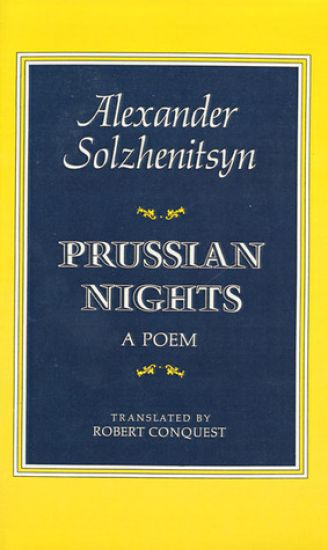
Prussian Nights: Bilingual Edition

Prussian Nights: Bilingual Edition

Aleksandr Solzhenitsyn

Farrar, Straus and Giroux
1977
nidottu
"The pictorial quality of the whole poem is an eye-opener. There is always a tendency, on the part of his detractors, to make of Solzhenitsyn something less than he is, but here is further evidence that he is something more than even his admirers thought." - Clive James, New Statesman
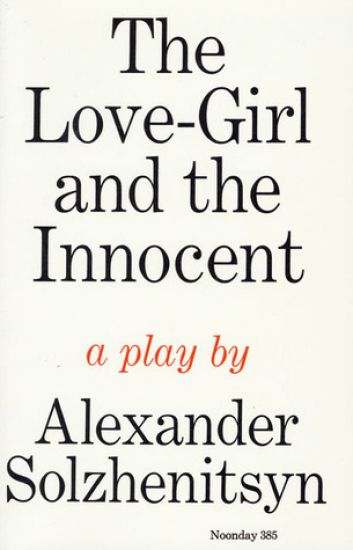
The Love-Girl and the Innocent: A Play

The Love-Girl and the Innocent: A Play

Aleksandr Solzhenitsyn

Farrar, Straus and Giroux
1970
nidottu
The action of this full-length play is set in 1945 in a Stalinist slave-labor camp similar to the one where the author himself served an eight-year term. It is basically a love story of two prisoners: Nemov, the "innocent," a new prisoner who is unwilling to compromise in order to survive, and Lyuba, a girl who tells him that in the labor camp integrity is a passport to death. He tries desperately to keep his honor and self-respect while she tries to convince him that he must compromise. The love story is told gradually and intermittently against the background of labor-camp life. The large number of characters on stage, working, arguing and fighting, emphasizes the cruel, unprivate world in which the pair have to live their lives. Finally the "innocent" realizes that if he will share Lyuba with one of the higher-ups, he will then have everything: extra food, a comfortable job and the woman he loves. All he has to do is make that one compromise. The Love-Girl and The Innocent was accepted for performance in 1962 by the Moscow Contemporary Theatre but was then banned. It has never been performed in Russia, as the author complained in his courageous letter to the Congress of Soviet Writers, reprinted in the Farrar, Straus and Giroux edition of Cancer Ward. Solzhenitsyn's works have been barred in the Soviet Union since 1966 and he was recently expelled from the Russian Writers' Union. The publication of Solzhenitsyn's play in England and America marks its first appearance in print in any language.