Kirjojen hintavertailu – 12 903 725 kirjaa ja 27 kauppaa
Kirjailija
Aleksandr Solzhenitsyn
Kirjat ja teokset yhdessä paikassa: 86 kirjaa, julkaisuja vuosilta 1970–2027, suosituimpiin kuuluu August 1914. Vertaile teosten hintoja ja tarkista saatavuus suomalaisista kirjakaupoista.
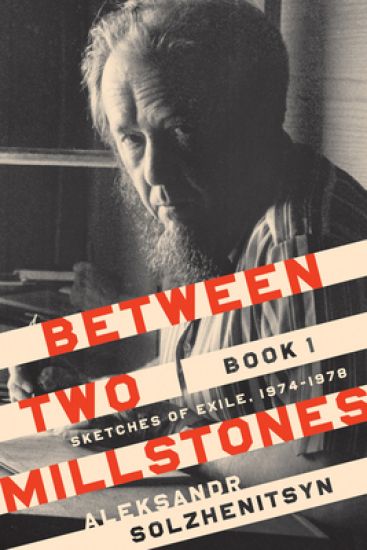
Russian Nobel prize–winner Aleksandr Solzhenitsyn (1918–2008) is widely acknowledged as one of the most important figures—and perhaps the most important writer—of the last century. To celebrate the centenary of his birth, the first English translation of his memoir of the West, Between Two Millstones, Book 1, is being published. Fast-paced, absorbing, and as compelling as the earlier installments of his memoir The Oak and the Calf (1975), Between Two Millstones begins on February 13, 1974, when Solzhenitsyn found himself forcibly expelled to Frankfurt, West Germany, as a result of the publication in the West of The Gulag Archipelago. Solzhenitsyn moved to Zurich, Switzerland, for a time and was considered the most famous man in the world, hounded by journalists and reporters. During this period, he found himself untethered and unable to work while he tried to acclimate to his new surroundings. Between Two Millstones contains vivid descriptions of Solzhenitsyn's journeys to various European countries and North American locales, where he and his wife Natalia ("Alya") searched for a location to settle their young family. There are fascinating descriptions of one-on-one meetings with prominent individuals, detailed accounts of public speeches such as the 1978 Harvard University commencement, comments on his television appearances, accounts of his struggles with unscrupulous publishers and agents who mishandled the Western editions of his books, and the KGB disinformation efforts to besmirch his name. There are also passages on Solzhenitsyn's family and their property in Cavendish, Vermont, whose forested hillsides and harsh winters evoked his Russian homeland, and where he could finally work undisturbed on his ten-volume dramatized history of the Russian Revolution, The Red Wheel. Stories include the efforts made to assure a proper education for the writer's three sons, their desire to return one day to their home in Russia, and descriptions of his extraordinary wife, editor, literary advisor, and director of the Russian Social Fund, Alya, who successfully arranged, at great peril to herself and to her family, to smuggle Solzhenitsyn's invaluable archive out of the Soviet Union. Between Two Millstones is a literary event of the first magnitude. The book dramatically reflects the pain of Solzhenitsyn's separation from his Russian homeland and the chasm of miscomprehension between him and Western society.
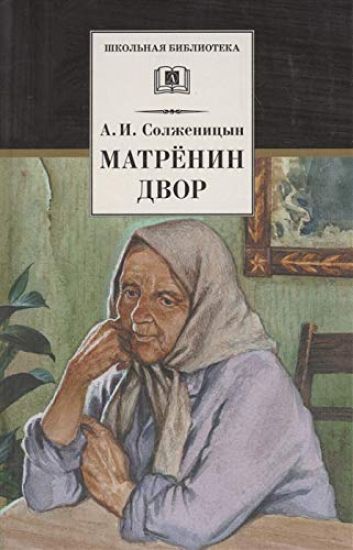
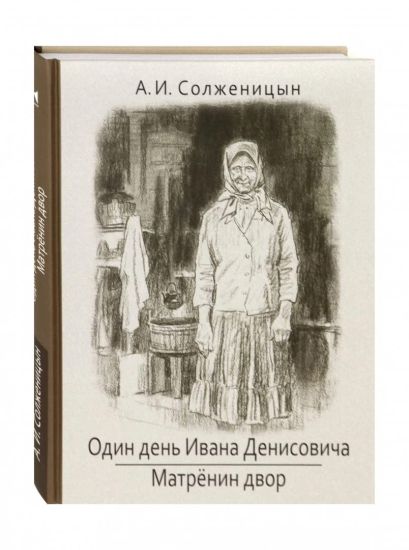
V knigu zamechatelnogo russkogo pisatelja A. I. Solzhenitsyna vkhodjat rasskazy "Odin den Ivana Denisovicha", "Matrenin dvor" i tsikl miniatjur "Krokhotki". . Dlja starshego shkolnogo vozrasta. . Khudozhnik: Britvin V.
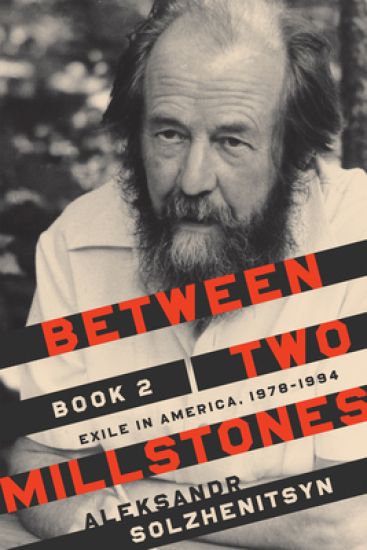
"Aleksandr Solzhenitsyn delineates his idyllic time in rural Vermont, where he had the freedom to work, spend time with his family, and wage a war of ideas against the Soviet Union and other detractors from afar. At his quiet retreat . . . the Nobel laureate found . . . 'a happiness in free and uninterrupted work.'" —Kirkus Reviews This compelling account concludes Nobel Prize–winner Aleksandr Solzhenitsyn's literary memoirs of his years in the West after his forced exile from the USSR following the publication of The Gulag Archipelago. The book reflects both the pain of separation from his Russian homeland and the chasm of miscomprehension between him and Western opinion makers. In Between Two Millstones, Solzhenitsyn likens his position to that of a grain that becomes lodged between two massive stones, each grinding away—the Soviet Communist power with its propaganda machine on the one hand and the Western establishment with its mainstream media on the other. Book 2 picks up the story of Solzhenitsyn's remarkable life after the raucous publicity over his 1978 Harvard Address has died down. The author parries attacks from the Soviet state (and its many fellow-travelers in the Western press) as well as from recent émigrés who, according to Solzhenitsyn, defame Russian culture, history, and religion. He shares his unvarnished view of several infamous episodes, such as a sabotaged meeting with Ronald Reagan, aborted Senate hearings regarding Radio Liberty, and Gorbachev's protracted refusal to allow The Gulag Archipelago to be published back home. There is also a captivating chapter detailing his trips to Japan, Taiwan, and Great Britain, including meetings with Margaret Thatcher and Prince Charles and Princess Diana. Meanwhile, the central themes of Book 1 course through this volume, too—the immense artistic quandary of fashioning The Red Wheel, staunch Western hostility to the historical and future Russia (and how much can, or should, the author do about it), and the challenges of raising his three sons in the language and spirit of Russia while cut off from the homeland in a remote corner of rural New England. The book concludes in 1994, as Solzhenitsyn bids farewell to the West in a valedictory series of speeches and meetings with world leaders, including John Paul II, and prepares at last to return home with his beloved wife Natalia, full of misgivings about what use he can be in the first chaotic years of post-Communist Russia, but never wavering in his conviction that, in the long run, his books would speak, influence, and convince. This vibrant, faithful, and long-awaited first English translation of Between Two Millstones, Book 2, will fascinate Solzhenitsyn's many admirers, as well as those interested in twentieth-century history, Russian history, and literature in general.
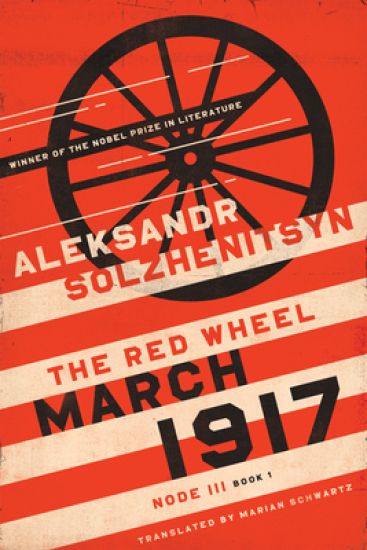
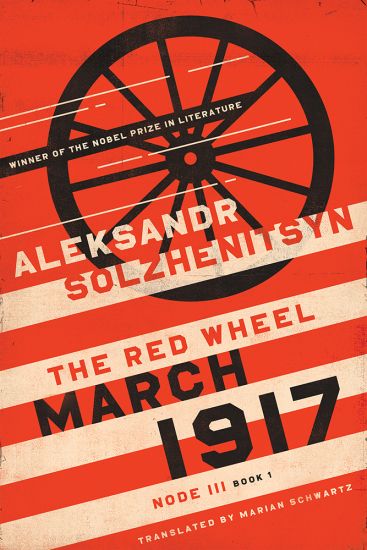
To commemorate the 100th anniversary of the Russian Revolution, the University of Notre Dame Press is proud to publish Nobel Prize–winner Aleksandr Solzhenitsyn's epic work March 1917, Node III, Book 1, of The Red Wheel. The Red Wheel is Solzhenitsyn's magnum opus about the Russian Revolution. Solzhenitsyn tells this story in the form of a meticulously researched historical novel, supplemented by newspaper headlines of the day, fragments of street action, cinematic screenplay, and historical overview. The first two nodes—August 1914 and November 1916—focus on Russia's crises and recovery, on revolutionary terrorism and its suppression, on the missed opportunity of Pyotr Stolypin's reforms, and how the surge of patriotism in August 1914 soured as Russia bled in World War I. March 1917—the third node—tells the story of the Russian Revolution itself, during which not only does the Imperial government melt in the face of the mob, but the leaders of the opposition prove utterly incapable of controlling the course of events. The action of Book 1 (of four) of March 1917 is set during March 8–12. The absorbing narrative tells the stories of more than fifty characters during the days when the Russian Empire begins to crumble. Bread riots in the capital, Petrograd, go unchecked at first, and the police are beaten and killed by mobs. Efforts to put down the violence using the army trigger a mutiny in the numerous reserve regiments housed in the city, who kill their officers and rampage. The anti-Tsarist bourgeois opposition, horrified by the violence, scrambles to declare that it is provisionally taking power, while socialists immediately create a Soviet alternative to undermine it. Meanwhile, Emperor Nikolai II is away at military headquarters and his wife Aleksandra is isolated outside Petrograd, caring for their sick children. Suddenly, the viability of the Russian state itself is called into question. The Red Wheel has been compared to Tolstoy's War and Peace, for each work aims to narrate the story of an era in a way that elevates its universal significance. In much the same way as Homer's Iliad became the representative account of the Greek world and therefore the basis for Greek civilization, these historical epics perform a parallel role for our modern world.
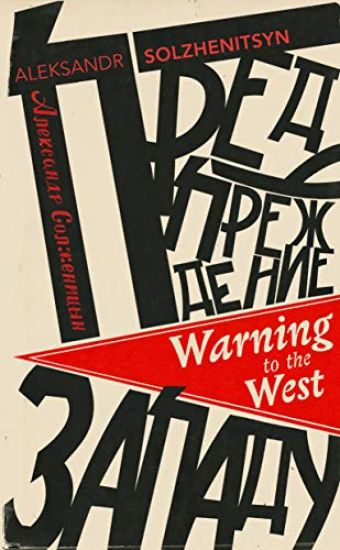
From Solzhenitsyn's warnings about the allure of communism, to his rebuke that the West should not abandon its age-old concepts of 'good' and 'evil', the speeches collected in Warning to the West provide insight into Solzhenitsyn's uncompromising moral vision.
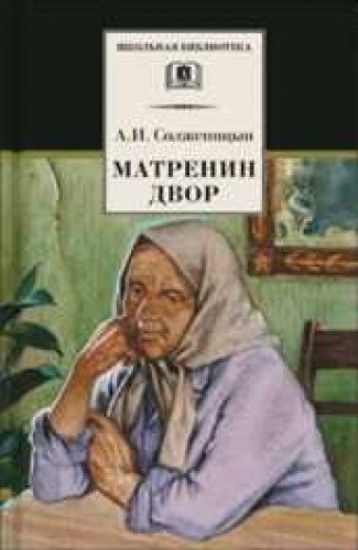
"Odin den Ivana Denisovicha" i "Matrjonin dvor" - rasskazy, chudom uvidevshie svet vo vremja khruschovskoj ottepeli, - s potrjasajuschej jarkostju i dostovernostju pokazali chitateljam sovershenno inye, protivopolozhnye ofitsialno propagandiruemym grani okruzhajuschej dejstvitelnosti, vpervye otrazhjonnye v zerkale bolshoj literatury. Odin den zakljuchjonnogo v lagere, ot podjoma do otboja, bolee vyrazitelen i strashen v privychnoj prostote ego chudovischnogo rasporjadka, chem vsja istorija stalinskikh lagerej. Poslednie mesjatsy zhizni staroj krestjanki kak budto vobrali v sebja vsju ejo skupuju na radost, bogatuju na gore, nespravedlivosti i tjazhjolyj trud zhizn. Derevenskuju pravednitsu Matrjonu i z/k Sch-854 Ivana Denisovicha obedinjaet nravstvennaja sila, s kotoroj oni perenosjat, kazalos by, sovershenno nevynosimoe, ostavajas ljudmi, bez kotorykh, "po poslovitse, ne stoit selo. Ni gorod. Ni vsja zemlja nasha". Zapominajuschiesja, atmosfernye illjustratsii k knige narisoval khudozhnik-grafik, professor Akademii im. A. L. Shtiglitsa N. Ju. Lavrukhin.
Znamenitoe issledovanie A. I. Solzhenitsyna vpervye vykhodit v vide illjustrirovannogo izdanija. Eto istoricheskij trud, v kotorom avtor govorit "nravstvenno nuzhnuju" pravdu ob otnoshenijakh dvukh natsij v Rossijskom gosudarstve - evreev i russkikh. Chast pervaja posvjaschena istorii etikh otnoshenij s kontsa XVIII v. do revoljutsionnykh sobytij 1917 g., chast vtoraja - sovetskomu periodu.
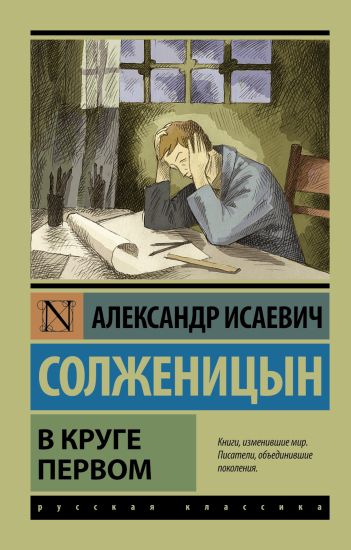
Roman "V kruge pervom", nad kotorym avtor rabotal s 1955 po 1958 god, zapreschennyj v SSSR i vpervye opublikovannyj na Zapade, a vposledstvii priznannyj klassikoj russkoj literatury XX veka i polozhennyj v osnovu zamechatelnogo odnoimennogo teleseriala G. Panfilova, napisan na avtobiograficheskom materiale. Nazvanie romana - eto allegoricheskoe sravnenie sharashki s adom iz "Bozhestvennoj komedii" Dante. Tsentralnoe mesto v povestvovanii zanimaet idejnyj spor geroev romana. Vse oni proshli vojnu i GULAG. Pri etom odin iz nikh ostalsja ubezhdennym kommunistom. Drugoj zhe, Nerzhin, uveren v porochnosti samoj osnovy kommunisticheskoj sistemy. V proshlom sam jaryj ee storonnik, on perezhil polnyj krakh svoikh ubezhdenij. Osoznannyj nravstvennyj vybor Gleba Nerzhina, kotoryj predpochel somnitelnomu schastju sharashki paradoksalnuju svobodu tjuremnogo etapa, - lejtmotiv romana.
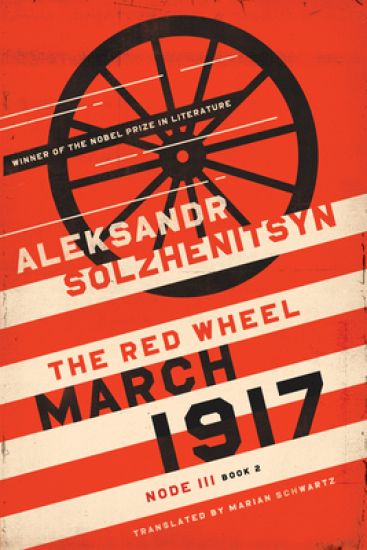
Aleksandr Solzhenitsyn's March 1917, Book 2, covers three days of the February Revolution when the nation unraveled, leading to the Bolshevik takeover eight months later. The Red Wheel is Nobel Prize–winner Aleksandr Solzhenitsyn's multivolume epic work about the Russian Revolution. He spent decades writing about just four of the most important periods, or "nodes." This is the first time that the monumental March 1917—the third node—has been translated into English. It tells the story of the Russian Revolution itself, during which the Imperial government melts in the face of the mob, and the giants of the opposition also prove incapable of controlling the course of events. The action of Book 2 (of four) of March 1917 is set during March 13–15, 1917, the Russian Revolution's turbulent second week. The revolution has already won inside the capital, Petrograd. News of the revolution flashes across all Russia through the telegraph system of the Ministry of Roads and Railways. But this is wartime, and the real power is with the army. At Emperor Nikolai II's order, the Supreme Command sends troops to suppress the revolution in Petrograd. Meanwhile, victory speeches ring out at Petrograd's Tauride Palace. Inside, two parallel power structures emerge: the Provisional Government and the Executive Committee of the Petrograd Soviet of Workers' and Soldiers' Deputies, which sends out its famous "Order No. 1," presaging the destruction of the army. The troops sent to suppress the Petrograd revolution are halted by the army's own top commanders. The Emperor is detained and abdicates, and his ministers are jailed and sent to the Peter and Paul Fortress. This sweeping, historical novel is a must-read for Solzhenitsyn's many fans, as well as those interested in twentieth-century history, Russian history and literature, and military history.
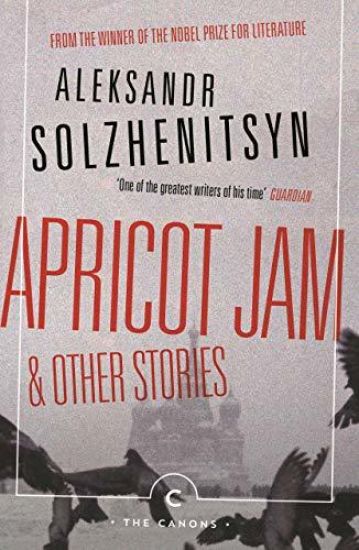
In this, his atmospheric final work of fiction, the Nobel Prize-winning author of One Day in the Life of Ivan Denisovich introduces an unforgettable set of characters whose day-to-day lives are transformed under the pressures of Soviet rule. These stories confirm Solzhenitsyn's position alongside Tolstoy, Dostoyevsky and Gogol as one of Russia's great writers.
OT REDAKTORAVremja napisanija iskhodnoj chasti knigi - vesna 1967, pered pismom avtora IV sezdu sovetskikh pisatelej, - i v tot moment ne predpolagalos prodolzhenie ejo. Odnako po mere razvitija sobytij voznikla potrebnost prodolzhat sjuzhet - i tak byli posledovatelno napisany tri Dopolnenija - v nojabre 1967, fevrale 1971 i dekabre 1973. (Primechanija, sdelannye pri napisanii etogo osnovnogo korpusa knigi, ne datirujutsja.) Uzhe togda avtor imel v vidu v buduschem napisat Dopolnenie "Nevidimki" i sobiral dlja nego materialy, pochti tolko ustno: v sovetskikh uslovijakh nelzja bylo doverit bumage dazhe chernovoj nabrosok - po ego krajnej opasnosti dlja soratnikov, pomoschnikov, dobrozhelatelej i druzej. Vse chasti knigido izgnanija avtora iz SSSR byli napisany v Podmoskove (Rozhdestvo-na-Iste, Zhukovka i Peredelkino). Srazu posle izgnanija v fevrale 1974 - v Shvejtsarii bylo napisano Chetvjortoe Dopolnenie (razvjazka: arest i vysylka). V takom sostave ocherki "Bodalsja teljonok s dubom" byli vpervye opublikovany na russkom v parizhskom izdatelstve "IMKA-Press" (1975); zatem, v perevodakh s etogo izdanija, kniga vyshla na mnogikh jazykakh. Togda zhe, letom 1974 i 1975, v nagore Tsjurikha bylo napisano Pjatoe Dopolnenie, "Nevidimki". No radi bezopasnosti samikh Nevidimok glava o nikh ne mogla byt opublikovana eschjo dolgie gody. V 1978 v glavu "Na poverkhnosti" byli vkljucheny prezhde nikuda ne voshedshie "Kremljovskie vstrechi" po sokhranivshejsja avtorskoj zapisi, sdelannoj vo vremja samikh vstrech. Na rodine tekst "Teljonka" so vsemi pjatju Dopolnenijami vpervye byl napechatan v zhurnale "Novyj mir" (1991, No 6-8, 11-12). Odnako nekotorye uchastniki i detali eschjo i togda ne mogli byt nazvany. Cherez neskolko let, kogda eti ogranichenija otpali, polnyj tekst knigi byl napechatan v izdatelstve "Soglasie" (1996). V techenie mnogikh let avtor utochnjal, zaochnym i ochnym oprosom dejstvujuschikh lits, podrobnosti ikh uchastija i posledstvij ego. Tak pojavljalis v tekste knigi dobavlenija i popravki i novye primechanija, datirovannye 1978, 1986, 1989, 1990, 1992 i 2004 godami. Poslednjuju pravku avtor predprinjal v 2004 godu. V etom okonchatelnom vide tekst vpervye pechataetsja v nastojaschem Sobranii sochinenij. Takzhe vpervye my snabdili tekst annotirovannym Imennym ukazatelem, blagodarju V. A. Astankova za pomosch pri ego sostavlenii. Rukopisi vsekh posledovatelno pisavshikhsja chastej knigi, a takzhe mashinopisnye i pechatnye ekzempljary s avtorskoj pravkoj khranjatsja v Arkhive A. I. Solzhenitsyna v Troitse-Lykove. Janvar 2018N. SolzhenitsynaRedaktor-sostavitel: Natalja Solzhenitsyna. Redaktor: Solzhenitsyna Natalija Dmitrievna
Kogda v sentjabre 1962 g. Lidija Chukovskaja sprosila Annu Akhmatovu, chitala li ona esche ne napechatannuju istoriju odnogo dnja odnogo lagernogo zakljuchennogo i chto o nej dumaet, otvet velikogo poeta byl jasen i tverd. "- Dumaju? Etu povest objazan prochitat i vyuchit naizust - kazhdyj grazhdanin izo vsekh dvukhsot millionov grazhdan Sovetskogo Sojuza". Ona vygovorila svoju rezoljutsiju medlenno, vnjatno, chut li ne po skladam, slovno objavljala prigovor". Sejchas - bolee, chem polveka spustja - jasno, chto skazannoe Akhmatovoj dolzhno byt rasprostraneno i na dva rasskaza Aleksandra Solzhenitsyna, pojavivshiesja vsled za "Odnim dnem Ivana Denisovicha" i krepchajshe s nim svjazannye. V mire, gde vlast osnovana na lzhi i zhestokosti, gde ikh fljuidy pronizyvajut vse bytie, chudovischnoe zlo mogut tvorit ne tolko prirozhdennye negodjai, no sovestlivye, chestnye, zhazhduschie spravedlivosti ljudi ("Sluchaj na stantsii Kochetovka"). Etot mir kak-to da derzhitsja lish potomu, chto obretajutsja v nem neprimetnye, a to i nevzrachnye s vidu, no istinno chistye dushoj ljudi, uvidet kotorykh dano russkomu pisatelju ("Matrjonin dvor"; pervonachalnoe nazvanie rasskaza - "Ne stoit selo bez pravednika"). Vozmozhno, bud zavet Akhmatovoj rasslyshan i ispolnen, strana nasha i my sami byli by neskolko inymi, chem sejchas. Soprovoditelnaja statja Andreja NemzeraAndrej Semenovich Nemzer (1957) - kandidat filologicheskikh nauk, ordinarnyj professor shkoly filologii Natsionalnogo issledovatelskogo universiteta "Vysshaja shkola ekonomiki" (Moskva), avtor odinnadtsati knig i mnogikh statej o russkoj literature XIX - nachala XXI v., laureat Premii Pravitelstva Rossijskoj Federatsii (2015).
V XX veke s imenem Aleksandra Isaevicha Solzhenitsyna (1918-2008) bylo prochno svjazano slovo "samizdat". Pisatel, rasprostranjaja svoi teksty v desjatkakh slepykh mashinopisnykh kopij, sumel donesti ikh do tysjach dumajuschikh ljudej. "Zhit ne po lzhi! ", "Obrazovanschina", "Esli ne zhelat byt slepym" - eti frazy ushli v narod i stali krylatymi. Chitaja publitsistiku Solzhenitsyna, nevolno vspominaesh dvukh "Prorokov" - pushkinskogo i lermontovskogo. Ego glagol vsegda zhzhjot. I za eto v avtora ne raz brosali besheno kamenja - kak sleva, tak i sprava. No Solzhenitsyn vsegda ostavalsja veren - i raven - samomu sebe... Sostavitel: Solzhenitsyna N. D. Redaktor: Kochetov V. P.
Solzhenitsyn spent eleven years in labour camps and in exile. This book is his masterwork, based on his own experiences as well as the testimony of some 200 survivors. A vast canvas of camps, prisons, transit centres and secret police, of informers and spies and interrogators but also of everyday heroism, it chronicles the story of those who dared to oppose Stalin, and for whom the key to survival lay not in hope but in despair. A thoroughly researched document and a feat of literary and imaginative power, this edition of The Gulag Archipelago was abridged into one volume at the request of the author.'Helped to bring down an empire. Its importance can hardly be exaggerated' Doris Lessing, Sunday Telegraph'Solzhenitsyn’s masterpiece...helped create the world we live in today' Anne ApplebaumWITH AN AFTERWORD BY JORDAN B. PETERSONTHE OFFICIALLY APPROVED ABRIDGEMENT OF THE GULAG ARCHIPELAGO VOLUMES I, II & III
Russian Nobel prize–winner Aleksandr Solzhenitsyn (1918–2008) is widely acknowledged as one of the most important figures—and perhaps the most important writer—of the last century. To celebrate the centenary of his birth, the first English translation of his memoir of the West, Between Two Millstones, Book 1, is being published. Fast-paced, absorbing, and as compelling as the earlier installments of his memoir The Oak and the Calf (1975), Between Two Millstones begins on February 13, 1974, when Solzhenitsyn found himself forcibly expelled to Frankfurt, West Germany, as a result of the publication in the West of The Gulag Archipelago. Solzhenitsyn moved to Zurich, Switzerland, for a time and was considered the most famous man in the world, hounded by journalists and reporters. During this period, he found himself untethered and unable to work while he tried to acclimate to his new surroundings. Between Two Millstones contains vivid descriptions of Solzhenitsyn's journeys to various European countries and North American locales, where he and his wife Natalia ("Alya") searched for a location to settle their young family. There are fascinating descriptions of one-on-one meetings with prominent individuals, detailed accounts of public speeches such as the 1978 Harvard University commencement, comments on his television appearances, accounts of his struggles with unscrupulous publishers and agents who mishandled the Western editions of his books, and the KGB disinformation efforts to besmirch his name. There are also passages on Solzhenitsyn's family and their property in Cavendish, Vermont, whose forested hillsides and harsh winters evoked his Russian homeland, and where he could finally work undisturbed on his ten-volume dramatized history of the Russian Revolution, The Red Wheel. Stories include the efforts made to assure a proper education for the writer's three sons, their desire to return one day to their home in Russia, and descriptions of his extraordinary wife, editor, literary advisor, and director of the Russian Social Fund, Alya, who successfully arranged, at great peril to herself and to her family, to smuggle Solzhenitsyn's invaluable archive out of the Soviet Union. Between Two Millstones is a literary event of the first magnitude. The book dramatically reflects the pain of Solzhenitsyn's separation from his Russian homeland and the chasm of miscomprehension between him and Western society.
To commemorate the 100th anniversary of the Russian Revolution, the University of Notre Dame Press is proud to publish Nobel Prize–winner Aleksandr Solzhenitsyn's epic work March 1917, Node III, Book 1, of The Red Wheel. The Red Wheel is Solzhenitsyn's magnum opus about the Russian Revolution. Solzhenitsyn tells this story in the form of a meticulously researched historical novel, supplemented by newspaper headlines of the day, fragments of street action, cinematic screenplay, and historical overview. The first two nodes—August 1914 and November 1916—focus on Russia's crises and recovery, on revolutionary terrorism and its suppression, on the missed opportunity of Pyotr Stolypin's reforms, and how the surge of patriotism in August 1914 soured as Russia bled in World War I. March 1917—the third node—tells the story of the Russian Revolution itself, during which not only does the Imperial government melt in the face of the mob, but the leaders of the opposition prove utterly incapable of controlling the course of events. The action of Book 1 (of four) of March 1917 is set during March 8–12. The absorbing narrative tells the stories of more than fifty characters during the days when the Russian Empire begins to crumble. Bread riots in the capital, Petrograd, go unchecked at first, and the police are beaten and killed by mobs. Efforts to put down the violence using the army trigger a mutiny in the numerous reserve regiments housed in the city, who kill their officers and rampage. The anti-Tsarist bourgeois opposition, horrified by the violence, scrambles to declare that it is provisionally taking power, while socialists immediately create a Soviet alternative to undermine it. Meanwhile, Emperor Nikolai II is away at military headquarters and his wife Aleksandra is isolated outside Petrograd, caring for their sick children. Suddenly, the viability of the Russian state itself is called into question. The Red Wheel has been compared to Tolstoy's War and Peace, for each work aims to narrate the story of an era in a way that elevates its universal significance. In much the same way as Homer's Iliad became the representative account of the Greek world and therefore the basis for Greek civilization, these historical epics perform a parallel role for our modern world.
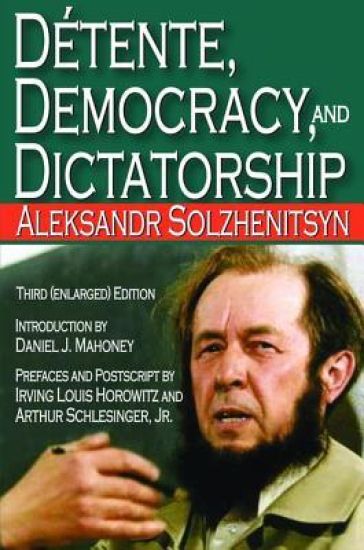
The subject of Detente, Democracy and Dictatorship has been with us since the breakdown of the Cold War and the termination of the Soviet system, indeed, if not since the origins of Bolshevism. No more vigorous critic of the uneasy co-existence of democracy and dictatorship exists than the greatest writer that the Soviet era of Russian history produced, Aleksandr Solzhenitsyn. This third edition is based on major addresses, especially aimed at Americans, delivered in 1975 in Washington, D. C. and New York, and again, in 1978, at Harvard University in Cambridge, all on the subject of detente, democracy and dictatorship. It also includes Solzhenitsyn's final 2007 interview with the German publication Der Spiegel. These major statements are brilliant and forthright comment on the risks of confusing ideology with diplomacy. But more than that, they summarize the Soviet debacle, the theoretical underpinnings, and distill Solzhenitsyn's multi-volumed masterpiece, the Gulag Archipelago.
V knigu zamechatelnogo russkogo pisatelja A. I. Solzhenitsyna vkhodjat rasskazy "Odin den Ivana Denisovicha", "Matrenin dvor" i tsikl miniatjur "Krokhotki". Dlja starshego shkolnogo vozrasta.
Komplekt iz dvukh knigV 26 tome SOBRANIJa SOCHINENIJ publikuetsja pervaja chast issledovanija DVESTI LET VMESTE (1795-1995) (vpervye: M.: Russkij mir, 2001), posvjaschennaja russko-evrejskim otnoshenijam "v dorevoljutsionnoj Rossii". Avtor kharakterizuet i analiziruet menjavsheesja polozhenie evreev v Rossijskoj imperii, vydeljaja osobo vazhnye istoricheskie momenty (epokha Velikikh reform, pervaja russkaja revoljutsija, Pervaja mirovaja vojna). V pole zrenija Solzhenitsyna vkhodjat politika verkhovnoj vlasti, otnoshenie k evrejam russkoj obschestvennosti, rol evreev v razvitii kapitalizma, ikh uchastie v revoljutsionnom dvizhenii, nachalo i rasprostranenie sionizma v Rossii, tragedija pogromov, borba za otmenu cherty osedlosti i drugikh ogranichitelnykh norm. Tsel issledovanija sformulirovana v predislovii: "Poisk vsekh tochek edinogo ponimanija i vsekh vozmozhnykh putej v buduschee, ochischennykh ot gorechi proshlogo... Iskrenno starajus ponjat obe storony. Dlja etogo - pogruzhajus v sobytija, a ne v polemiku. Stremljus pokazat". V 27 tome SOBRANIJa SOCHINENIJ publikuetsja vtoraja chast issledovanija DVESTI LET VMESTE (vpervye: M.: Russkij mir, 2002), posvjaschennaja russko-evrejskim otnoshenijam "v sovetskoe vremja". Reshitelno otvergaja mif o sovershennoj evrejami revoljutsii, avtor analiziruet uchastie evreev v sobytijakh 1917 goda i Grazhdanskoj vojne (v tom chisle v rjadakh Belogo dvizhenija). "Evrejskij vopros" v SSSR rassmatrivaetsja v tesnoj svjazi kak s obschej sudboj evropejskogo evrejstva v XX veke i Katastrofoj, tak i s tragediej Rossii, okazavshejsja pod vlastju kommunistov: izvilistyj protsess assimiljatsii evreev v 1920-1930-kh gg. i ego sledstvija (v tom chisle rost nizovogo antisemitizma); sudba rossijskogo evrejstva v pervoj emigratsii; evrei kak zhertvy i uchastniki kommunisticheskogo terrora ("V lagerjakh Gulaga"); evrei "v vojnu s Germaniej". Podrobno rassmotren poslevoennyj povorot Stalina k politike gosudarstvennogo antisemitizma. V glavakh 22-26 proslezhivajutsja peripetii russko-evrejskikh otnoshenij vtoroj poloviny 1950-kh - nachala 1980-kh godov, iskhod evreev iz Rossii, nachavshijsja posle Semidnevnoj vojny (1967). V zakljuchenie avtor razmyshljaet o slozhnostjakh i paradoksakh evrejskoj assimiljatsii, simvolichno zavershaja knigu tsitatoj iz opublikovannogo v Izraile (1981) "Pisma iz Rossii": "Ja verju, chto nesprosta eto poluchilos na putjakh Rossii - etot kontakt dushi iudejskoj i dushi slavjanskoj, chto bylo tut kakoe-to prednaznachenie".