Kirjojen hintavertailu – 12 859 829 kirjaa ja 27 kauppaa

Kirjailija

Alexander Arnfinn Olsen

Kirjat ja teokset yhdessä paikassa: 59 kirjaa, julkaisuja vuosilta 2022–2026, suosituimpiin kuuluu Introduction to Ship Engine Room Systems. Vertaile teosten hintoja ja tarkista saatavuus suomalaisista kirjakaupoista.

59 kirjaa

Kirjojen julkaisuvuodet: 2022–2026.

Finite Element Method Analysis for Ice Class Vessels

Finite Element Method Analysis for Ice Class Vessels

Alexander Arnfinn Olsen

Springer International Publishing AG
2025
sidottu
This book provides ship designers with clear guidance on alternative design procedures for hull side structures, power requirements, and propeller strength assessment based on the Finite Element Method for Baltic Ice Class Vessels. Through this comprehensive guide, readers will learn the intricacies of designing vessels capable of navigating the harsh ice conditions of the Baltic Sea. The chapters cover topics such as ice strengthening designs using direct calculation approaches, power requirement calculations for ice class vessels, and strength analysis of propellers. The authors present an expert analysis of these critical aspects, offering practical solutions and methodologies that are essential for marine engineers and naval architects. This book is a must-read for anyone involved in the design and construction of ice-class vessels, providing invaluable insights into the latest research and best practices in the field. This guide is indispensable for naval architects, marine engineering students, marine surveyors, and professionals working in maritime defense and shipping registries. It serves as a reference for academics and students in marine design and engineering, as well as a textbook for marine engineering courses. With contributions from experienced practitioners in the field, this book offers both theoretical perspectives and practical case studies that will benefit anyone involved in the design and operation of ice-class vessels.
Cathodic Protection of Offshore Structures

Cathodic Protection of Offshore Structures

Alexander Arnfinn Olsen

Springer International Publishing AG
2025
nidottu
Cathodic protection, when used in conjunction with protective coatings, is a common method used to protect immersed parts of steel surfaces from corrosion. This text offers detailed recommendations on cathodic protection for offshore structures. Traditional seagoing vessels dock at regular intervals, but offshore structures such as Floating Production Storage and Offloading structures (FPSOs) are stationary and are in continuous operation for prolonged periods of time. Therefore, the design of the corrosion protection for a 15-year or longer service life of a floating offshore structure requires special consideration. Some Floating Production Installations (FPIs) have hull designs similar to oil tankers, especially those converted from oil tankers. Others are designed and built as floating production platforms. Cathodic protection systems are to consider the structure to be protected as a whole as well as individual components which are attached to the structure. The information presented in the text is intended solely to assist the reader in the methodologies and/or techniques discussed. This text does not and cannot replace the analysis and/or advice of a qualified professional. It is the responsibility of the reader to perform their own assessment and obtain professional advice. Information contained in this text is considered to be pertinent at the time of publication but may be invalidated as a result of subsequent legislation, regulations, standards, methods, and/or more updated information and the reader assumes full responsibility for compliance.
Cathodic Protection of Marine Vessels

Cathodic Protection of Marine Vessels

Alexander Arnfinn Olsen

Springer International Publishing AG
2025
nidottu
Protective coatings are the most efficient way to protect ship steel structures from corrosion. However, cathodic protection, often in conjunction with protective coatings, is also used to protect immersed parts of bare steel surfaces (including coating damaged areas) from corrosion. This includes the external hull surface and the internal surfaces of tanks, such as ballast tanks. Cathodic protection (CP) can be Impressed Current Cathodic Protection, Galvanic Anode Cathodic Protection, or a combination of both. Cathodic protection controls corrosion by supplying direct current to the immersed surface of the structure, thus making the structure a cathode of a cell. The external hull of a ship is exposed to different waters with differing chemistries, which have a profound influence on the cathodic protection. This short text on Cathodic Protection of Marine Vessels was developed to provide guidelines for ship cathodic protection design, installation, and maintenance given it is a common practice for a ship to have cathodic protection systems installed during its new construction.
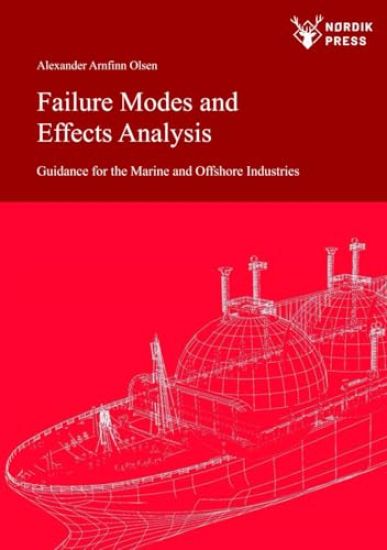
Failure Modes and Effects Analysis: Guidance for the Classification of Marine and Offshore Assets
The main Classification Societies (Class) often require their clients to develop and submit FMEA as part of the Classification requirements for select systems. For instance, FMEA are required for achieving many of the special or optional Classification notations such as the CDS, ACC, ACCU, R1, RQ, DPS-2, DPS-3, and ISQM offered by the American Bureau of Shipping (ABS) or other equivalents. This book provides guidance and insight into the development process for FMEA to comply with Classification rule requirements. The utilisation of this guidance will provide tangible benefits as the marine and offshore industry is able to realise the positive results of FMEA that are developed correctly and managed appropriately throughout the life cycle of a given system. Some of these benefits include: FMEA that meet the intended objectives and are a support to the classification process. Consistency in scope, depth and quality among comparable FMEA. Expedited FMEA review process; andReduced failures, downtimes and incidents.
Finite Element Method Analysis for Ice Class Vessels

Finite Element Method Analysis for Ice Class Vessels

Alexander Arnfinn Olsen

Springer International Publishing AG
2024
Nidottu
This book provides ship designers with clear guidance on alternative design procedures for hull side structures, power requirements, and propeller strength assessment based on the Finite Element Method for Baltic Ice Class Vessels. Through this comprehensive guide, readers will learn the intricacies of designing vessels capable of navigating the harsh ice conditions of the Baltic Sea. The chapters cover topics such as ice strengthening designs using direct calculation approaches, power requirement calculations for ice class vessels, and strength analysis of propellers. The author presents an expert analysis of these critical aspects, offering practical solutions and methodologies that are essential for marine engineers and naval architects. This book is a must-read for anyone involved in the design and construction of ice-class vessels, providing invaluable insights into the latest research and best practices in the field. This guide is indispensable for naval architects, marine engineering students, marine surveyors, and professionals working in maritime defense and shipping registries. It serves as a reference for academics and students in marine design and engineering, as well as a textbook for marine engineering courses. With contributions from experienced practitioners in the field, this book offers both theoretical perspectives and practical case studies that will benefit anyone involved in the design and operation of ice-class vessels.
Subsea Pipeline Systems

Subsea Pipeline Systems

Alexander Arnfinn Olsen

Springer International Publishing AG
2024
sidottu
This book is a comprehensive guide to the classification, design, construction, and maintenance of subsea pipeline systems. It provides an in-depth exploration of offshore pipeline architecture, serviceability, and the rigorous standards required for certification and verification. The chapters cover critical topics such as risk evaluations for novel features, survey and inspection regimes, materials and welding specifications, geotechnical and environmental conditions, flow assurance analysis, strength and stability criteria, and special considerations for pipe-in-pipe designs. Readers will also discover detailed discussions on pipeline rectification, intervention design, routing, installation procedures, testing protocols, and maintenance strategies. This book is an indispensable resource for anyone involved in the offshore oil and gas industry. Engineers, architects, and safety management professionals will find this book particularly valuable. It serves as both a reference for academics and students in industrial design and engineering fields and as a textbook for marine architecture courses. Whether you are overseeing the design of new pipelines or ensuring the integrity of existing ones, this guide offers the latest research and practical insights to help you navigate the complexities of subsea pipeline systems.
Hazard and Risk Analysis for Organisational Safety Management

Hazard and Risk Analysis for Organisational Safety Management

Alexander Arnfinn Olsen

Springer International Publishing AG
2024
nidottu
This book provides a comprehensive exploration of health and safety in the workplace, focusing on critical safety design, functional safety, and applying risk analysis. Through this book, readers will learn to navigate the complex landscape of organizational safety management, ensuring safe systems of work in hazardous environments. The chapters cover topics such as preliminary hazard identification and analysis, understanding and applying risk analysis, and constructing robust safety cases and arguments. The author presents an expert analysis of these themes through the lens of real-world examples and empirical research. Readers will also discover diverse perspectives from renowned scholars and practitioners in the field, making this book a must-read for anyone involved in organizational safety management. This book is essential for health and safety professionals, industrial and process engineers, and students at all levels studying engineering or safety courses. By the end of this volume, readers will be equipped with the knowledge to explain core principles of organizational safety management and apply them effectively in their work environments.
Guidance on the Classification of Offshore Containers

Guidance on the Classification of Offshore Containers

Alexander Arnfinn Olsen

Springer International Publishing AG
2024
nidottu
This guide provides guidance for manufacturing facilities to build offshore containers. It also serves to assist Class Engineers and Surveyors in certifying offshore containers around the globe. It provides Marine Surveyors and Offshore Industry Professionals with responsibility over offshore containers with a brief and concise summary of the main classification rules and regulations relating to the design, construction, inspection and testing, surveyance, and use of offshore containers.
Introduction to Ship-to-Ship Transfers for Oil Tankers

Introduction to Ship-to-Ship Transfers for Oil Tankers

Alexander Arnfinn Olsen

Springer International Publishing AG
2024
nidottu
This book provides an outline of the Ship-to-Ship transfer process, and how ship’s masters and officers can conduct this inherently dangerous activity safely. It is non-technical in detail making it an ideal resource for first-year students completing their studies in nautical science, or as a refresher resource for professionals already employed in the tanker sector. Moreover, this book would serve as a good handrail for shore-based personnel involved in planning and executing ship-to-ship transfers. It would be used a mid-range textbook for apprentices, officer cadets posted to crude/gas carriers. Due to its non-technical approach, accessible style and nature, the book would be good resource for students and teachers/trainers in the maritime field.
Development of Procedures and Technical Manuals for the Marine and Offshore Industries

Development of Procedures and Technical Manuals for the Marine and Offshore Industries

Alexander Arnfinn Olsen; Fidaa Karkori

Springer International Publishing AG
2024
nidottu
This book is devoted to the development of procedures and technical manuals for the marine and offshore industries, providing a comprehensive guide to creating clear, effective instructional materials. At the heart of this book is the matter of safety and environmental considerations, ensuring that all documentation aligns with current practices, policies, and regulatory requirements. The chapters cover topics such as the role of instructional materials, writing techniques, the use of graphics, and the processes for verifying, validating, approving, certifying, and implementing these materials. The authors present an expert analysis of how well-written administrative, regulatory, operating, emergency, maintenance, and routine duty procedures can enhance productivity and reduce accidents. Readers will also discover practical insights into managing instructional materials within safety programs. This book is essential for engineers and professionals tasked with developing technical manuals and texts in safety-critical industries. It serves as a valuable reference for academics and students in industrial design and engineering, as well as a textbook for students of marine architecture. Offshore installation managers and senior safety management professionals will find this guide indispensable for ensuring consistency and quality control in their operations.
Testing and Inspection of Offshore and Marine Lifting Appliances

Testing and Inspection of Offshore and Marine Lifting Appliances

Richard Rossi Ciampolini; Alexander Arnfinn Olsen

Springer International Publishing AG
2024
sidottu
This book introduces details of inspection criteria and inspection techniques, which are widely recognized by the marine construction industry as a reliable means of inspection of structure members and their welds during the construction of surface vessels and other related marine and offshore structures. This text incorporates the criteria for phased array ultrasonic testing (PAUT). Since 2016, PAUT has become a common non-destructive testing method in use in shipyards for marine and offshore structures across the world, as it provides quicker examination than conventional UT technique for complex geometries. Moreover, this book includes guidance for time-of-flight diffraction (TOFD) ultrasonic inspection. The TOFD ultrasonic examination technique provides improved detection and sizing capabilities of discontinuities compared to standard ultrasonic pulse-echo techniques. Both PAUT and TOFD produce a permanent record of the inspection in electronic format.
Accidental Load Analysis and Design for Offshore Structures

Accidental Load Analysis and Design for Offshore Structures

Alexander Arnfinn Olsen

Springer International Publishing AG
2024
nidottu
This book provides a comprehensive guide to the identification and assessment of structural loads arising from accidental events in offshore structures. Through this book, readers will learn about risk-based assessment techniques that are essential for determining accidental loads, moving beyond traditional prescriptive criteria. The chapters cover topics such as ship collision hazards, dropped object hazards, fire hazards, and blast hazards. The author, Alexander Arnfinn Olsen, presents an expert analysis of these critical issues through the lens of risk-based evaluations. Readers will discover methodologies to identify and assess the effects of accidental structural loads, making this book a must-read for those involved in offshore safety and certification. This book is an invaluable resource for offshore engineers, marine architects, and safety management professionals. It serves as both a reference for academics and students in industrial design and engineering and a textbook for students of marine architecture. With its focus on classification aspects including design, construction, and maintainability, this guide is essential for anyone responsible for overseeing the design and construction of offshore platform assets.
Offshore Access Gangways

Offshore Access Gangways

Alexander Arnfinn Olsen

Springer International Publishing AG
2024
nidottu
This book is a comprehensive guide to the classification, design, and certification of offshore access gangway systems. It provides essential insights into the safety and operational standards required for the construction and maintenance of these critical structures in the offshore oil and gas industry. The chapters cover topics such as structural requirements, machinery and systems, testing and surveys, and risk assessment. The author delves into the intricacies of Class notations, approvals, and international regulations. This guide is indispensable for understanding the stringent requirements for offshore gangway systems, ensuring compliance with global standards. Ideal for offshore engineers, marine architects, safety managers, and students in industrial design and engineering, this reference book offers a detailed exploration of the latest research and practical applications in the field. Whether you are overseeing design or construction or ensuring operational safety, this book is an invaluable resource.
Containerized Cargo Handling and Stowage

Containerized Cargo Handling and Stowage

Alexander Arnfinn Olsen; Fidaa Karkori

Springer International Publishing AG
2024
sidottu
Container industry is gathering pace as vessels are becoming increasingly larger, with the volume of containers carried regularly exceeding 23,000 per vessel. This means the scope for accidents and incidents is also increasing exponentially. This title aims to provide those professionals involved in the packing and handling of cargoes inside containers with the necessary knowledge to do so safely. This will help ensure container collapses are avoided due to inertial forces both at sea and during land transportation.
Position and Nearshore Mooring

Position and Nearshore Mooring

Alexander Arnfinn Olsen

Springer International Publishing AG
2024
sidottu
This book provides a summary of the Class Rules and Guides for mooring systems so that they are easier to navigate and therefore implement. Mooring systems have been evolving in design, analysis, operating management, and other areas to meet the challenges of safety and efficiency. To ensure these challenges are met, Class Rules and Guides are developed and updated to keep pace with the maritime industry. This has resulted in a complex library of Class Rules and Guides. Many requirements are repeated throughout these Class Rules and Guides making use and maintenance of Class Rules/Guides increasingly cumbersome and bureaucratic. In addition to the consolidation of the current requirements, this book also includes guidance in the following areas based on the latest industry knowledge and experiences: Vortex-Induced Motion (VIM) effect. Bending-tension fatigue of mooring chains. Fiber rope mooring criteria. Mooring systems in squalls. Dynamically installed anchors. Anchor holding capacity. Mooring analysis methodology. Thruster-assisted mooring.
Dropped Object Prevention on Offshore Facilities and Installations

Dropped Object Prevention on Offshore Facilities and Installations

Alexander Arnfinn Olsen

Springer International Publishing AG
2024
sidottu
The prevention of dropped objects is an important component of safeguarding personnel, property and the maritime environment. This concise book has been developed to provide safety professionals and practitioners with specific guidance and criteria on the development, implementation and management of dropped object prevention programs which corresponds to a growing industry-wide development to mitigate and eliminate the hazards imposed by dropped objects. This book relates to the Class requirements for an onboard dropped object prevention program to be implemented on offshore assets, and provides the design requirements for equipment primary securing, secondary retention methods and securing for specific equipment, etc. This book is intended for use by offshore installation Owners, Operators, and Companies whose intention is to prepare for, and ultimately apply for optional Class notations highlighting the installation’s compliance with dropped object safety management. For the benefit of context, the book uses the provisions which relate specifically to the DOPP and DOPP+ notations.
Applying Physical Ergonomics to Modern Ship Design

Applying Physical Ergonomics to Modern Ship Design

Alexander Arnfinn Olsen

Springer International Publishing AG
2024
sidottu
This book combines and summarizes the myriad rules, regulations, guidance, and guidelines that pertain to the human factor element of vessel design and marine operations. With a focus on physical ergonomics, the book is thoroughly researched and draws on the most current Class rules and industry regulations promulgated by the IMO and other organizations. As such, this book serves as a single point of reference for professionals and students involved in human factors and ergonomics at sea.
Equipment Conditioning Monitoring and Techniques

Equipment Conditioning Monitoring and Techniques

Alexander Arnfinn Olsen

Springer International Publishing AG
2024
sidottu
This book is a single source of guidance and information relating to condition monitoring techniques when designing, implementing and managing a reliability-centred maintenance programme. The topics addressed in this book include a summary of the types of condition-monitoring techniques used by the marine industry, in addition to guidance on the selection of appropriate technique(s), measurement frequency, personnel skills, company resources, and risk assessment. Through the application of condition-monitoring techniques, vessel owners, onshore managers, and marine asset operators should be able to see improved equipment and system reliability onboard their vessels or other marine installations. Moreover, consideration should be given to enrolling vessels and assets in either a reliability-centred maintenance programme or a preventative maintenance programme to take advantage of the additional cost saving benefits for equipment maintenance together with receiving credit towards Class mandated continuous survey for machinery.
Introduction to Celestial Navigation

Introduction to Celestial Navigation

Alexander Arnfinn Olsen

Springer International Publishing AG
2024
sidottu
This book focuses on Coastal and Ocean Navigation with an emphasis on celestial navigation techniques as a ‘back up’ in the event digital technologies fail. It deals with the main themes and principles of celestial navigation (including time). It covers the syllabus for deck officers working towards the Officer of the Watch (OOW) certificate of competence (COC) awarded by the Maritime and Coastguard Agency (MCA), and for Royal Navy navigation officers working towards achieving the equivalent Navigational Watch Certificate (NWC). The NWC is equivalent to the certificate awarded by the MCA to OOWs in the Merchant Service under the international Standardisation of Training, Certification and Watchkeeping (STCW) agreements. The detailed theory of celestial navigation is provided.
Introduction to Digital Navigation

Introduction to Digital Navigation

Alexander Arnfinn Olsen

Springer International Publishing AG
2024
sidottu
This book focuses on Coastal and Ocean Navigation with an emphasis on digital navigation (using ECDIS) and would be useful to both experienced seafarers as an aide memoire, and also to cadets and trainees embarking on their maritime careers. The text has been developed for modern day ship’s navigator in the ‘digital era’. It is written from the perspective that the reader’s vessel will be navigated using an IMO type-approved electronic chart and display information system (ECDIS) as opposed to traditional chart-based passage planning. As such, the book focuses on the main principles associated with position and direction of the earth's surface, geodesy projects and grids, digital navigation, electronic chart and data information systems, fixing, internal aids to navigation and systems, external aids to navigation, tides and currents, ocean navigation, coastal navigation, pilotage and blind pilotage, anchoring, navigational errors, relative velocity, and bridge organisation and management.