Kirjojen hintavertailu – 12 859 829 kirjaa ja 27 kauppaa
Kirjailija
Alexander Arnfinn Olsen
Kirjat ja teokset yhdessä paikassa: 59 kirjaa, julkaisuja vuosilta 2022–2026, suosituimpiin kuuluu Introduction to Ship Engine Room Systems. Vertaile teosten hintoja ja tarkista saatavuus suomalaisista kirjakaupoista.
Maritime Accident and Incident Investigation covers a wide range of topics relating to maritime-orientated organisational hazards and risks, as well as root cause analyses and techniques for analysing evidence. Its approach to maritime casualty and incident investigation caters to the unique needs of the maritime industry and covers the human element, machinery and engineering, and structural and security concerns. The book is divided into four parts, which respectively introduce the concepts and theories of organisational risks and hazards; provide a framework structure for planning, initiating, performing, and closing out maritime casualty and incident investigations; provide an overview of the main forms of analyses; and offer a toolkit of forms and documents for preparing and carrying out incident investigations. Features:Focuses on basic principles independent of particular software or protocols, allowing customisation to the reader’s own management system, Health, Safety and Environment (HSE) programmes, or related initiativesSupports the reader in applying class-related activities such as the provisions of the ISM Code and the International Ship and Port Facility Security (ISPS) CodeThe book is ideal for trainees, advanced students, and junior maritime professionals involved in the investigation of maritime accidents and incidents. Also available as online Support Material is a full MaRCIIF Toolkit, containing several resources, such as checklists, forms, and guidelines, useful in the execution of maritime incident investigations. Access the Support Material: www.routledge.com/9781032530239Alexander Arnfinn Olsen is a Senior Consultant at RINA Consulting Defence UK. He is STCW II 1995 qualified and has also worked as a marine training designer, marine auditor, and fisheries observer. He is the author of Introduction to Ship Operations and Onboard Safety, Core Concepts of Maritime Navigation, Introduction to Ship Engine Room Systems, Maritime Cargo Operations, Merchant Ship Types, and Firefighting and Fire Safety Systems on Ships (with Routledge).
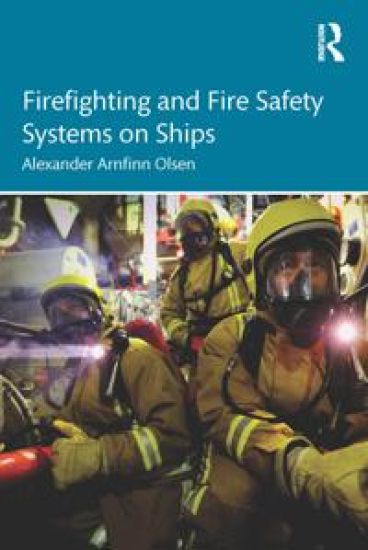
This accessible reference introduces firefighting and fire safety systems on ships and is written in line with the IACS Classification Rules for Firefighting Systems. It covers the design, construction, use, and maintenance of firefighting and fire safety systems, with cross references to the American Bureau of Shipping rules and various Classification Society regulations which pertain to specific Classification Society rules. As such, this book:Focuses on basic principles in line with current practice Is aimed at non-specialists The book suits professional seafarers, students, and cadets, as well as leisure sailors and professionals involved in the logistics industry. It is also particularly useful for naval architects, ship designers, and engineers who need to interpret the Class rules when developing shipboard firefighting systems.
Maritime Cargo Operations presents the core concepts of cargo work for marine engineering students and cadets. It is built around the essential principles of the maritime profession and is a valuable guide to a broad range of key subject areas in the safe carriage, handling, stowage and securing of cargo, and cargo watches in port. It contributes to a sound understanding of cargo operations for a future career in the profession, as well as offering a general overview for deck officers. Gives an overview of the key areas in cargo operations work. Includes structured Learning Outcomes and self-test questions for each subject area to assist readers in evaluating their understanding. The book suits merchant navy cadets at Higher National Certificate (HNC), and Higher National Diploma (HND), and foundation degree level in both the deck and engineering branches, and also serves as a general reference for maritime professionals.
Introduction to Ship Engine Room Systems outlines the key systems, machinery and equipment found in a ship’s engine room. It explores the basics of their function with overall practical guidance for engine room operation and maintenance, recognising emerging environmental challenges. It covers the following topics: The role and function of the steering and propulsion systems Power generation The heating, ventilation, and air conditioning systems The water management system Engine room fires and emergency response systems Engine room watch procedures and checklistsThe book serves as an accessible introductory text for engineering students at HNC, HND, and foundation degree level, marine engineering cadets, and non-engineering marine professionals such as deck officers and cadets who want a general guide to how the engine room functions.
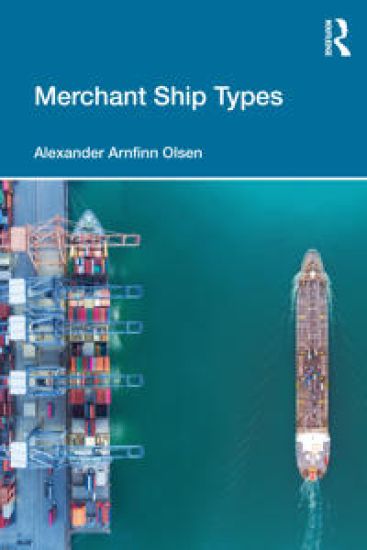
Merchant Ship Types provides a broad and detailed introduction to the classifications and main categories of merchant vessels for students and cadets. It introduces the concept of ship classification by usage, cargo type, and size, and shows how the various size categories affect which ports and channels the types of vessels are permitted to enter. Detailed outlines of each major vessel category are provided, including:• Feeder ship;• General cargo vessels;• Container ships;• Tankers;• Dry bulk carriers;• Multi-purpose vessels;• Reefer ships;• Roll-on/roll-off vessels. The book also explains where these are permitted to operate, the type of cargoes carried, and specific safety or risk factors associated with the vessel class, as well as their main characteristics. Relevant case studies are presented. The textbook is ideal for merchant navy cadets at HNC, HND, and foundation degree level in both the deck and engineering branches, and serves as a general reference for insurance, law, logistics, offshore, and fisheries.
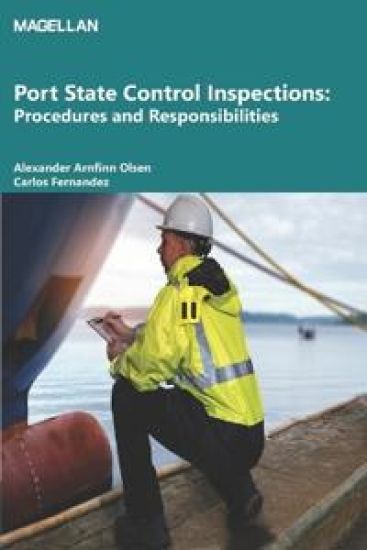
Port State Control or PSC is an inspection regime for countries to inspect foreign-flagged vessels in port other than those of the Flag State, and take action against those vessels which are not compliant. Inspectors who carry out Port State Control duties are called Port State Control Officers (PCSO) and are tasked with investigating vessel compliance with the international maritime conventions such as SOLAS, MARPOL, STCW and the MLC. Inspections often involve checking that the vessel is manned and operated in compliance with applicable international law, and verifying the competency of the vessel's master and officers, and the ship's condition and equipment. This book has been written to provide Port State Control Officers with guidance on the procedures and responsibilities for carrying out Port State Control inspections.
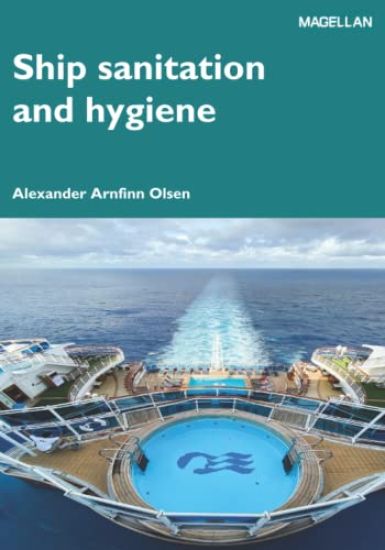
It is not by accident that ships have historically played a significant role in the carriage and transmission of infectious diseases around the world. Some of the earliest recorded evidence of attempts to control human disease transmission via ships dates as far back as the 14th century, when ports denied access to ships suspected of carrying bubonic plague. In the 19th century, the spread of cholera was thought to have been a consequence in the boom in merchant shipping. In a 2004 study, it is estimated that as many as 100 disease outbreaks were attributable to ship movements between 1970 and 2003. As of 2022, the global merchant fleet is smaller than in earlier years, yet the size and capacity of individual ships have grown exponentially. Whilst the risk of carrying infectious diseases is on the one hand limited by the lower number of hulls, the very fact that ships are larger today than ever before makes them a hazard waiting to happen. For this reason alone, it is imperative that the global shipping industry accepts its responsibility for ensuring the highest possible standards in ship sanitation and hygiene. This is not a burden carried by the shipping industry alone, however; the aviation industry also shares this burden, with people more mobile today than at any point in human history. Since 1999, there have been 11 major outbreaks of infectious diseases around the world. Some of these were local or regional, such as the 1999-2002 outbreak of West Nile Virus and 2006 Mumps pandemic in the US. Other outbreaks have been able to spread globally and with relative ease in part because of the globalised nature of travel and commerce. In 2003, SARS-CoV, 2009 H1N1 Virus (Swine Flu), 2012 MERS CoV, 2014 Ebola, 2016 Zika Virus and of course in 2019, Covid. These events represent the risk we all face in the battle against existing, emerging and new diseases. As humans spread further into the chartered regions of Africa and Asia in search of new materials and commercial opportunities, so does the risk of contracting and spreading infections. Recognising this risk, and taking appropriate actions is just the start of safeguarding against this very real modern-world problem. It is equally important, however, to recognise that tropical and exotic diseases are not the only problem that faces the modern seafarer. Poor personal hygiene, and ineffective shipboard sanitation are both key causes of common - and preventable - illnesses such as food poisoning, hepatitis, dental issues, stress and anxiety, depression, amongst many more. Living and working at sea is a difficult and isolated existence, which affects seasoned mariners as much as those new to the profession. Whilst this book does not profess to be an encyclopaedia of medical problems and treatments, it is hoped that by following the simple advice and guidance contained in these pages the shipping industry can be a little bit healthier, and therefore safer.
This handbook aims to provide the professional cargo officer with a source of guidance and information based on accepted industry best practice. The global economy is dependent on the smooth exchange of goods. Any damage results in a waste of resources. Loss prevention measures are not only economically necessary but also directly protect the marine environment. Surveys of transport practice have revealed that almost seventy percent of all packed containers, swap bodies, road and rail vehicles, or other cargo transport units, exhibit shortcomings in packing and load securing which can result in damage. It should be recognised, however, that even a handbook which has been edited and updated over many years cannot take account of every possible variant which may be encountered in practice, therefore this handbook does not make any claim to completeness, being less than comprehensive or perfect in many parts. Nevertheless, it is hoped that this handbook will serve as a source of guidance for the professional, and will make at least some contribution to preventing cargo damage and loss. The authors hope that it will be possible gradually to update this handbook as new best practices emerge so that it will continue to be a useful source of advice to anyone responsible for packing and securing cargo transport units.
Core Principles of Maritime Navigation introduces the main navigation concepts required by trainees and professionals involved in maritime operations. The book covers a wide range of subjects from wind, waves and depths to navigational marks and buoys, navigational techniques and equipment, passage planning, duties of the Officer of the Watch, berthing and anchorage. It is not intended to be a technical publication; rather, it aims to introduce core ideas and concepts in an accessible way for general readers, university students, cadets and for the continuous professional development of experienced seafarers.
This book is an adaptation of the Guidelines for Offshore Marine Operations, which were published as Revision 0611-1401 on 06 November 2013. References to the Guidelines or Guidance is made to direct the reader to the appropriate section of the original publication. The objective of this publication, therefore, is to provide said guidance regarding the best practices which should be adopted to ensure the safety of personnel on board all vessels servicing and supporting offshore facilities, and to reduce the risks associated with such operations. It particularly relates to the following activities: Operations of offshore facilities. Operations of vessels. Whilst the best practices summarised in this publication primarily reflect those adopted in the North-West European Area, the editor recognises that the guidance may just as easily apply outside this region and that many, if not all, of the recommendations included do indeed have global relevance. Where it has been possible to make recommendations relating to operations outside its core area without diluting the original objectives these have been included. It is recognised, however, that in certain circumstances local or company-specific requirements may exist. In this event the guidance contained herein should be read in the context of such requirements and interpreted accordingly. To facilitate common practices on a global basis, where necessary, the guidance, together with included reporting forms, should be used as the basis for preparing procedures for local practices
Introduction to Container Ship Operations and Onboard Safety is an introduction for students and professionals involved in the maritime industry. It provides an overview of the merchant navy from its beginnings to the present day, entry and training requirements, shipboard hierarchy and roles and responsibilities, shipboard safety organisation, inductions and new crew member familiarisation, safe means of access to enclosed spaces, general housekeeping, risk assessment and risk management. In addition, it examines specific hazardous activities such as cargo loading and unloading, drydocking, drills, and actions to take in the event of an emergency. This textbook provides a concise overview of core concepts and practices in the maritime industry that is appropriate for the cadet, experienced seafarer, industry professional, and the general maritime enthusiast.