
Kirjailija
Amitav Acharya
Kirjat ja teokset yhdessä paikassa: 33 kirjaa, julkaisuja vuosilta 2007–2026, suosituimpiin kuuluu TRAGIC NATION BURMA. Vertaile teosten hintoja ja tarkista saatavuus suomalaisista kirjakaupoista.
33 kirjaa
Kirjojen julkaisuvuodet: 2007–2026.

From Southeast Asia to Indo-Pacific: Culture, Identity, and the Return to Geopolitics
Amitav Acharya
PENGUIN BOOKS
2025
nidottu
AN AUTHORITATIVE ACCOUNT OF KEY GEOPOLITICAL CHANGES AFFECTING SOUTHEAST ASIA Southeast Asia was created by geopolitics, and it might die with it. An era of great power rivalry made the rise of Southeast Asia possible. It stimulated common purpose and unity among nations and led to the creation and consolidation of ASEAN. The question now is, will the return of geopolitics have a similar impact? This is no means assured. In fact, the opposite could happen. The new geopolitics is, after all, quite different from the old. Developments affecting Southeast Asia's reputation and appeal might destroy ' Southeast Asia' not just as a distinct idea, but also as pawns in the hands of great powers. The fate of the region looks increasingly uncertain; the question arises: has Southeast Asia passed its ' use by date' ?
The Once and Future World Order
Amitav Acharya
John Murray Press
2025
sidottu
Halvin toimitettuna 28,00 €
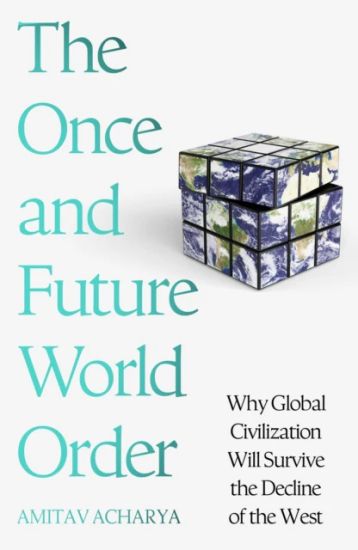
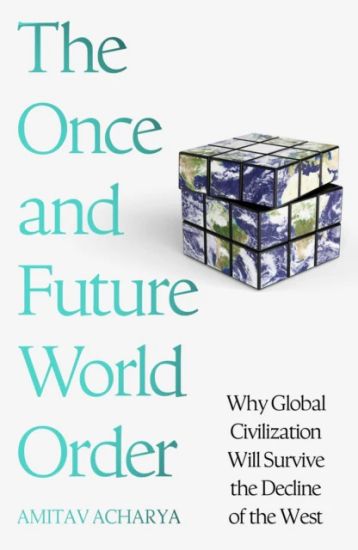
The epic history of world order, revealing how the decline of the West may be a good thing for its future. Since the dawn of the twenty-first century, the West has been in crisis. Social unrest, political polarization, and the rise of other great powers - especially China - threaten to unravel today's Western-led world order. Many fear this would lead to global chaos. But this is a Western illusion. Surveying five thousand years of global history, political scientist Amitav Acharya reveals that world order existed long before the rise of the West. Moving from ancient Sumer, India, Greece, and Mesoamerica, through medieval caliphates and Eurasian empires into the present, Acharya shows that humanitarian values, economic interdependence, and rules of inter-state conduct emerged across the globe over millennia. History suggests order will endure even as the West retreats. Instead of fearing the future, the West should learn from history and cooperate with the Rest to forge a more equitable order.


The Once and Future World Order: Why Global Civilization Will Survive the Decline of the West
Amitav Acharya
BASIC BOOKS
2025
sidottu
Halvin toimitettuna 29,70 €
The epic story of the past, present, and future of world order that "brilliantly" (Kishore Mahbubani, author of Living the Asian Century) argues why the decline of the West may be a good thing for the world Since the dawn of the twenty-first century, the West has been in crisis. Social unrest, political polarization, and the rise of other great powers--especially China--threaten to unravel today's Western-led world order. Many fear this would lead to global chaos. But the West has never had a monopoly on order. Surveying five thousand years of global history, political scientist Amitav Acharya reveals that world order--the political architecture enabling cooperation and peace among nations--existed long before the rise of the West. Moving from ancient Sumer, India, Greece, and Mesoamerica, through medieval caliphates and Eurasian empires into the present, Acharya shows that humanitarian values, economic interdependence, and rules of inter-state conduct emerged across the globe over millennia. History suggests order will endure even as the West retreats. In fact, the end of Western dominance offers us the opportunity to build a better world, where non-Western nations find more voice, power, and prosperity. Instead of fearing the future, the West should learn from history and cooperate with the Rest to forge a more equitable order. This is the definitive account of how world order evolved and why it will survive the decline of the West.
Divergent Worlds
Amitav Acharya; Manjeet S. Pardesi
YALE UNIVERSITY PRESS
2025
sidottu
Halvin toimitettuna 37,10 €
A study of why the ancient Mediterranean and Indian Ocean took different paths to peace and stability and its lessons for international order today In this book Amitav Acharya and Manjeet S. Pardesi compare the interplay of power and ideas in the ancient Mediterranean and Indian Ocean to explain why the two regions took divergent paths to peace and stability. While the ancient Mediterranean order was shaped by the hegemony of Rome, the Indian Ocean developed an open and inclusive international order without the dominance of any single power. Moreover, the Indian Ocean provides a more robust example of the peaceful spread of ideas and culture in contrast to the ancient Mediterranean, where Hellenization, or the spread of Greek ideas, was often accompanied by violence and imperialism. Applying the divergent experiences of the two regions, the authors argue that the history of the Indian Ocean before European colonization offers a more useful framework for reshaping world order as the U. S.- and Western-dominated Liberal International Order comes to an end. The Indian Ocean framework points to an alternative model of order building—a multiplex rather than a multipolar approach—that could sustain efforts to build peace and stability in the emerging Indo-Pacific region.
A decade ago, Burma was full of light and hope. Today, it has descended into darkness and despair. The once promising political and opening up of the country has been set back, possibly for a long time. How did this happen? This book will provide a timely and insightful account of the political situation in Burma, assessing why the country experienced the coup, what the implications are for the people of Burma and the Southeast Asian region, and what role the international community can play to prevent Burma becoming a failed state.
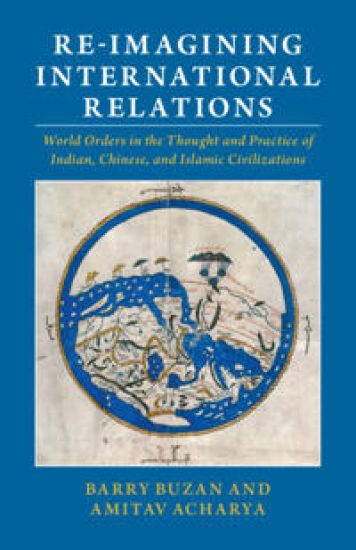
Re-imagining International Relations
Barry Buzan; Amitav Acharya
Cambridge University Press
2021
pokkari
Halvin toimitettuna 29,50 €
Buzan and Acharya challenge the discipline of International Relations to reimagine itself in the light of the thinking about, and practice of, international relations and world order from premodern India, China and the Islamic world. This prequel to their 2019 book, The Making of Global International Relations, takes the story back from the two-century tale of modern IR, to reveal the deep global history of the discipline. It shows the multiple origins and meanings of many concepts thought of as only modern and Western. It opens pathways for the rest of the world into this most Eurocentric of disciplines, encouraging them to bring their own histories, concepts and theories with them. The authors have written this book with the hope of inspiring others to extend these pathways by bringing in a wider array of cultures, and exploring how they thought about and acted in worlds composed of multiple, independent, collective actors.
Re-imagining International Relations
Barry Buzan; Amitav Acharya
Cambridge University Press
2021
sidottu
Buzan and Acharya challenge the discipline of International Relations to reimagine itself in the light of the thinking about, and practice of, international relations and world order from premodern India, China and the Islamic world. This prequel to their 2019 book, The Making of Global International Relations, takes the story back from the two-century tale of modern IR, to reveal the deep global history of the discipline. It shows the multiple origins and meanings of many concepts thought of as only modern and Western. It opens pathways for the rest of the world into this most Eurocentric of disciplines, encouraging them to bring their own histories, concepts and theories with them. The authors have written this book with the hope of inspiring others to extend these pathways by bringing in a wider array of cultures, and exploring how they thought about and acted in worlds composed of multiple, independent, collective actors.
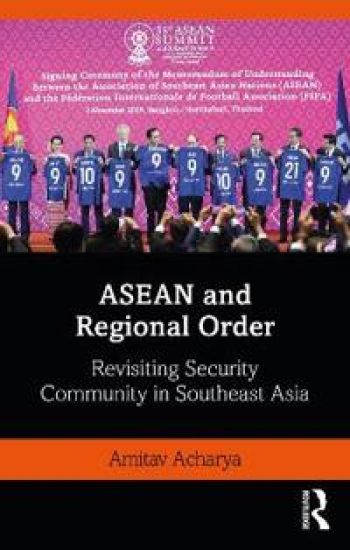
Founded in 1967, the Association of Southeast Asian Nations (ASEAN) has emerged as one of the most successful regional organizations in the world. This book discusses the future of ASEAN against a backdrop of a growing US–China rivalry and the security implications of COVID-19. Chapters in this book move through a history of ASEAN and its multilateral institutions, including the ASEAN Regional Forum (ARF) and the East Asia Summit (EAS), featuring rare photographic material to contextualize both recent developments in regional security and projections for ASEAN’s prospects. Key concepts and terms are unpacked throughout, with the chapters focusing on rapidly changing international and regional environments, economic insecurities such as trade conflicts, human rights, and ASEAN identity, and providing extensive analysis of the factors challenging the principle ASEAN Centrality and the Indo-Pacific security architecture. The concept of security community frames this book, despite being subject to change if intraregional discord and institutional stagnation take hold. As a discussion of the role and future of ASEAN in a pivotal period of world history, ASEAN and Regional Order will prove vital to both students and scholars of international relations, regional organizations, and Asian studies more broadly.
Founded in 1967, the Association of Southeast Asian Nations (ASEAN) has emerged as one of the most successful regional organizations in the world. This book discusses the future of ASEAN against a backdrop of a growing US–China rivalry and the security implications of COVID-19. Chapters in this book move through a history of ASEAN and its multilateral institutions, including the ASEAN Regional Forum (ARF) and the East Asia Summit (EAS), featuring rare photographic material to contextualize both recent developments in regional security and projections for ASEAN’s prospects. Key concepts and terms are unpacked throughout, with the chapters focusing on rapidly changing international and regional environments, economic insecurities such as trade conflicts, human rights, and ASEAN identity, and providing extensive analysis of the factors challenging the principle ASEAN Centrality and the Indo-Pacific security architecture. The concept of security community frames this book, despite being subject to change if intraregional discord and institutional stagnation take hold. As a discussion of the role and future of ASEAN in a pivotal period of world history, ASEAN and Regional Order will prove vital to both students and scholars of international relations, regional organizations, and Asian studies more broadly.
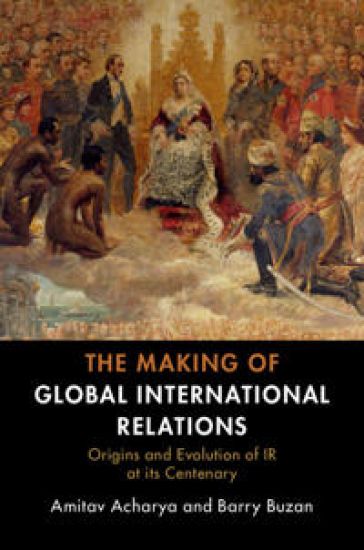
The Making of Global International Relations
Amitav Acharya; Barry Buzan
Cambridge University Press
2019
pokkari
Halvin toimitettuna 42,00 €
This book presents a challenge to the discipline of international relations (IR) to rethink itself, in the light of both its own modern origins, and the two centuries of world history that have shaped it. By tracking the development of thinking about IR, and the practice of world politics, this book shows how they relate to each other across five time periods from nineteenth-century colonialism, through two world wars, the Cold War and decolonization, to twenty-first-century globalization. It gives equal weight to both the neglected voices and histories of the Global South, and the traditionally dominant perspectives of the West, showing how they have moved from nearly complete separation to the beginnings of significant integration. The authors argue that IR needs to continue this globalizing movement if it is to cope with the rapidly emerging post-Western world order, with its more diffuse distribution of wealth, power and cultural authority.
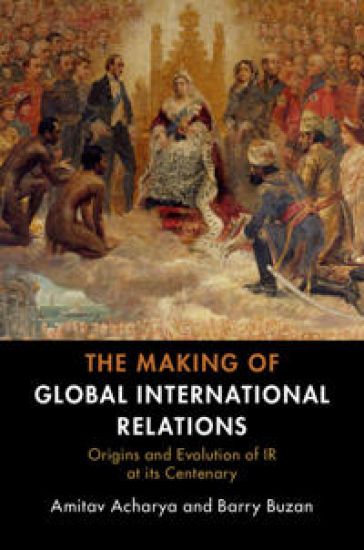
The Making of Global International Relations
Amitav Acharya; Barry Buzan
Cambridge University Press
2019
sidottu
This book presents a challenge to the discipline of international relations (IR) to rethink itself, in the light of both its own modern origins, and the two centuries of world history that have shaped it. By tracking the development of thinking about IR, and the practice of world politics, this book shows how they relate to each other across five time periods from nineteenth-century colonialism, through two world wars, the Cold War and decolonization, to twenty-first-century globalization. It gives equal weight to both the neglected voices and histories of the Global South, and the traditionally dominant perspectives of the West, showing how they have moved from nearly complete separation to the beginnings of significant integration. The authors argue that IR needs to continue this globalizing movement if it is to cope with the rapidly emerging post-Western world order, with its more diffuse distribution of wealth, power and cultural authority.
For a long time, international relations scholars have adopted a narrow view of what is global order, who are its makers and managers, and what means they employ to realize their goals. Amitav Acharya argues that the nature and scope of agency in the global order - who creates it and how - needs to be redefined and broadened. Order is built not by material power alone, but also by ideas and norms. While the West designed the post-war order, the non-Western countries were not passive. They contested and redefined Western ideas and norms, and contributed new ones of their own making. This book examines such acts of agency, especially the redefinitions of sovereignty and security, shaping contemporary world politics. With the decline of Western dominance, ideas and agency from the Rest may make it possible to imagine and build a truly global order.
For a long time, international relations scholars have adopted a narrow view of what is global order, who are its makers and managers, and what means they employ to realize their goals. Amitav Acharya argues that the nature and scope of agency in the global order - who creates it and how - needs to be redefined and broadened. Order is built not by material power alone, but also by ideas and norms. While the West designed the post-war order, the non-Western countries were not passive. They contested and redefined Western ideas and norms, and contributed new ones of their own making. This book examines such acts of agency, especially the redefinitions of sovereignty and security, shaping contemporary world politics. With the decline of Western dominance, ideas and agency from the Rest may make it possible to imagine and build a truly global order.

The age of Western hegemony is over. Whether or not America itself declines or thrives under President Trump's leadership, the post-war liberal international order underpinned by US military, economic and ideological primacy and supported by global institutions serving its power and purpose, is coming to an end. But what will take its place? A Chinese world order? A re-constituted form of American hegemony? A regionalized system of global cooperation, including major and emerging powers? In this updated and extended edition of his widely acclaimed book, Amitav Acharya offers an incisive answer to this fundamental question. While the US will remain a major force in world affairs, he argues that it has lost the ability to shape world order after its own interests and image. As a result, the US will be one of a number of anchors including emerging powers, regional forces, and a concert of the old and new powers shaping a new world order. Rejecting labels such as multipolar, apolar, or G-Zero, Acharya likens the emerging system to a multiplex theatre, offering a choice of plots (ideas), directors (power), and action (leadership) under one roof. Finally, he reflects on the policies that the US, emerging powers and regional actors must pursue to promote stability in this decentred but interdependent, multiplex world. Written by a leading scholar of the international relations of the non-Western world, and rising above partisan punditry, this book represents a major contribution to debates over the post-American era.

The age of Western hegemony is over. Whether or not America itself declines or thrives under President Trump's leadership, the post-war liberal international order underpinned by US military, economic and ideological primacy and supported by global institutions serving its power and purpose, is coming to an end. But what will take its place? A Chinese world order? A re-constituted form of American hegemony? A regionalized system of global cooperation, including major and emerging powers? In this updated and extended edition of his widely acclaimed book, Amitav Acharya offers an incisive answer to this fundamental question. While the US will remain a major force in world affairs, he argues that it has lost the ability to shape world order after its own interests and image. As a result, the US will be one of a number of anchors including emerging powers, regional forces, and a concert of the old and new powers shaping a new world order. Rejecting labels such as multipolar, apolar, or G-Zero, Acharya likens the emerging system to a multiplex theatre, offering a choice of plots (ideas), directors (power), and action (leadership) under one roof. Finally, he reflects on the policies that the US, emerging powers and regional actors must pursue to promote stability in this decentred but interdependent, multiplex world. Written by a leading scholar of the international relations of the non-Western world, and rising above partisan punditry, this book represents a major contribution to debates over the post-American era.
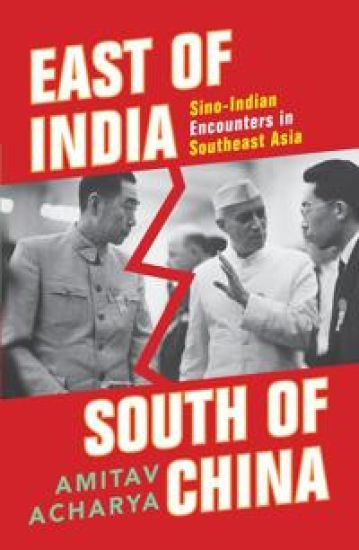
This volume will explore the role of India and China in regional geopolitics, with a focus on Southeast Asia. It highlights some of the key events and turning points in the evolving equations since the times of Jawaharlal Nehru, Indias first prime minister. In six chapters, it shows how Indias prominent position in devising the regional architecture in Asia was diluted after the Bandung era, especially after the Indo-China war in 1962. The author maintains that, relative to its earlier status as a major champion of Asian regionalism, India had become a political and diplomatic non-entity, if not a pariah, in Southeast Asia by the 1980s. While China emerged as the most important political entity in the region over the next three decades, India gradually made substantial inroads into the ASEAN scene, more so after its emergence as a 'rising' power in the post-Cold War era and economic reforms of 1991. This book revisits the question of contemporary Asian security from an Indian vantage point, posing critical questions about the future of regional leadership in Southeast Asia, and demonstrating how it depends as much on the India-China-Southeast Asia relationship as on China-US-Japan relations.

First published in 2004 in the immediate wake of the September 11 terrorist attacks, this is an accessible commentary intended to provoke thought and debate on the topic of terrorism. In a collection of challenging essays, questions consider the causes of terrorism and why post-modern terrorism is different. The essays are divided into three key sections, first investigating the civilizational roots and dimensions of contemporary terrorism, next examining the Bush administration’s approach, and finally, considering the complex and changing relationship between fear and freedom. Written by a leading scholar in Middle East and Asian Studies, this comprehensive reissue will be of particular value to students of international relations and terrorism studies, as well as the more general reader with an interest in the global issues faced in the age of contemporary terrorism.

First published in 1989, this title explores the nature and dimensions of the U. S. strategy in the Gulf in the formative years that followed the fall of the Shah, the Soviet invasion of Afghanistan and the outbreak of the Iran-Iraq war. It describes the formation of the U. S. Rapid Deployment Joint Task Force and the U. S. Central Command, their force structure and the network of U. S. bases and facilities in the region. The role of pro-Western countries in the wider region, in particular Pakistan, Egypt, Jordan, and Israel, in the formulation of strategy is discussed in detail, along with a more general assessment of the achievements and failures of U. S. strategy in the Gulf towards the end of the 1980s. In light of the persistent struggle for peace within the Middle East, this is a timely reissue, which will be of great interest to students researching U. S. military strategy over the past thirty years.