Kirjojen hintavertailu – 12 903 725 kirjaa ja 27 kauppaa

Kirjailija

Amitav Acharya

Kirjat ja teokset yhdessä paikassa: 33 kirjaa, julkaisuja vuosilta 2007–2026, suosituimpiin kuuluu TRAGIC NATION BURMA. Vertaile teosten hintoja ja tarkista saatavuus suomalaisista kirjakaupoista.

33 kirjaa

Kirjojen julkaisuvuodet: 2007–2026.

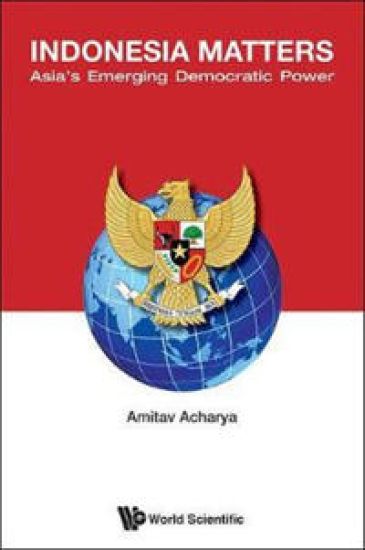
Indonesia Matters: Asia's Emerging Democratic Power

Indonesia Matters: Asia's Emerging Democratic Power

Amitav Acharya

World Scientific Publishing
2014
sidottu
Indonesia is the fourth most populous country in the world after China, India and the United States. It is also the world's largest Muslim majority country and the third largest democracy. Its economy is currently the 10th largest on the global scale. Indonesia is recognized as an emerging power, and a respected member of the international community. It plays an important role not only in the Asia-Pacific region, but also in the world at large. Indonesia has defied the grim predictions about its imminent collapse following the ouster of Suharto in 1998. Its ability to rebuild and reinvigorate itself into its current status is one of the most impressive stories of the late 20th and early 21st century. Its journey since the fall of Suharto is inspiring at a time when the world has seen many failing nations, recurring economic crises, and growing radicalism and terrorism. Yet, the Indonesian story receives far less attention than the BRICS (Brazil, Russia, India, China, and South Africa). The Indonesian story suggests a different pathway to emerging power status. This pathway is based not so much on military or economic resources. Rather, it lies in the ability of a country to develop a positive, virtuous correlation among three factors: democracy, development and stability, while pursuing a foreign policy of restraint towards neighbours and active engagement with the world at large. This is the key lesson from the story of Indonesia that this book seeks to present. It analyses Indonesia's foreign policy and international role under the democratic regime, with particular focus on its role as a leader of ASEAN, its relationship with the major powers of the Asia Pacific, and its place in the global order of the 21st century.
Indonesia Matters: Asia's Emerging Democratic Power

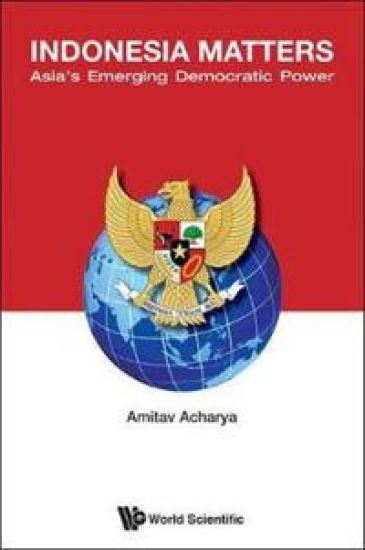
Indonesia Matters: Asia's Emerging Democratic Power

Amitav Acharya

WSPC co-published with Now Publisher
2014
nidottu
Indonesia is the fourth most populous country in the world after China, India and the United States. It is also the world's largest Muslim majority country and the third largest democracy. Its economy is currently the 10th largest on the global scale. Indonesia is recognized as an emerging power, and a respected member of the international community. It plays an important role not only in the Asia-Pacific region, but also in the world at large. Indonesia has defied the grim predictions about its imminent collapse following the ouster of Suharto in 1998. Its ability to rebuild and reinvigorate itself into its current status is one of the most impressive stories of the late 20th and early 21st century. Its journey since the fall of Suharto is inspiring at a time when the world has seen many failing nations, recurring economic crises, and growing radicalism and terrorism. Yet, the Indonesian story receives far less attention than the BRICS (Brazil, Russia, India, China, and South Africa). The Indonesian story suggests a different pathway to emerging power status. This pathway is based not so much on military or economic resources. Rather, it lies in the ability of a country to develop a positive, virtuous correlation among three factors: democracy, development and stability, while pursuing a foreign policy of restraint towards neighbours and active engagement with the world at large. This is the key lesson from the story of Indonesia that this book seeks to present. It analyses Indonesia's foreign policy and international role under the democratic regime, with particular focus on its role as a leader of ASEAN, its relationship with the major powers of the Asia Pacific, and its place in the global order of the 21st century.
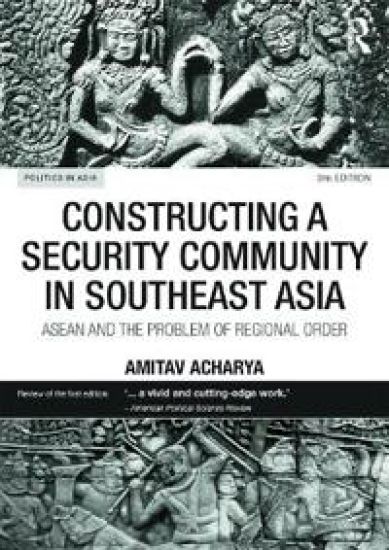
Constructing a Security Community in Southeast Asia
In this third edition of Constructing a Security Community in Southeast Asia, Amitav Acharya offers a comprehensive and critical account of the evolution of the Association of Southeast Asian Nations (ASEAN) norms and the viability of the ASEAN way of conflict management. Building on the framework from the first edition, which inspired the establishment of the ASEAN Political-Security community, this new edition has been extensively updated and revised based on new primary sources that are not publicly available. Updates for this edition include: Expanded and updated coverage of the South China Sea Conflict and how it affects regional order and tests ASEAN unity Analysis of new developments in the US role in the region, including ASEAN's place and role in the US pivot/rebalancing strategy and the evolution of the East Asian Community, the newest summit-level multilateral group Extensive analysis of the ASEAN Political-Security community An examination of US–China relations and China–ASEAN relations Coverage of ASEAN's institutional development and the controversy over reform of the ASEAN Secretariat. An updated outlook on ASEAN's future as a security community and the issue of ASEAN Centrality in the regional security architecture. The new edition will continue to appeal to students and scholars of Asian security, international relations theory and Southeast Asian studies, as well as policymakers and the media.
Constructing a Security Community in Southeast Asia
In this third edition of Constructing a Security Community in Southeast Asia, Amitav Acharya offers a comprehensive and critical account of the evolution of the Association of Southeast Asian Nations (ASEAN) norms and the viability of the ASEAN way of conflict management. Building on the framework from the first edition, which inspired the establishment of the ASEAN Political-Security community, this new edition has been extensively updated and revised based on new primary sources that are not publicly available. Updates for this edition include: Expanded and updated coverage of the South China Sea Conflict and how it affects regional order and tests ASEAN unity Analysis of new developments in the US role in the region, including ASEAN's place and role in the US pivot/rebalancing strategy and the evolution of the East Asian Community, the newest summit-level multilateral group Extensive analysis of the ASEAN Political-Security community An examination of US–China relations and China–ASEAN relations Coverage of ASEAN's institutional development and the controversy over reform of the ASEAN Secretariat. An updated outlook on ASEAN's future as a security community and the issue of ASEAN Centrality in the regional security architecture. The new edition will continue to appeal to students and scholars of Asian security, international relations theory and Southeast Asian studies, as well as policymakers and the media.
Rethinking Power, Institutions and Ideas in World Politics
The study of international relations, has traditionally been dominated by Western ideas and practices, and marginalized the voice and experiences of the non-Western states and societies. As the world moves to a "post-Western" era, it is imperative that the field of IR acquires a more global meaning and relevance. Drawing together the work of renowned scholar Amitav Acharya and framed by a new introduction and conclusion written for the volume, this book exposes the narrow meaning currently attached to some of the key concepts and ideas in IR, and calls for alternative and broader understandings of them. The need for recasting the discipline has motivated and undergirded Acharya's own scholarship since his entry into the field over three decades ago. This book reflects his own engagement, quarrels and compromise and concludes with suggestions for new pathways to a Global IR- a forward-looking and inclusive enterprise that is reflective of the multiple and global heritage of IR in an changing and interconnected world. It is essential reading for anyone who is concerned about the history, development and future of international relations and international relations theory.
Rethinking Power, Institutions and Ideas in World Politics
The study of international relations, has traditionally been dominated by Western ideas and practices, and marginalized the voice and experiences of the non-Western states and societies. As the world moves to a "post-Western" era, it is imperative that the field of IR acquires a more global meaning and relevance. Drawing together the work of renowned scholar Amitav Acharya and framed by a new introduction and conclusion written for the volume, this book exposes the narrow meaning currently attached to some of the key concepts and ideas in IR, and calls for alternative and broader understandings of them. The need for recasting the discipline has motivated and undergirded Acharya's own scholarship since his entry into the field over three decades ago. This book reflects his own engagement, quarrels and compromise and concludes with suggestions for new pathways to a Global IR- a forward-looking and inclusive enterprise that is reflective of the multiple and global heritage of IR in an changing and interconnected world. It is essential reading for anyone who is concerned about the history, development and future of international relations and international relations theory.
Age of Fear (Routledge Revivals)

Age of Fear (Routledge Revivals)

Amitav Acharya

Routledge
2013
sidottu
First published in 2004 in the immediate wake of the September 11 terrorist attacks, this is an accessible commentary intended to provoke thought and debate on the topic of terrorism. In a collection of challenging essays, questions consider the causes of terrorism and why post-modern terrorism is different. The essays are divided into three key sections, first investigating the civilizational roots and dimensions of contemporary terrorism, next examining the Bush administration’s approach, and finally, considering the complex and changing relationship between fear and freedom. Written by a leading scholar in Middle East and Asian Studies, this comprehensive reissue will be of particular value to students of international relations and terrorism studies, as well as the more general reader with an interest in the global issues faced in the age of contemporary terrorism.
U.S. Military Strategy in the Gulf (Routledge Revivals)
First published in 1989, this title explores the nature and dimensions of the U. S. strategy in the Gulf in the formative years that followed the fall of the Shah, the Soviet invasion of Afghanistan and the outbreak of the Iran-Iraq war. It describes the formation of the U. S. Rapid Deployment Joint Task Force and the U. S. Central Command, their force structure and the network of U. S. bases and facilities in the region. The role of pro-Western countries in the wider region, in particular Pakistan, Egypt, Jordan, and Israel, in the formulation of strategy is discussed in detail, along with a more general assessment of the achievements and failures of U. S. strategy in the Gulf towards the end of the 1980s. In light of the persistent struggle for peace within the Middle East, this is a timely reissue, which will be of great interest to students researching U. S. military strategy over the past thirty years.
Civilizations in Embrace

Civilizations in Embrace

Amitav Acharya

Institute of Southeast Asian Studies
2013
sidottu
This study revisits one of the most extensive examples of the spread of ideas in the history of civilisation: the diffusion of Indian religious and political ideas to Southeast Asia before the advent of Islam and European colonialism. Hindu and Buddhist concepts and symbols of kingship and statecraft helped to legitimise Southeast Asian rulers, and transform the political institutions and authority of Southeast Asia. But the process of this diffusion was not accompanied by imperialism, political hegemony, or ""colonisation"" as conventionally understood. This book investigates different explanations of the spread of Indian ideas offered by scholars, including why and how it occurred and what were its key political and institutional outcomes. It challenges the view that strategic competition is a recurring phenomenon when civilisations encounter each other.
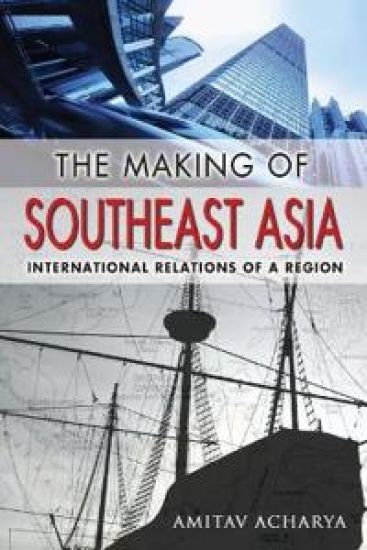
The Making of Southeast Asia

The Making of Southeast Asia

Amitav Acharya

Cornell University Press
2013
pokkari
Developing a framework to study "what makes a region," Amitav Acharya investigates the origins and evolution of Southeast Asian regionalism and international relations. He views the Association of Southeast Asian Nations (ASEAN) "from the bottom up" as not only a U. S.-inspired ally in the Cold War struggle against communism but also an organization that reflects indigenous traditions. Although Acharya deploys the notion of "imagined community" to examine the changes, especially since the Cold War, in the significance of ASEAN dealings for a regional identity, he insists that "imagination" is itself not a neutral but rather a culturally variable concept. The regional imagination in Southeast Asia imagines a community of nations different from NAFTA or NATO, the OAU, or the European Union. In this new edition of a book first published as The Quest for Identity in 2000, Acharya updates developments in the region through the first decade of the new century: the aftermath of the financial crisis of 1997, security affairs after September 2001, the long-term impact of the 2004 tsunami, and the substantial changes wrought by the rise of China as a regional and global actor. Acharya argues in this important book for the crucial importance of regionalism in a different part of the world.
Whose Ideas Matter?

Whose Ideas Matter?

Amitav Acharya

Cornell University Press
2011
pokkari
Asia is a crucial battleground for power and influence in the international system. It is also a theater of new experiments in regional cooperation that could redefine global order. Whose Ideas Matter? is the first book to explore the diffusion of ideas and norms in the international system from the perspective of local actors, with Asian regional institutions as its main focus. There's no Asian equivalent of the EU or of NATO. Why has Asia, and in particular Southeast Asia, avoided such multilateral institutions? Most accounts focus on U. S. interests and perceptions or intraregional rivalries to explain the design and effectiveness of regional institutions in Asia such as SEATO, ASEAN, and the ASEAN Regional Forum. Amitav Acharya instead foregrounds the ideas of Asian policymakers, including their response to the global norms of sovereignty and nonintervention. Asian regional institutions are shaped by contestations and compromises involving emerging global norms and the preexisting beliefs and practices of local actors. Acharya terms this perspective "constitutive localization" and argues that international politics is not all about Western ideas and norms forcing their way into non-Western societies while the latter remain passive recipients. Rather, ideas are conditioned and accepted by local agents who shape the diffusion of ideas and norms in the international system. Acharya sketches a normative trajectory of Asian regionalism that constitutes an important contribution to the global sovereignty regime and explains a remarkable continuity in the design and functions of Asian regional institutions.
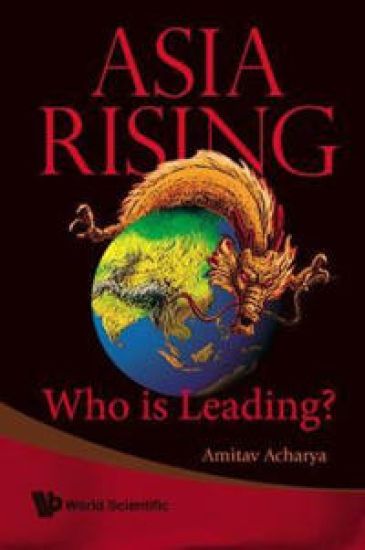
Asia Rising: Who Is Leading?

Asia Rising: Who Is Leading?

Amitav Acharya

World Scientific Publishing Co Pte Ltd
2008
nidottu
China, India and Japan are among the biggest players in the global economy today. However, Asia's future depends not just on its impressive growth rates or its immense natural resources and human talent; rather, it also hinges on the quality of leadership provided by the major nations and associations of Asia, and their ability to overcome persisting rivalries and respond to new transnational challenges. Conflict and cooperation are the two central themes of this book — a collection of commentaries and opinion pieces by Professor Amitav Acharya from various newspapers and publications from 2002 to 2006. It covers a wide range of issues such as the rise of China, Asia's leadership legacy and the role of ASEAN. Also discussed are the fate of democracy in Asia, and the implications of transnational dangers and the changing world order for Asia.
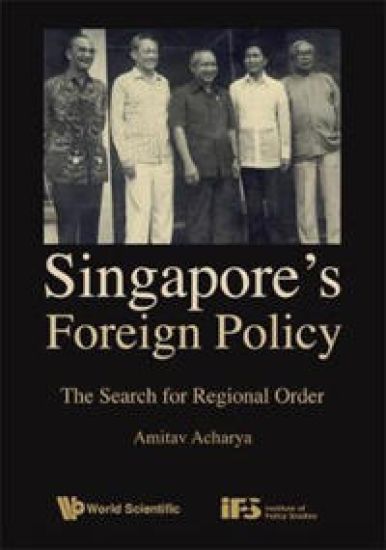
Singapore's Foreign Policy: The Search For Regional Order

Singapore's Foreign Policy: The Search For Regional Order

Amitav Acharya

World Scientific Publishing Co Pte Ltd
2007
sidottu
The conventional understanding of Singapore's foreign policy can be summarized in three main propositions: first, it is dictated by the imperatives of being a small state; second, its primary purpose is to ensure Singapore's survival, given its small size; and third, this logic of survival dictates a realpolitik approach to foreign policy and national security. This book argues that an exclusively realist view of Singapore's foreign policy is inadequate. Singapore's foreign policy is also shaped by the positive effects of economic interdependence and regional institution-building — instruments that realists tend to dismiss, but which Singapore has self-consciously tried to promote as instruments of regional order. The book first looks at the evolution of Singapore's foreign policy, before analyzing Singapore's international relations and national security in the context of economic growth and terrorism. It concludes with an interesting chapter on the impact of the rise of China and India on the regional landscape.