Kirjojen hintavertailu – 12 903 725 kirjaa ja 27 kauppaa

Kirjailija

Ananda Viet Foundation

Kirjat ja teokset yhdessä paikassa: 23 kirjaa, julkaisuja vuosilta 2017–2023, suosituimpiin kuuluu Tu Huyen Thoai Toi Tam Kinh. Vertaile teosten hintoja ja tarkista saatavuus suomalaisista kirjakaupoista.

23 kirjaa

Kirjojen julkaisuvuodet: 2017–2023.

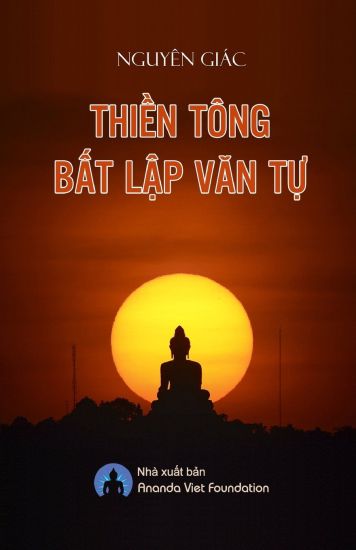
Thien Tong Bat Lap Van Tu

Thien Tong Bat Lap Van Tu

Ananda Viet Foundation; Nguyen Giac

Createspace Independent Publishing Platform
2018
nidottu
The book Thien Tong Bat Lap Van Tu by Nguyen Giac is a collection of essays that explain extensively The Heart Sutra and the practice based on Sutta Nipata -- the practitioner should cling neither outside nor inside, neither to the past nor future nor present; should neither grasp nor reject anything. If you dwell in or hold on to "the here and now," you are still outside the Zen Gate of Bodhidharma. If you practice the Four Foundations of Mindfulness, you still have an object for insight meditation -- which is a great means; however, if you practice Zen (in which The Heart Sutra is a great means), you are mindful without any object. You should cling to neither Existence nor Non-Existence because you directly recognize via eyes and ears the Emptiness and the Stillness; in the Emptiness, you know how to dwell your mind in Suchness. Buddha taught in Sutta Nipata that we should drop all the "here and now" and all things, even the practice (Sn 4.5 - Paramatthaka Sutta in Atthakavagga, Sutta Nipata: A brahman not led by precepts or practices, gone to the beyond - Such - doesn't fall back.). Thus, Sutta Nipata shows us how to mindful without any object, depending on nothing. This book also cites Einstein in the essays about the Buddhist way to see the world as illusions. Thien Tong Bat Lap Van Tu gom nhieu bai viet ve Thien Tong cua Nguyen Giac trong do giai thich tan tuong ve Bat Nha Tam Kinh va dan toi phap thuc hanh dua theo Kinh Tap Sutta Nipata la khong vuong gi toi trong hay ngoai khong vuong gi toi ca ba thoi qua khu hien tai vi lai khong nam giu hay xua day bat ky phap nao Neu ban con an tru hay nam giu cai o day va bay gio ban van chua vao cua Thien Bo De Dat Ma Ban Tu Tu Niem Xu niem than niem tho niem tam niem phap la ban niem co doi tuong nhu doi tuong la hoi tho cu chi cam tho cung la phuong tien lon nhung khi ban tu theo Thien Tong trong do Bat Nha Tam Kinh la phuong tien lon la phap niem khong doi tuong khong vuong vao Co hay Khong vi thay tuc khac la Khong la Rong Rang Tich Lang du la truoc mat hay ben tai du la qua khu hien tai hay vi lai va trong Tanh Khong nay ban se tu biet giu tam Nhu Thi Duc Phat day trong Kinh Tap la buong bo ca bay gio va o day la vo tu vo chung vi khong vuong ca gioi luat va tu hanh Kinh Sn 4 5 Paramatthaka Sutta trong Pham Atthakavagga Kinh Tap A brahman not led by precepts or practices gone to the beyond - Such - doesnt fall back va Kinh Tap la niem khong doi tuong Sach cung dan ra Einstein khi noi ve phap Nhu Huyen cua nha Phat.

Kinh Chu Tam Vao Hoi Tho

Kinh Chu Tam Vao Hoi Tho

Ananda Viet Foundation; Hoang Phong

Createspace Independent Publishing Platform
2018
nidottu
Kinh Chu Tam vao Hoi Tho la mot trong hai bai kinh can ban ma Duc Phat da neu len mot phep luyen tap vo cung thiet thuc, cu the va truc tiep ve thien dinh, do la su chu tam that manh dua vao hoi tho. Ban kinh nay duoc dich gia Hoang Phong chuyen ngu tu kinh Anapanasati Sutta (Trung Bo Kinh MN 118) Noi dung kinh gom hai phan: truoc het Duc Phat giang ve phep muon hoi tho de tap trung su chu tam huong vao than xac, cam giac, tam thuc va cac hien tuong tam than, sau do Ngai nhac lai tat ca cac yeu to can ban gop phan mang lai Dao Duc va Tri Tue Ngoai ra, bai kinh nay con neu len mot so chi tiet dang luu y ve su sinh hoat cua Duc Phat va Tang Doan vao thoi bay gio, cac chi tiet nay se duoc truc tiep giai thich va ghi chu trong ban dich (chu in nghieng trong dau ngoac don). Mot so nhan xet quan trong hon se duoc neu len trong phan ghi chu ben duoi ban dich, nham neu len cac su chuyen huong va mot so cac bien doi quan trong trong Giao Huan cua Duc Phat xuyen qua khong gian va thoi gian, dua den su hinh thanh cua cac tong phai va hoc phai khac nhau.
Quan Diem Cua Phat Giao Truoc Cac Van de Hien Dai

Quan Diem Cua Phat Giao Truoc Cac Van de Hien Dai

Do Kim Them; Ananda Viet Foundation

Createspace Independent Publishing Platform
2017
nidottu
A contemporary world issues from a Buddhist perspective is providing a fascinating response of the Western scholars to the questions about the life span of nations. The world is experiencing numerous global challenges, including climate change, resource depletion, financial crises, insufficient education, widespread poverty, food insecurity; and most importantly, the war on terror. Faced with the ever-present threat and the reality of war, there is a growing consensus that we do not have the vision needed for providing a solution. How will all these complex, mutually dependent changes affect us as we struggles ourselves with the rising pressures? What is the role of Buddhism in the world today? How can Buddhists accomplish all of this? The interaction between a contemporary word issues and the rising role of Buddhism is one main feature of the book. Peter Harvey, Maso Abe, Trinh Xuan Thuan, Matthieu Ricard, Rita M. Cross and Amartya Sen have filled a major lacuna by providing a powerful, brilliant and well informed analysis of the contributing role of Buddhism. They present an alternative approach to mainstream theories and come to argue that Buddhism values world peace both intrinsically and instrumentally. It identifies the human nature and the structural cause of violence. It has the cultural power to motivate and to hold people morally responsible for achieving peaceful ideals: common basis of values, virtues, rights and responsibilities, culture of non-violence, solidarity and tolerance. Their scholarship are great, their eloquence powerful and their argument convincing. This innovative and thoughtful volume is helpful to formulate policy implication on these issues. This book is an essential reference for policy makers, scholars, students and anyone else who believes the reform in the light of Buddhism is useful to the proper functioning of state governments, civil societies, businesses, religions, families and individuals. By accompanying with the Buddhists, people around the world may feel powerful enough to deal with the contemporary world issues.