Kirjojen hintavertailu – 12 903 725 kirjaa ja 27 kauppaa
Kirjailija
Andrew Robinson
Kirjat ja teokset yhdessä paikassa: 46 kirjaa, julkaisuja vuosilta 2005–2026, suosituimpiin kuuluu Satyajit Ray: The Inner Eye. Vertaile teosten hintoja ja tarkista saatavuus suomalaisista kirjakaupoista.
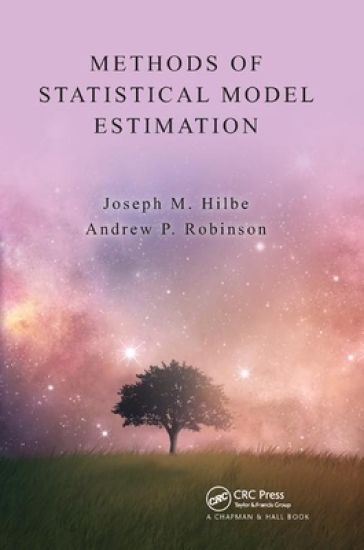
Methods of Statistical Model Estimation examines the most important and popular methods used to estimate parameters for statistical models and provide informative model summary statistics. Designed for R users, the book is also ideal for anyone wanting to better understand the algorithms used for statistical model fitting. The text presents algorithms for the estimation of a variety of regression procedures using maximum likelihood estimation, iteratively reweighted least squares regression, the EM algorithm, and MCMC sampling. Fully developed, working R code is constructed for each method. The book starts with OLS regression and generalized linear models, building to two-parameter maximum likelihood models for both pooled and panel models. It then covers a random effects model estimated using the EM algorithm and concludes with a Bayesian Poisson model using Metropolis-Hastings sampling. The book's coverage is innovative in several ways. First, the authors use executable computer code to present and connect the theoretical content. Therefore, code is written for clarity of exposition rather than stability or speed of execution. Second, the book focuses on the performance of statistical estimation and downplays algebraic niceties. In both senses, this book is written for people who wish to fit statistical models and understand them. See Professor Hilbe discuss the book.
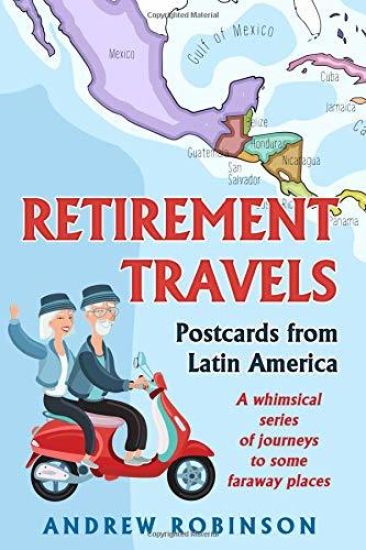
After retiring from financial services and starting a part-time gardening business, Andrew Robinson and his wife Jilly finally had time to indulge in their passion for travelling. With interests ranging from archaeology and history to nature, fishing and people watching, Latin America was a natural choice. Over the last few years the couple have explored Mexico, Nicaragua, Guatemala and Belize, often going off the beaten track to places most tourists haven't even heard of. These "postcards" home, emailed to their friends and family, capture the essence of their travels and the often comical situations they found themselves in. Come along for the adventure - and be inspired to explore the world more yourself
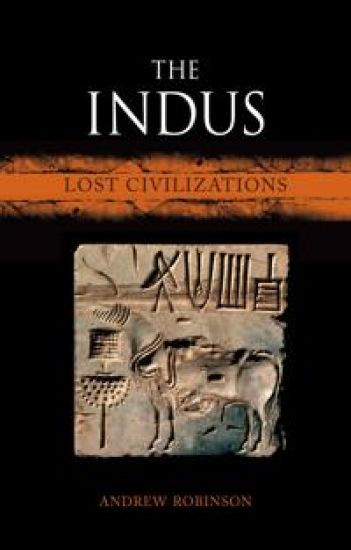
The Indus civilization flourished for half a millennium from about 2600 to 1900 BC, when it mysteriously declined and vanished from view. It remained invisible for almost four thousand years, until its ruins were discovered in the 1920s by British and Indian archaeologists. Today, after almost a century of excavation, it is regarded as the beginning of Indian civilization and possibly the origin of Hinduism. The Indus: Lost Civilizations is an accessible introduction to every significant aspect of an extraordinary and tantalizing ‘lost’ civilization, which combined artistic excellence, technological sophistication and economic vigour with social egalitarianism, political freedom and religious moderation. The book also discusses the vital legacy of the Indus civilization in India and Pakistan today.
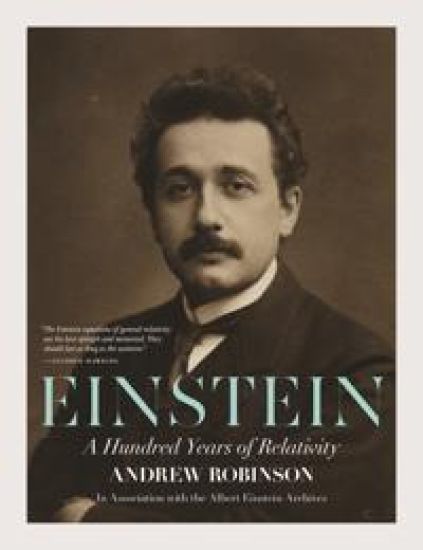
"The eternal mystery of the world is its comprehensibility ... The fact that it is comprehensible is a miracle." --Albert Einstein, 1936 Albert Einstein's universal appeal is only partially explained by his brilliant work in physics, as Andrew Robinson demonstrates in this authoritative, accessible, and richly illustrated biography. The main narrative is enriched by twelve essays by well-known scientists, scholars, and artists, including three Nobel Laureates. The book presents clearly the beautiful simplicity at the heart of Einstein's greatest discoveries, and explains how his ideas have continued to influence scientific developments such as lasers, the theory of the big bang, and "theories of everything." Einstein's life and activities outside of science are also considered, including his encounters with famous contemporaries such as Chaplin, Roosevelt, and Tagore, his love of music, and his troubled family life. The book recognizes that Einstein's striking originality was expressed in many ways, from his political and humanitarian campaigns against nuclear weapons, anti-Semitism, McCarthyism, and social injustices, to his unconventional personal appearance. Published in association with the Albert Einstein Archives at the Hebrew University of Jerusalem, the book draws on this exceptional resource of Einstein's private papers and personal photographs. This new edition, published to recognize the centenary of the publication of Einstein's General Theory of Relativity, includes an important new afterword by Diana Kormos Buchwald, the director of the Einstein Papers Project at the California Institute of Technology. The contributors are Philip Anderson, Arthur C. Clarke, I. Bernard Cohen, Freeman Dyson, Philip Glass, Stephen Hawking, Max Jammer, Diana Kormos Buchwald, Joao Magueijo, Joseph Rotblat, Robert Schulmann, and Steven Weinberg.
A contribution to trinitarian theology, examining the nature of the Trinity and its significance for the Christian through semiotic concepts and methods. Traces of the Trinity is a masterful exploration of Christian theology through the lens of semiotics – the study of signs. Andrew Robinson provides helpful analogies and clear explanations throughout to lead even the non-specialist through the subject with ease. Although the variety of signs is endless, all signs and sign-interpretations have the same basic, underlying structure: sign, object and interpretation. Further, this triad rests upon the existence of three ‘elemental grounds’: Quality, Otherness and Mediation. According to Robinson’s highly original thesis, in the structure of signs we can see vestiges of the powerful, threefold dynamic of the Trinity in creation. He proceeds to develop a highly original ‘semiotic model’ of the Trinity, illuminating and integrating key areas of Christian thought: creation, incarnation, and atonement; the roles of baptism and the Eucharist; the nature of the church and the basis of participation in the divine life. Traces of the Trinity makes belief in the Trinity relevant to ordinary, everyday experience, and challenges the church to recognize the implications for its calling to be transformative, truthful, and inclusive.
Learn How to Program Stochastic ModelsHighly recommended, the best-selling first edition of Introduction to Scientific Programming and Simulation Using R was lauded as an excellent, easy-to-read introduction with extensive examples and exercises. This second edition continues to introduce scientific programming and stochastic modelling in a clear, practical, and thorough way. Readers learn programming by experimenting with the provided R code and data. The book’s four parts teach: Core knowledge of R and programming conceptsHow to think about mathematics from a numerical point of view, including the application of these concepts to root finding, numerical integration, and optimisationEssentials of probability, random variables, and expectation required to understand simulationStochastic modelling and simulation, including random number generation and Monte Carlo integration In a new chapter on systems of ordinary differential equations (ODEs), the authors cover the Euler, midpoint, and fourth-order Runge-Kutta (RK4) schemes for solving systems of first-order ODEs. They compare the numerical efficiency of the different schemes experimentally and show how to improve the RK4 scheme by using an adaptive step size. Another new chapter focuses on both discrete- and continuous-time Markov chains. It describes transition and rate matrices, classification of states, limiting behaviour, Kolmogorov forward and backward equations, finite absorbing chains, and expected hitting times. It also presents methods for simulating discrete- and continuous-time chains as well as techniques for defining the state space, including lumping states and supplementary variables. Building readers’ statistical intuition, Introduction to Scientific Programming and Simulation Using R, Second Edition shows how to turn algorithms into code. It is designed for those who want to make tools, not just use them. The code and data are available for download from CRAN.
Methods of Statistical Model Estimation examines the most important and popular methods used to estimate parameters for statistical models and provide informative model summary statistics. Designed for R users, the book is also ideal for anyone wanting to better understand the algorithms used for statistical model fitting. The text presents algorithms for the estimation of a variety of regression procedures using maximum likelihood estimation, iteratively reweighted least squares regression, the EM algorithm, and MCMC sampling. Fully developed, working R code is constructed for each method. The book starts with OLS regression and generalized linear models, building to two-parameter maximum likelihood models for both pooled and panel models. It then covers a random effects model estimated using the EM algorithm and concludes with a Bayesian Poisson model using Metropolis-Hastings sampling. The book's coverage is innovative in several ways. First, the authors use executable computer code to present and connect the theoretical content. Therefore, code is written for clarity of exposition rather than stability or speed of execution. Second, the book focuses on the performance of statistical estimation and downplays algebraic niceties. In both senses, this book is written for people who wish to fit statistical models and understand them. See Professor Hilbe discuss the book.
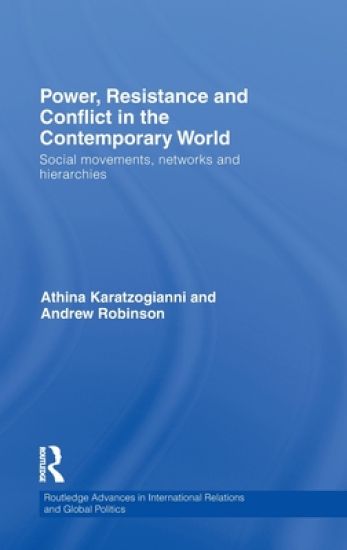
This book examines issues of organisation in resistance movements, discussing topics including the integration of the world system, the intersection of networks with discourses of identity, and the possibility of social transformation. Drawing on a number of theorists including Deleuze and Guattari, authors Athina Karatzogianni and Andrew Robinson seek to reinterpret World Systems Theory in order to engage with issues of power, resistance, and conflict in the contemporary world. Discussing contemporary scholarship in global politics, the authors consider new and developing concepts including: global cities, bifurcations, hegemonic transitions, the relationship between capitalism and the state, the position of East Asia, and active and reactive network movements. Their analysis includes a very rich pool of empirical examples covering more than fifty countries and thirty resistance groups. Power, Resistance and Conflict in the Contemporary World will be of interest to students and scholars looking for a comprehensive new theorization of the forces at work in global politics. The book provides a framework which crosses the boundaries between international relations, international political economy, comparative politics, conflict studies, social movement studies and critical theory, producing a study of a highly interdisciplinary scope.
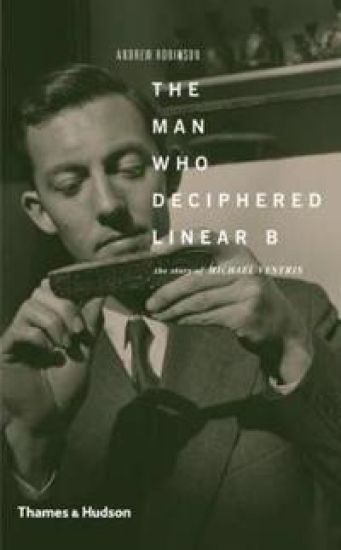
Linear B is Europe’s oldest readable writing, dating from the middle of the second millennium BC. This book, newly available in paperback, tells the life story of Michael Ventris, interlaced with that of his decipherment of Linear B. First discovered in 1900, on clay tablets among the ruins of the Palace of Minos at Knossos, Crete, it remained a mystery for over fifty years until 1952, when Michael Ventris discovered that its signs did not represent an unknown language as previously believed, but an archaic dialect of Greek, more than 500 years older than the Greek of Homer. Dubbed the `Everest of archaeology’, the decipherment was all the more remarkable because Ventris was not a trained classical scholar but an architect by profession, who had first heard of Linear B as a schoolboy. An initial fascination became a lifelong obsession for this intriguing and contradictory man, a gifted linguist but a divided soul. `Excellent: well researched and clearly presented … compelling reading’ – The Times Literary Supplement `Excellent … Robinson understands how to make the complexities of pictograms clear to the non-expert. The book gives many examples, and would appeal to anyone interested in crosswords, codes and cyphers, but it also tells a fascinating human story’ – The Independent `A wonderfully swift and clear biography, written for the nonspecialist’ – The Economist `A superb biography of Michael Ventris, combining a warm account of his life with just enough technical details to satisfy those who have knowledge of linguistics or indeed of the classics. It is a splendid read, and a fine memorial to the split personality that enabled Ventris to decipher Minoan Linear B so triumphantly’ – Current World Archaeology
Homer, Leonardo da Vinci, Mozart, Shakespeare, and Tolstoy; Curie, Darwin, Einstein, Galileo, and Newton. What do these world-famous artists and scientists have in common?- apart from the fact that their achievements predate our own time by a century or more. Most of us would probably answer: all ten possessed something we call genius, which in each instance permanently changed the way that humanity perceived the world. But pressed to be more precise, we find it remarkably hard to define genius. Genius is highly individual and unique, of course, yet it shares a compelling, inevitable quality for professionals and the general public alike. Darwin's ideas are still required reading for every working biologist; they continue to generate fresh thinking and experiments around the world. So do Einstein's theories among physicists. Shakespeare's plays and Mozart's melodies and harmonies continue to move people in languages and cultures far removed from their native England and Austria. Contemporary 'geniuses' may come and go, but the idea of genius will not let go of us. Genius is the name we give to a quality of work that transcends fashion, celebrity, fame, and reputation: the opposite of a period piece. Somehow, genius abolishes both the time and the place of its origin. This Very Short Introduction uses the life and work of familiar geniuses-and some less familiar-to illuminate both the individual and the general aspects of genius. In particular: the roles of talent, heredity, parenting, education, training, hard work, intelligence, personality, mental illness, inspiration, eureka moments, and luck, in the making of genius. ABOUT THE SERIES: The Very Short Introductions series from Oxford University Press contains hundreds of titles in almost every subject area. These pocket-sized books are the perfect way to get ahead in a new subject quickly. Our expert authors combine facts, analysis, perspective, new ideas, and enthusiasm to make interesting and challenging topics highly readable.
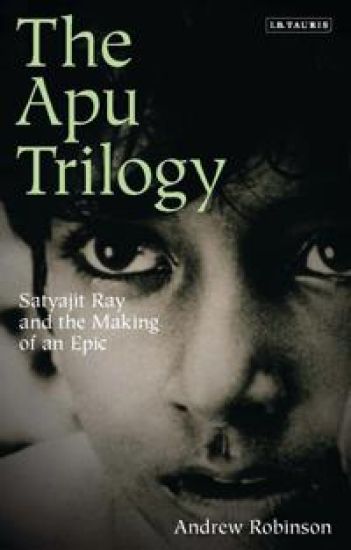
"I can never forget the excitement in my mind after seeing 'Pather Panchali'", noted Akira Kurosawa. Satyajit Ray's three films about the boyhood, adolescence and manhood of Apu, 'Pather Panchali' (1955), 'Aparajito' (1956) and 'The World of Apu' (1959) - collectively known as The Apu Trilogy - are established classics of world cinema. The Trilogy was the chief reason for Satyajit Ray's receiving a Hollywood Oscar for lifetime achievement in 1992, just before his death. This book by Ray's biographer and world authority Andrew Robinson is the first full study of the Trilogy. Robinson - who came to know the director well during the last decade of his career - covers the literary and cultural background to the films, their production, their music composed by Ravi Shankar, their aesthetic value, and their complex critical reception in the East and the West, from 1955 up to the present day. Extensively and beautifully illustrated and a pleasure to read, 'The Apu Trilogy' will appeal to anyone captivated by the unique world created by Satyajit Ray.
Christianity has been described as “a religion seeking a metaphysic”. Drawing on the philosophy of C. S. Peirce, Robinson develops a metaphysical framework centred around a ‘semiotic model’ of the Trinity. The model invites a fresh approach to the claim that Jesus was the incarnate Word of God and suggests a new way of understanding how nature may bear the imprint of the Triune Creator in the form of ‘vestiges of the Trinity in creation’. Scientific spin-offs include a new perspective on the problem of the origin of life and a novel hypothesis about the evolution of human distinctiveness. The result is an original contribution to Trinitarian theology and a bold new way of integrating philosophy, science and religion.
This book examines issues of organisation in resistance movements, discussing topics including the integration of the world system, the intersection of networks with discourses of identity, and the possibility of social transformation. Drawing on a number of theorists including Deleuze and Guattari, authors Athina Karatzogianni and Andrew Robinson seek to reinterpret World Systems Theory in order to engage with issues of power, resistance, and conflict in the contemporary world. Discussing contemporary scholarship in global politics, the authors consider new and developing concepts including: global cities, bifurcations, hegemonic transitions, the relationship between capitalism and the state, the position of East Asia, and active and reactive network movements. Their analysis includes a very rich pool of empirical examples covering more than fifty countries and thirty resistance groups. Power, Resistance and Conflict in the Contemporary World will be of interest to students and scholars looking for a comprehensive new theorization of the forces at work in global politics. The book provides a framework which crosses the boundaries between international relations, international political economy, comparative politics, conflict studies, social movement studies and critical theory, producing a study of a highly interdisciplinary scope.