Kirjojen hintavertailu – 12 903 725 kirjaa ja 27 kauppaa

Kirjailija

Andrew Robinson

Kirjat ja teokset yhdessä paikassa: 46 kirjaa, julkaisuja vuosilta 2005–2026, suosituimpiin kuuluu Satyajit Ray: The Inner Eye. Vertaile teosten hintoja ja tarkista saatavuus suomalaisista kirjakaupoista.

46 kirjaa

Kirjojen julkaisuvuodet: 2005–2026.

Writing and Script

Writing and Script

Andrew Robinson

Oxford University Press
2009
nidottu

Halvin toimitettuna 18,90 €

Without writing, there would be no records, no history, no books, and no emails. Writing is an integral and essential part of our lives; but when did it start? Why do we all write differently and how did writing develop into what we use today? All of these questions are answered in this Very Short Introduction. Starting with the origins of writing five thousand years ago, with cuneiform and Egyptian hieroglyphs, Andrew Robinson explains how these early forms of writing developed into hundreds of scripts including the Roman alphabet and the Chinese characters. He reveals how the modern writing symbols and abbreviations we take for granted today - including airport signage and text messaging - resemble ancient ones much more closely than we might think. ABOUT THE SERIES: The Very Short Introductions series from Oxford University Press contains hundreds of titles in almost every subject area. These pocket-sized books are the perfect way to get ahead in a new subject quickly. Our expert authors combine facts, analysis, perspective, new ideas, and enthusiasm to make interesting and challenging topics highly readable.
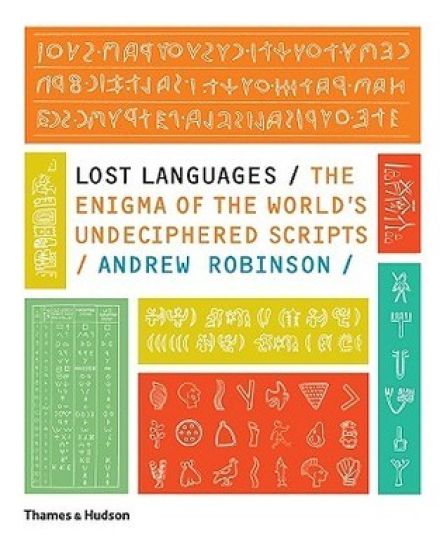
Lost Languages

Lost Languages

Andrew Robinson

Thames Hudson Ltd
2009
nidottu

Halvin toimitettuna 38,00 €

Beginning with the stories of three great decipherments – Egyptian hieroglyphs, Minoan Linear B and Mayan glyphs – Lost Languages moves on to dissect the most well-known and enigmatic undeciphered scripts from around the world. These include the Etruscan alphabet of Italy, the Indus Valley seal script, Rongorongo from remote Easter Island, the Zapotec script of Mexico (probably the first writing system in the Americas), and the unique Phaistos disc of Crete. Lost Languages reports from the front lines of scholarship where obsessions, genius, occasional delusion and sometimes bitter rivalry are de rigueur among those currently competing for the rare honour of cracking these ancient codes – and giving voice to forgotten worlds.
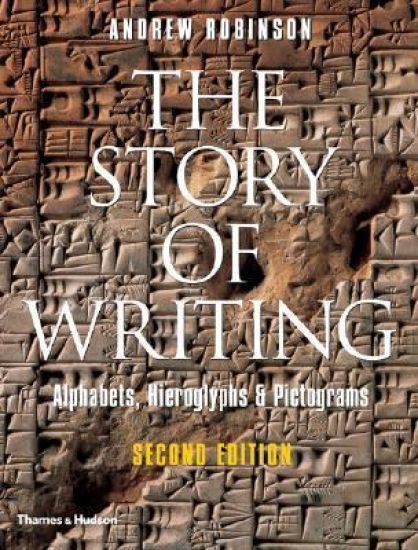
The Story of Writing

The Story of Writing

Andrew Robinson

Thames Hudson Ltd
2007
nidottu

Halvin toimitettuna 22,00 €

Writing is one of humanity’s greatest inventions. Without it there would be no history and no civilization as we know it. But how, when and where did writing evolve? In a succinct, absorbing and well-illustrated text, Andrew Robinson discusses the history of decipherment and then each of the major writing systems in turn, from cuneiform and Egyptian and Mayan hieroglyphs to alphabets and the scripts of China and Japan. An invaluable guide to the world’s major writing systems, The Story of Writing is a book to read for both pleasure and enlightenment.
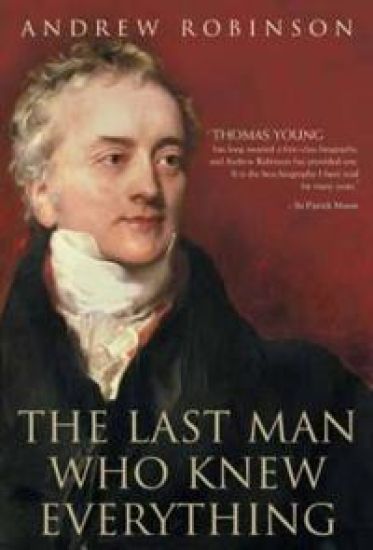
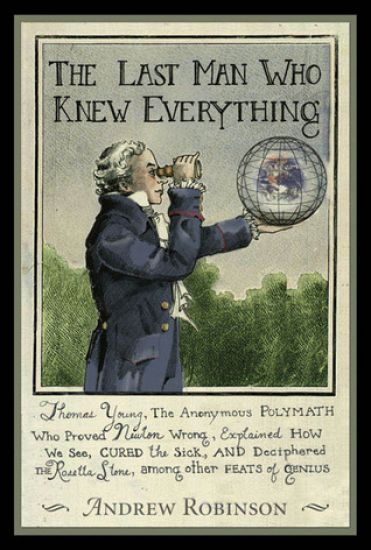
The Last Man Who Knew Everything
"The biography of an individual who simply was the last man who knew everything. Open any physics textbook and you will find the name of Thomas Young (1773-1829), the experimenter who first demonstrated the interference of light and proved that light is a wave, not a stream of corpuscles as maintained by Newton. Open any book on the eye and vision, and Young appears as the celebrated London physician who proposed how the eye focuses and the three-colour theory of vision, experimentally confirmed only in 1959. Open any book on ancient Egypt, and Young is credited for his crucial detective work in deciphering the Rosetta Stone and the hieroglyphic and demotic scripts. And this describes only the basics of his knowledge. An exhibition of Young at London's Science Museum on his birth bicentenary stated that: ""He probably had a wider range of creative learning than any other Englishman in history"". When invited to contribute to a new edition of the Encyclopedia Brittanica, Young offered the following subjects: Alphabet, Annuities, Attraction, Capillary Action, Cohesion, Colour, Dew, Egypt, Eye, Focusm Friction, Halo, Hieroglyphic, Hydraulics, Motion, Resistance, Ship, Sound, Strength, Tides, Waves and ""anything of a medical nature"". But he asked that his contributions be kept anonymous, to avoid harming his medical practice. While not yet thirty he gave a course of lectures at the Royal Institution covering virtually all of known science. But polymathy made him unpopular in the academy. An early attack on his wave theory of light was so scathing that English physicists buried it for nearly two decades until it was rediscovered in France. But slowly, after his death, great scientists began to recognize his genius. Readers who enjoy David Sobel's crisp historical biography and the intellectual curiosity of Patrick O'Brians Stephen Maturin will love Andrew Robinson's colourful portrayal of the last man who knew everything. "