Kirjojen hintavertailu – 12 859 818 kirjaa ja 27 kauppaa

Kirjailija

Andrew Smith

Kirjat ja teokset yhdessä paikassa: 169 kirjaa, julkaisuja vuosilta 1988–2026, suosituimpiin kuuluu Stephen by Andrew. Vertaile teosten hintoja ja tarkista saatavuus suomalaisista kirjakaupoista.

Nimi esiintyy myös muodoissa: Andrew Smith.

169 kirjaa

Kirjojen julkaisuvuodet: 1988–2026.

Doctor Who: The Fourth Doctor Adventures Series 10 - Volume 2

Doctor Who: The Fourth Doctor Adventures Series 10 - Volume 2

Andrew Smith; Helen Goldwyn

Big Finish Productions Ltd
2021
cd
This set contains two four-part stories: Thaddeus Nook's Time Tours by Andrew Smith. It's time for the trip of a lifetime! Come along on one of Thadeus Nook's Time Tours. See history as it really was. Get to witness wars and assassinations! See barbarian warlords right up close! The Doctor and Leela encounter a most enterprising young gentleman - using time travel for his own financial gain. The Doctor is horrified at the irresponsibility - but it's just the tip of the iceberg. Because Thadeus Nook is about to learn that history is often best left in the past. The Primeval Design by Helen Goldwyn. Dorset, 1830. The Doctor has taken Leela to meet Mary Anning, the noted palaeontologist, but the duo immediately stumble into trouble. A body has been found in unusual circumstances. Attacked by an animal... but one of a size unknown in the area. It turns out some things might be better off staying buried. CAST: Tom Baker (The Doctor), Louise Jameson (Leela), Brendan Murphy (Thadeus Nook), Laura Riseborough (Jess/Young Woman), Kieran Bew (Grannus Drek), Georgina Hellier (Flaia/Stallholder), Arthur Hughes (Lem/ Lieutenant Muller), Tim Bentinck (Karlos/Guard/Reveller), Christopher Naylor (Krillian/Cop/Halder), Lucy Briggs-Owen (Mary Anning), Ian Conningham (Dr Richard Numan/Corfield), Alan David (Lord Macavoy/Old Lawrence), Charlotte Bate (Lizzie Berenger/Queen/Giant Queen), Joe Sims (Jim Berenger).
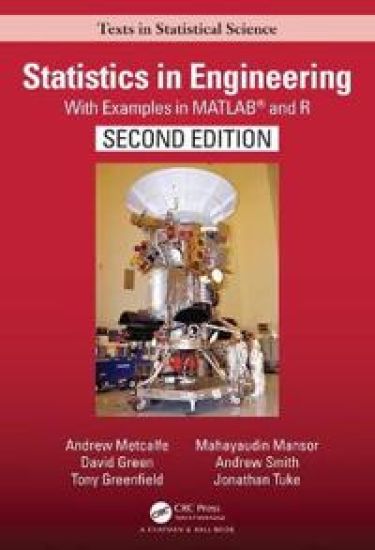
Statistics in Engineering

Statistics in Engineering

Andrew Metcalfe; David Green; Tony Greenfield; Mayhayaudin Mansor; Andrew Smith; Jonathan Tuke

CRC Press
2020
nidottu

Halvin toimitettuna 66,30 €

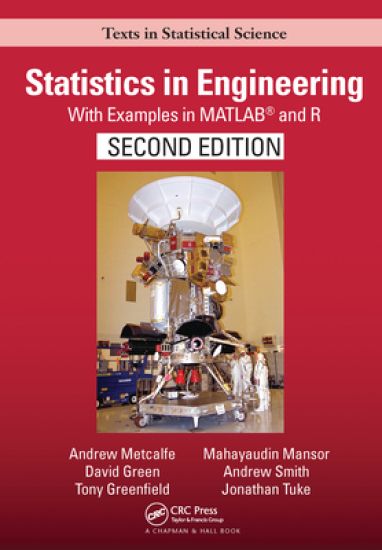
Engineers are expected to design structures and machines that can operate in challenging and volatile environments, while allowing for variation in materials and noise in measurements and signals. Statistics in Engineering, Second Edition: With Examples in MATLAB and R covers the fundamentals of probability and statistics and explains how to use these basic techniques to estimate and model random variation in the context of engineering analysis and design in all types of environments. The first eight chapters cover probability and probability distributions, graphical displays of data and descriptive statistics, combinations of random variables and propagation of error, statistical inference, bivariate distributions and correlation, linear regression on a single predictor variable, and the measurement error model. This leads to chapters including multiple regression; comparisons of several means and split-plot designs together with analysis of variance; probability models; and sampling strategies. Distinctive features include: All examples based on work in industry, consulting to industry, and research for industry Examples and case studies include all engineering disciplines Emphasis on probabilistic modeling including decision trees, Markov chains and processes, and structure functions Intuitive explanations are followed by succinct mathematical justifications Emphasis on random number generation that is used for stochastic simulations of engineering systems, demonstration of key concepts, and implementation of bootstrap methods for inference Use of MATLAB and the open source software R, both of which have an extensive range of statistical functions for standard analyses and also enable programing of specific applications Use of multiple regression for times series models and analysis of factorial and central composite designs Inclusion of topics such as Weibull analysis of failure times and split-plot designs that are commonly used in industry but are not usually included in introductory textbooks Experiments designed to show fundamental concepts that have been tested with large classes working in small groups Website with additional materials that is regularly updated Andrew Metcalfe, David Green, Andrew Smith, and Jonathan Tuke have taught probability and statistics to students of engineering at the University of Adelaide for many years and have substantial industry experience. Their current research includes applications to water resources engineering, mining, and telecommunications. Mahayaudin Mansor worked in banking and insurance before teaching statistics and business mathematics at the Universiti Tun Abdul Razak Malaysia and is currently a researcher specializing in data analytics and quantitative research in the Health Economics and Social Policy Research Group at the Australian Centre for Precision Health, University of South Australia. Tony Greenfield, formerly Head of Process Computing and Statistics at the British Iron and Steel Research Association, is a statistical consultant. He has been awarded the Chambers Medal for outstanding services to the Royal Statistical Society; the George Box Medal by the European Network for Business and Industrial Statistics for Outstanding Contributions to Industrial Statistics; and the William G. Hunter Award by the American Society for
Statistics in Engineering

Statistics in Engineering

Andrew Metcalfe; David Green; Tony Greenfield; Mayhayaudin Mansor; Andrew Smith; Jonathan Tuke

Taylor Francis Inc
2019
sidottu
Engineers are expected to design structures and machines that can operate in challenging and volatile environments, while allowing for variation in materials and noise in measurements and signals. Statistics in Engineering, Second Edition: With Examples in MATLAB and R covers the fundamentals of probability and statistics and explains how to use these basic techniques to estimate and model random variation in the context of engineering analysis and design in all types of environments. The first eight chapters cover probability and probability distributions, graphical displays of data and descriptive statistics, combinations of random variables and propagation of error, statistical inference, bivariate distributions and correlation, linear regression on a single predictor variable, and the measurement error model. This leads to chapters including multiple regression; comparisons of several means and split-plot designs together with analysis of variance; probability models; and sampling strategies. Distinctive features include: All examples based on work in industry, consulting to industry, and research for industry. Examples and case studies include all engineering disciplines. Emphasis on probabilistic modeling including decision trees, Markov chains and processes, and structure functions. Intuitive explanations are followed by succinct mathematical justifications. Emphasis on random number generation that is used for stochastic simulations of engineering systems, demonstration of key concepts, and implementation of bootstrap methods for inference. Use of MATLAB and the open source software R, both of which have an extensive range of statistical functions for standard analyses and also enable programing of specific applications. Use of multiple regression for times series models and analysis of factorial and central composite designs. Inclusion of topics such as Weibull analysis of failure times and split-plot designs that are commonly used in industry but are not usually included in introductory textbooks. Experiments designed to show fundamental concepts that have been tested with large classes working in small groups. Website with additional materials that is regularly updated.
Ignition

Ignition

Brooke Estrada; Andrew Smith

Sunshine Savvy Press
2018
nidottu
Bret Pine sees something in the woods that leaves him very troubled. He's not sure he can even talk about it without being labeled as crazy. When the disappearance of a family of four from Europe draws national media attention, some people in town want to point fingers. Then, on the last day before summer break begins, Bret and his friend Ashley, blow the school's electric grid with a single touch. A few people close to Bret seem to know more than they want to admit about the legend of Light Guardians and it has him seriously contemplating his murky beginnings. There's no stepping outside anymore without the feeling that he's being watched. For Bret, the questions only get deeper when he's carried off by a creature that isn't supposed to exist, to a place he could have never dreamt up. When a man arrives searching for two powerful young Light Guardians and proves himself willing to kill to get to them, Bret and Ashley will be dragged into a war, a war they didn't even know existed.
Bram Stoker

Bram Stoker

Andrew Smith; William Hughes

Palgrave Macmillan
1998
sidottu
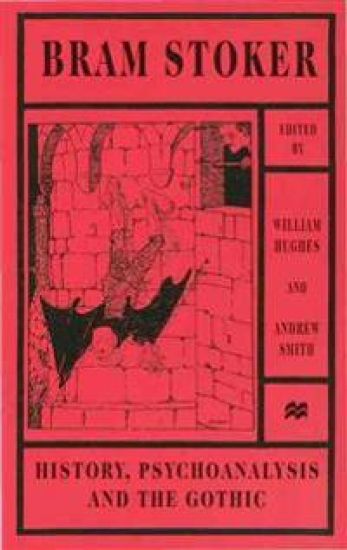
Stoker is best remembered today as the author of Dracula . However, as the twelve essays in this volume demonstrate, Stoker's work blends the Gothic with the discourses of politics, sexuality, medicine and national identity to produce texts that may be read by a variety of critical methodologies. Following an Introduction that analyses how Stoker's writings have been critically received in the twentieth century, the book addresses not merely Dracula but also the author's other writings through historicism, psychology and genre.
Vegetarian Gothic

Vegetarian Gothic

Andrew Smith

Cambridge University Press
2026
Sidottu
Vegetarian Gothic analyses the representation of vegetarianism in Mary Shelley's Frankenstein (1818), the World War One writings of Arthur Machen, and Han Kang's The Vegetarian (2007). These texts from different eras (and nations) are placed into critical dialogue through the application of ideas drawn from object-orientated ontology (OOO), and theories of ecological awareness. The vegetarian is represented in highly ambivalent ways. At one level the vegetarian is associated with Gothic otherness but also represented as potentially bringing together humans and animals in a complex holistic, utopian understanding of the natural world. This model of belonging to nature is at odds with a Gothic dystopia which seeks to demonise the radical potential of vegetarianism.
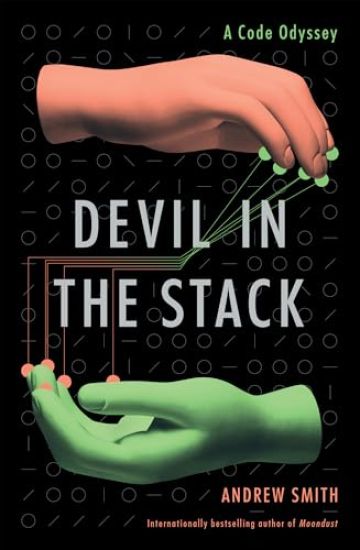
Devil in the Stack

Devil in the Stack

Andrew Smith

Atlantic Books
2025
nidottu

Halvin toimitettuna 23,90 €

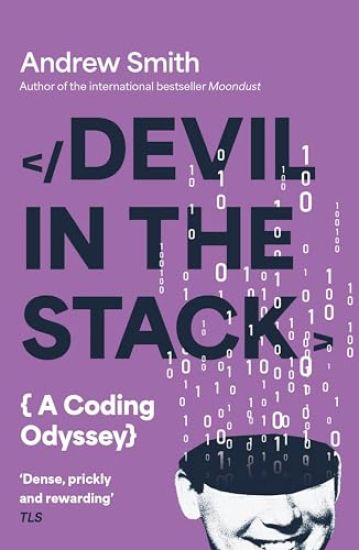
Throughout history, technological revolutions have been driven by the invention of machines. But today, the power of the technology transforming our world lies in an intangible and impenetrable cosmos of software: algorithmic code. In a world increasingly governed by technologies that so few can comprehend, who-or what-controls the future? Devil in the Stack follows Andrew Smith on his immersive trip into the world of coding, passing through the stories of logic, machine-learning and early computing, from Ada Lovelace to Alan Turing, and up to the present moment, behind the scenes into the lives - and minds - of the pioneers of the 21st century: those who write code. Smith embarks on a quest to understand this sect in what he believes to be the only way possible: by learning to code himself. Expansive and effervescent, Devil in the Stack delivers a portrait of code as both a vivid culture and an impending threat. By turns revelatory, unsettling and joyously funny, this is an essential book for our times, of vital interest to anyone hoping to participate in the future-defining technological debates to come.
Devil in the Stack

Devil in the Stack

Andrew Smith

GROVE PRESS / ATLANTIC MONTHLY PRESS
2025
nidottu
From internationally-bestselling author and journalist Andrew Smith, an immersive, alarming, sharp-eyed journey into the bizarre world of computer code, told through his sometimes painful, often amusing attempt to become a coder himself Throughout history, technological revolutions have been driven by the invention of machines. But today, the power of the technology transforming our world lies in an intangible and impenetrable cosmos of software: algorithmic code. So symbiotic has our relationship with this code become that we barely notice it anymore. We can't see it, are not even sure how to think about it, and yet we do almost nothing that doesn't depend on it. In a world increasingly governed by technologies that so few can comprehend, who--or what--controls the future? Devil in the Stack follows Andrew Smith on his immersive trip into the world of coding, passing through the stories of logic, machine-learning and early computing, from Ada Lovelace to Alan Turing, and up to the present moment, behind the scenes into the lives--and minds--of the new frontiers people of the 21st century: those who write code. Smith embarks on a quest to understand this sect in what he believes to be the only waypossible: by learning to code himself. Expansive and effervescent, Devil in the Stack delivers a portrait of code as both a vivid culture and an impending threat. How do we control a technology that most people can't understand? And are we programming ourselves out of existence? Perhaps most terrifying of all: Is there something about the way we compute - the way code works - that is innately at odds with the way humans have evolved? By turns revelatory, unsettling, and joyously funny, Devil in the Stack is an essential book for our times, of vital interest to anyone hoping to participate in the future-defining technological debates to come.