Kirjojen hintavertailu – 12 859 829 kirjaa ja 27 kauppaa

Kirjailija

Anil Gupta

Kirjat ja teokset yhdessä paikassa: 195 kirjaa, julkaisuja vuosilta 1993–2026, suosituimpiin kuuluu Papel dos probióticos. Vertaile teosten hintoja ja tarkista saatavuus suomalaisista kirjakaupoista.

195 kirjaa

Kirjojen julkaisuvuodet: 1993–2026.

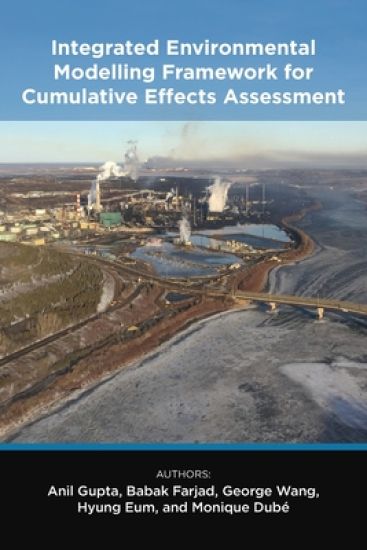
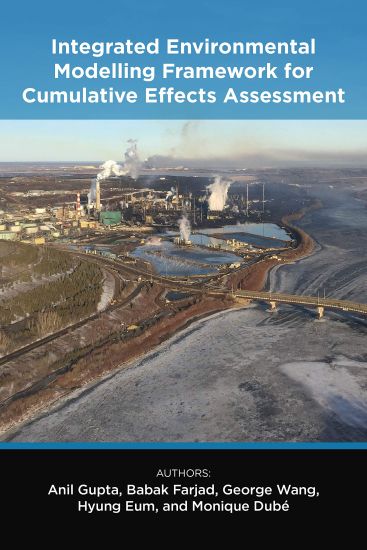
Integrated Environmental Modelling Framework for Cumulative Effects Assessment

Integrated Environmental Modelling Framework for Cumulative Effects Assessment

Anil Gupta; Babak Farjad; George Wang; Hyung Eum; Monique Dubé

University of Calgary Press
2021
nidottu
Global warming and population growth have resulted in an increase in the intensity of natural and anthropogenic stressors. Investigating the complex nature of environmental problems requires the integration of different environmental processes across major components of the environment, including water, climate, ecology, air, and land. Cumulative effects assessment (CEA) not only includes analyzing and modeling environmental changes, but also supports planning alternatives that promote environmental monitoring and management. Disjointed and narrowly focused environmental management approaches have proved dissatisfactory. The adoption of integrated modelling approaches has sparked interests in the development of frameworks which may be used to investigate the processes of individual environmental component and the ways they interact with each other. Integrated modelling systems and frameworks are often the only way to take into account the important environmental processes and interactions, relevant spatial and temporal scales, and feedback mechanisms of complex systems for CEA. This book examines the ways in which interactions and relationships between environmental components are understood, paying special attention to climate, land, water quantity and quality, and both anthropogenic and natural stressors. It reviews modelling approaches for each component and reviews existing integrated modelling systems for CEA. Finally, it proposes an integrated modelling framework and provides perspectives on future research avenues for cumulative effects assessment.
Integrated Environmental Modelling Framework for Cumulative Effects Assessment

Integrated Environmental Modelling Framework for Cumulative Effects Assessment

Anil Gupta; Babak Farjad; George Wang; Hyung Eum; Monique Dubé

UNIVERSITY OF CALGARY PRESS
2021
sidottu
Global warming and population growth have resulted in an increase in the intensity of natural and anthropogenic stressors. Investigating the complex nature of environmental problems requires the integration of different environmental processes across major components of the environment, including water, climate, ecology, air, and land. Cumulative effects assessment (CEA) not only includes analyzing and modeling environmental changes, but also supports planning alternatives that promote environmental monitoring and management. Disjointed and narrowly focused environmental management approaches have proved dissatisfactory. The adoption of integrated modelling approaches has sparked interests in the development of frameworks which may be used to investigate the processes of individual environmental component and the ways they interact with each other. Integrated modelling systems and frameworks are often the only way to take into account the important environmental processes and interactions, relevant spatial and temporal scales, and feedback mechanisms of complex systems for CEA. This book examines the ways in which interactions and relationships between environmental components are understood, paying special attention to climate, land, water quantity and quality, and both anthropogenic and natural stressors. It reviews modelling approaches for each component and reviews existing integrated modelling systems for CEA. Finally, it proposes an integrated modelling framework and provides perspectives on future research avenues for cumulative effects assessment.
Biochemical Parameters and the Nutritional Status of Children
Biochemical parameters represent better, precise, and objective tools toward the assessment of the nutritional status of children in comparison to anthropometric, clinical, and dietary methods. They constitute laboratory tests to estimate the concentration of circulating nutrients in body fluids. Biochemical parameters are suggestive of acute or subclinical conditions when other methods of nutritional assessment fail to interpret the condition. These parameters exhibit substantial variability in their reproducibility. Moreover, these parameters are novel tools in the hands of clinicians for screening of the nutritional status of children. Key Features Covers the latest biochemical parameters for nutritional assessment Updated content is useful for clinicians, nutritionists, and general practitioners A unique and concise treatise covering descriptive and research-based work on a crucial health issue of worldwide prevalenceAbout the AuthorAnil Gupta, PhD, is the Dean of Research at Desh Bhagat University and Professor and Head, Department of Physiology and Biochemistry at Desh Bhagat Dental College and Hospital, Mandi Gobindgarh, Punjab, India.
Relevancy: Reinventing Ourselves to Survive

Relevancy: Reinventing Ourselves to Survive

Paul Ouellette; Paul Dominique; Anil Gupta

Ba Khoa Nguyen
2020
nidottu
THE GREAT PAUSE was a reboot of all the systems of society. Many outdated systems will not make it back. The Dental Industry is a needed one, it has laid on complacency for far too long. In an age where expertise is global and democratized, and can be replaced with technologies and artificial intelligence, the REBOOT will force, not just an update, but an operating system replacement and a firmware upgrade. First, they saved their industry with THE ALPHAS INITIATIVE, sharing their knowledge and vision freely to all the world's dental industry. With the OUELLETTE INITIATIVE, they bought some time to all the dental clinics to resume and to adjust. The warning has been given, the clock is now ticking. who will prevail and prosper and who will be left behind, outdated and obsolete? THE AUTHORSFrom
Geophagia

Geophagia

Anil Gupta

CRC Press
2019
sidottu
Ingestion of food is a physiological process among heterotrophic organisms to obtain nutrients for survival. The consumption of soil, clay and chalk by humans is labeled as geophagia. Ancient resources and modern references deliver valuable information concerning geophagia and pica in humans. This book takes a consistent, interdisciplinary approach for reviewing this aberrant behavior, crafting its etiology, charting its health effects and identifying the universal traits among the affected population. It puts forward a brief conceptual framework to achieve universality in its definition, history, epidemiology and multiple hypotheses thus help in adopting measures to control this habit. Key Features: 1. Systematic and meticulous flow of information on geophagia. 2. Guides general practioners, physicians, pediatricians to curb this practice in their patients. 3. A unique and concise treatise covering descriptive and research based work over a crucial health issue of worldwide prevalence.
Conscious Experience

Conscious Experience

Anil Gupta

Harvard University Press
2019
sidottu
A distinguished philosopher offers a novel account of experience and reason, and develops our understanding of conscious experience and its relationship to thought: a new reformed empiricism. The role of experience in cognition is a central and ancient philosophical concern. How, theorists ask, can our private experiences guide us to knowledge of a mind-independent reality? Exploring topics in logic, philosophy of mind, and epistemology, Conscious Experience proposes a new answer to this age-old question, explaining how conscious experience contributes to the rationality and content of empirical beliefs. According to Anil Gupta, this contribution cannot be determined independently of an agent’s conceptual scheme and prior beliefs, but that doesn’t mean it is entirely mind-dependent. While the rational contribution of an experience is not propositional—it does not, for example, provide direct knowledge of the world—it does authorize certain transitions from prior views to new views. In short, the rational contribution of an experience yields a rule for revising views. Gupta shows that this account provides theoretical freedom: it allows the observer to radically reconceive the world in light of empirical findings. Simultaneously, it grants empirical reason significant power to constrain, forcing particular conceptions of self and world on the rational inquirer. These seemingly contrary virtues are reconciled through novel treatments of presentation, appearances, and ostensive definitions. Collectively, Gupta’s arguments support an original theory: reformed empiricism. He abandons the idea that experience is a source of knowledge and justification. He also abandons the idea that concepts are derived from experience. But reformed empiricism preserves empiricism’s central insight: experience is the supreme epistemic authority. In the resolution of factual disagreements, experience trumps all.

Comprehensive Biochemistry for Dentistry

Comprehensive Biochemistry for Dentistry

Anil Gupta

Springer Verlag, Singapore
2019
sidottu
This book combines fundamental concepts of biochemistry and the dental sciences to provide an authentic, coherent and comprehensive text for dental students. It describes in simple language the intricate pathophysiology of biomolecules in health and in diseases of dental and oral tissues. This book also describes the evolution of biochemistry in a chronological order, provides information about the fundamental chemical structure, classification and biological significance of biomolecules, vitamins and hormones, enriched with flow charts and diagrams for easy understanding and quick reference. It includes chapters on nucleic acids, nutrition and serum enzymes and organ function tests, and offers an innovative approach to familiarize dental students with the biochemical composition of enamel, dentine, cementum and saliva, explaining the biochemical basis of dental caries, periodontal diseases, role of fluorides in caries prophylaxis, fluoride toxicity, and the role of amino acids as anti-hypersensitive agents.