Kirjojen hintavertailu – 12 903 735 kirjaa ja 27 kauppaa

Kirjailija

Anthony Burton

Kirjat ja teokset yhdessä paikassa: 49 kirjaa, julkaisuja vuosilta 1976–2027, suosituimpiin kuuluu Richard Trevithick. Vertaile teosten hintoja ja tarkista saatavuus suomalaisista kirjakaupoista.

49 kirjaa

Kirjojen julkaisuvuodet: 1976–2027.

Britain's Canals

Britain's Canals

Anthony Burton; Derek Pratt

Adlard Coles Nautical
2020
nidottu
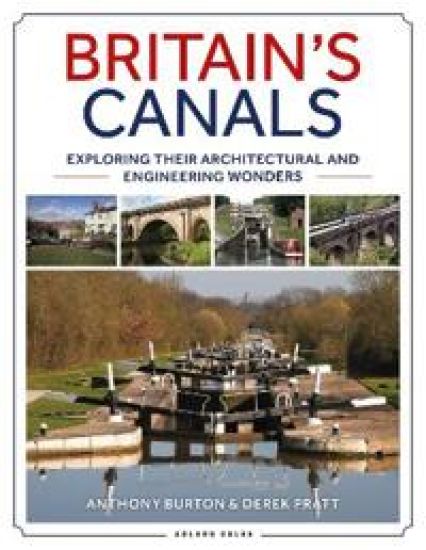
Britain's Canals is a charming and insightful exploration into the amazing architecture and engineering wonders that surround Britain’s inland waterways – from the awe-inspiring 30-lock flight on the Worcester and Birmingham Canal, to the delightful chocolate-box lock-keepers’ cottages that line the cut of every canal, to masterpieces such as the 18-arch Pontcysyllte aqueduct, the highest aqueduct in the world, to beautiful bridges, grand company buildings, the social hubs that were, and still are, canal-side pubs, plus so much more. In contrast to many inland waterways books which are organised geographically by canal, Britain's Canals is structured thematically, with chapters covering the line (the shape of the canal), locks and lock cottages, bridges, aqueducts, lifts and planes, company buildings, wharves, basins and quays and finally the canal-side pub. Each chapter explores how these features were created and have changed through history, right through to the present, with plenty of ideas for places to visit – plus full information on how to get to them. An abundance of full-colour photography throughout, both historical and modern-day, will delight readers and inspire them to explore Britain’s wondrous inland waterways, whether on boat, by foot or by bike. In Britain's Canals, two inland waterways experts and admired authors come together to produce the definitive word on the man-made wonders that make Britain’s canals so special, so loved and enjoyed by so many.
Josiah Wedgwood

Josiah Wedgwood

Anthony Burton

Pen Sword History
2019
sidottu
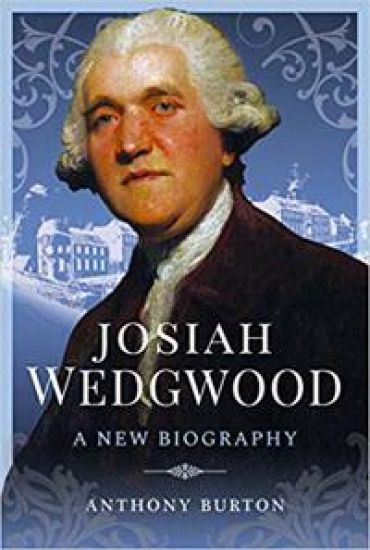
Wedgwood was born in the Staffordshire Potteries in 1739 and lived in the area all his life. His family were all potters, working in traditional ways, but Josiah was to revolutionise the industry. When he started work, the local ware was either rather rustic, or made to look a little more sophisticated by the addition of heavy glazes. He worked to produce a lighter coloured body and to use designs made to appeal to aristocratic tastes, convinced that where they led the rapidly growing middle class would follow. The result was cream ware which, when a whole service was ordered by the royal family, was soon christened queens ware. He needed to import new materials - flint from East Anglia, light clays from the West Country, so he became an ardent promoter of the Trent and Mersey Canal, and built a new factory and family home on its banks, naming the area Etruria In the new works, he abandoned the old systems where individual craftsmen produced whole pieces for an early form of mass production. From these works came the ceramics that are still world famous, such as the distinctive jasper ware. He had many outside interests and was one of the earliest supporters of the ant-slavery movement. He studied science and was made a Fellow of the Royal Society for his work on high temperature thermometers. He was a loving family man and an enthusiastic correspondent, and his many letters reveal a character that was attractive, enthusiastic and always eager to learn, He died in 1795.
Balloons and Airships

Balloons and Airships

Anthony Burton

Pen Sword Aviation
2019
sidottu
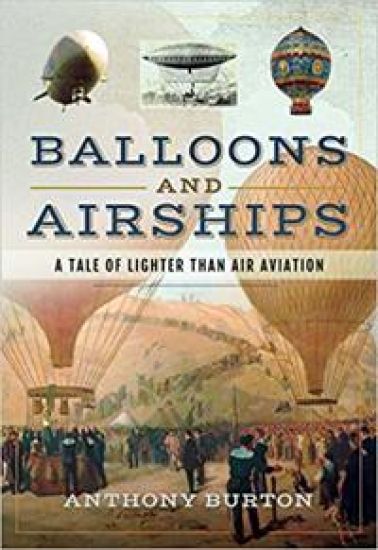
This book tells the often dramatic and always fascinating story of flight in lighter than air machines. For centuries man had dreamed of flying, but all attempts failed, until in 1782 the Montgolfier brothers constructed the world's first hot air balloon The following year saw the first ascent with aeronauts - not human beings but a sheep, a duck and a cockerel. But it was not long before men and women too took to the air and became ever more adventurous. The aeronauts became famous giving displays before crowds of thousands, often accompanied by special effects. In the early years, ballooning was a popular pastime, but in the 19th century it found a new use with the military. Balloons were used to send messages out during the Siege of Paris and later found a role as observation balloons for the artillery. But their use was always limited by the fact that they were at the mercy of the wind. There were numerous attempts at steering balloons, and various attempts were made to power them but it was the arrival of the internal combustion engine that saw the balloon transformed into the airship. The most famous developer of airships was Graf von Zeppelin and the book tells the story of the use of his airships in both peacetime and at war. There were epic adventures including flights over the poles and for a time, commercial airships flourished - then came the disaster of the Hindenburg. Airships still fly today and ballooning has become a hugely popular pastime.
Steam Traction on the Road

Steam Traction on the Road

Anthony Burton

Pen Sword Books Ltd
2018
sidottu
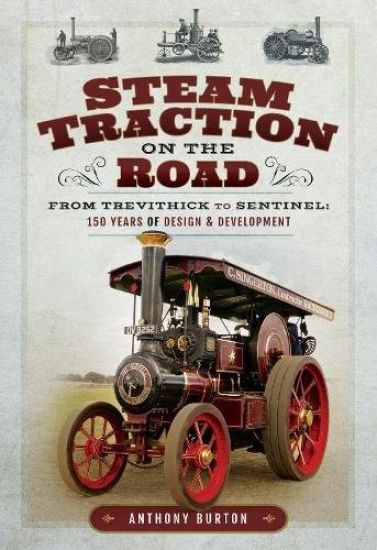
This is the story of how for more than a hundred years steam power played a vital role in the development of road transport. It all began with tentative attempts to build steam carriages by pioneers such as Cugnot in France and Trevithick in Britain, and in the early part of the nineteenth century there were significant attempts to develop steam carriages and omnibuses. That these attempts ultimately failed was largely due to opposition by road authorities and draconian legislation. Steam power did, however, find a real purpose in agriculture, where the traction engine was used for a variety of tasks from towing and working threshing machines, to ploughing. Once the value of the traction engine had been established, it soon found a use in many parts of the world for heavy haulage work and appeared in an exotic guise as the showman's engine. The latter was not only used to haul rides to fairgrounds but also powered a dynamo that could light up the fair at night. By the end of the nineteenth century, steam on the road took on a new life with the development of steam cars and trucks. For a time they vied the new internal combustion engine for supremacy on the road. The American Doble Company even developed a 100mph steam sports car. Ultimately steam lost the war, but steam vehicles survive and delight us still thanks to enthusiastic owners and restorers.
Around Britain by Canal

Around Britain by Canal

Anthony Burton

Pen Sword Transport
2018
sidottu
This is the story of a thousand mile-long trip around England by canal. At times the journey took the author out into the beautiful countryside, and elsewhere the canal crept round the edge of old industrial towns. It is a journey that proved full of surprises, delights and rich variety, as the book clearly demonstrates. The book illustrates the great contrasts between travelling on the wide tidal waters of the River Trent and being overtaken by sea-going cargo ships, to meadnering along the sinuous curves of the Oxford Canal. The Leeds & Liverpool Canal brought magnificent moorland scenery and the drama of the great five-lock staircase at Bingley. London was seen from two very different perspectives. Travelling past the elegant houses of Little Venice and Regents Park and then turning back along the Thames to float past the Houses of Parliament. The author finds as much pleasure in the hidden corners of Birmingham as in the rural beauties of Shropshire. The book has become regarded as a classic of canal travel, and is reissued with previously unpublished colour photographs taken by Phillip Lloyd, who shared the trip with the author.
Joseph Locke

Joseph Locke

Anthony Burton

Pen Sword Transport
2017
sidottu
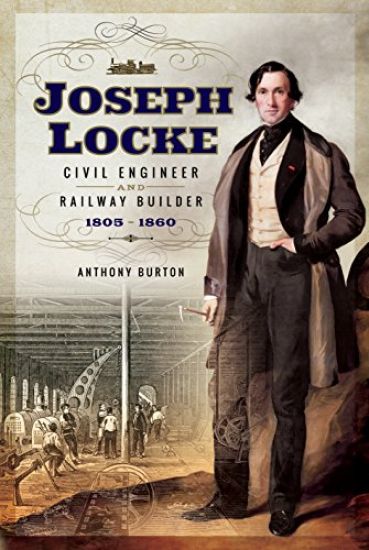
Most historians recognise the work of three engineers as being the men who developed the railways from slow, lumbering colliery lines into fast, inter-city routes. Two are very well known: Robert Stephenson and Isambard Kingdom Brunel. The third was Joseph Locke, who should be recognised for having made a contribution just as great as that of the other two. The Locke family had been colliery managers and overseers for many generations and Joseph, once he had completed his very rudimentary education at Barnsley Grammar School at the age of thirteen, seemed set to follow in their footsteps. However, at the age of nineteen he was taken on as an apprentice by an old friend of his father, George Stephenson, and sent to the new locomotive works at Newcastle. His enthusiasm and willingness to learn soon brought promotion, and he became a highly valued assistant engineer on the prestigious Liverpool & Manchester Railway. During his time there he wrote a pamphlet with Robert Stephenson, arguing the case for steam locomotives and had the embarrassing task of having to correct calculations for a tunnel being built under the direct supervision of George Stephenson. After its opening, he moved on to work on the Grand Junction Railway, at the start working alongside Stephenson rather than as his assistant. But before long, they had quarrelled and the directors handed the whole works over to Lockes control. It was the turning point of his life. Locke was to continue as chief engineer on some of the most important lines in Britain, and his reputation grew to the point where he was also in demand for work in mainland Europe, building major routes in France, the Netherlands and Spain. He became a wealthy man, purchasing the manor of Honiton in Devon and sat in Parliament as the Liberal member for that constituency. He received many honours during his lifetime and died while on holiday at Scotland in 1860 at the age of fifty-five.
Crafted in Britain

Crafted in Britain

Anthony Burton; Rob Scott

Adlard Coles Nautical
2017
sidottu
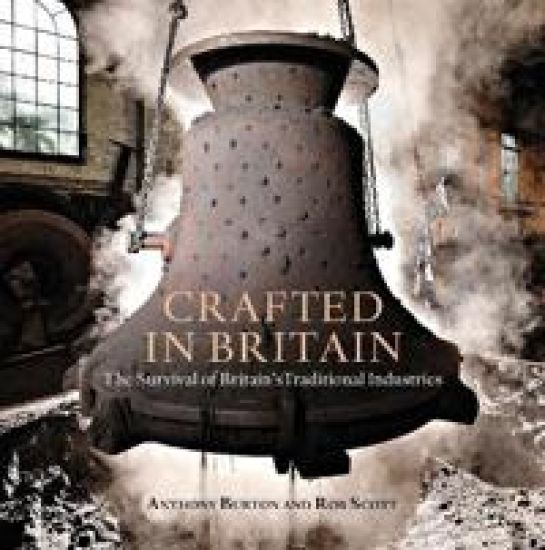
Crafted in Britain is a celebration of Britain’s traditional crafts and industries that have survived into the modern world, not as museums but on their merits. In an age of increasing automation and standardisation, it is a joy to find such places, where craftsmanship and personal skills are still valued. Their world is recreated in Rob Scott’s dramatic photographs, while the processes and history of the different industries is described in the captivating text by Anthony Burton. They have travelled the country from the Spey valley in Scotland, where they recorded the workers in a traditional distillery and a cooperage, to Cornwall and the studio of a specialist pub sign painter. They have gone underground with a Free Miner of the Forest of Dean and seen molten metal being poured to create majestic church bells. The book delights in the variety and individuality of the different industries. For both author and photographer it has been a revelation to see some of these processes at work: to watch a craftsman take a strip of silver and work it by hand into a spoon, or to find clocks being made in a workshop that looks as if it has scarcely changed for a hundred years. Crafted in Britain gives you the opportunity to share these experiences and delight in the discovery of these magnificent survivors.
The West Highland Way

The West Highland Way

Anthony Burton

Aurum Press
2016
nidottu
The 93-mile West Highland Way is indisputably Britain's most spectacular long-distance path. The first section, following the eastern shore of Loch Lomond, offers an idyllic waterside walk, with the full grandeur of the Highlands gradually revealing itself. Then, after crossing the barren wilderness of the Rannoch Moor, the walker climbs the Devil's Staircase above Glencoe and traverses classic Highland landscapes to reach Fort William and, if he or she wishes, a grand finale at the peak of Britain's highest mountain, Ben Nevis. This comprehensive, easy-to-use guide is an authoritative companion, packed with indispensable information.
Cotswold Way

Cotswold Way

Anthony Burton

Aurum Press Ltd
2016
pokkari
Following the limestone escarpment on the Western edge of the Cotswolds, the 102 miles of the Cotswold Way take the walker through a quintessentially English landscape as varied as it is beautiful.
The Iron Men

The Iron Men

Anthony Burton

The History Press Ltd
2015
nidottu
The eighteenth century saw the second Iron Age. Practically everything was made of iron: the machines of the Industrial Revolution; bridges and the ships that went under them; the trains running on their rails; and the frames of the first skyscrapers. But progress was bought at a price and the working classes paid it. The knife grinders of Sheffield were lucky to reach their 30th birthday before their ruined lungs gave up, women chain makers were described as ‘The White Slaves of England’ and, in a time before health and safety regulations, each advance in technology risked a new kind of deadly accident. Tracking both the brilliant innovation of the period and the hardship and struggle that powered it, this is the story of how iron changed the world.
The Workers' War

The Workers' War

Anthony Burton

The History Press Ltd
2014
sidottu
The First World War is famous for the unprecedented loss of life on a global scale; it was a conflict that affected the world forever. However, it wasn’t only in terms of bloodshed that the war rocked the nation: it also massively impacted the industrial integrity of Britain. This was a war not just of fighting, but of technological and industrial advances. All areas of industry, from aviation to food production, leapt ahead in terms of development over the four-year period: from the Wright Brothers in 1903 to the Sopwith Camel in 1917, and from the first motorcars to the tank within twenty years. On a social level, working Britain experienced change as well: with the men at war, it fell to the women of the country to keep the factories going, challenging preconceptions as they did. Here Anthony Burton shows how the First World War produced fundamental changes in British society.
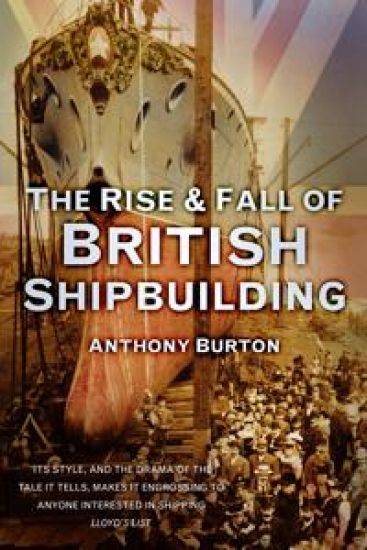
The Rise and Fall of British Shipbuilding

The Rise and Fall of British Shipbuilding

Anthony Burton

The History Press Ltd
2013
nidottu
From modest beginnings, Britain rose throughout the nineteenth century to become the greatest shipbuilding nation in the world, yet by the end of the following century the British merchant fleet ranked just 38 in the world. The glory days of sail had given way to the introduction of the steam age. Traditional shipwrights had railed against new industrial methods resulting in the infamous demarcation disputes. Talented men, like Brunel and Armstrong, had always sought change and development, but too many shipbuilders were relying on old technologies. From building mighty battleships and extravagant ocean liners, the nation became complacent and its yards were eventually no longer as innovative as their foreign competitors. In the twenty-first century, British shipbuilding has shrunk to a mere fraction of its former size and has become almost totally dependent on government contracts. The popularity of and fascination with this subject has prompted a new edition of Anthony Burton’s successful book. With fresh images and a new, final chapter, the story of the rise and cataclysmic fall of British shipbuilding has been brought right up to date.
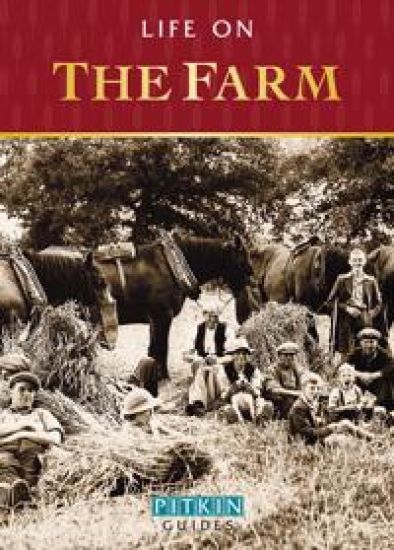
Life on the Farm

Life on the Farm

Anthony Burton

Pitkin Publishing
2013
nidottu
Somewhere around 4000 BC, people in Britain began to give up their old hunter-gatherer way of life, instead raising livestock and planting crops: they became farmers. This comprehensive and informative guide covers the history of farming in Britain since this time, when cattle were huge beasts and ploughs did little more than scratch the ground’s surface. Tools and technologies may have changed since these primitive times, but the patterns of life on the farm have remained much the same. From the medieval farm to the Agricultural Revolution as enclosure transformed the landscape, here is the story of how farming has evolved into the tractors and mechanization we recognise today. With photographs and illustrations this book also illuminates the life of farmworkers and their families. What was it like being a cattle farmer or a shepherd? What did a farmer’s wife spend her day making? An entertaining and detailed guide for anyone interested in the history and lives of the country’s farmers. Includes a list of farms and museums to visit of historic and general interest.
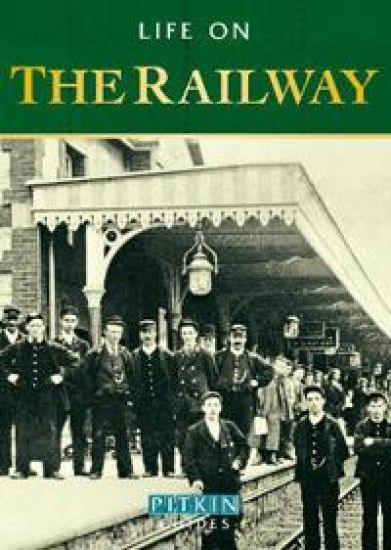
Life on the Railway

Life on the Railway

Anthony Burton

Pitkin Publishing
2013
nidottu
On Christmas Eve 1801, Cornish mining engineer Richard Trevithick tested the first steam locomotive on the road. Though it was short-lived, exploding four days later, this was the beginning of the railway age in Britain. By the end of the 18th century, there was a considerable number of railways across Britain with well established steam engines. This informative guide tells the story of these railways, beginning with the pioneers of locomotive engines and the navvies who built the railways themselves. A must for anyone interested in the history of the railways, industrial Britain and travel, this informative guide explores the lives of those on the railway. Train guards, station staff and passengers are all touched on, as well as underground railways and tragic rail disasters. Colour photographs and illustrations bring the golden age of rail in Britain to life. Includes a list of places to visit which specialize in railways, as well as a glossary of the key terms in the book.
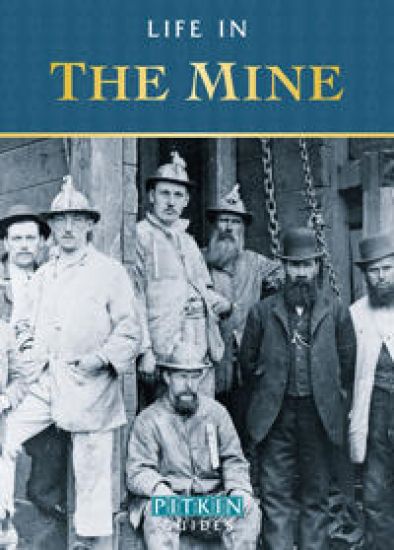
Life in the Mine

Life in the Mine

Anthony Burton

Pitkin Publishing
2013
nidottu
Over 4,000 years of history lie in the seams of British mines, beginning all the way back in the New Stone Age. Large-scale coal mining in Britain developed during the Industrial Revolution, providing energy for industry and transportation in industrial areas from the 18th century to the 1950s. This classic Pitkin guide provides a history of mining in Britain as well as of the hard lives of those who worked in them. Child labour was a normal part of Victorian life, so women and children were found in the dangerous deep pits until 1842, while male miners relied on safety lamps and canaries to avoid mining disasters. Fascinating photographs accompany this guide’s history of these people’s lives, including their time outside of the mines, their homes and hobbies. Whole villages grew up around mines, with close comradeship and tightly knit mining communities emerging. Here is the story of what that life was like for so many, up until British mining's decline in the 19th and 20th centuries. Includes a list of mines, museums and heritage centres to visit.
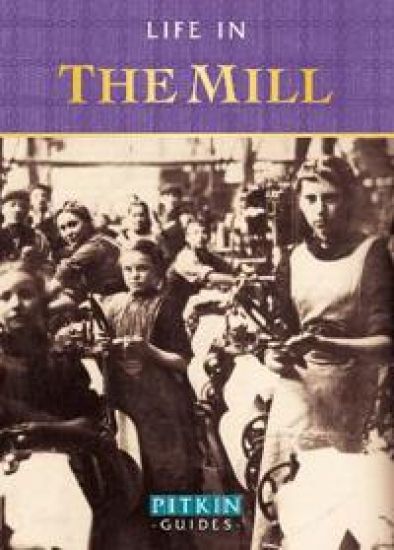
Life in the Mill

Life in the Mill

Anthony Burton

Pitkin Publishing
2013
nidottu
For centuries, most textile manufacturing relied on people working in their own homes. All that changed in 1761 when Richard Arkwright began construction of the first water-powered cotton mill in Derbyshire. The complex woollen industry was transformed as mills spread cross the north of England and into Scotland, with tasks taken out of the cottage and into the factory. This informative guide tracks the development of the textile manufacturing industry, from industrial power looms meeting with Luddite resistance, to the distinctive silk weaving workrooms. Mill towns sprung up around places of work, including special apprentice houses for children. Conditions were harsh and often dangerous, both in the mills and in woollen towns living under permanent palls of smoke. Packed with photographs and illustrations, this is a classic Pitkin guide to the everyday lives of the workers in this mills and towns, from their work to their time off. There was a time when Britain sent textiles around the world: this is the story of the workforce, mainly women and children, who made this possible - and created the factory age. Includes a list of mills, museums and visitor centres to visit.