Kirjojen hintavertailu – 12 903 725 kirjaa ja 27 kauppaa

Kirjailija

Anthony Saunders

Kirjat ja teokset yhdessä paikassa: 17 kirjaa, julkaisuja vuosilta 1994–2026, suosituimpiin kuuluu Loose Leaf for Financial Institutions Management: 2026 Release. Vertaile teosten hintoja ja tarkista saatavuus suomalaisista kirjakaupoista.

17 kirjaa

Kirjojen julkaisuvuodet: 1994–2026.

Financial Institutions Management: A Risk Management Approach: 2026 Release ISE
Financial Institutions Management: A Risk Management Approach offers an innovative perspective on managing return and risk in today's financial institutions. While covering traditional sector activities, it emphasizes emerging areas such as asset securitization, off-balance-sheet banking, and international banking. The text highlights that risk management techniques and markets are increasingly similar across commercial banks, saving banks, investment banks, and insurance companies.

Financial Markets and Institutions: 2024 Release ISE

Financial Markets and Institutions: 2024 Release ISE

Anthony Saunders; Marcia Cornett; Otgo Erhemjamts

McGraw-Hill Education
2024
nidottu
In response to evolving economic and competitive landscapes, this book underscores the increasing importance of focusing on both profit and risk. It provides a distinctive analysis of the risks encountered by investors and savers engaging with financial institutions and markets while offering strategies for effective risk management. Notably, the book explores emerging areas in finance, including asset securitization, off-balance-sheet activities, and the globalization of financial services. Emphasizing a risk measurement and management framework, it addresses the integration of domestic and foreign financial markets and the shift of financial intermediaries towards a unified financial services industry. The content, accessible to students at all levels, combines mathematical rigor with practical tools. It equips students with essential skills for comprehending and navigating the dynamic financial market environment, covering topics such as issuing and trading financial securities, and analyzing financial statements and loan applications. The book strikes a balance between descriptive concepts and analytical techniques, providing a comprehensive understanding of the unique operational context of modern financial markets and institutions.
Raiding on the Western Front

Raiding on the Western Front

Anthony Saunders

PEN SWORD BOOKS LTD
2022
nidottu

Halvin toimitettuna 23,70 €

The trench raid came to typify the aggression and close-combat of trench warfare on the Western Front. Inevitably, raiding by aggressively minded units had a psychological effect on the enemy. Dominance over the enemy could be established by aggressive raiding. Equally, raiding had an effect on the morale of friendly troops but not always a positive one. Successful raids buoyed spirits but unsuccessful raids could be detrimental because of the casualties sustained for no gain and raiding provoked retaliation from enemy artillery or mortars or a tit-for-tat return raid. Raids came to be the epitome of all-arms operations, combining individual weapons skills with tactical sense and requiring cooperation with artillery and mortar batteries for success. Yet, a raiding party was an ad hoc all-arms combat team put together and trained for a specific operation. In the early days of raiding, the raiders were always volunteers but the steady toll of experienced soldiers led to raiders being told off for the first task like any other. This is the first book to look at how raids were carried out, the successes, the failures, the consequences of raiding, their effect on morale and their contribution to military operations on the Western Front.
Financial Markets and Institutions ISE

Financial Markets and Institutions ISE

Anthony Saunders; Marcia Cornett; Otgo Erhemjamts

McGraw-Hill Education
2021
nidottu
Financial Markets and Institutions is aimed at the first course in financial markets and institutions at both the undergraduate and MBA levels. While topics covered in this book are found in more advanced textbooks on financial markets and institutions, the explanations and illustrations are aimed at those with little or no practical or academic experience beyond the introductory-level finance courses. In most chapters, the main relationships are presented by figures, graphs, and simple examples. The more complicated details and technical problems related to in-chapter discussion are provided in appendixes to the chapters. Since the author team's focus is on return and risk and the sources of that return and risk in domestic and foreign financial markets and institutions, this text relates ways in which a modern financial manager, saver, and investor can expand return with a managed level of risk to achieve the best, or most favorable, return–risk outcome.
Financial Institutions Management: A Risk Management Approach

Financial Institutions Management: A Risk Management Approach

Anthony Saunders; Marcia Cornett

McGraw-Hill Education
2017
sidottu
Saunders and Cornett's Financial Institutions Management: A Risk Management Approach provides an innovative approach that focuses on managing return and risk in modern financial institutions. The central theme is that the risks faced by financial institutions managers and the methods and markets through which these risks are managed are becoming increasingly similar whether an institution is chartered as a commercial bank, a savings bank, an investment bank, or an insurance company. Although the traditional nature of each sector's product activity is analyzed, a greater emphasis is placed on new areas of activities such as asset securitization, off-balance-sheet banking, and international banking.
Financial Markets and Institutions

Financial Markets and Institutions

Anthony Saunders

McGraw-Hill Professional
2014
sidottu
Financial Markets and Institutions, 6e offers a unique analysis of the risks faced by investors and savers interacting through financial institutions and financial markets, as well as strategies that can be adopted for controlling and managing risks. Special emphasis is put on new areas of operations in financial markets and institutions such as asset securitization, off-balance-sheet activities, and globalization of financial services. Then, resources within Connect help students solve financial problems and apply what they've learned. Saunders' strong markets focus and superior pedagogy combine with a complete digital solution to help students achieve higher outcomes in the course. Connect is the only integrated learning system that empowers students by continuously adapting to deliver precisely what they need, when they need it, and how they need it, so that your class time is more engaging and effective.
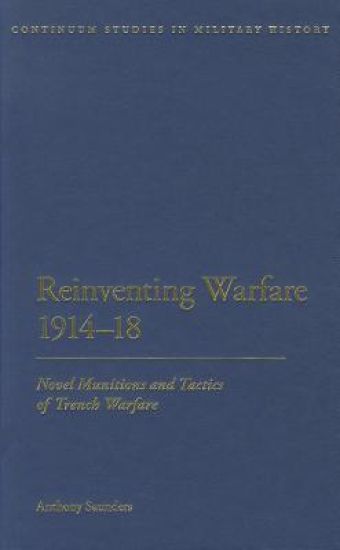
Reinventing Warfare 1914-18

Reinventing Warfare 1914-18

Anthony Saunders

Continuum Publishing Corporation
2012
sidottu
This title presents new research highlighting the invention of new weaponry and its front-line combat use. No army went to war in 1914 ready to conduct trench warfare operations. All the armies of the First World War discovered that prolonged trench warfare required new types of munitions alongside the conventional howitzers, large-calibre guns and explosive shells. This volume examines how the British went about inventing and manufacturing new weaponry such as hand grenades, rifle grenades and trench mortars when no body of knowledge about trench warfare munitions existed. It also examines how tactics were developed for these new munitions. Based on new research, this is the first book to discuss the complexity of invention and manufacture of novel weapons such as the Mills grenade and the Stokes mortar, and to consider the relationship between technical design and operational tactics on the ground. In so doing the book presents a different model of the trench warfare conducted by the British Expeditionary Force on the Western Front, and also provides a blueprint to understanding the relationship between technology and tactics applicable to all types of weapons and warfare. "Continuum Studies in Military History" offers up-to-date, scholarly accounts of war and military history. Unrestricted by period or geography, the series aims to provide free-standing works that are attuned to conceptual and historiographical developments in the field while being based on original scholarship.
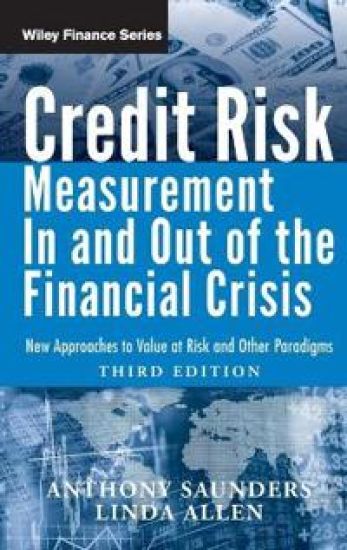
Credit Risk Management In and Out of the Financial Crisis

Credit Risk Management In and Out of the Financial Crisis

Anthony Saunders; Linda Allen

John Wiley Sons Inc
2010
sidottu
A classic book on credit risk management is updated to reflect the current economic crisis Credit Risk Management In and Out of the Financial Crisis dissects the 2007-2008 credit crisis and provides solutions for professionals looking to better manage risk through modeling and new technology. This book is a complete update to Credit Risk Measurement: New Approaches to Value at Risk and Other Paradigms, reflecting events stemming from the recent credit crisis. Authors Anthony Saunders and Linda Allen address everything from the implications of new regulations to how the new rules will change everyday activity in the finance industry. They also provide techniques for modeling-credit scoring, structural, and reduced form models-while offering sound advice for stress testing credit risk models and when to accept or reject loans. Breaks down the latest credit risk measurement and modeling techniques and simplifies many of the technical and analytical details surrounding themConcentrates on the underlying economics to objectively evaluate new modelsIncludes new chapters on how to prevent another crisis from occurring Understanding credit risk measurement is now more important than ever. Credit Risk Management In and Out of the Financial Crisis will solidify your knowledge of this dynamic discipline.
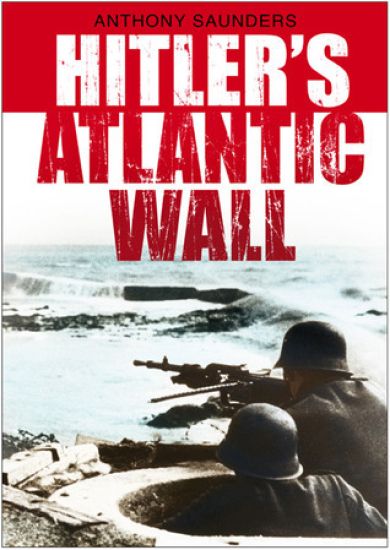
Hitler's Atlantic Wall

Hitler's Atlantic Wall

Anthony Saunders

Sutton Publishing Ltd
2007
nidottu
With the ever-growing interest in Hitler's Atlantic Wall, it comes as a surprise that so little has been written about it in the English language - until now, that is. In this, the first substantial work in English, author Tony Saunders takes a critical look at the history of the wall, how it was built, what was built and the role it played in the Second World War, together with a guide to what remains to see of it today in France. Hitler conceived the Atlantic Wall during the Second World War as a line of impregnable fortifications along the western coast of Europe to protect his newly conquered empire from seaborne invasion. From 1942 until the Allied invasion of Normandy in June 1944, millions of tons of steel-reinforced concrete were poured into the construction of gun emplacements, bunkers, flak batteries, radar stations, command and observation posts, as well as ammunition dumps and U-boat pens. This huge project stretched from the Franco-Spanish border in the south, following the French Atlantic coast north for 1,500 miles passing through Brittany, around the Cherbourg peninsula, along the coast of Normandy and extending right to the North Sea coasts of Belgium and Holland. More than 12,000 concrete structures were built, many of them so massive that they survive today despite being shelled by battleships, and resisting most post-war attempts by Allied army engineers to demolish them. They are now tourist attractions as well as the focus for a growing number of 'fortress' enthusiasts. Richly illustrated, the authoritative text is supported by a selection of contemporary photographs and plans - many rare or previously unpublished - and present-day photographs showing the amazing endurance of these monolithic fortifications.
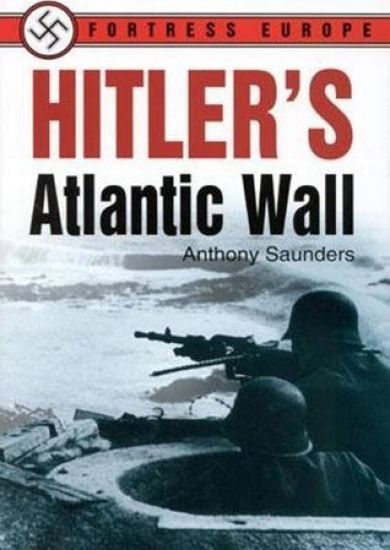
Hitler's Atlantic Wall

Hitler's Atlantic Wall

Anthony Saunders

Sutton Publishing Ltd
2004
sidottu
Hitler conceived the Atlantic Wall during World War II as a line of impregnable fortifications along the western coast of Europe to protect his newly conquered empire from seaborne invasion. From 1942 until the Allied invasion of Normandy in June 1944, millions of tons of steel-reinforced concrete were poured into the construction of gun emplacements, bunkers, flak batteries, radar stations, command and observation posts, as well as ammunition dumps and U-boat pens. This huge project stretched from the Franco-Spanish border in the south, following the French Atlantic coast north for 1500 miles passing through Brittany, around the Cherbourg peninsula, along the coast of Normandy and extending right to the North Sea coasts of Belgium and Holland. More than 12,000 concrete structures were built, many of them so massive that they survive today despite being shelled by battleships, and resisting most post-war attempts by Allied army engineers to demolish them. They are now tourist attractions. This title examines the reasons behind Hitler Directive 51 in building the Atlantic Wall, the slaves and generals who built and designed these immense structures, and explains the strategic importance behind them.
Understanding Market, Credit, and Operational Risk

Understanding Market, Credit, and Operational Risk

Linda Allen; Jacob Boudoukh; Anthony Saunders

Blackwell Publishers
2003
sidottu
A step-by-step, real world guide to the use of Value at Risk (VaR) models, this text applies the VaR approach to the measurement of market risk, credit risk and operational risk. The book describes and critiques proprietary models, illustrating them with practical examples drawn from actual case studies. Explaining the logic behind the economics and statistics, this technically sophisticated yet intuitive text should be an essential resource for all readers operating in a world of risk. Applies the Value at Risk approach to market, credit, and operational risk measurement. Illustrates models with real-world case studies. Features coverage of BIS bank capital requirements.
Credit Risk Measurement

Credit Risk Measurement

Anthony Saunders

John Wiley Sons Inc
1999
sidottu
The single most important topic in finance today is the art and science of credit risk management. Growing dissatisfaction with traditional credit risk measurement methods has combined with regulations imposed by the Bank for International Settlements (BIS) in 1993 to send numerous financial institutions in search of alternative "internal model" approaches to measuring the credit risk of a loan or portfolio of loans. This has led to a raging debate over whether internal models can replace regulatory models, and which areas of credit risk measurement and management are most amenable to internal models. Much of this highly technical debate, however, has been inaccessible to the interested practitioner, student, economist, or regulator-until now. In Credit Risk Measurement: New Approaches to Value at Risk and Other Paradigms, Anthony Saunders invites a wider audience into the debate. Simplifying many of the technical details and analytics surrounding internal models, he concentrates on their underlying economics and economic intuition. Professor Saunders examines the approaches of these new models to the evaluation of individual borrower credit risk, portfolio credit risk, and derivative contracts. The alternative models explored include: * Loans as options and the KMV model * The VAR approach: J. P. Morgan's CreditMetrics and other models * The macro simulation approach: the McKinsey and other models * The risk-neutral valuation approach: KPMG's Loan Analysis System (LAS) and other models * The insurance approach: mortality models and CSFP credit risk plus model * Back testing and stress testing credit risk models * RAROC models With its comprehensive coverage, summary, and comparison of new internal model approaches along with clear explanations of often complex material, Credit Risk Measurement is an indispensable resource for bankers, academics and students, economists, and regulators.
Universal Banking in the United States

Universal Banking in the United States

Anthony Saunders; Ingo Walter

Oxford University Press Inc
1994
sidottu
In 1933 and 1956, the United States sharply limited the kinds of securities, commercial, and insurance activities banks could engage in. These regulations remain in place despite profound changes in the economic environment, in the structure of the national and international financial markets, and in technology. This book evaluates the case for and against eliminating these barriers. The authors study the consequences of bank regulation in the US as it relates to competition in international financial markets. They examine universal banking systems in other countries, especially Germany, Switzerland, and the UK, and how they work. They then apply the lessons to US banking, paying particular attention to the benchmarks of stability, equity, efficiency, and competitiveness against which the performance of national financial systems should be measured. They propose a level playing field on which any number of forms of organization can grow in the financial services sector, in which universal banking is one of the permitted structures, and where regulation is linked to function.