Kirjojen hintavertailu – 12 859 827 kirjaa ja 27 kauppaa
Kirjailija
Anthony Trollope
Kirjat ja teokset yhdessä paikassa: 2 344 kirjaa, julkaisuja vuosilta 1974–2026, suosituimpiin kuuluu Autobiography Of Anthony Trollope. Vertaile teosten hintoja ja tarkista saatavuus suomalaisista kirjakaupoista.
Barchester Towers, published in 1857, is the second novel in Anthony Trollope's series known as the "Chronicles of Barsetshire". Among other things it satirises the then raging antipathy in the Church of England between High Church and Evangelical adherents. Trollope began writing this book in 1855. He wrote constantly, and made himself a writing-desk so he could continue writing while travelling by train. "Pray know that when a man begins writing a book he never gives over," he wrote in a letter during this period. "The evil with which he is beset is as inveterate as drinking - as exciting as gambling." And, years later in his autobiography, he observed "In the writing of Barchester Towers I took great delight. The bishop and Mrs. Proudie were very real to me, as were also the troubles of the archdeacon and the loves of Mr. Slope." But when he submitted his finished work, his publisher, William Longman, initially turned it down, finding much of it to be full of "vulgarity and exaggeration"More recent critics offer a more sanguine opinion. "Barchester Towers is many readers' favourite Trollope", wrote The Guardian, which included it in its list of "1000 novels everyone must read" Barchester Towers concerns the leading clergy of the cathedral city of Barchester. The much loved bishop having died, all expectations are that his son, Archdeacon Grantly, will succeed him. Instead, owing to the passage of the power of patronage to a new Prime Minister, a newcomer, the far more Evangelical Bishop Proudie, gains the see. His wife, Mrs Proudie, exercises an undue influence over the new bishop, making herself as well as the bishop unpopular with most of the clergy of the diocese. Her interference to veto the reappointment of the universally popular Mr Septimus Harding (protagonist of Trollope's earlier novel, The Warden) as warden of Hiram's Hospital is not well received, even though she gives the position to a needy clergyman, Mr Quiverful, with 14 children to support. Even less popular than Mrs Proudie is the bishop's newly appointed chaplain, the hypocritical and sycophantic Mr Obadiah Slope, who decides it would be expedient to marry Harding's wealthy widowed daughter, Eleanor Bold, and hopes to win her favour by interfering in the controversy over the wardenship. The Bishop, or rather Mr Slope under the orders of Mrs Proudie, also orders the return of the prebendary Dr Vesey Stanhope from Italy. Dr Stanhope has been there, recovering from a sore throat, for 12 years and has spent his time catching butterflies. With him to the Cathedral Close come his wife and his three adult children. The younger of Dr Stanhope's two daughters causes consternation in the Palace and threatens the plans of Mr Slope: Signora Madeline Vesey Neroni is a crippled serial flirt with a young daughter and a mysterious Italian husband whom she has left. Mrs Proudie is appalled by her and considers her an unsafe influence on her daughters, her servants and Mr Slope. Mr Slope is drawn like a moth to a flame and cannot keep away. Dr Stanhope's son Bertie is skilled at spending money but not at making it: his two sisters think marriage to rich Eleanor Bold will provide financial security for him.... Anthony Wilson Thorold (13 June 1825 - 25 July 1895) was an Anglican Bishop of Winchester ... They had three children: Algar Labouchere Thorold (1866-1936), Dorothy, and Sybil.
Framley Parsonage is the fourth novel in Anthony Trollope's series known as the Chronicles of Barsetshire. It was first published in serial form in the Cornhill Magazine in 1860, then in book form in 1861. The hero of Framley Parsonage, Mark Robarts, is a young vicar, settled in the village of Framley in Barsetshire with his wife and children. The living has come into his hands through Lady Lufton, the mother of his childhood friend Ludovic, Lord Lufton. Mark has ambitions to further his career and begins to seek connections in the county's high society. He is soon preyed upon by local Whig Member of Parliament Mr Sowerby to guarantee a substantial loan, which Mark in a moment of weakness agrees to do, even though he does not have the means and knows Sowerby to be a notorious debtor. The consequences of this blunder play a major role in the plot, with Mark eventually being publicly humiliated when bailiffs arrive and begin to take an inventory of the Robarts' furniture. At the last moment, Lord Lufton forces a loan on the reluctant Mark. Another plot line deals with the romance between Mark's sister Lucy and Lord Lufton. The couple are deeply in love and the young man proposes, but Lady Lufton is against the marriage. She would prefer that her son instead choose the coldly beautiful Griselda Grantly, daughter of Archdeacon Grantly, and fears that Lucy is too "insignificant" for such a high position. Lucy herself recognises the great gulf between their social positions and declines the proposal. When Lord Lufton persists, she agrees only on condition that Lady Lufton ask her to accept her son. Lucy's conduct and charity (especially towards the family of poor priest Josiah Crawley) weaken her ladyship's resolve. In addition, Griselda becomes engaged to Lord Dumbello. But it is the determination of Lord Lufton that in the end vanquishes his doting mother. The book ends with Lucy and Ludovic's marriage as well as three other marriages. Two of these involve the daughters of Bishop Proudie and Archdeacon Grantly. The rivalry between Mrs Proudie and Mrs Grantly over their matrimonial ambitions forms a significant comic subplot, with the latter triumphant. The other marriage is that of the outspoken heiress, Martha Dunstable, to Doctor Thorne, the eponymous hero of the preceding novel in the series....
Indefer Jones, le propri taire de Llanfeare, devenu vieux, est assailli par le doute quant au choix de son h ritier. Il choisit d'abord sa ni ce pr f r e, Isabel Broderick, puis son neveu Henry Jones, qu'il d teste cordialement, mais c'est un Jones... Il finit par faire un troisi me testament, juste avant sa mort, par lequel il choisit Isabel. Mais ce dernier demeure introuvable. Pas tout fait car Henry, h ritier d sign en l'absence du troisi me testament, sait que ce dernier se trouve dans un livre de sermons que son oncle lisait peu avant sa mort.
Barchester Towers, published in 1857, is the second novel in Anthony Trollope's series known as the "Chronicles of Barsetshire". Among other things it satirises the then raging antipathy in the Church of England between High Church and Evangelical adherents. Trollope began writing this book in 1855. He wrote constantly, and made himself a writing-desk so he could continue writing while travelling by train. "Pray know that when a man begins writing a book he never gives over," he wrote in a letter during this period. "The evil with which he is beset is as inveterate as drinking - as exciting as gambling."
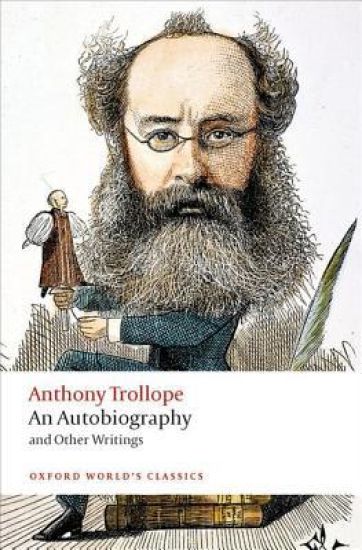
'I hated the office. I hated my work...the only career in life within my reach was that of an author.' The only autobiography by a major Victorian novelist, Trollope's account offers a fascinating insight into his literary life and opinions. After a miserable childhood and misspent youth, Trollope turned his life around at the age of twenty-six. By 1860 the 'hobbledehoy' had become both a senior civil servant and a best-selling novelist. He worked for the Post Office for many years and stood unsuccessfully for Parliament. Best-known for the two series of novels grouped loosely around the clerical and political professions, the Barsetshire and Palliser series, in his Autobiography Trollope frankly describes his writing habits. His apparent preoccupation with contracts, deadlines, and earnings, and his account of the remorseless regularity with which he produced his daily quota of words, has divided opinion ever since. This edition reassesses the work's distinctive qualities and includes a selection of Trollope's critical writings to show how subtle and complex his approach to literature really was. ABOUT THE SERIES: For over 100 years Oxford World's Classics has made available the widest range of literature from around the globe. Each affordable volume reflects Oxford's commitment to scholarship, providing the most accurate text plus a wealth of other valuable features, including expert introductions by leading authorities, helpful notes to clarify the text, up-to-date bibliographies for further study, and much more.