Kirjailija
Anthony Tucker-Jones
Kirjat ja teokset yhdessä paikassa: 63 kirjaa, julkaisuja vuosilta 2009–2027, suosituimpiin kuuluu Rommel's Afrika Korps in Colour. Vertaile teosten hintoja ja tarkista saatavuus suomalaisista kirjakaupoista.
63 kirjaa
Kirjojen julkaisuvuodet: 2009–2027.
Can air power alone win a war? That has been the question since the Second World War. Air attacks failed miserably in Vietnam: Operation Linebacker had little effect, while bombing Hanoi just increased hatred for America – yet air strikes in both Iraq and Libya helped bring about regime changes. No-fly zones may have worked in the Balkans, but they might as well not have been there for Saddam Hussein’s Iraq. From the Luftwaffe’s massed attack on Britain to NATO’s interventions in Libya, aerial warfare has changed almost beyond recognition. The piston engine has been replaced by the jet, and in some cases the pilot has been completely replaced by the microchip. Carpet bombing is now a global positioning system and laser pinpointed strikes using precision-guided munitions. Whereas a bomber’s greatest enemies were once fighters and flak, the threats have now morphed into smart missiles from half a world away. In this compelling study, celebrated defence expert Anthony Tucker-Jones charts the remarkable evolution of aerial warfare from 1940 to the present day.
The second millennium of mankind has been characterised by almost incessant warfare somewhere on the face of the globe. The Art of War in Twenty Battles serves as a snapshot of the development of warfare over the past 1,000 years, illustrating the bravery and suffering mankind has inflicted upon itself in developing what we call the ‘Art of War’. Here military historian Anthony Tucker-Jones selects twenty battles that illustrate the changing face of warfare over the past thousand years – from the Viking shield wall to long bows and knights, the emergence of gunpowder and finally the long-range faceless warfare of today. This is a look at the killing game and its devastating impact.
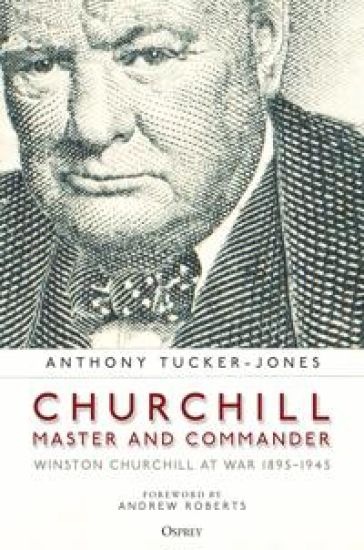
Churchill, Master and Commander
Anthony Tucker-Jones; Andrew Roberts
BLOOMSBURY PUBLISHING PLC
2023
nidottu
'Masterful research, impeccable detail, with a beautifully flowing narrative of which Churchill himself would have been proud.' - Professor Peter Caddick-AdamsFrom his earliest days Winston Churchill was an extreme risk taker and he carried this into adulthood. Today he is widely hailed as Britain’s greatest wartime leader and politician. Deep down though, he was foremost a warlord. Just like his ally Stalin, and his arch enemies Hitler and Mussolini, Churchill could not help himself and insisted on personally directing the strategic conduct of World War II. For better or worse he insisted on being political master and military commander. Again like his wartime contemporaries, he had a habit of not heeding the advice of his generals. The results of this were disasters in Norway, North Africa, Greece and Crete during 1940–41. His fruitless Dodecanese campaign in 1943 also ended in defeat. Churchill’s pig-headedness over supporting the Italian campaign in defiance of the Riviera landings culminated in him threatening to resign and bring down the British Government. Yet on occasions he got it just right: his refusal to surrender in 1940, the British miracle at Dunkirk and victory in the Battle of Britain, showed that he was a much-needed decisive leader. Nor did he shy away from difficult decisions, such as the destruction of the French Fleet to prevent it falling into German hands and his subsequent war against Vichy France. In this fascinating new book, acclaimed historian Anthony Tucker-Jones explores the record of Winston Churchill as a military commander, assessing how the military experiences of his formative years shaped him for the difficult military decisions he took in office. This book assesses his choices in the some of the most controversial and high-profile campaigns of World War II, and how in high office his decision making was both right and wrong.
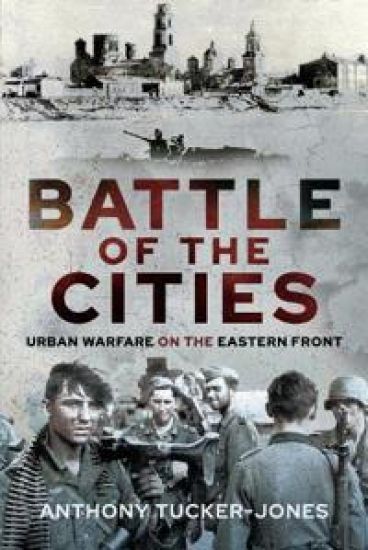
Battle of the Cities
Anthony Tucker-Jones
PEN SWORD BOOKS LTD
2023
sidottu
Halvin toimitettuna 29,20 €
The Stalingrad battle and the Leningrad siege were just two of the brutal, devastating urban conflicts that marked the awful struggle between Germany and the Soviet Union during the Second World War. The cities were strategic fixed points in the sweeping advances and retreats of the opposing armies across eastern Europe. Yet no one has concentrated on these city battles before or has sought to tell the story of the campaigns through the fighting that took place in and around them. That is Anthony Tucker-Jones's purpose in this concise and vivid history of the urban war on the Eastern Front. Early in the war, during the Wehrmacht's crushing offensives of 1941 and 1942, the Red Army was forced out of a series of key cities. Moscow was threatened, Leningrad surrounded. Then, after the climactic battle at Stalingrad, the Red Army with increasing confidence, speed and power drove the Germans from the Soviet and East European capitals they had occupied. The final urban battles were fought in Germany's cities, culminating in Berlin. As he traces the course of the fighting for each city, Anthony Tucker-Jones looks at the local circumstances, the opposing forces, the strategic significance and the tactics employed. He focuses not only on the destruction and cruelty of such warfare, but on the heroism displayed on both sides and on the fate of the civilians who found themselves on the front line.
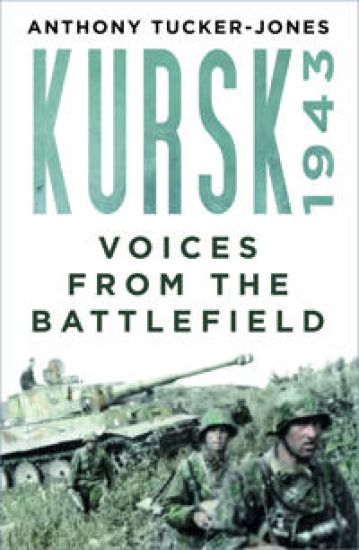
In 1943, as war raged along the Eastern Front, the German forces attempted to push further east in the brutal Operation Citadel, which saw one of the largest armoured clashes in history: the Battle of Prokhorovka. Countered by two Soviet attacks, this operation saw the tide turn on the Eastern Front. For the first time a German offensive was halted in its tracks and the Soviets ended the conflict as the decisive victors. With a loss of over 200,000 men on both sides, this two-month clash was one of the costliest of the war. In this dramatic study, Anthony Tucker-Jones reassesses this decisive tank battle through the eyes of those who fought, using translated first-person accounts. Kursk 1943 is one volume that no military history enthusiast should be without.
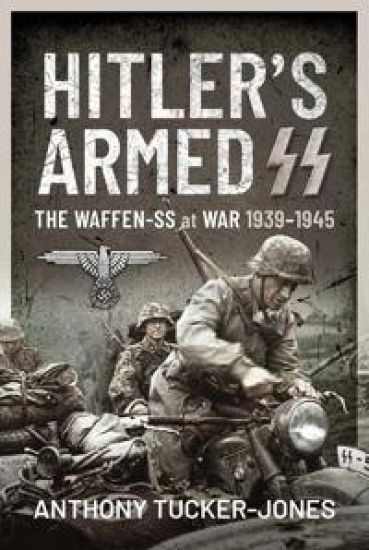
The Waffen-SS was one of the most formidable German military formations of the Second World War - feared for its tenacity and ruthlessness in battle, notorious for the atrocities it committed. As a distinct fighting force derived from the Nazi Party's SS organization, it stood apart from the other units of the German army. Its origins, structure and operational role during the war are often misunderstood and the controversy still surrounding its conduct make it difficult today to get an accurate picture of its actions and its impact on the fighting. Anthony Tucker-Jones, in this concise and fluently written account, provides an absorbing and clear sighted introduction to it. He traces its development under Himmler from modest beginnings in the early 1930s as Hitler's personal protection squad of elite soldiers to a force which eventually amounted to thirty-eight divisions. Towards the end of the war many Waffen-SS units were formed from foreign volunteers and proved to be of poor quality, but its premier panzer divisions thoroughly deserved their reputation as tough fighters. Through accounts of the Waffen-SS's major battles on the Eastern Front, in Normandy and finally in defence of Germany, a detailed picture emerges of the contribution it made to the German war effort, especially when Hitler's armies were in retreat. The parts played by the most famous Waffen-SS formations - Das Reich, Totenkopf, Leibstandarte SS Adolf Hitler among them - and their commanders - men like Dietrich and Hausser - can be seen in the wider context of the war and Germany's defeat.
Hitler’s Winter
Anthony Tucker-Jones; Professor Peter Caddick-Adams
BLOOMSBURY PUBLISHING PLC
2022
sidottu
Halvin toimitettuna 33,90 €
‘What a brilliant book this is… a terrific narrative of Hitler’s Ardennes offensive of December 1944 – superb storytelling that achieves a skilful balance between drama and detail.’ - James HollandThe Battle of the Bulge was the last major German offensive in the West. Launched in the depths of winter to neutralize the overwhelming Allied air superiority, three German armies attacked through the Ardennes, the weakest part of the American lines, with the aim of splitting the Allied armies and seizing the vital port of Antwerp within a week. It was a tall order, as the Panzers had to get across the Our, Amblève, Ourthe and Meuse rivers, and the desperate battle became a race against time and the elements, which the Germans would eventually lose. But Hitler’s dramatic counterattack did succeed in catching the Allies off guard in what became the largest and bloodiest battle fought by US forces during the war. In this book, Anthony Tucker-Jones tells the story of the battle from the German point of view, from the experiences of the infantrymen and panzer crewmen fighting on the ground in the Ardennes to the operational decisions of senior commanders such as SS-Oberstgruppenführer Josef ‘Sepp’ Dietrich and General Hasso von Manteuffel that did so much to decide the fate of the offensive. Drawing on new research, Hitler’s Winter provides a fresh perspective on one of the most famous battles of World War II.
The Devil's Bridge
Anthony Tucker-Jones; Professor Peter Caddick-Adams
Osprey Publishing
2022
nidottu
In the late summer of 1944, SS-Obergruppenführer Wilhelm ‘Willi’ Bittrich found himself in the Netherlands surveying his II SS Panzer Corps, which was in a poor state having narrowly escaped the defeat in Normandy. He was completely unaware that his command lay directly in the path of a major Allied thrust: the 17 September 1944 launch of the largest airborne and glider operation in the history of warfare. Codenamed Operation Market Garden, it was intended to outflank the German West Wall and ‘bounce’ the Rhine at Arnhem, from where the Allies could strike into the Ruhr, Nazi Germany’s industrial heartland. Such a move could have ended the war. However, Market Garden and the battle for Arnhem were a disaster for the Allies. Put together in little over a week and lacking in flexibility, the operation became an all-or-nothing race against time. The plan to link the airborne divisions by pushing an armoured division up a sixty-five-mile corridor was optimistic at best, and the British drop zones were not only too far from Arnhem Bridge, but also directly above two recuperating SS Panzer divisions. This new book explores the operation from the perspective of the Germans as renowned historian Anthony Tucker-Jones examines how they were able to mobilise so swiftly and effectively in spite of depleted troops and limited intelligence.
As Anthony Tucker-Jones shows in this highly illustrated, wide-ranging history, for most of the Cold War the tank retained its pre-eminence on the battlefield. The Arab-Israeli wars witnessed some of the biggest tank battles of all time, and tanks played key roles in conflicts in Korea, Vietnam and Afghanistan as well as in the Iran-Iraq War and the wars fought between India and Pakistan. But then in the mid-1960s anti-tank weapons became ever deadlier and the Mechanised Infantry Fighting Vehicle (MIFV), which was designed to support infantry and fight tanks, emerged and the heyday of the tank was over. Chapters cover each major phase in the evolution of the tank and of tank warfare during the period, from the battles fought in the late 1940s and 1950s with Second World War armoured vehicles like the T-34 and the Sherman, through to the designs common in the 1960s and 1970s like the T-55, Centurion, Challenger and M60 Patton, to the confrontation between the M1 Abrams and the T-72 during the Gulf War in 1991\. Technical and design developments are important elements throughout the story, but so are dramatic changes in tactics and armaments which mean the tank has an increasingly uncertain role in modern warfare.
Radio Operator on the Eastern Front
Erhard Steiniger; Anthony Tucker-Jones
Greenhill Books
2021
sidottu
This is the true and dramatic testimony of a German grenadier during World War II. Erhard Steiniger joined his Wehrmacht unit on 12 October 1940 as a radio operator, a role which required his constant presence with troops at the Front, right in the midst of combat. On 22 June 1941, he accompanied his division to Lithuania where he experienced the catastrophic first day of Operation Barbarossa. He later witnessed intense clashes during the conquest of the Baltic islands and the battles leading up to Leningrad on the Volkhov and Lake Ladoga. He describes the retreat from battles in Estonia, Kurland and East Prussia and his eventual surrender and captivity in Siberia. He finally returned to Germany in October 1949, a broken man. From the first page to the last, this is a captivating eyewitness account of the horrors of war.
Stalin's purge of army officers in the late 1930s and disputes about tank tactics meant that Soviet armoured forces were in disarray when Hitler invaded in 1941\. As a result, during Operation Barbarossa, the Wehrmacht's 3,200 panzers ran circles round the Red Army's tank force of almost 20,000 - thousands of Soviet tanks were disabled or destroyed. Yet within two years of this disaster the Red Army's tank arm had regained its confidence and numbers and was in a position to help turn the tide and liberate the Soviet Union. This is the remarkable story Anthony Tucker-Jones relates in this concise, highly illustrated history of the part played by Soviet armour in the war on the Eastern Front. Chapters cover each phase of the conflict, from Barbarossa, through the battles at Moscow, Stalingrad and Kursk to the massive, tank-led offensives that drove the Wehrmacht back to Berlin. Technical and design developments are covered, but so are changes in tactics and the role of the tanks in the integrated all-arms force that crushed German opposition.
During the first years of the Second World War, Allied forces endured a series of terrible defeats at the hands of the Germans, Italians and Japanese. Their tanks were outclassed, their armoured tactics were flawed. But the advent of new tank designs and variants, especially those from the United States, turned the tables. Although German armour was arguably still superior at the end of the war, the competence of Allied designs and the sheer scale of their production gave them a decisive advantage on the armoured battlefield. This is the fascinating story that Anthony Tucker-Jones tells in this book which is part of a three-volume history of armoured warfare during the Second World War. Chapters cover each major phase of the conflict, from the early blitzkrieg years when Hitler's panzers overran Poland, France and great swathes of the Soviet Union to the Allied fight back in tank battles in North Africa, Italy and northern Europe. He also covers less-well-known aspects of the armoured struggle in sections on Allied tanks in Burma, India and during the Pacific campaign. Technical and design developments are a key element in the story, but so are changes in tactics and the role of the tanks in the integrated all-arms forces that overwhelmed the Axis.
During the Second World War five brutal battles were fought in and around Warsaw. Each proved to be dramatic, decisive and bloody, and in this volume of the Images of War series Anthony Tucker-Jones records them all in graphic detail. The first occurred in 1939 when the Polish army was defeated by the German invaders, and five years of occupation followed. The second was sparked by the Jewish Ghetto Uprising in 1943 which was ruthlessly suppressed by 1,200 SS troops and led to the deaths of 13,000 people. In the third the Red Army's advance was beaten back at the gates of the city in the summer of 1944 and the fourth was fought at the same time when the Nazis crushed the rising of the Polish Home Army and sought to destroy the city in an act of revenge. The failure of the rising consigned the country to decades of communist rule. The photographs and the detailed narrative give the reader a powerful impression of the experience of the people of Warsaw during this tragic period in their history and document the widespread devastation the fighting left in its wake.
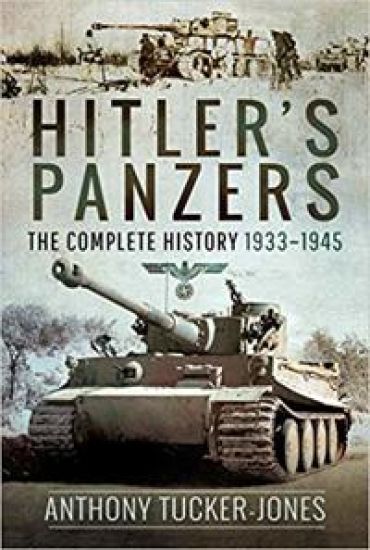
Often it is assumed that Hitler's panzers stormed into action perfectly formed, driving through the armies of the Poles in 1939 and the French in 1940 and defeating them. The dramatic blitzkrieg victories won by the Wehrmacht early in the Second World War - in which the panzers played a leading role - tend to confirm this impression. But, as Anthony Tucker-Jones demonstrates in this illustrated, comprehensive and revealing history of the panzers, this is far from the truth. As armoured fighting vehicles the early panzers were no better than - sometimes inferior to - those of their opponents, but their tactics rather than their technology gave them an advantage. Later on German tank designers developed technically superior tanks but these could not be built fast enough or in sufficient numbers. For all their excellence, they were overwhelmed by the American Shermans and Soviet T-34s that were produced in their tens of thousands. This is the story Anthony Tucker-Jones relates as he traces the evolution of the panzers from the modest beginnings in the 1930s to the Panzer IVs, Panthers and Tigers which were the most formidable German tanks of the war. Not only does he cover their design and production history, he also assesses their combat performance and gives a fascinating insight into the decision-making at the highest level which directed German tank design.
Tiger I and Tiger II
Anthony Tucker-Jones
Pen Sword Military
2019
nidottu
Halvin toimitettuna 32,90 €
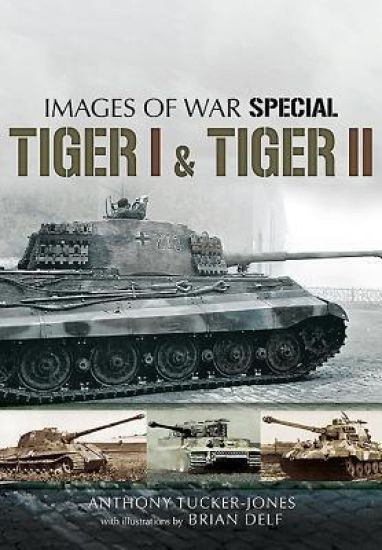
The German Tiger I and Tiger II (known to the Allies as the 'King Tiger' or 'Royal Tiger') were the most famous and formidable heavy tanks of the Second World War. In their day their awesome reputation inspired such apprehension among Allied soldiers that the weaknesses of these brilliant but flawed designs tended to be overlooked. Anthony Tucker-Jones, in this illustrated history, tells the story of their conception and development and reconsiders their operational history, and he dispels the legends and misunderstandings that have grown up around them. The Tigers were over-engineered, required raw materials that were in short supply, were time-consuming to manufacture and difficult to recover from the battlefield. Only around 1,300 of the Tiger I and fewer than 500 of the Tiger II were produced, so they were never going to make anything more than a local impact on the outcome of the fighting on the Western and Eastern fronts. Yet the myth of the Tigers, with their 88mm guns, thick armour and brutal profiles, has grown over time to the extent that they are regarded as the deadliest tanks of the Second World War. Anthony Tucker-Jones's expert account of these remarkable fighting vehicles is accompanied by a series of colour plates showing the main variants of the designs and the common ancillary equipment and unit markings. His book is an essential work of reference for enthusiasts.
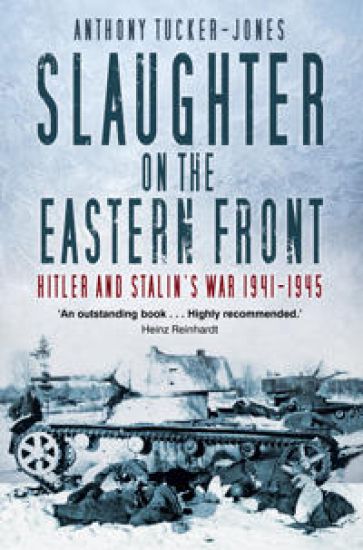
In the summer of 1941, a collective madness overtook Adolf Hitler and his senior generals. They convinced themselves that they could take on and defeat a superpower in the making – the Soviet Union. Foolishly, they thought in a swift campaign they could smash the Red Army and force Stalin to sue for peace, despite dire warnings that Stalin was amassing a reserve army of more than 1 million men on the Volga. The end result would be such carnage that it would tear the German forces apart. In his major reassessment of the war on the Eastern Front, Anthony Tucker-Jones casts new light on the brutal fighting, including such astounding German defeats as at Stalingrad, Kursk, Minsk and, finally, Berlin. He controversially contends that from the very start intelligence officers on both sides failed to influence their leadership resulting in untold slaughter. He also reveals the shocking blunders by Hitler, Stalin and even Churchill that led to the appalling, needless destruction of Hitler’s armed forces as early as the winter of 1941–42. Step by step, Tucker-Jones describes how the German war machine fought to its very last against a relentless enemy, fully aware that defeat was inevitable.
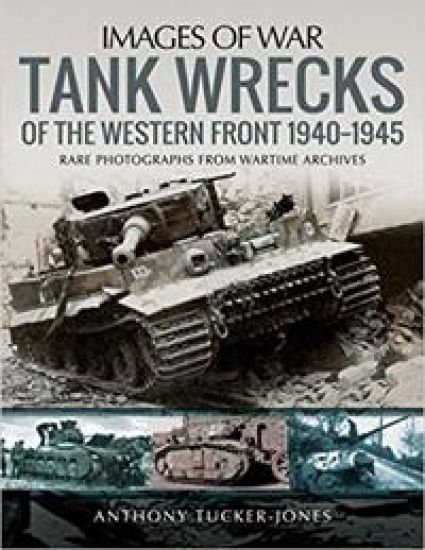
Early in the Second World War in Western Europe the German victors regularly photographed and posed with destroyed or abandoned Allied armour. During their invasion of France the Germans left 4,500 smashed French tanks in their wake, and these were a popular subject for their photographs. Then, when the tide of the war turned against them in 1944-5, their wrecked and burnt-out panzers were photographed by the victorious Allies during the key battles for Normandy and the Ardennes. These wartime photographers created an extraordinary record of the many thousands of tank wrecks that littered the battlefields, and Anthony Tucker-Jones has selected a fascinating visual guide to the fate of the numerous types of tank employed by the American, British, French and German armies throughout the conflict. All the principal tanks are represented - Renaults, Matildas, Churchills, Shermans, Panzer IVs, Panthers and Tigers along with many others - so the book gives an insight into the rapid development of tank design during the war. It also shows how vulnerable these armoured vehicles were - and how lethal they could be for their crews - when they were hit by anti-tank guns and air attacks. Tanks Wrecks of the Western Front will be absorbing reading and reference for anyone who is interested in the history of armoured warfare, and it will be a useful visual guide for modellers.
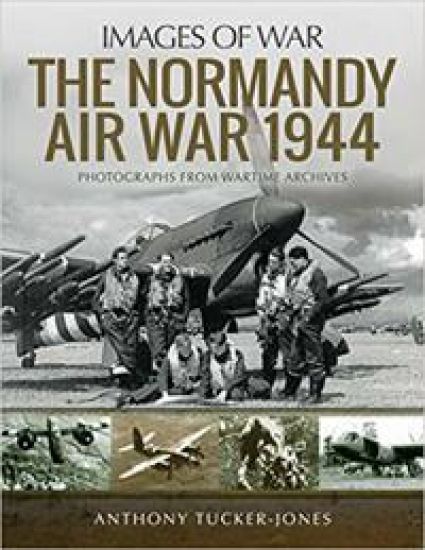
The support provided by the Allied air armies to the preparations for the invasion of France and the Normandy campaign is overshadowed by the dramatic and protracted fighting on the ground. Yet the air campaign played a key role in blinding and isolating German forces in northern France in the months preceding the D-Day landings. These Allied air forces then supported the Allied armies as they pushed inland, most notably by hampering the march of Hitler's panzer divisions and controversially bombing the ancient Norman cities of Caen and Rouen. Anthony Tucker-Jones's photographic history is a vivid introduction to this enormous Allied air offensive and illustrates the many famous types of aircraft employed by the RAF, USAAF and Luftwaffe. Shots of the Allied bombers - Halifax, Lancaster, Fortress, Liberator, Havoc and Marauder - and the fighters and fighter-bombers - Lightning, Thunderbolt, Mustang, Spitfire and Typhoon - dominate the selection. Shots of the German warplanes are rarer because the Luftwaffe was overwhelmed by Allied air superiority. These images of the air war over northern France bring home in a graphic way the nature and conditions of combat flying over seventy years ago, and they emphasize the contribution of air power to the campaign.
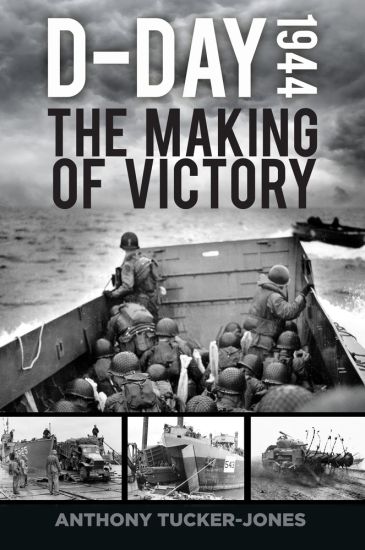
D-Day was unprecedented. An invasion of this scale and magnitude had never been carried out before. The landings in North Africa, Sicily and Italy were of limited scope by comparison; if they had failed it would not have been a complete disaster, whereas Normandy heralded the long-awaited Second Front. D-Day 1944: The Making of Victory investigates the great feats of unique problem-solving that enabled the success of such an important invasion. Military historian Anthony Tucker-Jones brings his expert eye to bear on the D-Day landings and subsequent Normandy campaign. He reassesses the technical ingenuity required through the eyes of those who fought there, and vividly reveals how each side managed, whether dealing with the challenges of crossing the Channel safely or in defence of the French coast. Including first-hand accounts, this book places the reader in the thick of the action.