Kirjojen hintavertailu – 12 903 735 kirjaa ja 27 kauppaa

Kirjailija

Anthony Tucker-Jones

Kirjat ja teokset yhdessä paikassa: 63 kirjaa, julkaisuja vuosilta 2009–2027, suosituimpiin kuuluu Rommel's Afrika Korps in Colour. Vertaile teosten hintoja ja tarkista saatavuus suomalaisista kirjakaupoista.

63 kirjaa

Kirjojen julkaisuvuodet: 2009–2027.

The Battle for Arnhem 1944-1945

The Battle for Arnhem 1944-1945

Anthony Tucker-Jones

Pen Sword Military
2019
nidottu
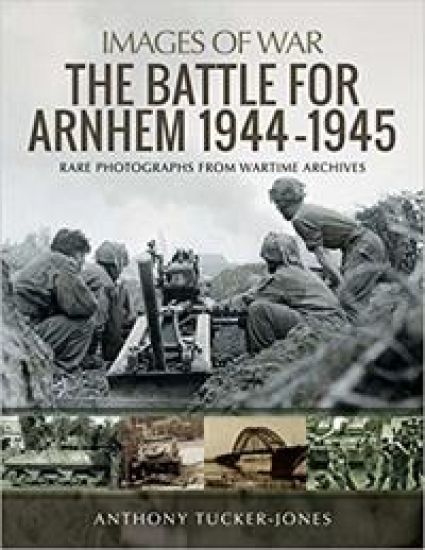
Operation Market Garden, September 1944, the Netherlands. Three parachute drops and one armoured charge. The prize was the last bridge at Arnhem over the Neder Rijn. Taken intact it would provide the Allies with a back door into Germany - the famous Bridge Too Far'. This was one of the most audacious and imaginative operations of the war, and it failed, and Anthony Tucker-Jones's photographic history is a vivid introduction to it. In a sequence of almost 200 archive photographs accompanied by a detailed narrative he describes the landing of British and American parachutists and glider troops. At the same time British tanks spearheaded a sixty-mile dash along Hell's Highway' to link up with the lightly armed and heavily outnumbered airborne forces. Most books about the resulting battle concentrate on the struggle at Arnhem and the heroism of the British 1st Airborne Division. This book puts that episode in its wider context. In particular it focuses on the efforts of the US 101st and 82nd airborne divisions to hold off counterattacks by German battlegroups during the tanks' advance. The photographs give a dramatic insight into all sides of a remarkable but ill-fated operation which has fascinated historians and been the subject of controversy ever since. They also portray, as only photographs can, the men who were involved and the places and conditions in which the fighting took place.
The Desert Air War 1940-1943

The Desert Air War 1940-1943

Anthony Tucker-Jones

Pen Sword Military
2018
nidottu
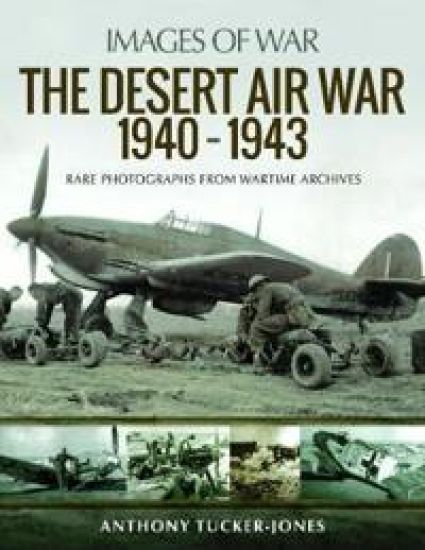
The war in air over North Africa and the Mediterranean during the Second World War has long been overshadowed by the battle on the ground. Between 1940 and 1943 Italy's Regia Aeronautica and then Germany's Luftwaffe waged a concerted aerial campaign against the British, yet apart from the bitter fight for Malta, this aspect of the conflict is rarely given the attention it deserves. Anthony Tucker-Jones, in this vivid photographic history, provides a fascinating introduction to it. The wartime photographs, and the concise text, cover the entire course of the struggle in the air. The Regia Aeronautica at first met weak British opposition when Mussolini launched his ill-advised offensive against British-controlled Egypt, but the obsolete Italian aircraft proved to be no match for the Allied fighters once the strength of the Royal Air Force built up. Then, when Hitler stepped in to help his hapless ally, the aerial struggle intensified, and the air forces of both sides were locked in deadly combat in the skies over Egypt, Libya, the Mediterranean and Tunisia. The wide range of Italian, British, German and American aircraft involved, the air and ground crews from all sides, and the conditions in which they operated and fought are all shown in this varied selection of photographs.
Spitfire to Reaper

Spitfire to Reaper

Anthony Tucker-Jones

The History Press Ltd
2018
nidottu
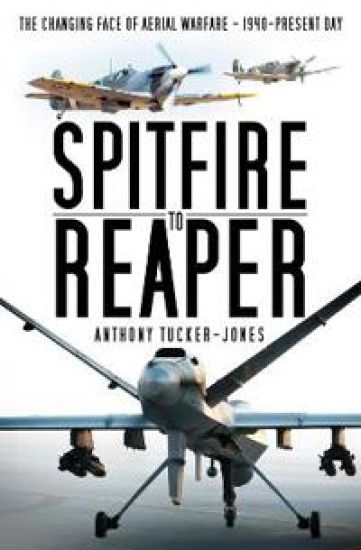
Can air power alone win a war? That has been the question since the Second World War. Air attacks failed miserably in Vietnam: Operation Linebacker had little effect, while bombing Hanoi just increased hatred for America – yet air strikes in both Iraq and Libya helped bring about regime changes. No-fly zones may have worked in the Balkans, but they might as well not have been there for Saddam Hussein’s Iraq. From the Luftwaffe’s massed attack on Britain to NATO’s interventions in Libya, aerial warfare has changed almost beyond recognition. The piston engine has been replaced by the jet, and in some cases the pilot has been completely replaced by the microchip. Carpet bombing is now a global positioning system and laser pinpointed strikes using precision-guided munitions. Whereas a bomber’s greatest enemies were once fighters and flak, the threats have now morphed into smart missiles from half a world away. In this compelling study, celebrated defence expert Anthony Tucker-Jones charts the remarkable evolution of aerial warfare from 1940 to the present day.
Armoured Warfare in the Battle of the Bulge 1944-1945

Armoured Warfare in the Battle of the Bulge 1944-1945

Anthony Tucker-Jones

Pen Sword Military
2018
nidottu
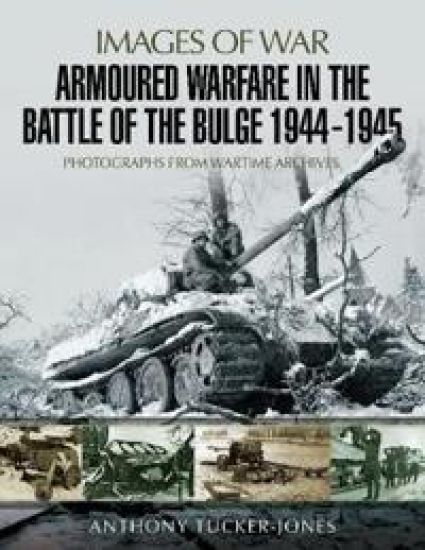
The Battle of the Bulge took the Allied armies by surprise in 1944\. It was a result of the extraordinary recovery of Hitler's panzer divisions following crushing defeats on the Eastern and Western fronts. In a daring offensive he hoped his panzers would unhinge the American and British push on the Rhine by charging through the Schnee Eifel, thereby prolonging the war. The consequence was one of the best-known battles of the entire conflict, and Anthony Tucker-Jones's photographic history is the ideal introduction to it. The story is told through a sequence of revealing contemporary photographs and a concise text. They give a sharp insight into the planning and decision-making, the armoured forces involved, the terrain and the appalling mid-winter conditions, the front-line fighting and the experience of the troops involved. The armoured battle, which was critical to the outcome, is the main focus. Through a massive tank offensive the Germans aimed to cut through the US 1st Army to Antwerp and Brussels, in the process trapping three Allied armies. The confusion and near collapse of the Americans as their defences were overrun is vividly recorded in the photographs, as is their resistance and recovery as the German spearheads were slowed, then stopped.
Panzer I and II: The Birth of Hitler's Panzerwaffe

Panzer I and II: The Birth of Hitler's Panzerwaffe

Anthony Tucker-Jones

Pen Sword Military
2018
nidottu
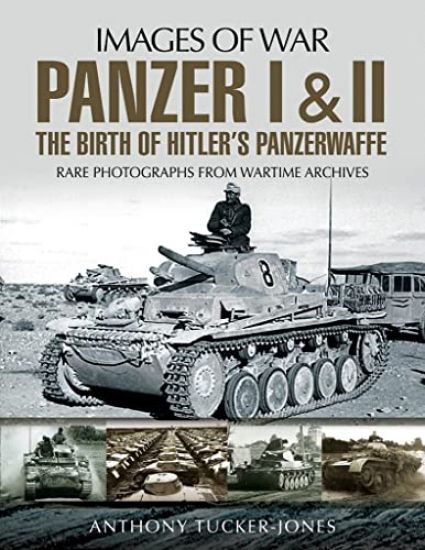
While the Panzer I and II are not as famous as the German tanks produced later in the Second World War, they played a vital role in Hitler's early blitzkrieg campaigns and in the Nazi rearmament programme pursued, at first in secret, by the Nazi regime during the 1930s. Anthony Tucker-Jones's photographic history of their design, development and wartime service is an ideal introduction to them. Both panzers saw combat during the invasions of Poland and France, the Low Countries and Scandinavia during 1939-40. Although by the time the Wehrmacht invaded the Soviet Union in 1941, the Panzer I had been virtually phased out of service, in the form of self-propelled guns they continued to see combat well into 1943. The Panzer II was also phased out with the panzer regiments in late 1943, yet it remained in action on secondary fronts and, as the self-propelled Marder II anti-tank gun and Wespe artillery variant, it saw active service with the panzer and panzer grenadier divisions until the end of the war. The Panzer I and II were the precursors of the formidable range of medium and heavy tanks that followed-the Panzer III and IV and the Panther and Tiger-and this book is a fascinating record of them.
Iran-Iraq War

Iran-Iraq War

Anthony Tucker-Jones

Pen Sword Military
2018
nidottu

Halvin toimitettuna 23,70 €

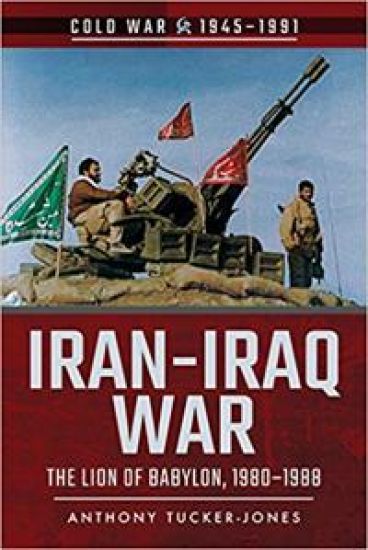
The bloody eight-year Iran-Iraq war is now almost forgotten, overshadowed by the subsequent Gulf War and Iraq War. However, it is best remembered for the unique so-called 'Tanker War' which threatened to strangle the world's oil supplies. At the time Tucker-Jones as a defence analyst wrote extensively on the war and now brings his expertise to bear with this account of a conflict fuelled by festering regional rivalries, the Cold War and the emerging threat posed by militant Shia Islam. Fought on land, at sea and in the air using some of the most modern weapons money could buy, Western-backed Saddam Hussein's Sunni Iraq and Shia Iran under the ayatollahs fought themselves to a standstill. Once Saddam's armoured blitzkrieg had been halted and Iran's human-wave counterattacks fought off, it became a war of attrition with major battles fought for the possession of Khorramshahr and Basra. Both sides resorted to chemical weapons and bombarding each other with missiles. When the war spilled over into the waters of the Gulf it sparked open Western intervention. Escalating attacks on oil tankers finally culminated in a ceasefire.
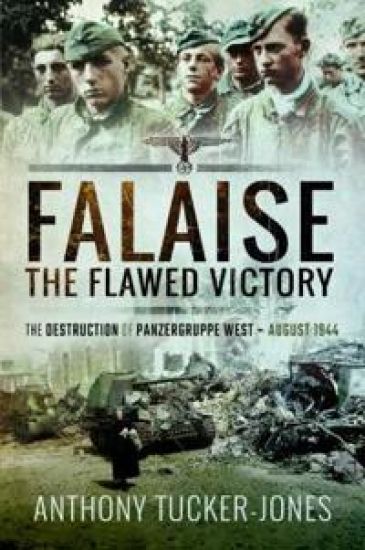
Falaise: The Flawed Victory

Falaise: The Flawed Victory

Anthony Tucker-Jones

Pen Sword Military
2018
nidottu
The destruction of the trapped German forces in the Falaise pocket in August 1944 is one of the most famous episodes of the Normandy campaign. But myths have grown up around accounts of the battle, and its impact on the course of the war is sometimes misunderstood. In this meticulously researched and perceptive study Anthony Tucker-Jones dispels misconceptions about the battle, describes the combat in graphic detail and reassesses the outcome in the context of the campaign to liberate Europe. He takes a broad view of the sequence of operations that culminated in the battle at Falaise, tracing the course of the campaign mainly from the panzers' viewpoint. For two bloody months the panzers held the Allies at bay following the D-Day landings, but then they were blocked in at Falaise and the area became a killing ground. Some liken the event to Hitler's defeat at Stalingrad, while others argue the victory was flawed because so many German troops escaped.
Tank Wrecks of the Eastern Front 1941 - 1945

Tank Wrecks of the Eastern Front 1941 - 1945

Anthony Tucker-Jones

Pen Sword Military
2018
nidottu
Four years of armoured battle on the Eastern Front in the Second World War littered the battlefields with the wrecks of destroyed and disabled tanks, and Anthony Tucker-JonesOs photographic history is a fascinating guide to them. It provides a graphic record of the various types of tank deployed by the Red Army and the Wehrmacht during the largest and most destructive confrontation between mechanized armies in military history. During the opening stages of the war the German victors regularly photographed and posed with destroyed Soviet armour. Operation Barbarossa left 17,000 smashed Soviet tanks in its wake, and the heavy and medium tanks such as the T-28, T-35, KV-1 and the T-34 proved to be a source of endless interest. Once the tide turned it was the turn of wrecked and burnt-out panzers D the Mk IVs, Tigers and Panthers D to be photographed by the victorious Red Army. As well as tracing the entire course of the war on the Eastern Front through the trail of broken armour, the photographs provide a wide-ranging visual archive of the tank types of the period that will appeal to everyone who is interested in tank warfare and to modellers and wargamers in particular.
Dien Bien Phu

Dien Bien Phu

Anthony Tucker-Jones

Pen Sword Military
2017
nidottu
When the world held its breath It is 25 years since the end of the Cold War, now a generation old. It began over 75 years ago, in 1944 long before the last shots of the Second World War had echoed across the wastelands of Eastern Europe with the brutal Greek Civil War. The battle lines are no longer drawn, but they linger on, unwittingly or not, in conflict zones such as Iraq, Somalia and Ukraine. In an era of mass-produced AK-47s and ICBMs, one such flashpoint was French Indochina At the end of the Second World War France sought to reassert its military prestige, but instead suffered humiliating defeat at Dien Bien Phu in French colonial Indochina. The First Indochina war became a textbook example of how not to conduct counter-insurgency warfare against nationalist guerrillas. Anthony Tucker-Jones guides the reader through this decisive conflict with a concise text and contemporary photographs, providing critical insight into the conduct of the war by both sides and its wider ramifications. The Viet Minh, after resisting the Japanese in Indochina, sought independence for Vietnam from France. The French, with limited military resources, moved swiftly to reassert control in 1945, sparking a decade-long conflict. French defence of Hanoi rested on holding the Red River Delta, making it a key battleground. When the Viet Minh invaded neighboring Laos the French deployed to fight a set-piece battle at Dien Bien Phu, in 1954, but instead were trapped. All relief attempts failed and French defences were slowly overwhelmed. America considered coming to the garrison s rescue using nuclear weapons, but instead left it to its fate, which set the scene for the Algerian and the Vietnam conflicts.
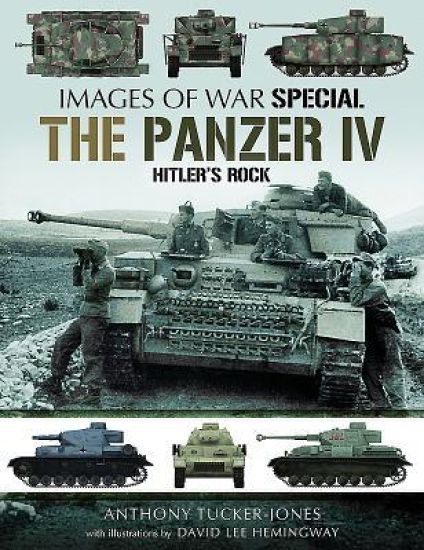
Panzer IV: Hitler's Rock

Panzer IV: Hitler's Rock

Anthony Tucker-Jones

Pen Sword Military
2017
nidottu
The Panzerkampfwagen Mk IV proved to be the one constant in Hitler's Panzerwaffe throughout the Second World War - the German equivalent of the American Sherman and the Soviet T-34. In this companion volume to his best-selling visual histories of the Tiger and Panther tanks, Anthony Tucker-Jones provides a concise account of the Mk IV's design, development and performance in combat. The Mk IV served on every major front, in France, the Balkans, North Africa, the Soviet Union and, at the end of the war, in Germany itself - it was a key weapon in the blitzkrieg attacks launched early in the war and in the later desperate defence of the Reich. Using over 150 rare wartime photographs, plus a selection of specially commissioned colour, he describes how the initial design of the Mk IV was modified and refined throughout the course of the conflict to counter the threats posed by ever more formidable Allied tanks and anti-tank guns on the battlefield. While the Mk IV was never produced in the same numbers as the leading Allied tanks, it was without doubt one of the principal armoured vehicles of the Second World War, and Anthony Tucker-Jones's highly illustrated history is the ideal introduction to it.
German Assault Guns and Tank Destroyers 1940 - 1945

German Assault Guns and Tank Destroyers 1940 - 1945

Anthony Tucker-Jones

PEN SWORD BOOKS LTD
2017
nidottu
The assault guns and tank destroyers deployed by the Wehrmacht during the Second World War are not as famous as tanks like the Tiger and Panther, but they were remarkably successful, and they are the subject of Anthony Tucker-Jones's wide-ranging photographic history. As the conflict progressed, the German army had to find a use for its obsolete panzers, and this gave rise to the turretless Sturmgeschutz or assault guns designed for infantry support. From 1944 onwards they played a vital role in Nazi Germany's increasingly defensive war. A selection of rare wartime photographs shows the variety of turretless armoured fighting vehicles that were produced and developed - various models of the Sturmgeschutz III, the Sturmhaubitze, Jagdpanzer, Panzerjager, Marder, Hetzer. Often a lack of tanks meant that these armoured vehicles were called on to fill the panzer's role, and they proved ideal during the Germans' defensive battles on the Eastern Front as well as in Italy and Normandy - they were instrumental in delaying Germany's defeat. This highly illustrated account provides is a fascinating introduction to one of the less well-known aspects of armoured warfare during the Second World War.
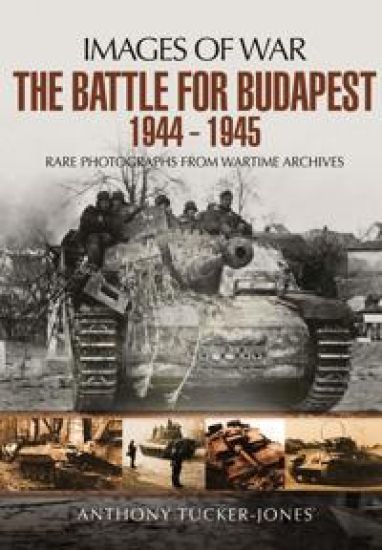
Battle for Budapest 1944 - 1945

Battle for Budapest 1944 - 1945

Anthony Tucker-Jones

PEN SWORD BOOKS LTD
2017
nidottu

Halvin toimitettuna 26,90 €

The desperate struggle between the Wehrmacht and the Red Army for Budapest in 1944 and 1945 was as lethal and destructive as any of the urban battles fought during the Second World War. The losses of men and equipment sustained by the Germans were so great that they hastened the collapse of Hitler's regime. Yet what happened in Budapest is less well remembered today than other flashpoints in the conflict on the Eastern Front. Anthony Tucker-Jones's photographic history is a fascinating and graphic introduction to this neglected episode in the closing months of the war. The battle began with Operation Panzerfaust in October 1944 when the Germans seized Hungarian leader Admiral Horthy to prevent his country defecting to the Soviets. Red Army advances then left German and Hungarian units trapped in the city and sparked fifty days of intense fighting. Then in March 1945 Hitler launched Operation Spring Awakening, the reckless final German offensive of the war, designed to recapture Budapest and stabilize the Eastern Front. It failed spectacularly, opening the road to Vienna for the Red Army. The selection of archive photographs gives a sharp insight into every aspect of the fighting in and around Budapest and records the ravaged city the battle left behind.
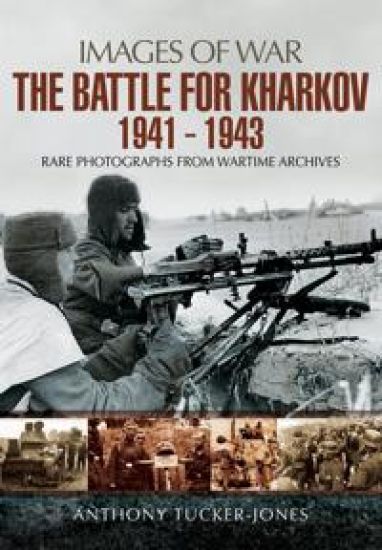
Battle for Kharkov 1941 - 1943

Battle for Kharkov 1941 - 1943

Anthony Tucker-Jones

PEN SWORD BOOKS LTD
2016
nidottu
The four battles fought for Kharkov during the Second World War are often overshadowed by the battles for Moscow, Leningrad and Stalingrad, yet they were critical stages in the struggle between the Wehrmacht and the Red Army for control of the southern Soviet Union. Anthony Tucker-Jones, in this volume in the Images of War series, offers a visual record of the dramatic and bloody conflict that took place there, showing every grim aspect of the fighting. Kharkov became one of the most bitterly contested cities during the war on the Eastern Front, and this book presents a graphic overview of the atrocious conditions the soldiers on both sides had to endure. In 1941 Kharkov fell to Hitler's Army Group South. In 1942 the Soviets tried and failed to retake it, losing 240,000 men in the Barvenkovo Bulge. Then, in 1943, the control of the battered city changed hands twice before the Soviets liberated it for good. The fate of Kharkov during the war reflects the history of the wider struggle between Hitler's Germany and Stalin's Soviet Union.
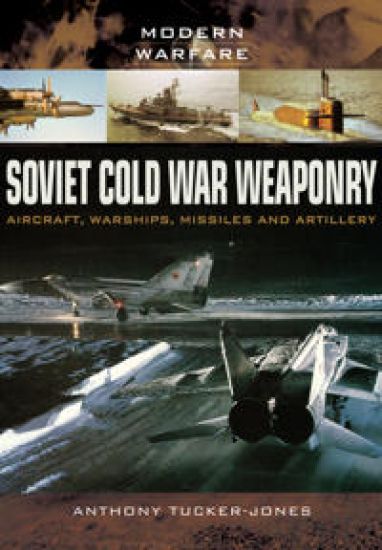
Soviet Cold War Weaponry: Aircraft, Warships and Missiles

Soviet Cold War Weaponry: Aircraft, Warships and Missiles

Anthony Tucker-Jones

Pen Sword Aviation
2016
nidottu
In this companion volume to his photographic history of Soviet tanks and armoured vehicles, Anthony Tucker-Jones provides a visual guide to the vast array of aircraft, warships and missiles the Soviet armed forces deployed at the height of the Cold War. Although the superpowers never came to blows, the so-called 'Cold War' was far from cold, with numerous 'hot' proxy wars being fought in Africa and the Middle East. All these conflicts employed Soviet weaponry which has been captured in action in the colour and black-and-white photographs selected for this book. Between the 1950s and 1980s Soviet and Warsaw Pact countries churned out thousands of weapons ready for the Third World War. They also embarked on a technological arms race with NATO in an attempt to counter each new piece of equipment as it appeared. The MiG fighters, the Badger and Backfire bombers, the nuclear submarines have achieved almost iconic status, but, as Anthony Tucker-Jones's book shows, there was much more to the Soviet armoury than these famous weapons. Much of it, despite its age, remains in service with armies, guerrilla forces and terrorist organizations around the world today.
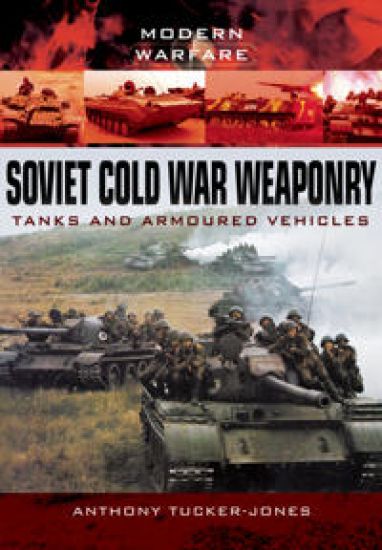
Soviet Cold War Weaponry: Tanks and Armoured Vehicles

Soviet Cold War Weaponry: Tanks and Armoured Vehicles

Anthony Tucker-Jones

Pen Sword Military
2015
nidottu
The T-54, T-62 and T-72 main battle tanks along with the personnel carriers, assault guns, self-propelled guns and anti-tank missiles that are illustrated in this photographic history represent the high point in the design and manufacture of armoured vehicles by the Soviet Union during the Cold War. Although the superpowers never came to blows, the 'Cold War' was far from cold, as numerous 'hot' proxy wars were fought in Africa and the Middle East, and these conflicts employed the Soviet weaponry that is shown in action in the colour and black-and-white photographs selected for this book. Between the 1950s and 1980s Soviet and Warsaw Pact countries produced thousands of tanks and armoured vehicles ready for the Third World War. They embarked on a technological arms race with the NATO allies in an attempt to counter each new piece of equipment as it appeared in service. Much of this Soviet weaponry has achieved almost iconic status and, despite its age, remains in service with armies, guerrilla forces and terrorist organizations around the world today. It is also of enduring interest to collectors, re-enactors and modellers who are fascinated by the military equipment of the late twentieth century.
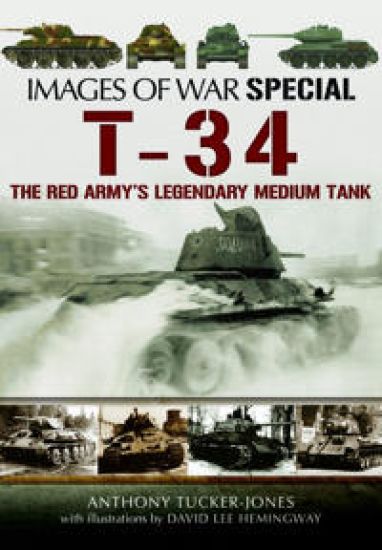
T-34

T-34

Anthony Tucker-Jones

Pen Sword Military
2015
nidottu
It could be said that the T-34 was the tank that won the Second World War. In total 57,000 were produced between 1941 and 1945. Stalin's tank factories outstripped Hitler's by a factor of three to one, and production of the T-34 also exceeded that of the famed American M4 Sherman. Not only did this output swamp German panzer production, the T-34 was a robust no frills war-winning design - easy to manufacture and reliable. Its sloping armour was innovative at the time and its wide tracks suited it to off-road warfare. Crucially it required little maintenance in comparison to German tanks, and its chassis was used as the basis for a range of assault guns, the SU-85, SU-100 and SU-122. Anthony Tucker-Jones's photographic history of this exceptional armoured vehicle follows its story through the course of the war, from its combat debut against the Wehrmacht during Operation Barbarossa, through the Red Army's defeats and retreats of 1941 and 1942 to the tide-turning victories at Stalingrad and Kursk and on through the long, rapid Soviet advance across Ukraine and Byelorussia to Berlin. As well as a range of rare archive photographs and photographs of a surviving example of the T-34, the book features specially commissioned colour illustrations.
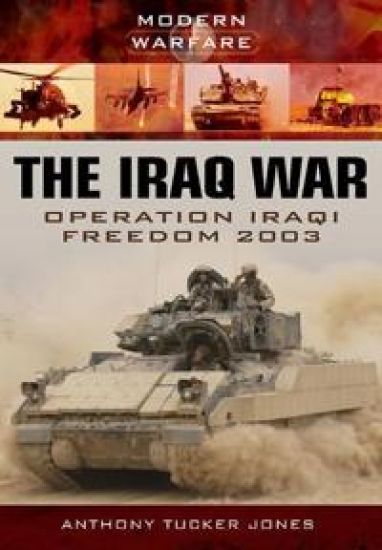
Iraq War: Operation Iraqi Freedom 2003

Iraq War: Operation Iraqi Freedom 2003

Anthony Tucker-Jones

Pen Sword Books Ltd
2014
nidottu
The Iraq War is a visual record of the American-led Operation Iraqi Freedom of 2003, which resulted in the dramatic overthrow of dictator Saddam Hussein. In a striking sequence of photographs Anthony Tucker-Jones shows how this was achieved by the American and British armed forces in a lightning campaign of just two weeks. But the photographs also show the disastrous aftermath when the swift victory was undermined by the outbreak of the Iraqi insurgency - in the Shia south, in Baghdad and the Sunni Triangle, and in Fallujah where two ferocious battles were fought. The author, who is an expert on the Iraqi armed forces and has written extensively on the Iran-Iraq War and the Gulf War, gives a fascinating insight into the Iraqi army and air force and into the multitude of weapons systems Saddam purchased from around the world. He also looks at the failures on the American and British side - the flaws in the tactics that were used, the poor performance of some of the armoured fighting vehicles - and at the reformed Iraqi armed forces who have now taken responsibility for security in the country. The Iraq War is a vivid photographic introduction to a conflict that has only just passed into history.
Armoured Warfare and the Fall of France 1940

Armoured Warfare and the Fall of France 1940

Anthony Tucker-Jones

Pen Sword Military
2014
nidottu

Halvin toimitettuna 26,90 €

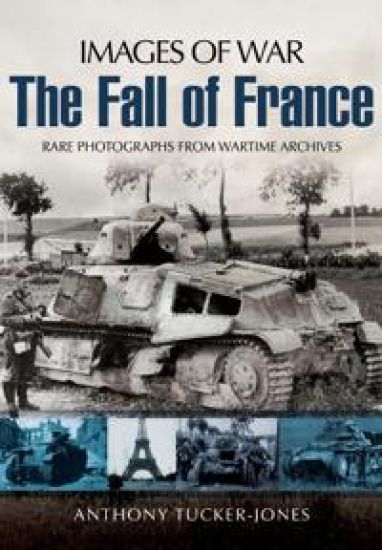
At 21:00 on 9 May 1940 Codeword Danzig was issued alerting Adolf Hitler's airborne troops that they were about to spearhead an attack on Belgium and the Netherlands. The following day his blitzkrieg rolled forward striking the British Expeditionary Force and the French armies in Belgium and in northern France at Sedan. The desperate attempts of the allied armies to stem the Nazi tide proved futile and, once their reserves had been exhausted and the remaining forces cut off, Paris lay open. By early June, it was all over - trapped British, Belgian and French troops were forced to evacuate Dunkirk, Calais and Boulogne and the defeated French army agreed to an armistice leaving the country divided in two. This dramatic story is shown in a sequence of over 150 historic photographs that Anthony Tucker-Jones he has selected for this memorable book. The images he has chosen cover every aspect of this extraordinary campaign, but his main focus is on the vital role played by the armoured fighting vehicles of both sides. The book is a graphic record of the destruction wrought by the Wehrmacht's lightning offensive through the Low Countries and France.
Armoured Warfare in the Arab-Israeli Conflicts

Armoured Warfare in the Arab-Israeli Conflicts

Anthony Tucker-Jones

Pen Sword Military
2013
nidottu
The latest volume in Anthony Tucker-Jones's series of books on armoured warfare in the Images of War series is a graphic account of the development of armoured forces in the Arab and Israeli armies from 1948 to the present day. In a sequence of over 200 archive photographs he tells the story of the role armour played in Arab-Israeli conflicts over the last sixty years, from the initial battles of 1948, through the Suez Crisis, the Six Day War, the Yom Kippur War, the Israeli invasion of Lebanon in 1982 and the Israeli attack on Hamas in Gaza in 2008. In all these clashes armoured vehicles played a prominent, sometimes decisive part. As the photographs show, an extraordinary range of Second World War and post-war tanks, armoured cars and armoured personnel carriers was deployed by all sides. Russian T-34s, SU-100s, T-54/55s, T-62s and T-72s were imported from the Eastern Bloc by the Egyptians and Syrians. Shermans, Pattons, Centurions and AMX-13s were imported from the West by the Israelis. In addition, the Israelis developed modified hybrids such as the Sherman/Isherman, the Sho't, Magach and Sabra, and they produced to their own design their main battle tank, the Merkava. Anthony Tucker-Jones's photographic survey is an excellent introduction to late-twentieth-century armoured warfare, and it gives a fascinating insight into the military history of Israel and its Arab neighbours.
Armoured Warfare in the Korean War

Armoured Warfare in the Korean War

Anthony Tucker-Jones

Pen Sword Military
2013
nidottu
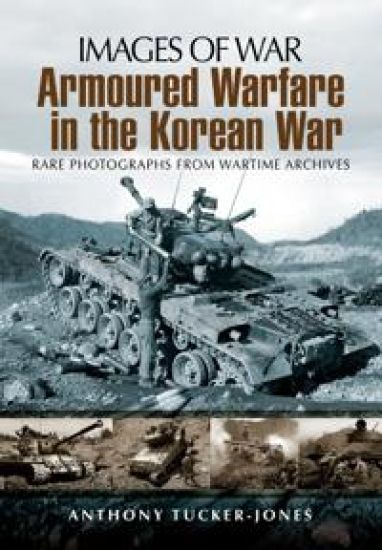
After the Second World War military analysts thought that the only place significant armoured forces were ever likely to confront each other again was in central Europe where the Nato alliance would fend off the Soviet Red Army. But then during the Korean War of 1950-53 large numbers of armoured fighting vehicles were deployed by both sides, and this neglected aspect of the conflict is the subject of Anthony Tucker-Jones's photographic history. Korea, with its rugged mountains, narrow passes, steep valleys and waterlogged fields. was not ideal tank country so the armour mainly supported the infantry and rarely engaged in battles of manoeuvre. Yet the wide variety of armour supporting UN and North Korean forces played a vital if unorthodox role in the swiftly moving campaigns. For this fascinating book over 180 contemporary photographs have been selected to show Soviet-built T-34/85s and Su-76s, American M4 Shermans, M26 Pershings and M46 Pattons, and British Cromwells and Centurions in action in one of the defining conflicts of the Cold War.