Kirjailija
Antonin Artaud
Kirjat ja teokset yhdessä paikassa: 35 kirjaa, julkaisuja vuosilta 1980–2026, suosituimpiin kuuluu Vincent Van Gogh, le suicidé de la société. Vertaile teosten hintoja ja tarkista saatavuus suomalaisista kirjakaupoista.
35 kirjaa
Kirjojen julkaisuvuodet: 1980–2026.
Antonin Artaud, one of the theatrical visionaries of the twentieth century, showed a keen interest in all the forces that underlie dramatic material: myth, legend, the wisdom of the ancients, the classical and pre-classical exploration of nature, the mind and the occult. This prompted him to investigate the most diverse sources of lore, such as Greek mythology, the I Ching, Christian ritual, astrology, the tarot and the civilizations of India and Mexico. This volume contains extracts from his notebooks, reflections, poems and explorations into the fields of mysticism and magic that will fascinate not only those interested in such subjects, but all those who have read any of Artaud’s ground-breaking works and have followed his thought in other spheres.
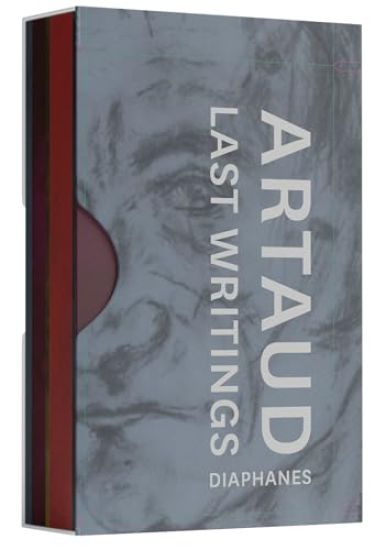
Last Writings of Antonin Artaud
Antonin Artaud
Diaphanes AG
2025
nidottu
Halvin toimitettuna 97,00 €
The last writings of Antonin Artaud published in English and brought together in one edition for the first time. Artaud spent the last years of his life, from his incarceration in the psychiatric hospital of Rodez to the last month in freedom until his death in March 1948, working and writing. This collection includes numerous poems, radio works, texts on his drawings, vocal improvisations, letters, and fragments, some of which have never or only partially been published in English. Artaud’s late writings intensify and accumulate the author’s most urgent preoccupations: the transmutation of the human anatomy into a skeletal configuration without organs; the imminent threat from malevolent assassins to steal his semen and kill him; his hatred of psychiatry and all religions and the necessity for a new and insurgent creation of art, dance, and vocal cacophony. Including additional new translations, this issue edited by Stephen Barber finishes the project by American poet and translator Clayton Eshleman and his collaborators to translate and publish these works in English in their entirety.
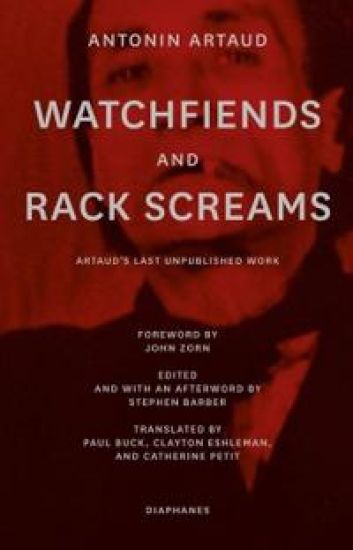
Antonin Artaud’s last large-scale work, published in its complete form in English for the first time. Drawings on texts and letters dating from 1946, some of them written while he was still confined at the Rodez psychiatric hospital, Artaud devoted the months of November 1946 to February 1947 to completing his book through a long series of vocal improvisations titled Interjections, dictated at his pavilion on the edge of Paris. He cursed the assassins he believed were on their way there to steal his semen, to make his brain go “up in smoke as under the action of one of those machines created to suck up filth from the floor,” and finally to erase him. The publisher who had commissioned the book, Louis Broder, was horrified at reading its incandescent, fiercely obscene, and anti-religious manuscript and refused to publish it. Ambitious and experimental in scale, fragmentary and ferocious in intent, it was not published until 1978, in an edition prepared by Artaud’s close friend Paule Thévenin. Artaud commented that it was an “impossible” book, and that “nobody has ever read it from end to end, not even its own author.” Clayton Eshleman, together with his translation collaborators such as David Rattray, began to work soon after 1978 on an English-language edition, with extracts appearing especially in Eshleman’s poetry magazine, Sulfur. This volume presents his translations with additional ones by Paul Buck, and Catherine Petit it in its complete form in English for the first time.
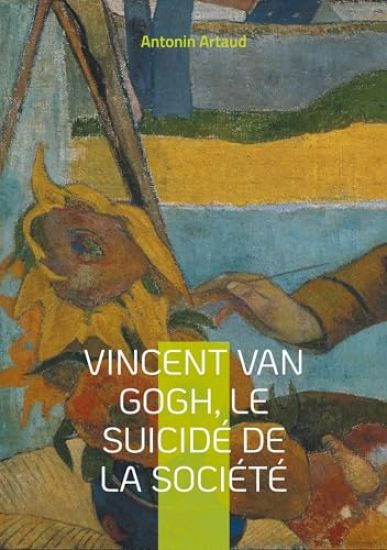
Vincent Van Gogh, le suicid de la soci t d'Antonin Artaud est une oeuvre incandescente qui transcende les fronti res de la critique d'art traditionnelle. Publi en 1947, cet essai fulgurant offre une vision radicale et profond ment personnelle de l'artiste n erlandais, transformant sa biographie en un manifeste contre l'oppression sociale et artistique. Artaud y d peint Van Gogh non pas comme un fou, mais comme un g nie incompris, victime d'une soci t incapable de supporter sa lucidit visionnaire. travers une prose fi vreuse et envo tante, l'auteur explore la folie cr atrice de Van Gogh, pr sentant sa peinture post-impressionniste comme un acte de r volte pure contre les conventions artistiques et sociales de son poque. L'ouvrage transcende la simple analyse biographique pour devenir une critique acerbe de la soci t , de la psychiatrie et des institutions artistiques. Artaud tablit un parall le saisissant entre la souffrance de Van Gogh et sa propre exp rience de l'ali nation, cr ant ainsi un dialogue poignant entre deux artistes tourment s. Ce livre s'inscrit naturellement dans les cat gories Essais litt raires, Biographies d'artistes et Critique sociale . Artaud y d ploie une criture incisive et po tique, transformant chaque page en un tableau verbal aussi vibrant que les toiles de Van Gogh. Vincent Van Gogh, le suicid de la soci t ne se contente pas d' tre une simple tude sur l'artiste; c'est un cri de rage contre une soci t qui touffe le g nie et la cr ativit . Artaud y d veloppe l'id e que la folie apparente de Van Gogh n' tait en r alit qu'une forme sup rieure de lucidit , incompr hensible pour ses contemporains. L'auteur explore en profondeur la relation entre l'art et l'ali nation, sugg rant que la v ritable folie r side dans la normalit oppressive de la soci t plut t que dans l'esprit tourment de l'artiste. Il analyse les tableaux de Van Gogh non pas comme des objets esth tiques, mais comme des actes de r sistance contre
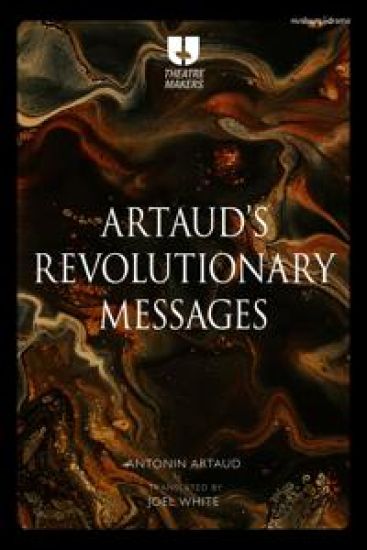
Revolutionary Messages
Antonin Artaud
BLOOMSBURY PUBLISHING PLC
2024
nidottu
Halvin toimitettuna 34,50 €
Published here in its entirety in English, Artaud’s Revolutionary Messages collects Antonin Artaud’s political, aesthetic and philosophical writings during his travels to Mexico in 1936. Written around the same time as his seminal work The Theatre and its Double, it captures a crucial point in Artaud's life shortly before he was admitted to a mental asylum in which he was to spend a significant part of his later life. Revolutionary Messages contains conferences that Artaud gave at the University of Mexico, articles from the daily Mexican newspaper El Nacional Revolucionario and a study of three seminal artists of the time influenced by or from Mexico: Franz Hals, Ortiz Monasterio and Maria Izquierdo. Not only will you gain crucial insight into Artaud’s time in Mexico and his vision of a “total revolution,” which he places in distinction to Marxist and Surrealist conceptions of revolution, but you will deepen your understanding of the philosophical roots of his theatrical project, which ultimately shaped modern theatre and dance. The publication includes an introduction by the translator, Joel White, and a preface by Professor of European Philosophy, Howard Caygill.
Published here in its entirety in English, Artaud’s Revolutionary Messages collects Antonin Artaud’s political, aesthetic and philosophical writings during his travels to Mexico in 1936. Written around the same time as his seminal work The Theatre and its Double, it captures a crucial point in Artaud's life shortly before he was admitted to a mental asylum in which he was to spend a significant part of his later life. Revolutionary Messages contains conferences that Artaud gave at the University of Mexico, articles from the daily Mexican newspaper El Nacional Revolucionario and a study of three seminal artists of the time influenced by or from Mexico: Franz Hals, Ortiz Monasterio and Maria Izquierdo. Not only will you gain crucial insight into Artaud’s time in Mexico and his vision of a “total revolution,” which he places in distinction to Marxist and Surrealist conceptions of revolution, but you will deepen your understanding of the philosophical roots of his theatrical project, which ultimately shaped modern theatre and dance. The publication includes an introduction by the translator, Joel White, and a preface by Professor of European Philosophy, Howard Caygill.
On 10 January 1936, the poet, actor, and dramatic theorist, Antonin Artaud departed Europe on a journey to Mexico that would take him from the streets, caf s, and lecture halls of Mexico City to the remote mountains of the Sierra Tarahumara. The journey would last only ten months, culminating in some six to eight weeks spent among the Tarahumara (Rar muri), but it was a profound turning point in his life. Artaud didn't just leave Europe. He fled it. "I came to Mexico to escape European civilization ... I hoped to find a vital form of culture." The vital form of culture that he sought was one wherein individual and communal behaviors were rooted in the soil of a place, wherein the rituals of religion, reinforced a connection in human lives between the earth and the sun. But Artaud's search for a vital form of culture would not be a simple one. His appeal to indigenous culture would first require an intense and intricate effort at aesthetic, religious, political, and philosophical decolonization. And this intellectual work would not be without a psychological cost. Journey to Mexico collects very nearly all of Artaud's writings related to his voyage to the land of the Tarahumara: the writings he prepared prior to this journey; the pieces he published in Mexico and the lectures he delivered there; the essays, letters, and poems that he wrote in the years after his journey, reflecting on and reframing his experiences. A selection of letters written before, during, and after the trip conveys the very personal - the physical, emotional, and financial - challenges of the journey. Artaud's Journey to Mexico takes us far from home to the limits of art and anthropology, myth and religion, to confront the legacies of colonial conquest and the possibility of decolonization in a desperate search for a "vital form of culture."
The Theatre and its Double
Antonin Artaud
BLOOMSBURY PUBLISHING PLC
2024
nidottu
Halvin toimitettuna 30,80 €
In The Theatre and Its Double, first published in 1938, Antonin Artaud puts forward his radical theories on drama and theatre, which he saw as being stifled by conservatism and a lack of experimentation. Containing the famous manifestos of the ‘Theatre of Cruelty’, this collection of essays analyses the underlying impulses of performance, provides suggestions on a physical-training method for actors, and features a long appreciation of the expressive values of Eastern dance drama. This new English translation of Artaud's canonical text by Mark Taylor-Batty retains the idiosyncratic nature of the author's writing, communicating its fervour and ambition, while achieving a much-needed clarity. Through doing so, it facilitates a fuller appreciation of Artaud’s artistic objectives and the original context in which they grew, aided by a newly translated set of his notes and drafts, and a selection of letters to his publisher, friends and associates concerning the book's genesis and the evolution of the concept of a ‘Theatre of Cruelty’. The commentary further contextualizes this material within Artaud’s broader oeuvre, from his collaboration with the Surrealist group through to his plans to stage his own adaptation of Percy Shelley’s Les Cenci in 1935. A welcome addition to any theatre-lover's or student's bookshelf, this translation of Artaud’s classic text offers clear and faithful insights into Artaud's theatre.
The Theatre and its Double
Antonin Artaud
BLOOMSBURY PUBLISHING PLC
2024
sidottu
Halvin toimitettuna 82,40 €
In The Theatre and Its Double, first published in 1938, Antonin Artaud puts forward his radical theories on drama and theatre, which he saw as being stifled by conservatism and a lack of experimentation. Containing the famous manifestos of the ‘Theatre of Cruelty’, this collection of essays analyses the underlying impulses of performance, provides suggestions on a physical-training method for actors, and features a long appreciation of the expressive values of Eastern dance drama. This new English translation of Artaud's canonical text by Mark Taylor-Batty retains the idiosyncratic nature of the author's writing, communicating its fervour and ambition, while achieving a much-needed clarity. Through doing so, it facilitates a fuller appreciation of Artaud’s artistic objectives and the original context in which they grew, aided by a newly translated set of his notes and drafts, and a selection of letters to his publisher, friends and associates concerning the book's genesis and the evolution of the concept of a ‘Theatre of Cruelty’. The commentary further contextualizes this material within Artaud’s broader oeuvre, from his collaboration with the Surrealist group through to his plans to stage his own adaptation of Percy Shelley’s Les Cenci in 1935. A welcome addition to any theatre-lover's or student's bookshelf, this translation of Artaud’s classic text offers clear and faithful insights into Artaud's theatre.
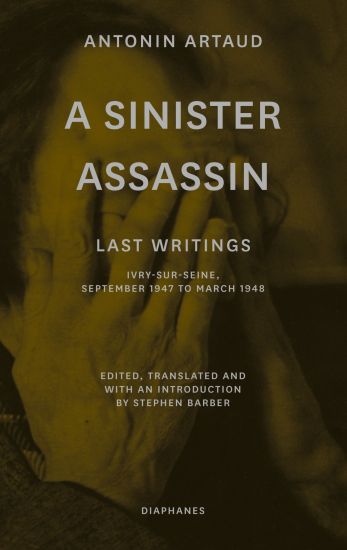
A Sinister Assassin – Last Writings, Ivry–Sur–Seine, September 1947 to March 1948
Antonin Artaud; Stephen Barber
Diaphanes AG
2023
nidottu
A Sinister Assassin contains original translations of Antonin Artaud’s last writings and interviews, most never previously available in English. A Sinister Assassin presents translations of Antonin Artaud’s largely unknown final work of 1947–48, revealing new insights into his obsessions with human anatomy, sexuality, societal power, creativity, and ill-will—notably, preoccupations of the contemporary world. Artaud’s last conception of performance is that of a dance-propelled act of autopsy, generating a ”body without organs” which negates malevolent microbial epidemics. This book assembles Artaud’s crucial writings and press interviews from September 1947 to March 1948, undertaken at a decrepit pavilion in the grounds of a convalescence clinic in Ivry-sur-Seine, on the southern edge of Paris, as well as in-transit through Paris’s streets. It also draws extensively on Artaud’s manuscripts and original interviews with his friends, collaborators, and doctors throughout the 1940s, illuminating the many manifestations of Artaud’s final writings: the contents of his last, death-interrupted notebook; his letters; his two final key texts; his glossolalia; the magazine issue which collected his last fragments; and the two extraordinary interviews he gave to national newspaper journalists in the final days of his life, in which he denounces and refuses both his work’s recent censorship and his imminent death. Edited, translated, and with an introduction by Stephen Barber, A Sinister Assassin illuminates Artaud’s last, most intensive, and terminal work for the first time.
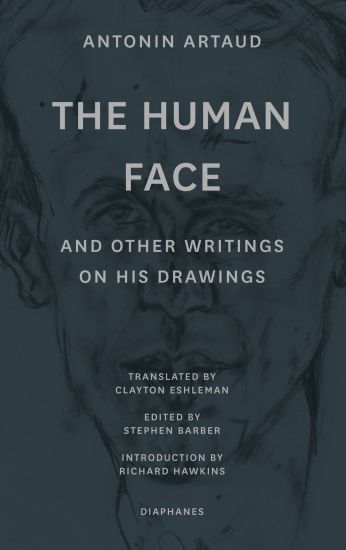
"The Human Face" and Other Writings on His Drawings
Antonin Artaud; Stephen Barber; Clayton Eshleman; Richard Hawkins
Diaphanes
2023
nidottu
The first comprehensive collection in English of Antonin Artaud’s writings on his artworks. The many major exhibitions of Antonin Artaud’s drawings and drawn notebook pages in recent years—at New York’s Museum of Modern Art, Vienna’s Museum Moderner Kunst, and Paris’s Centre Georges Pompidou—have entirely transformed our perception of his work, reorienting it toward the artworks of his final years. This volume collects all three of Artaud’s major writings on his artworks. “The Human Face” (1947) was written as the catalog text for Artaud’s only gallery exhibition of his drawings during his lifetime, focusing on his approach to making portraits of his friends at the decrepit pavilion in the Paris suburbs where he spent the final year of his life. “Ten years that language is gone” (1947) examines the drawings Artaud made in his notebooks—his main creative medium at the end of his life—and their capacity to electrify his creativity when language failed him. “50 Drawings to assassinate magic” (1948), the residue of an abandoned book of Artaud’s drawings, approaches the act of drawing as part of the weaponry deployed by Artaud at the very end of his life to combat malevolent assaults and attempted acts of assassination. Together, these three extraordinary texts—pitched between writing and image—project Artaud’s ferocious engagement with the act of drawing.
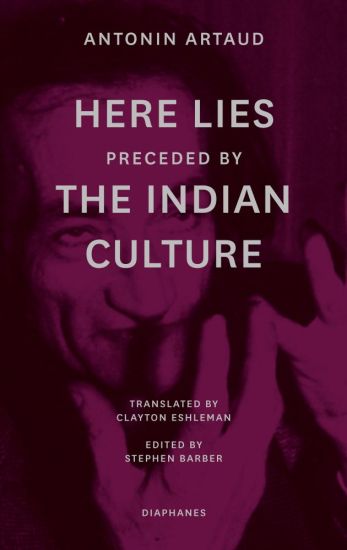
"Here Lies" preceded by "The Indian Culture"
Antonin Artaud; Stephen Barber; Clayton Eshleman
Diaphanes AG
2022
nidottu
“Here Lies” preceded by “The Indian Culture” collects two of Antonin Artaud’s foremost poetic works from the last period of his life. He wrote both works soon after his release from the psychiatric hospital of Rodez and his return to Paris, and they were published during the flurry of intensive activity and protests against his work’s censorship. The Indian Culture is the first and most ambitious work of Artaud’s last period. It deals with his travels in Mexico in 1936 where Artaud sets aside his usual preoccupations with peyote and the Tarahumara people’s sorcerers to directly anatomize his obsessions with gods, corporeality, and sexuality. Here Lies is Artaud’s final declaration of autonomy for his own body from its birth to its imminent death, won at the cost of multiple battles against the infiltrating powers amassed to steal that birth and death away from him. Both works demonstrate Artaud’s final poetry as a unique amalgam of delicate linguistic invention and ferociously obscene invective. “Here Lies” preceded by “The Indian Culture” was translated by the award-winning translator Clayton Eshleman, widely seen as the preeminent translator into English of Artaud’s work, with its profound intensity and multiply nuanced language. For the first time since its first publication, this bilingual edition presents the two works in one volume, as Artaud originally intended. This edition also features a contextual afterword by Stephen Barber as well as new material, previously untranslated into English.
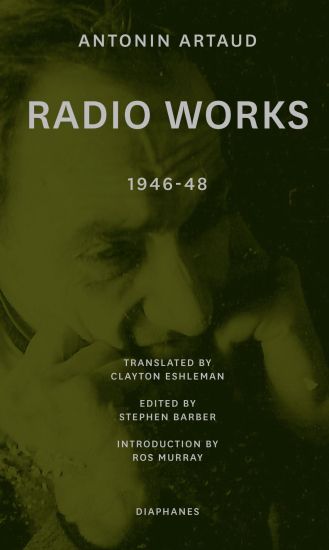
Radio Works: 1946–48
Antonin Artaud; Stephen Barber; Clayton Eshleman; Ros Murray
Diaphanes AG
2022
nidottu
Following his release from the Rodez asylum, Antonin Artaud decided he wanted his new work to connect with a vast public audience, and he chose to record radio broadcasts in order to carry through that aim. That determination led him to his most experimental and incendiary project, To Have Done with the Judgement of God, 1947-48, in which he attempted to create a new language of texts, screams, and cacophonies: a language designed to be heard by millions, aimed, as Artaud said, for “road-menders.” In the broadcast, he interrogated corporeality and introduced the idea of the “body without organs,” crucial to the later work of Deleuze and Guattari. The broadcast, commissioned by the French national radio station, was banned shortly before its planned transmission, much to Artaud’s fury. This volume collects all of the texts for To Have Done with the Judgement of God, together with several of the letters Artaud wrote to friends and enemies in the short period between his work’s censorship and his death. Also included is the text of an earlier broadcast from 1946, Madness and Black Magic, written as a manifesto prefiguring his subsequent broadcast. Clayton Eshleman’s extraordinary translations of the broadcasts activate these works in their extreme provocation.
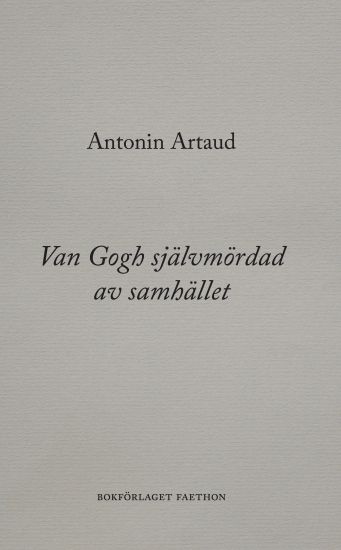
Teatermannen Antonin Artaud satt länge inspärrad på psykiatrisk klinik. I Van Gogh självmördad av samhället från 1947 går han till storms mot hur hans olycksbroder, målargeniet, behandlades. Med en rasande prosa blir texten en anklagelseakt mot den förmenta vetenskap som inte förmår skilja dårarna från genierna, som bryter ner och slutligen förgör de människor den inte förmår hantera. Percival har översatt och den franska Artaudforskaren Évelyne Grossman har skrivit efterordet.

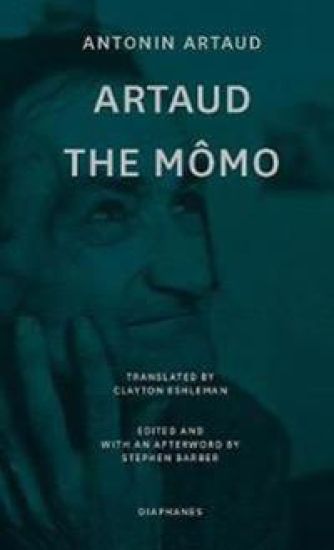
Artaud the Mômo is Antonin Artaud’s most extraordinary poetic work from the brief final phase of his life, from his return to Paris in 1946 after nine years of incarceration in French psychiatric institutions to his death in 1948. This work is an unprecedented anatomical excavation carried through in vocal language, envisioning new gestural futures for the human body in its splintered fragments. With black humor, Artaud also illuminates his own status as the scorned, Marseille-born child-fool, the “mômo” (a self-naming that fascinated Jacques Derrida in his writings on this work). Artaud moves between extreme irreligious obscenity and delicate evocations of his immediate corporeal perception and his sense of solitude. The book’s five-part sequence ends with Artaud’s caustic denunciation of psychiatric institutions and of the very concept of madness itself. This edition is translated by Clayton Eshleman, the acclaimed foremost translator of Artaud’s work. This will be the first edition since the original 1947 publication to present the work in the spatial format Artaud intended. It also incorporates eight original drawings by Artaud—showing reconfigured bodies as weapons of resistance and assault—which he selected for that edition, after having initially attempted to persuade Pablo Picasso to collaborate with him. Additional critical material draws on Artaud’s previously unknown manuscript letters written between 1946 and 1948 to the book’s publisher, Pierre Bordas, which give unique insights into the work from its origins to its publication.