Kirjojen hintavertailu – 12 903 725 kirjaa ja 27 kauppaa
Kirjailija
Arthur Asa Berger
Kirjat ja teokset yhdessä paikassa: 100 kirjaa, julkaisuja vuosilta 1978–2024, suosituimpiin kuuluu Sports Semiotics. Vertaile teosten hintoja ja tarkista saatavuus suomalaisista kirjakaupoista.
This book deals with tourism, popular culture and everyday life in Japan. It offers some interesting statistics about Japanese life and society, discusses popular kinds of tours in Japan, considers images of Japan found in guidebooks about the country, and discusses the pleasures people get from travel in Japan. The book interprets various aspects of Japanese culture and provides an analysis of popular visitor destinations. It is written in an accessible style and thus will be of interest to tourists considering visiting Japan, Japanophiles, social scientists and humanities scholars with interests in Japan, and students taking courses in tourism, Japanese culture, cultural studies and consumer culture.
This book deals with tourism, popular culture and everyday life in Japan. It offers some interesting statistics about Japanese life and society, discusses popular kinds of tours in Japan, considers images of Japan found in guidebooks about the country, and discusses the pleasures people get from travel in Japan. The book interprets various aspects of Japanese culture and provides an analysis of popular visitor destinations. It is written in an accessible style and thus will be of interest to tourists considering visiting Japan, Japanophiles, social scientists and humanities scholars with interests in Japan, and students taking courses in tourism, Japanese culture, cultural studies and consumer culture.
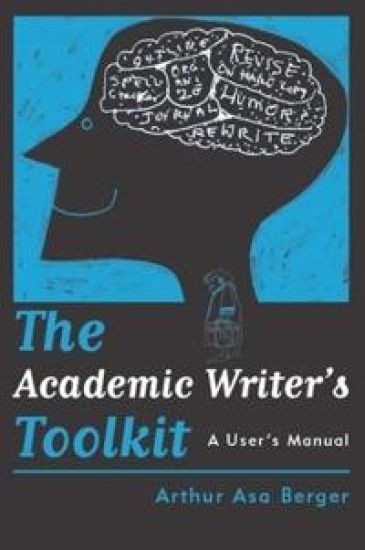
Berger’s slim, user-friendly volume on academic writing is a gift to linguistically-stressed academics. Author of 60 published books, the author speaks to junior scholars and graduate students about the process and products of academic writing. He differentiates between business writing skills for memos, proposals, and reports, and the scholarly writing that occurs in journals and books. He has suggestions for getting the “turgid” out of turgid academic prose and offers suggestions on how to best structure various forms of documents for effective communication. Written in Berger’s friendly, personal style, he shows by example that academics can write good, readable prose in a variety of genres.
Berger’s slim, user-friendly volume on academic writing is a gift to linguistically-stressed academics. Author of 60 published books, the author speaks to junior scholars and graduate students about the process and products of academic writing. He differentiates between business writing skills for memos, proposals, and reports, and the scholarly writing that occurs in journals and books. He has suggestions for getting the “turgid” out of turgid academic prose and offers suggestions on how to best structure various forms of documents for effective communication. Written in Berger’s friendly, personal style, he shows by example that academics can write good, readable prose in a variety of genres.
The average person in America watches four hours of television per day and spends the equivalent of nine years of his or her life in front of the television set. If the attention most people devote to popular culture - listening to the news, watching soap operas, reading the comics-were added up, it would reveal that most people spend an enormous amount of time with popular culture which becomes in large measure, their culture. "Manufacturing Desire" is a study of how the mass media broadcast or spread various popular arts; further how the media and popular arts play a major role in shaping our everyday lives. The television shows we watch, the movies we see, the radio programs we listen to, and all the comic strips we read influence social behavior. They give us ideas about what is good and evil, about how to solve problems, and about how we should relate to others. If we understand this, says Berger, then the way we think about our media-influenced culture will be far different than if we see popular culture as mindless entertainment. Berger provides an analysis of the way popular culture and the mass media simultaneously reflect and affect various aspects of American culture and society. He examines commercials, television shows, comics, film, humor, and everyday life in terms of what beliefs and values are found in them, what attitudes toward ourselves, and our societies are contained in them, how they achieve their effects, and what they reflect about present-day American culture and society. This book is analysis of the impact mass media have across America, cross-culturally, and internationally. "Manufacturing Desire" will provide the general reader as well as specialists in communication and information, sociology, and psychology with a better understanding of the effects of mass media and popular culture on contemporary society.
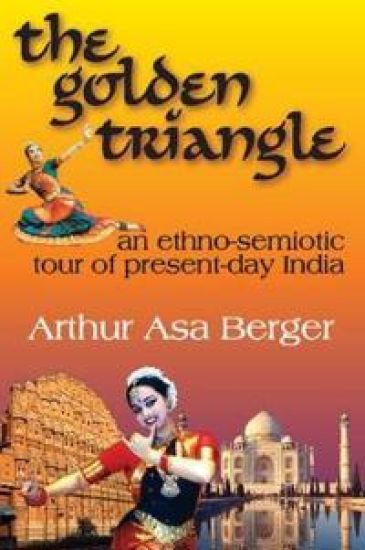
This book offers a semiotically informed ethnographic study of contemporary culture in Rajasthan and in India generally. It adapts the methodology of analyzing cultures found in Roland Barthes' semiotic portrait of Japanese culture, Empire of Signs, but adds an analysis of lifestyles as explicated in the work of social anthropologist Mary Douglas, political scientist Aaron Wildavsky, and a number of other social scientists. This manuscript is, at first, a guide to Rajasthan and India, and it is that but it is also more in that it considers tourism from both an anthropological and sociological level. Berger begins with statistics on tourism and other aspects of life in Rajasthan and India, and then considers how tourism in India compares with tourism in other important tourism destinations. He refers to the "Imaginary India" as the picture created in tourists' minds with the help of guidebooks, media, and the Internet before they actually travel to India. He then discusses these representations and how they are actually different from the country itself. The trip itself then becomes the search for the authentic India--the goal is to find places before they are discovered. He calls this "Semiotic Rajasthan," where the representations are compared to actuality. After offering a discussion of semiotic theory, it interprets and analyzes a number of important aspects of Rajasthani and Indian culture such as: the Taj Mahal, the Palace of Winds in Jaipur, the notorious rat temple in Deshnok, and sacred cows. Lastly, he discusses his own trip and how the impact of Rajasthan did not fully register until he returned home. This volume's strength lies in the author's ability to write in an accessible manner, assemble the project in an interesting way, and include only that information which will guide the reader along the narrative trail. While this manuscript really is a guidebook to Rajasthan, it could also serve as a good introduction to ethnography for beginning students and an interested general audience. It moves from basic explanations, such as that of semiotics, to complex applications all with the grace of good story telling.
In this entirely sophisticated and scholarly account of political culture, Arthur Asa Berger shows how the variety of cultural preferences creates the foundations of communication theory. Using the work of Aaron Wildavsky, the author shows how individualism, egalitarianism, collectivism, and fatalism form the basis of culture in complex societies. But more importantly, Berger breaks down the mechanical distinction between mass culture and elite culture, showing how they interpenetrate and crossover at the level of competitive and hierarchical frames. Agitpop, now in paperback, suggests that there is an ideological content to our popular culture, even though the creators no less than the consumers of that culture are either unaware or dimly aware that they are creating works with an ideological bent. The work takes up in quick order two examples from different areas of the hierarchical, individualist, egalitarian, and fatalist cultures. From football games to the Iran-Contra Hearings, from MTV to the Human Potential Movement, from Max Headroom to humor on the Jews, and from wrestling to The Terminator, Berger takes up his master themes with a deft touch of his own. Weaving in the work of scholars from Emile Durkheim to Aaron Wildavsky he manages to make each of the chapters very much his own. For those who know the earlier work of this author, the reader will be very much at home; for those new to Berger, the volume will be a joyous revelation. The final three chapters reveal a deeper aspect of Berger's work. His interpretation of the earlier materials in terms of the semiotics of power, of textual analysis, or deconstruction of the media, and finally, an analysis and self-analysis of the larger research agenda of which this work is pivotal, should make this book central to the theoretical construction of popular and political culture. For people working in communications theory, political culture, and the sociology of knowledge, this book is a must; for everyone else, it is a joy.
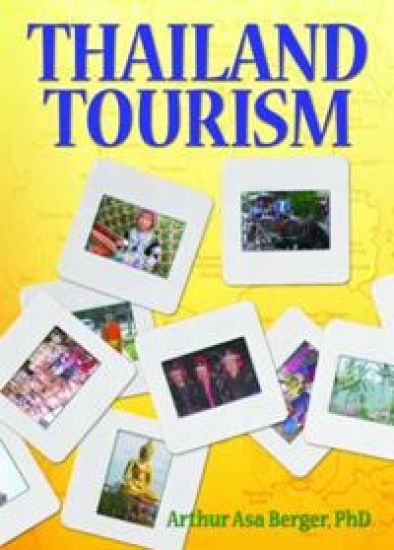
Understand Thailand’s important symbols, icons, and social practicesThailand’s culture is unlike any other. Travelers attempting to fully immerse themselves in all that this tourist destination has to offer find it essential to become culturally sensitive. Thailand Tourism provides readers with an indispensable overview of this remarkable land of contrasts. This invaluable text reveals the South East Asian country, its history, its culture, and its people’s fun-loving perspective of life. The importance of Thai symbols and their meaning, icons and social practices, its proud history of its constitutional monarchy, and its numerous religious temples are examined in detail. This book offers tourists and students of tourism an informative, realistic view of the people, food, entertainment, and scenery of one of the most exotic lands in the world. Thailand was never colonized by a foreign power. Because of the lack of outside influence, this South East Asian nation has fostered a culture thrillingly different from others. Thailand Tourism offers a rare, in-depth look at this unique country and provides the information travelers need to know to easily move about and make their trip memorable. The guide includes helpful typical tourist itineraries illustrating what to expect when booking plans. The Thai viewpoints on sexuality, marriage, and societal changes are analyzed in detail. The issue of violence is discussed, including its ingrained presence in everyday life. Helpful tables detail demographic information from several countries to shed light not only on where travelers originate, but also to study the contrasts with the Thai culture. The book also presents a primer on the semiotics of tourism, and then discusses significant signs and symbols infused in Thai culture including Thai smiles, the royal kingdom of Thailand, Buddhist monks, Buddha statues, and Wats (temples). The importance of elephants in modern Thailand is explored, as well as the importance of the nation’s ethnic tribes and the cultural significance of the Wai. Thai food, the Thai sex industry, and a comparison between Thailand and America are also examined. The final section presents author Arthur Asa Berger’s own notes of his travels throughout Thailand with cogent perspectives of the country as a ’monoculture’. Topics in Thailand Tourism include: a theoretical discussion of tourism statistical data on tourism in Thailand typical tourist itineraries in Thailand perceptions of Thailand in travel literature violence in Thai society analysis of Thai culture such as Thai smile, Wats, Buddha statues Discover an exotic, spiritual, sensual country like no other. Thailand Tourism is a must read for anyone planning to visit Thailand, students of tourism, and students of Thailand’s culture.
Understand Thailand’s important symbols, icons, and social practicesThailand’s culture is unlike any other. Travelers attempting to fully immerse themselves in all that this tourist destination has to offer find it essential to become culturally sensitive. Thailand Tourism provides readers with an indispensable overview of this remarkable land of contrasts. This invaluable text reveals the South East Asian country, its history, its culture, and its people’s fun-loving perspective of life. The importance of Thai symbols and their meaning, icons and social practices, its proud history of its constitutional monarchy, and its numerous religious temples are examined in detail. This book offers tourists and students of tourism an informative, realistic view of the people, food, entertainment, and scenery of one of the most exotic lands in the world. Thailand was never colonized by a foreign power. Because of the lack of outside influence, this South East Asian nation has fostered a culture thrillingly different from others. Thailand Tourism offers a rare, in-depth look at this unique country and provides the information travelers need to know to easily move about and make their trip memorable. The guide includes helpful typical tourist itineraries illustrating what to expect when booking plans. The Thai viewpoints on sexuality, marriage, and societal changes are analyzed in detail. The issue of violence is discussed, including its ingrained presence in everyday life. Helpful tables detail demographic information from several countries to shed light not only on where travelers originate, but also to study the contrasts with the Thai culture. The book also presents a primer on the semiotics of tourism, and then discusses significant signs and symbols infused in Thai culture including Thai smiles, the royal kingdom of Thailand, Buddhist monks, Buddha statues, and Wats (temples). The importance of elephants in modern Thailand is explored, as well as the importance of the nation’s ethnic tribes and the cultural significance of the Wai. Thai food, the Thai sex industry, and a comparison between Thailand and America are also examined. The final section presents author Arthur Asa Berger’s own notes of his travels throughout Thailand with cogent perspectives of the country as a ’monoculture’. Topics in Thailand Tourism include: a theoretical discussion of tourism statistical data on tourism in Thailand typical tourist itineraries in Thailand perceptions of Thailand in travel literature violence in Thai society analysis of Thai culture such as Thai smile, Wats, Buddha statues Discover an exotic, spiritual, sensual country like no other. Thailand Tourism is a must read for anyone planning to visit Thailand, students of tourism, and students of Thailand’s culture.
The Genius of the Jewish Joke focuses on what is distinctive and unusual about Jewish jokes and Jewish humor. Jewish humor is humor by Jews and about Jews, in whatever medium this humor is found. Jokes are defined as short stories, meant to amuse, with a punch line, though Jewish humor exists in many other forms—riddles, comic definitions, parodies—as well. The book makes a "radical" suggestion about the origin of Jewish humor—namely, that Sarah and Abraham's relation to God, and the name of their son Isaac (which, in Hebrew, means laughter), recognizes a special affinity in Jews for humor. Abraham does not sacrifice Isaac (humor) and, thus, humor and the Jews are linked early in Jewish history. Berger discusses techniques of humor and how they can be used to analyze jokes. He also compares "Old World Jewish Humor"—the humor of the shtetl, with its fabulous schlemiels, schlimazels, schnorrers, and other characters—and "New World Humor"—the humor of Jewish doctors, lawyers, accountants, and other professional types living mostly in the suburbs nowadays. Jewish humor is contrasted with other forms of ethnic humor, such as Polish jokes and Italian American jokes. This humor, in addition to providing pleasure, reveals a great deal about Jewish character and culture and, in addition, the human condition. Now available with a new introduction by the author, The Genius of the Jewish Joke is an entertaining and informative inquiry into Jewish humor that explores its distinctiveness, its unique spirit, and its role in Jewish identity.
Is consciousness like an iceberg? Does advertising lead to the commodification of humans? What is the hidden meaning of fairy tales? In 50 Ways to Understand Communication, Arthur Asa Berger familiarizes readers with important concepts written by leading communication and cultural theorists, such as Saussure, LZvi-Strauss, de Certeau, Lasswell, McLuhan, Postman, and many others. Organized in fifty short segments, this concise guide covers a wide range of important ideas from psychoanalysis and semiology to humor, 'otherness,' and nonverbal communication. Berger's clear explanations and examples surround this assortment of influential writing, walking the uninitiated through these sometimes dense theoretical works. His selections and commentary will challenge readers to reconsider the role of communication in our culture. This engaging, accessible book is essential for students of communication and anyone interested in how we communicate in a world of rapidly changing media.
Is consciousness like an iceberg? Does advertising lead to the commodification of humans? What is the hidden meaning of fairy tales? In 50 Ways to Understand Communication, Arthur Asa Berger familiarizes readers with important concepts written by leading communication and cultural theorists, such as Saussure, Lévi-Strauss, de Certeau, Lasswell, McLuhan, Postman, and many others. Organized in fifty short segments, this concise guide covers a wide range of important ideas from psychoanalysis and semiology to humor, "otherness," and nonverbal communication. Berger's clear explanations and examples surround this assortment of influential writing, walking the uninitiated through these sometimes dense theoretical works. His selections and commentary will challenge readers to reconsider the role of communication in our culture. This engaging, accessible book is essential for students of communication and anyone interested in how we communicate in a world of rapidly changing media.
In 1946, William Bullitt, the first U. S. Ambassador to the Soviet Union, U. S. Ambassador to France at the outbreak of the Second World War, and onetime close advisor to FDR, wrote the first book-length, comprehensive analysis of the emerging Cold War between the United States and the Soviet Union. During the war, as the book's new introduction by Francis P. Sempa points out, Bullitt had repeatedly urged President Roosevelt to wage war with a view toward the postwar balance of power. Bullitt recounted in this volume how the United States missed opportunities to block Soviet geopolitical gains during the war due to a fundamental misreading of the nature of the Soviet political system. Bullitt wrote The Great Globe Itself from the perspective of a key advisor to President Roosevelt who evolved into a strident critic of the president's wartime diplomacy toward the Soviet Union. When Soviet Russia became a wartime ally of the United States, Bullitt understood that the alliance would last only until the common enemy (Hitler's Germany) was defeated. Bullitt's discussion and analysis of fundamental global geopolitical realities and his prudent counsel to couple diplomacy with force in international relations are as relevant today as when he wrote the book, nearly sixty years ago.
A murder, just four hours before the Royal Duchess is scheduled to sail for Alaska, and inspector Solomon Hunter and his assistant, Talcott Weems, are summoned to investigate this latest mystery. This delightful whodunit textbook by Arthur Asa Berger is the perfect tool to introduce students to cultural studies theories, in particular the complexities of identity, and also to the foibles of academic life. During the investigation, the reader will encounter several critical theories, including semiotics, postmodernism, feminism, psychoanalysis, and race theory. Of course, identity is also of central importance in Hunter and Weems' own mission: to learn the identity of the murderer!
Explore the travel/tourism possibilities of this exotic yet tourist-friendly countryVietnam Tourism presents a unique ethnographic-semiotic analysis of some of the most important touristic icons in Vietnamese culture. In addition, it offers a firsthand analysis of many aspects of daily life in Vietnam and a semiotic analysis of Vietnam’s dominant cultural symbols. A twelve-page photo section brings vibrant images of this unique country to life. Vietnam Tourism also presents an essential overview of what Vietnam has to offer tourists, looking at the exciting possibilitiesand the potential pitfallsof visiting this extraordinary country. Although Vietnam is a Third World country, it has excellent tourism companies and many wonderful sitesfrom Halong Bay and Hue to extraordinary temples and beautiful beaches. The book paints a vivid portrait of this country’s hidden gems and popular tourist destinations, exploring the problems and possibilities Vietnam faces in developing its tourism industry. In Vietnam Tourism, you’ll find information that is essential for anyone who needs to be in the know about this increasingly popular tourist destination. This reader-friendly book will leave you better informed about: the rapid construction of hotels in important tourist sites: there are now hotels of all kindsfrom super luxurious ones to middle-range, three-star hotels, down to very primitive hotelsin most of the country’s important tourist venues daily life in Vietnam’s teeming cities, in its religious enclaves, and in its unique rural areas the meaning and relevance (semiotics) of commonplace objects in Vietnam, including Pho (a traditional soup that is often eaten for breakfast and is found everywhere in the country), conical straw hats, spring rolls, pith helmets, dong (Vietnamese currency), water puppetry, etc. important sites that tourists often visit, including the Ho Chi Minh museum, Ha Noi, the Cu Chi Tunnels, the unforgettable Cao Dai Cathedral at Tay Ninh, the Mekong Delta, and Ho Chi Minh City (Saigon) images of Vietnam created by travel writerswhat the tourist guidebooks have to say, and how they relate to the reality of the author’s personal experience in VietnamAfter reading Vietnam Tourism, you (and your students) will have a wealth of knowledge to draw upon. This is an ideal book to read before visiting Vietnam yourselfor recommending/planning a trip for others. The fresh insights it presents will help make any trip to the region more rewarding for the traveler.
Explore the travel/tourism possibilities of this exotic yet tourist-friendly countryVietnam Tourism presents a unique ethnographic-semiotic analysis of some of the most important touristic icons in Vietnamese culture. In addition, it offers a firsthand analysis of many aspects of daily life in Vietnam and a semiotic analysis of Vietnam’s dominant cultural symbols. A twelve-page photo section brings vibrant images of this unique country to life. Vietnam Tourism also presents an essential overview of what Vietnam has to offer tourists, looking at the exciting possibilitiesand the potential pitfallsof visiting this extraordinary country. Although Vietnam is a Third World country, it has excellent tourism companies and many wonderful sitesfrom Halong Bay and Hue to extraordinary temples and beautiful beaches. The book paints a vivid portrait of this country’s hidden gems and popular tourist destinations, exploring the problems and possibilities Vietnam faces in developing its tourism industry. In Vietnam Tourism, you’ll find information that is essential for anyone who needs to be in the know about this increasingly popular tourist destination. This reader-friendly book will leave you better informed about: the rapid construction of hotels in important tourist sites: there are now hotels of all kindsfrom super luxurious ones to middle-range, three-star hotels, down to very primitive hotelsin most of the country’s important tourist venues daily life in Vietnam’s teeming cities, in its religious enclaves, and in its unique rural areas the meaning and relevance (semiotics) of commonplace objects in Vietnam, including Pho (a traditional soup that is often eaten for breakfast and is found everywhere in the country), conical straw hats, spring rolls, pith helmets, dong (Vietnamese currency), water puppetry, etc. important sites that tourists often visit, including the Ho Chi Minh museum, Ha Noi, the Cu Chi Tunnels, the unforgettable Cao Dai Cathedral at Tay Ninh, the Mekong Delta, and Ho Chi Minh City (Saigon) images of Vietnam created by travel writerswhat the tourist guidebooks have to say, and how they relate to the reality of the author’s personal experience in VietnamAfter reading Vietnam Tourism, you (and your students) will have a wealth of knowledge to draw upon. This is an ideal book to read before visiting Vietnam yourselfor recommending/planning a trip for others. The fresh insights it presents will help make any trip to the region more rewarding for the traveler.
Are Americans obsessed with shopping? Shop 'til You Drop is a lively look at our consumer culture and its role in our everyday lives and society. Is the United States different from other first-world nations in the amount of time we spend shopping or in our attitudes toward consumption? Are we one unified consumer culture or are several cultures operating and battling against one another? Arthur Asa Berger uncovers the answers to these and other questions, considering the sacred roots of consumer culture, the demographics of consumption, theories about competing cultures, and the semiotics of shopping. Accessibly written and entertaining, Shop 'til You Drop is ideal for courses in cultural studies, advertising, and American studies, as well as for anyone curious about our nation's drive to consume.
Azriel Moshe, the head of an interdisciplinary team of scholars investigating the Kabbalah, has been murdered. The only clue found is a strange mark Moshe left on the floor, written in his own blood. Which of his colleagues is the murderer?
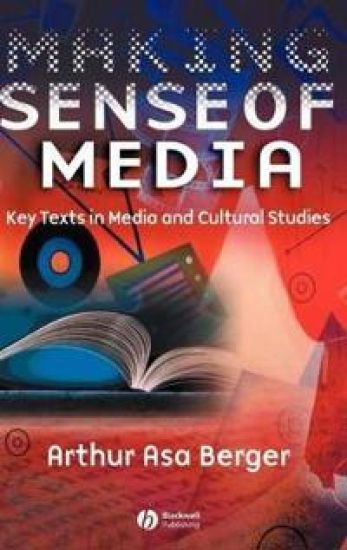
Making Sense of Media is a lively and accessible text that helps readers understand mass media and the texts they carry. Designed expressly for those interested in gaining a solid understanding of the media and how they work, it is an indispensable book. Offers a lively, accessible, and concise textbook to help readers understand mass media and their textsCovers seminal figures, concepts and scholarship in mass media studies, including Vladimir Propp, Mikhail Bakhtin, Raymond Williams, Fredric Jameson, and Stuart HallExplores the ideas found in nineteen significant books that will provide useful insights and concepts for anyone interested in the study of the mediaFeatures chapter-by-chapter short articles by the author, that address an idea or theory in the particular book being discussedIncludes charts, boxes features, exercises, and illustrations to round out analyses and engage the beginning student
Making Sense of Media is a lively and accessible text that helps readers understand mass media and the texts they carry. Designed expressly for those interested in gaining a solid understanding of the media and how they work, it is an indispensable book. Offers a lively, accessible, and concise textbook to help readers understand mass media and their textsCovers seminal figures, concepts and scholarship in mass media studies, including Vladimir Propp, Mikhail Bakhtin, Raymond Williams, Fredric Jameson, and Stuart HallExplores the ideas found in nineteen significant books that will provide useful insights and concepts for anyone interested in the study of the mediaFeatures chapter-by-chapter short articles by the author, that address an idea or theory in the particular book being discussedIncludes charts, boxes features, exercises, and illustrations to round out analyses and engage the beginning student