Kirjojen hintavertailu – 12 903 725 kirjaa ja 27 kauppaa
Kirjailija
Arthur Asa Berger
Kirjat ja teokset yhdessä paikassa: 100 kirjaa, julkaisuja vuosilta 1978–2024, suosituimpiin kuuluu Sports Semiotics. Vertaile teosten hintoja ja tarkista saatavuus suomalaisista kirjakaupoista.
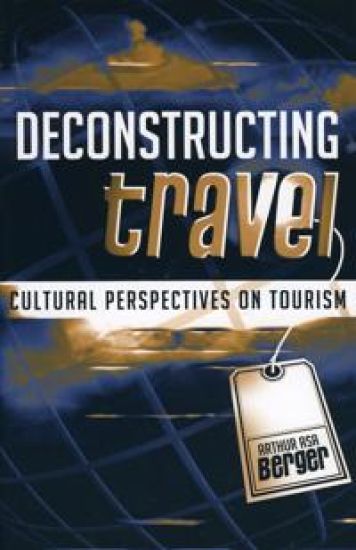
As a visible marker of globalization, the increased role of travel and tourism in our lives makes it a remarkable force in contemporary culture. Deconstructing Travel provides an easily understood framework of the relationship between travel and culture in our rapidly changing postmodern, postcolonial world. Beginning with an examination of classical expeditions in mythology, history, and literatures, Arthur Asa Berger explores the role of travel in contemporary lives, from university travel-abroad programs to package tours and family vacations. This volume is a highly-engaging look into why people travel, examining travel and tourism as a cultural phenomenon through social, cultural, psychological, and economic forces.
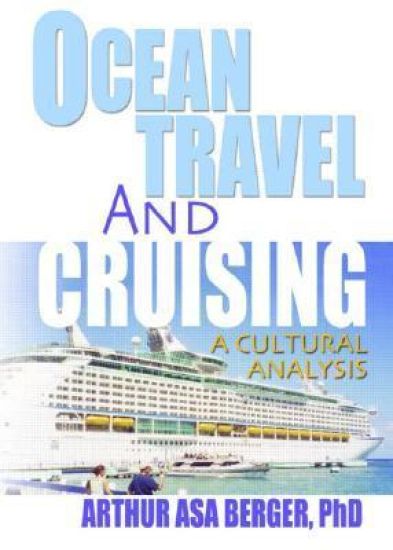
A one-of-a-kind analysis of ocean cruising! In Ocean Travel and Cruising: A Cultural Analysis, noted author Arthur Asa Berger turns his critical eye to the phenomenon of ocean cruising. This academically solid yet reader-friendly book brings a multidisciplinary cultural studies approach to the subject, examining ocean cruising from economic, semiotic, sociological, psychoanalytic, and marketing perspectives, and offering insights not provided by the more traditional sociological approaches to the subject. You'll explore cruise demographics, the relationship between cruising and gender, the sociology of dining on cruise ships, hedonism and pleasure seeking, the compulsion to cruise, consolidation in the industry, the exploitation of workers on cruise ships, and a great deal more. Here's a section-by-section rundown of what's in store for you and your students in this one-of-a-kind new text: The Economics of Cruising examines cruise categories, industry consolidation, worker exploitation, and ways that cruise lines make money aside from ticket sales. This section also compares the costs of cruises vs. land-based vacations and fills you in on the typical weekly food and beverage consumption of the Carnival line's complement of ships, which sheds light on how a cruise line can, for a mere $10, provide a food array that would cost a restaurant or hotel $33 to $40. Signs at SeaThe Semiotics of Cruising provides you with a quick primer on semiotics and then discusses the cruise ship as a sign system and then breaks the system down to its component parts, discussing dining rooms, cabins/staterooms, dress codes, spatiality, luxury signifiers, the perceived elitism of the cruise experience, the role of photography, and more. A Sociological Analysis of Cruising explores cruise demographics and their meaning, time budgeting on cruises, the sociology of dining, new trends in cruising, and the meaning of gender in relation to ocean cruising. A particularly intriguing chapter is A Psychoanalytic Interpretation of Cruising. Beginning with a look at the compulsion to cruise, this section explores cruising's relationship with the unconscious, the paradise myth, hedonism and pleasure seeking, the desire for unconditional love, psychological regression, and more. In Selling Smooth Sailing: Advertising and Marketing Cruises, you'll examine print advertisements from eight major cruise lines, look at what they have in common and what the differences are between the messages each cruise line hopes to convey via the style and content of their ads and brochures. Cruising (on) the Internet looks at the intersection of the information superhighway with the world of cruising. You'll learn about the cruise lines' own Web sites, travel agency sites, Internet sites designed to rate and review cruises and cruise ships, and more. Notes from a Cruise Journal shares the author’s on-site reflections and impressions of a weeklong cruise from Los Angeles to Puerto Vallarta, Mexico, and back. Written in accessible, jargon-free language that will appeal to students at all levels, Ocean Travel and Cruising: A Cultural Analysis is the most recent of a very small selection of scholarly studies of ocean cruising available in English. Make it a part of your cultural studies, leisure studies, sociology, travel/tourism/hospitality, popular culture, or American studies course this semester!
A one-of-a-kind analysis of ocean cruising! In Ocean Travel and Cruising: A Cultural Analysis, noted author Arthur Asa Berger turns his critical eye to the phenomenon of ocean cruising. This academically solid yet reader-friendly book brings a multidisciplinary cultural studies approach to the subject, examining ocean cruising from economic, semiotic, sociological, psychoanalytic, and marketing perspectives, and offering insights not provided by the more traditional sociological approaches to the subject. You'll explore cruise demographics, the relationship between cruising and gender, the sociology of dining on cruise ships, hedonism and pleasure seeking, the compulsion to cruise, consolidation in the industry, the exploitation of workers on cruise ships, and a great deal more. Here's a section-by-section rundown of what's in store for you and your students in this one-of-a-kind new text: The Economics of Cruising examines cruise categories, industry consolidation, worker exploitation, and ways that cruise lines make money aside from ticket sales. This section also compares the costs of cruises vs. land-based vacations and fills you in on the typical weekly food and beverage consumption of the Carnival line's complement of ships, which sheds light on how a cruise line can, for a mere $10, provide a food array that would cost a restaurant or hotel $33 to $40. Signs at SeaThe Semiotics of Cruising provides you with a quick primer on semiotics and then discusses the cruise ship as a sign system and then breaks the system down to its component parts, discussing dining rooms, cabins/staterooms, dress codes, spatiality, luxury signifiers, the perceived elitism of the cruise experience, the role of photography, and more. A Sociological Analysis of Cruising explores cruise demographics and their meaning, time budgeting on cruises, the sociology of dining, new trends in cruising, and the meaning of gender in relation to ocean cruising. A particularly intriguing chapter is A Psychoanalytic Interpretation of Cruising. Beginning with a look at the compulsion to cruise, this section explores cruising's relationship with the unconscious, the paradise myth, hedonism and pleasure seeking, the desire for unconditional love, psychological regression, and more. In Selling Smooth Sailing: Advertising and Marketing Cruises, you'll examine print advertisements from eight major cruise lines, look at what they have in common and what the differences are between the messages each cruise line hopes to convey via the style and content of their ads and brochures. Cruising (on) the Internet looks at the intersection of the information superhighway with the world of cruising. You'll learn about the cruise lines' own Web sites, travel agency sites, Internet sites designed to rate and review cruises and cruise ships, and more. Notes from a Cruise Journal shares the author’s on-site reflections and impressions of a weeklong cruise from Los Angeles to Puerto Vallarta, Mexico, and back. Written in accessible, jargon-free language that will appeal to students at all levels, Ocean Travel and Cruising: A Cultural Analysis is the most recent of a very small selection of scholarly studies of ocean cruising available in English. Make it a part of your cultural studies, leisure studies, sociology, travel/tourism/hospitality, popular culture, or American studies course this semester!
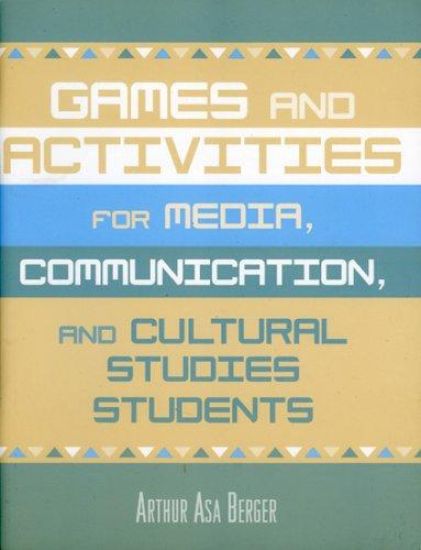
Based on class activities and assignments used by the author over nearly forty years of teaching, Games and Activities for Media, Communication, and Cultural Studies Students is a natural accompaniment for texts in media or cultural studies and communication courses. Berger has put together a range of activities that will help students apply the ideas and concepts learned about media and communication to films, television programs, advertisements, and other media "texts." It also gives tips to students and professors on how to create new games and includes a glossary of communication and cultural studies terms. Games and Activities will help turn textbook concepts into useful applications.
In this sociology textbook/mystery novel, students can join Sherlock Holmes and Watson as they discover a new area ripe for acrimony and intrigue: social theory. In 1910, the most prominent social theorists in the world gather in London for a conference on the new science of sociology. Things rapidly fall apart, though, as a fight breaks out, a jewel is stolen, and famous sociologist Emile Durkheim disappears. As Sherlock Holmes and Watson investigate, it appears that social theory may not only explain actions—in this case, it may be the cause of them. So Holmes and Watson investigate social theory itself, learning directly from those creating it: W. E. B. Du Bois, Sigmund Freud, Vladimir Lenin, Beatrice Webb, Georg Simmel, Emile Durkheim, and Max Weber. The theories, lives, and passions of each sociologist are revealed as Holmes and Watson learn first-hand just how influential social theory can be.
In this sociology textbook/mystery novel, students can join Sherlock Holmes and Watson as they discover a new area ripe for acrimony and intrigue: social theory. In 1910, the most prominent social theorists in the world gather in London for a conference on the new science of sociology. Things rapidly fall apart, though, as a fight breaks out, a jewel is stolen, and famous sociologist Emile Durkheim disappears. As Sherlock Holmes and Watson investigate, it appears that social theory may not only explain actions—in this case, it may be the cause of them. So Holmes and Watson investigate social theory itself, learning directly from those creating it: W. E. B. Du Bois, Sigmund Freud, Vladimir Lenin, Beatrice Webb, Georg Simmel, Emile Durkheim, and Max Weber. The theories, lives, and passions of each sociologist are revealed as Holmes and Watson learn first-hand just how influential social theory can be.
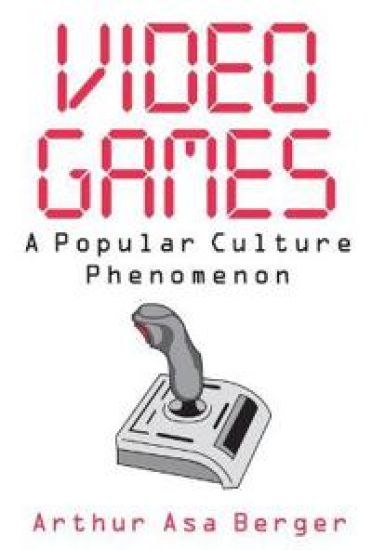
From their inception, video games quickly became a major new arena of popular entertainment. Beginning with very primitive games, they quickly evolved into interactive animated works, many of which now approach film in terms of their visual excitement. But there are important differences, as Arthur Asa Berger makes clear in this important new work. Films are purely to be viewed, but video involves the player, moving from empathy to immersion, from being spectators to being actively involved in texts. Berger, a renowned scholar of popular culture, explores the cultural significance of the expanding popularity and sophistication of video games and considers the biological and psychoanalytic aspects of this phenomenon. Berger begins by tracing the evolution of video games from simple games like Pong to new, powerfully involving and complex ones like Myst and Half-Life. He notes how this evolution has built the video industry, which includes the hardware (game-playing consoles) and the software (the games themselves), to revenues comparable to the American film industry.
Humor permeates every aspect of society and has done so for thousands of years. People experience it daily through television, newspapers, literature, and contact with others. Rarely do social researchers analyze humor or try to determine what makes it such a dominating force in our lives. The types of jokes a person enjoys contribute significantly to the definition of that person as well as to the character of a given society. Arthur Asa Berger explores these and other related topics in An Anatomy of Humor. He shows how humor can range from the simple pun to complex plots in Elizabethan plays. Berger examines a number of topics—ethnicity, race, gender, politics—each with its own comic dimension. Laughter is beneficial to both our physical and mental health, according to Berger. He discerns a multiplicity of ironies that are intrinsic to the analysis of humor. He discovers as much complexity and ambiguity in a cartoon, such as Mickey Mouse, as he finds in an important piece of literature, such as Huckleberry Finn. An Anatomy of Humor is an intriguing and enjoyable read for people interested in humor and the impact of popular and mass culture on society. It will also be of interest to professionals in communication and psychologists concerned with the creative process.
When the cold war ended, many hoped it signified enhanced prospects for a more stable world. However, despite favorable political developments, the post-cold war period has been marked by turbulence, uncertainty, and challenge. The actions of rogue states such as Iraq and North Korea have made nuclear proliferation more unpredictable. Violence in Somalia and Bosnia has cast doubt on the viability of international peacekeeping arrangements. Hopes for expanding democratization have been dimmed by assertions that the values of liberal democracy and human rights are incompatible with non-Western cultures. The Adaptive Military describes how military security policies and practices have adapted to these new times and explains why such changes are necessary. The central argument is that current conflicts have been shaped by long-term trends, which increased the number and complexity of threats that the developed world is supposed to meet, and correspondingly decreased the stock of social and political options available to meet them. Although the authors differ in their assessments about the current prospects for peace and ways to maintain security, the issues they address are as critical as they were at the end of the Cold War. Mobilizing resources and political support for remote and difficult enterprises will always remain contentious, but if we recognize the hazard of letting violence run unopposed throughout the world, then we bear some responsibility to consider how it might be checked. This volume is an exercise of that responsibility. It will be of great interest to experts in military studies and international relations.
You and your students are invited to join the detective, Solomon Hunter, in his hunt for knowledge and a killer. Ettore Gnocchi, the famed postmodern theorist, has been murdered at his own dinner party. Which of his guests could have poisoned, stabbed, and shot him? Was it Shoshana TelAviv, the wife he may have betrayed? Slavomir Propp, the Russian linguist who accused Gnocchi of stealing his ideas? Alain Fess, who may be sleeping with Shoshana? To find out which of these people killed Gnocchi, the detective Solomon Hunter must first explore postmodernism itself. What is it? Who are Baudrillard, Foucault, and Habermas, and what do they think? Why does any of this matter, anyway? Teach your students postmodern theory with this fun and enlightening text.
Southwest literary humor and Yiddish humor collided in the ever-popular comic strip ""Li'l Abner,"" From 1936 to 1977, when it ceased publication, this comic strip entertained, annoyed, riled, and amused legions of readers. Li'l Abner, Daisy Mae, Mammy and Pappy Yokum, Moonbeam McSwine, Marryin' Sam, and Sadie Hawkins became pillars in American popular culture, and Dogpatch became a symbol, an emblem, and a community in mainstream U. S. A. The denizens of Dogpatch were destined for their place outside the frames of comic strips. They were popular subjects on stage and screen and eventually made their way into scholarly studies. Li'l Abner: A Study in American Satire, the first such assessment, is made available again in this edition which includes a new afterword by the author. Originally published in 1969, it was the first full-length book devoted to a single American comic strip. It has remained a model of how the comics, sometimes snubbed as ""culture for the common man,"" can be given earnest and well deserved analytical attention. Here in great detail are discussions of the place of ""Li'l Abner"" in American satire, of Capp's narrative technique, his use of dialogue and grotesquerie, his use of self-caricature, and of the significance of social criticism and the pictorial image.
In this entirely sophisticated and scholarly account of political culture, Arthur Asa Berger shows how the variety of cultural preferences creates the foundations of communication theory. Using the work of Aaron Wildavsky, the author shows how individualism, egalitarianism, collectivism, and fatalism form the basis of culture in complex societies. But more importantly, Berger breaks down the mechanical distinction between mass culture and elite culture, showing how they interpenetrate and crossover at the level of competitive and hierarchical frames. Agitpop, now in paperback, suggests that there is an ideological content to our popular culture, even though the creators no less than the consumers of that culture are either unaware or dimly aware that they are creating works with an ideological bent. The work takes up in quick order two examples from different areas of the hierarchical, individualist, egalitarian, and fatalist cultures. From football games to the Iran-Contra Hearings, from MTV to the Human Potential Movement, from Max Headroom to humor on the Jews, and from wrestling to The Terminator, Berger takes up his master themes with a deft touch of his own. Weaving in the work of scholars from Emile Durkheim to Aaron Wildavsky he manages to make each of the chapters very much his own. For those who know the earlier work of this author, the reader will be very much at home; for those new to Berger, the volume will be a joyous revelation. The final three chapters reveal a deeper aspect of Berger's work. His interpretation of the earlier materials in terms of the semiotics of power, of textual analysis, or deconstruction of the media, and finally, an analysis and self-analysis of the larger research agenda of which this work is pivotal, should make this book central to the theoretical construction of popular and political culture. For people working in communications theory, political culture, and the sociology of knowledge, this book is a must; for everyone else, it is a joy.
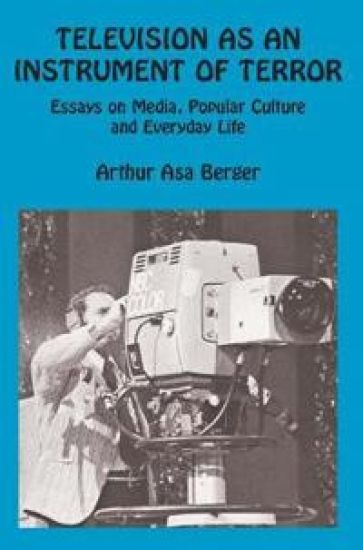
Is television a cultural wasteland, or a medium that has brought people more great art, music, dance, and drama than any previous media? How do we study and interpret television? What are the effects of television on individuals and society, and how do we measure them? What is the role of television in our political and economic life? Television in Society explores these issues in considering how television both reflects and affects society. The book is divided into two sections. The first focuses on programming and deals with commercials, ceremonial events, important series (such as "MASH" and "Lou Grant"), significant programs (a production of Brave New World on television), and the images of police on the medium. The second part of the book deals with important issues and topics related to the medium: the impact of television violence, values found on television, the impact of television on education, the significance of new technological developments, and the always thorny issue of freedom of the press. The articles are drawn together by a brilliant introductory essay by Arthur Asa Berger, who examines television as culture.
This volume explores the vast and endlessly growing subject of popular culture, mass culture, the public arts, and mass-mediated culture. They cover such varied forms of mass communication as television, the comics, advertising, humor, and fads, foods, and artifacts. Some of the essays have been published in such periodicals as Society magazine. Berger, widely recognized as a leading scholar in the field, continues to shape the thinking of today's scholars.