Kirjojen hintavertailu – 12 859 824 kirjaa ja 27 kauppaa
Kirjailija
Arthur Conan Doyle
Kirjat ja teokset yhdessä paikassa: 4 566 kirjaa, julkaisuja vuosilta 1887–2027, suosituimpiin kuuluu Sherlock Holmesin seikkailuja. Vertaile teosten hintoja ja tarkista saatavuus suomalaisista kirjakaupoista.
Nimi esiintyy myös muodoissa: Arthur-Conan Doyle, Arthur Conan-Doyle, Arthur Conan`= Doyle
Sherlock Holmes y el doctor Watson se encuentran charlando una fr a ma ana de primavera, despu s del desayuno, y Holmes se lamenta de que los criminales han perdido audacia y originalidad. Dice literalmente: "En cuanto a mi peque o consultorio, parece que est degenerando en una agencia de recuperaci n de l pices perdidos y de consejos a jovencitas de internados escolares. Creo que, al fin, he tocado fondo". Holmes muestra a Watson una carta que le env a una tal se orita Hunter en la que pide que le aconseje si debe aceptar un empleo de ni era. Watson intenta consolarle dici ndole que las cosas muchas veces no son lo que parecen, y en ese momento anuncian a la se orita Violet Hunter. Contra todo pron stico, la joven le gusta a Holmes, ya que detesta los fingimientos y le agrada la gente clara y decidida. Acepta el caso, y as se inicia El misterio de Copper Beeches. Violet Hunter visits Holmes, asking whether she should accept a job as governess; a job with very strange conditions. She is enticed by the phenomenal salary which, as originally offered, is 100 a year, later increased to 120 when Miss Hunter balks at having to cut her long hair short (her previous position paid 48 a year). This is only one of many peculiar provisos to which she must agree. The employer, Jephro Rucastle, seems pleasant enough, yet Miss Hunter obviously has her suspicions. She announces to Holmes, after the raised salary offer, that she will take the job, and Holmes suggests that if he is needed, a telegram will bring him to Hampshire, where Mr Rucastle's country estate, the Copper Beeches, is situated.
A banker, Mr. Alexander Holder of Streatham, makes a loan of 50,000 to a socially prominent client, who leaves the Beryl Coronet - one of the most valuable public possessions in existence - as collateral. Holder feels that he must not leave this rare and precious piece of jewellery in his personal safe at the bank, and so he takes it home with him to lock it up there. He is awakened in the night by a noise, enters his dressing room, and is horrified to see his son Arthur with the coronet in his hands, apparently trying to bend it. Holder's niece Mary comes at the sound of all the shouting and, seeing the damaged coronet, faints dead away. Three beryls are missing from it. In a panic, Mr. Holder travels to see Holmes, who agrees to take the case. The case against Arthur seems rather damning, yet Holmes is not convinced of his guilt. Why has Arthur clammed up? Why is he refusing to give a statement of any kind? How could Arthur have broken the coronet (even Holmes, who has exceptionally strong hands, can't do it) and without making any noise? Could any other people in the household be involved, such as the servants, or Mary? Could some visitor, such as the maid's wooden-legged boyfriend, or Arthur's rakish friend Sir George Burnwell, have something to do with what happened to the coronet? The failure to resolve the case will result in Mr. Holder's dishonour, and a national scandal.
Este nuevo relato de la prol fica serie comienza con la descripci n que hace el doctor Watson de su amigo Isa Whitney, adicto al opio. Una noche de junio de 1889, Watson tiene que ir a buscar a Whitney a un s rdido fumadero de los barrios bajos londinenses, a instancias de su desgraciada esposa. Para su sorpresa, all se encuentra a Holmes, y lo que parec a que iba a ser una historia sobre el mundo del opio y sus lacras da un giro total. Watson se une de buen grado a la investigaci n que est realizando Holmes, limit ndose a enviar una nota a su esposa. Curiosamente, al principio del relato la se ora Watson se equivoca y se refiere a su marido como James en lugar de John. Tras su encuentro, Holmes conduce a Watson a las cercan as de Lee, en el condado de Kent. En el trayecto le explica que el matrimonio Saint Clair viv a felizmente en The Cedars, una lujosa mansi n. La desaparici n del marido, Neville Saint Clair, en misteriosas circunstancias, ha conducido a Holmes al s rdido antro donde le ha encontrado Watson. Seg n parece, Saint Clair ha sido asesinado por Hugh Boone, un mendigo cuyo labio retorcido le da un siniestro aspecto. Todas las pruebas acusan al mendigo, que ya ha sido encarcelado. Pero la llegada de un mensaje junto con el anillo de Saint Clair hace cambiar totalmente las expectativas. Dr Watson is called upon late at night by a female friend of his wife. Her husband has been absent for several days and, as he is an opium addict, she is sure he has been indulging in a lengthy drug binge in a dangerous East End opium den. Frantic with worry, she seeks Dr. Watson's help in fetching him home. Watson does this, but he also finds his friend Sherlock Holmes in the den, disguised as an old man, trying to extract information about a new case from the addicts in the den. Mr. Neville St. Clair, a respectable and punctual country businessman, disappears. Making the matter more mysterious is that Mrs. St. Clair is sure that she saw her husband at a second-floor window of the opium den, in Upper Swandam Lane, a rough part of town near the docks. He withdrew into the window immediately, and Mrs. St. Clair is sure that there is something wrong.
Holmes y Watson son llamados a investigar los extra os cr menes aparentemente relacionados con la antigua maldici n que pesa sobre la familia Baskerville. El "asesino" parece ser un "animal enorme y negro con forma de perro, aunque mayor que ning n otro visto jam s por criatura humana". Atra dos por el misterio del caso, nuestros protagonistas se ven pronto envueltos en un laberinto de antiguas supersticiones y oscuras venganzas, en el escenario amenazador y siniestro de los p ramos de Dartmoor.
La trama se basa en el robo de una fabulosa diadema de 39 berilos montados en oro, perteneciente a la casa real. La joya une a su incalculable valor material el hecho de ser una de las joyas m s famosas del tesoro real y uno de los bienes m s preciados del Imperio. La historia comienza cuando un distinguido caballero llega, sin avisar, al apartamento 221-B de Baker Street. Con aspecto alterado, se presenta como Alexander Holder, el socio de m s edad de Holder & Stevenson, una de las instituciones bancarias m s s lidas y de mayor prestigio en el Londres de la poca. Su relato nos traslada a su banco, donde un miembro de la familia real -sin decirlo, da a entender que puede tratarse del pr ncipe de Gales- solicita a Holder un pr stamo de cincuenta mil libras durante unos d as, y en prueba de garant a ofrece la famosa diadema de berilos. -Una de las joyas m s preciadas del Imperio- exclama el cajero . La transacci n se efect a, y el banquero, para mayor seguridad, se lleva la joya a su casa donde, tras un incidente, desaparece una parte de la diadema, que contiene tres de las irremplazables piedras preciosas. Todo apunta al irresponsable y calavera hijo del banquero, que es encarcelado. Pero los berilos no aparecen y el banquero, desesperado, acude a casa de Sherlock Holmes. Tras una exhaustiva investigaci n, Sherlock Holmes une las piezas del rompecabezas, encuentra a los verdaderos culpables (Su sobrina y su novio) y recupera los famosos berilos. La gran duda del relato es si para evitar el esc ndalo, teniendo en cuenta la importancia de las bailarinas implicadas, quedan libres de castigo los autores del delito. -Una persona que ha ahorrado a Inglaterra un gran esc ndalo p blico- dice de Holmes el banquero al final del relato. A banker, Mr. Alexander Holder of Streatham, makes a loan of 50,000 to a socially prominent client, who leaves the Beryl Coronet - one of the most valuable public possessions in existence - as collateral. Holder feels that he must not leave this rare and precious piece of jewellery in his personal safe at the bank, and so he takes it home with him to lock it up there. He is awakened in the night by a noise, enters his dressing room, and is horrified to see his son Arthur with the coronet in his hands, apparently trying to bend it. Holder's niece Mary comes at the sound of all the shouting and, seeing the damaged coronet, faints dead away. Three beryls are missing from it. In a panic, Mr. Holder travels to see Holmes, who agrees to take the case. The case against Arthur seems rather damning, yet Holmes is not convinced of his guilt. Why has Arthur clammed up? Why is he refusing to give a statement of any kind? How could Arthur have broken the coronet (even Holmes, who has exceptionally strong hands, can't do it) and without making any noise? Could any other people in the household be involved, such as the servants, or Mary? Could some visitor, such as the maid's wooden-legged boyfriend, or Arthur's rakish friend Sir George Burnwell, have something to do with what happened to the coronet? The failure to resolve the case will result in Mr. Holder's dishonour, and a national scandal.
Inmediatamente despu s de El carbunclo azul, Conan Doyle escribi otro relato de Sherlock Holmes titulado The Adventure of the Speckled Band (La banda de lunares). Posteriormente, Doyle revel que cre a que sta era la mejor historia de Holmes. Doyle escribi y produjo una obra de teatro basada en la historia. Fue estrenada en el Teatro Adelphi, en Londres, en junio de 1910. En esta ocasi n, Watson nos traslada a su poca de soltero, cuando compart a con Sherlock Holmes las habitaciones del 221-B de Baker Street, despu s de su primera aventura, Estudio en escarlata, y antes de El signo de los cuatro. Una ma ana de abril de 1883, Holmes y Watson reciben la visita de Helen Stoner, una atemorizada joven que les cuenta una tragedia. Su hermana ha muerto en extra as circunstancias y aunque la prudencia le impide acusar abiertamente a su padrastro, el doctor Roylott, da a entender que esto es lo que cree, y a ade que teme seriamente por su vida. Holmes' client is Helen Stoner, a 32-year-old spinster who lives with her stepfather: Dr. Grimesby Roylott of Stoke Moran. Dr Roylott is the last survivor of what was a wealthy but dissolute and violent tempered aristocratic Anglo-Saxon family of Surrey. After returning from India where he had a large medical practice and had served a jail sentence for killing his native Butler in a fit of rage, Roylott-a widower-settles with his two stepdaughters in the broken-down ancestral manor-all that is left of estates that had extended into Berkshire and Hampshire. The doctor becomes notorious for terrorizing the local village because of his quarrelsome personality and violent temper. Dr. Roylott has required Miss Stoner, who is engaged to be married, to move into a particular bedroom of his heavily mortgaged ancestral home in Stoke Moran. This room was the one in which two years before, Helen's twin sister Julia had died under mysterious and dramatic circumstances-uttering the last words "The band The speckled band "-just prior to her wedding. Helen is reluctant to sleep in the room because a number of things about the bedroom are mysterious and disturbing. Late at night, Helen hears low whistling sounds followed by a metallic clang.
El Arist crata Solter n, relata el caso de la extra a desaparici n de la rica heredera Hatty Doran. Hija nica del multimillonario Aloysius Doran, se ha esfumado tras su matrimonio con el citado Lord St. Simon, segundo hijo del duque de Balmoral y perteneciente a la m s rancia aristocracia de Inglaterra. A pesar de la poca simpat a que inspira a Holmes el estirado personaje, el caso le interesa, y se hace cargo de l. Como es habitual, resuelve brillante y r pidamente el caso. El supuesto asesinato, en el que est implicada Flora Millar, una antigua "amiga ntima" de Lord St. Simon, se convierte en una rom ntica aventura en la que, finalmente, vence el amor. El arist crata se siente humillado, la novia feliz, y el inepto inspector Lestrade de Scotland Yard, una vez m s, queda confuso y aturdido ante la probada eficacia del genial Sherlock Holmes. The story entails the disappearance of Hatty, Lord St. Simon's bride on the day of their marriage. She participates in the wedding, but disappears from the reception. The events of the wedding day are most perplexing to Lord St. Simon as it seemed to him that his bride, Miss Hatty Doran of San Francisco, was full of enthusiasm about their impending marriage. St. Simon tells Holmes that he noticed a change in the young lady's mood just after the wedding ceremony. She was uncharacteristically sharp with him. The only thing out of the ordinary at the church where the wedding took place was Hatty's little accident: she dropped her wedding bouquet and a gentleman in the front pew picked it up and handed it back to her.
Un 26 de diciembre, Watson se acerca al 221-B de Baker Street para felicitar las Navidades a su inseparable amigo Holmes. Al llegar, lo encuentra analizando un bomb n en lamentable estado, que el inspector Peterson de Scotland Yard le ha llevado. Tanto el sombrero como una oca de buen tama o proceden de un incidente callejero, en el curso del cual el propietario acab huyendo. La oca llevaba una tarjeta, que indicaba que era para la se ora de Henry Baker, y el sombrero llevaba las iniciales H. B. Ante la dificultad de encontrar al propietario, en una ciudad con tantos Baker, Peterson se lleva la oca con destino a la cocina de su casa, y Holmes se entretiene estudiando el sombrero. Watson visits his friend Holmes at Christmas time and finds him contemplating a battered old hat, brought to him by the commissionaire Peterson after the hat and a Christmas goose had been dropped by a man in a scuffle with some street ruffians. Peterson takes the goose home to eat, but later returns to Holmes with a blue carbuncle his wife had found in the bird's crop (throat). Holmes makes some interesting deductions concerning the owner of the hat from simple observations of its condition, conclusions amply confirmed when an advertisement for the owner produces the man himself: Henry Baker. Holmes cannot resist such an intriguing mystery, and he and Watson set out across the city to determine exactly how the jewel, stolen from the Countess of Morcar during her stay at a hotel, wound up in a goose's crop. The man who dropped the goose, Mr. Henry Baker, comes to reclaim his hat in response to Holmes' advertisement. Holmes drops hints about how he saved the "innards" of the goose, but Baker fails to respond to them, simply saying that he is afraid goose remains are not much use. He does, however, give Holmes valuable information, eventually leading him to the conclusive stage of his investigation, at Covent Garden. Holmes offers a fresh goose to Henry Baker, who responds with gladness and departs, whereupon Holmes tells Watson that Baker is eliminated from the suspect list as he obviously knows nothing about the carbuncle. At Covent Garden, a salesman named Breckinridge gets angry with Holmes, complaining about all the people who have pestered him about geese sold recently to the landlord of the Alpha Inn. Clearly, someone else knows that the carbuncle was in a goose and is looking for the bird.
Violet Hunter visits Holmes, asking whether she should accept a job as governess; a job with very strange conditions. She is enticed by the phenomenal salary which, as originally offered, is 100 a year, later increased to 120 when Miss Hunter balks at having to cut her long hair short (her previous position paid 48 a year). This is only one of many peculiar provisos to which she must agree. The employer, Jephro Rucastle, seems pleasant enough, yet Miss Hunter obviously has her suspicions. She announces to Holmes, after the raised salary offer, that she will take the job, and Holmes suggests that if he is needed, a telegram will bring him to Hampshire, where Mr Rucastle's country estate, the Copper Beeches, is situated. After a fortnight, Holmes receives such a message, beseeching him to come and see her in Winchester. Miss Hunter tells them one of the most singular stories that they have ever heard. Mr. Rucastle would sometimes have Miss Hunter wear a particular electric blue dress and sit in the front room reading, with her back to the front window. She began to suspect that she was not supposed to see something outside the window, and a small mirror shard hidden in her handkerchief showed her that she was right: there was a man standing there on the road looking towards the house. At another such session, Mr Rucastle told a series of funny stories that made Miss Hunter laugh until she was quite weary. The one astonishing thing about this was that Mrs. Rucastle not only did not laugh, but did not even smile.
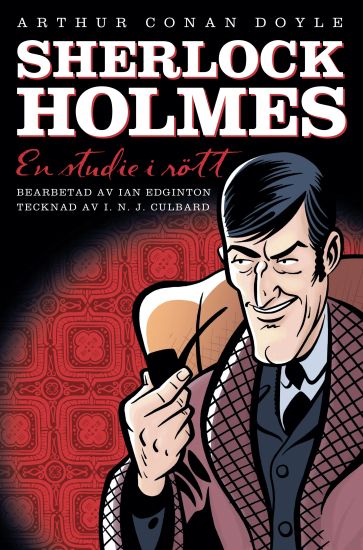
Alla berättelser har en början. Så även den om Sherlock Holmes och hans gode vän dr John H Watson. Och det är just i äventyret En studie i rött som allting inleds. Det är här de träffas för första gången. Holmes är tjugosju och Watson två år äldre – i samma ålder som författaren Arthur Conan Doyle var när han skrev denna sin debutroman. Det som Conan Doyle ville skapa var en vetenskaplig detektiv, någon som gav sig ut till brottsplatser och detaljstuderade varenda befintlig ledtråd. En detektiv som lutade sig mot ovedersägliga bevis – samtidigt som domstolarna vid slutet av 1800-talet sällan tog hänsyn till sådant, utan behövde antingen ögonvittnen eller att brottslingar tagits på bar gärning för att kunna döma.– – –Ur Mattias Boströms förord till denna serieadaption av Arthur Conan Doyles klassiker En studie i rött med mästerdetektiven Sherlock Holmes.” Edgintons och Culbards version har ett bättre tempo och är mer underhållande än Doyles, samtidigt som den är trogen originalet. För en ny generation Sherlock Holmes-läsare är denna adaption en bra introduktion till Doyles arbete, medan redan frälsta kommer att njuta av att se hur Culbard och Edginton skildrar Holmes och Watsons första möte.” The School Library Journal
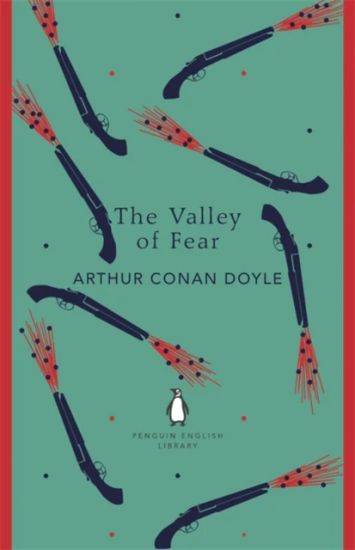
The Valley of Fear, the fourth and final Sherlock Holmes novel by Sir Arthur Conan Doyle. Based loosely on the real-life exploits of the Molly Maguires and Pinkerton agent James McParland. Holmes decodes a cipher warning from Moriarty's organization for "Douglas" in "Birlstone", but a corpse is there already. When Mr. Douglas blows the head off his American assassin, he dresses the body as himself, and hides, to throw off the chase for good. Holmes guesses the missing dumb-bell weighted down the killer's clothes in the moat.
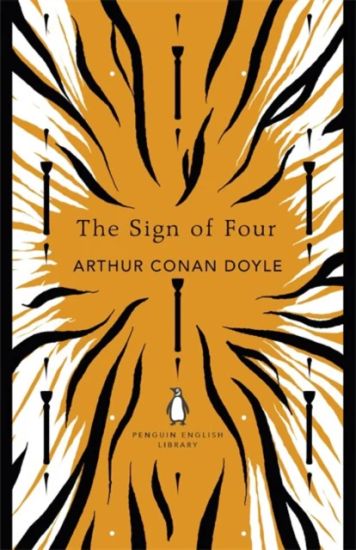
The Penguin English Library editionA dense yellow miasma swirls in the streets of London as Sherlock Holmes and Dr Watson accompany a beautiful young woman to a sinister assignation. For Mary Marston has received several large pearls - one a year for the last six years - and now a mystery letter telling her she is a wronged woman. If she would seek justice she is to meet her unknown benefactor, bringing with her two companions. But unbeknownst to them all, others stalk London's fog-enshrouded streets: a one-legged ruffian with revenge on his mind - and his companion, who places no value on human life . . .
The Penguin English Library EditionThe deadly hand of Professor Moriarty once more reaches out to commit a vile and ingenious crime, but a mole in Moriarty's criminal organization alerts Sherlock Holmes of the evil deed by means of a cipher . . . When Holmes and Watson arrive at a Sussex manor house they appear to be too late. The discovery of a body suggests that Moriarty's henchmen have been at their work. But there is much more to this tale of murder than at first meets the eye.